Precision-extruded thermoplastic spools engineered for zero batch drift, tight laser tolerance (±0.02 mm), and vacuum-sealed moisture protection.
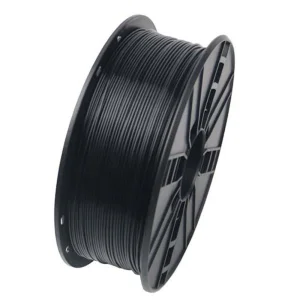
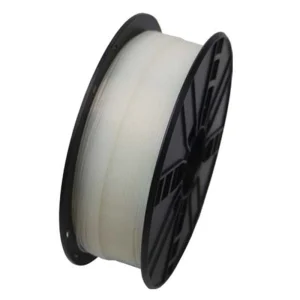
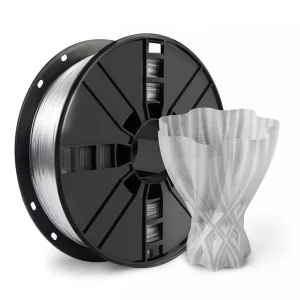
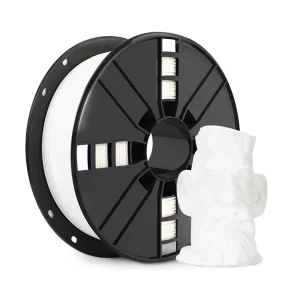
As additive manufacturing matures from rapid prototyping into direct digital manufacturing (DDM), selection of structural polymers must reflect localized environmental stresses. In Metro Manila and the wider Luzon economic zone, industrial equipment operates under some of the most aggressive natural degradation conditions in the Asia-Pacific region.
Traditional engineering plastics like ABS (Acrylonitrile Butadiene Styrene) suffer rapid photodegradation when deployed outdoors. High-energy solar ultraviolet (UV) radiation breaks the butadiene rubber backbone, leading to surface yellowing, embrittlement, micro-cracking, and mechanical failure within months. ASA (Acrylonitrile Styrene Acrylate) solves this fundamental failure mode by replacing butadiene with an acrylic ester elastomer matrix.
Torwell Technologies, operating a standardized 2,500 m² automated extrusion facility with six continuous lines, supplies direct enterprise-grade ASA filament to Manila’s rapid prototyping centers, marine engineering projects, solar microgrid integrators, and automotive aftermarket OEMs.
Metro Manila experiences extreme peak solar irradiance, with UV index ratings frequently exceeding level 11. Torwell ASA incorporates UV-stabilizer additives that absorb high-energy UV-A and UV-B spectra, preventing photo-oxidation and retaining color stability for years.
With annual relative humidity (RH) in the Philippines averaging between 75% and 90%, hygroscopic polymers degrade during processing and service. ASA exhibits low water absorption rates (0.2–0.4%), ensuring dimensional stability without hydrolytic structural weakness.
Industrial activity around Manila South Harbor and coastal zone projects in Cavite and Pasay expose components to salt spray and sulfur pollutants. ASA is chemically inert to diluted acids, alkalis, and salt aerosols.
To enable engineering procurement teams across Manila to make informed material selections, the following matrix contrasts mechanical, thermal, and environmental attributes across key industrial polymers.
| Property Benchmark | Torwell ASA | Standard ABS | Engineering PETG | High-Temp PC |
|---|---|---|---|---|
| UV & Weathering Resistance | Exceptional (>5 Years Outdoor) | Poor (Yellows/Embrittles) | Moderate (Slight Degradation) | Moderate (Requires Coating) |
| Heat Deflection Temp (HDT @ 0.45MPa) | 95°C - 102°C | 85°C - 92°C | 70°C - 75°C | 135°C - 142°C |
| Tensile Strength (ISO 527) | 45 - 50 MPa | 40 - 45 MPa | 48 - 53 MPa | 60 - 70 MPa |
| Flexural Modulus (ISO 178) | 2,100 - 2,400 MPa | 2,000 - 2,200 MPa | 1,900 - 2,100 MPa | 2,300 - 2,500 MPa |
| Charpy Impact Strength (Notched, 23°C) | 18 - 22 kJ/m² | 12 - 18 kJ/m² | 8 - 12 kJ/m² | 30 - 45 kJ/m² |
| Interlayer Adhesion Quality | High (Thermal Tuning) | Medium (Prone to Warping) | Very High | High (Requires Enclosure) |
| Physical / Mechanical Property | Test Standard / Method | Metric Value | Imperial Value |
|---|---|---|---|
| Density | ISO 1183 / ASTM D792 | 1.07 g/cm³ | 0.0386 lb/in³ |
| Melt Flow Index (MFI) | 220°C / 10 kg (ISO 1133) | 12 - 18 g/10 min | 12 - 18 g/10 min |
| Tensile Yield Strength | 50 mm/min (ISO 527) | 48 MPa | 6,960 psi |
| Elongation at Break | 50 mm/min (ISO 527) | 25% | 25% |
| Recommended Extruder Nozzle Temp | Manufacturing Standard | 240°C - 260°C | 464°F - 500°F |
| Recommended Print Bed Temp | PEI / Textured Glass Sheet | 90°C - 110°C | 194°F - 230°F |
| Print Chamber Temperature | Enclosed 3D Printer | 40°C - 60°C Recommended | 104°F - 140°F |
| Diameter Tolerance Guarantee | Inline Dual-Axis Laser Gauge | ±0.02 mm | ±0.0008 in |
From smart city infrastructure projects in Bonifacio Global City (BGC) to maritime equipment along Manila Bay, Torwell ASA filament serves critical municipal and enterprise hardware implementations.
Telecommunication providers across Metro Manila require rugged, non-conductive, weatherproof enclosures for micro-cell 5G routers and traffic monitoring sensors mounted on concrete utility poles. ASA resists moisture ingress and intense midday solar heating without warping.
With widespread commercial rooftop solar deployments in industrial estates across Laguna, Cavite, and Bulacan, ASA is used to print durable cable management clips, edge protectors, and junction box housings exposed directly to sunlight.
Local bodybuilders and utility electric vehicle assemblers leverage 3D printed ASA for side mirror housings, decorative radiator grilles, signal light brackets, and customized dashboard panels that withstand daily road friction and intense heat.
Printing high-performance styrenic polymers in tropical zones requires adherence to disciplined moisture management and thermal chamber control.
Although ASA has superior hydrolysis resistance compared to PETG or Nylon, ambient humidity in Manila can introduce moisture micro-voids during high-temperature extrusion. Torwell recommends pre-drying ASA spools at 70°C to 80°C for 4–6 hours in a dedicated filament dryer or convection oven prior to high-volume print runs.
To eliminate corner warping caused by thermal contraction differential across large print beds:
• Keep the print bed at a constant 100°C.
• Use an enclosed print chamber maintained at 45°C–50°C.
• Set part cooling fans to 0% for initial layers and cap max fan speed at 20% for extreme overhangs.
Apply specialist adhesive coatings (such as Magigoo PP/ABS/ASA or liquid adhesive solutions) over textured PEI or smooth borosilicate glass. Ensure the first layer speed is throttled to 20–30 mm/s with a slight positive Z-offset squeeze to establish strong molecular bonding.
Streamlined logistics directly from our automated factory floor to Metro Manila ports, supporting private label brands, regional distributors, and high-volume print farms.
We supply custom pantone color matching, private-label spool sticker design, customized retail carton artwork, and multi-language SDS documentation tailored for the Philippine import market.
Every spool is dried immediately after extrusion, spooled in tension-controlled conditions, wrapped with high-capacity silica desiccant pouches, and thick aluminum-vacuum sealed to guarantee factory freshness upon arrival in Manila.
Direct maritime container freight (FCL/LCL) to Manila South Harbor (Port Area) and Manila North Harbor, plus air express services directly to NAIA (Ninoy Aquino International Airport) for urgent production orders.
Torwell’s chemical engineering team continuously expands specialized polymer matrix capabilities to satisfy emerging industrial requirements across Southeast Asia.
Integrating 15% high-modulus chopped carbon fibers into the ASA polymer matrix. Delivers ultra-high tensile stiffness, lightweight dimensional integrity, and a distinctive matte black industrial surface finish ideal for commercial drone arms and robotics tooling.
Formulated with non-halogenated self-extinguishing additive packages meeting UL94 V-0 flame rating requirements. Target applications include high-voltage electrical enclosures and public transport passenger cabin components.
Engineered for electronics assembly lines in Semiconductor hubs like Clark and Laguna. Provides permanent electrostatic discharge protection (surface resistivity 10^6 – 10^9 ohms/sq) without sloughing carbon dust.
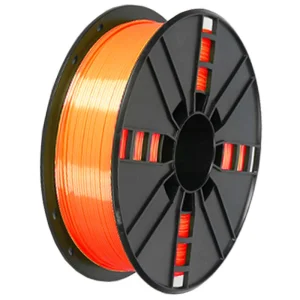
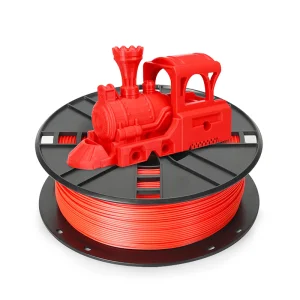
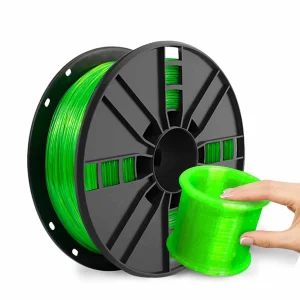
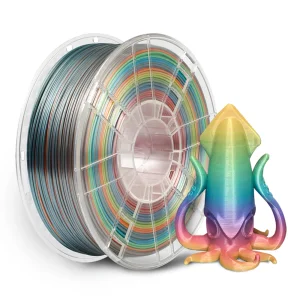
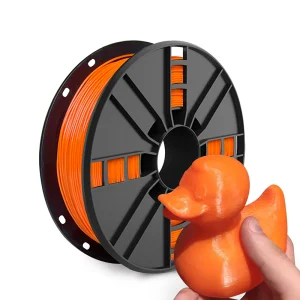
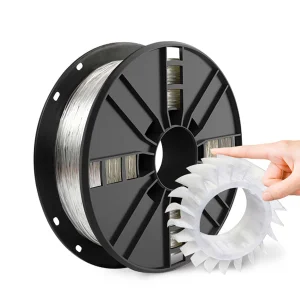
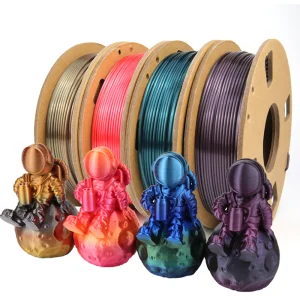
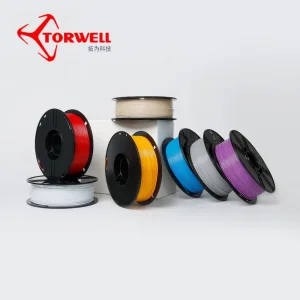
Full range of 1.75mm and 2.85mm thermoplastic filaments engineered for high-speed desktop & industrial 3D printers.
Direct technical and procurement answers provided by Torwell’s export engineering department.
ABS contains butadiene rubber, which photodegrades under solar UV light, causing yellowing, brittleness, and mechanical fracture within 3 to 6 months of outdoor exposure in tropical regions like Metro Manila. ASA replaces butadiene with UV-stable acrylic elastomer, maintaining high impact resistance, tensile strength, and color integrity for over 5 years of intense sunlight exposure.
Yes. Torwell specializes in full OEM/ODM services. We can match custom RAL or Pantone color codes, produce customized spool stickers, design private-label retail boxes, and supply technical data sheets tailored for your brand distribution across the Philippines.
Every spool extruded at our factory undergoes an automated drying cycle before precision winding. Spools are immediately vacuum-sealed with high-capacity active desiccant in heavy-duty moisture barrier foil pouches. Cardboard master cartons are reinforced to withstand tropical humidity during transit to Manila South or North Harbor.
All production lines at Torwell feature inline dual-axis laser micrometer monitoring. We guarantee a continuous diameter tolerance of ±0.02 mm on 1.75 mm spools. Strands exceeding tolerance limits trigger automatic line re-spooling, preventing print nozzle clogging or under-extrusion in high-speed 3D printers.
For high-speed coreXY printers, we recommend an extrusion temperature of 250°C–260°C, a heated bed temperature of 100°C, an enclosed chamber temperature around 45°C–50°C, and setting maximum part cooling fan speed to 20%. Ensure print speeds for outer walls stay between 80–150 mm/s for optimal layer adhesion.
Standard OEM production lead time is 10 to 14 business days from order confirmation. Sea freight shipping to Manila Port typically takes 5 to 7 days, while urgent express air freight delivers to NAIA Airport within 3 to 4 days.
Supply your enterprise or retail network in Manila with high-performance, UV-resistant ASA spools. Request sample spools, technical datasheets, and direct factory pricing today.