Direct factory-extruded 1.75mm and 2.85mm engineering ABS filaments engineered for ultra-low warping, high impact resistance, and flawless thermal stability across automated additive manufacturing setups.
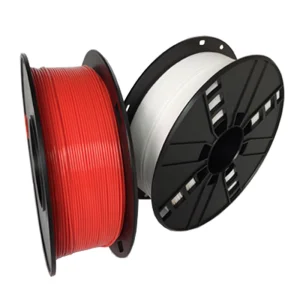
Engineered terpolymer resin formulation providing high Izod impact strength and thermal deflection up to 98°C. Perfect for Odense robotics enclosures and heavy-duty Danish manufacturing jigs.
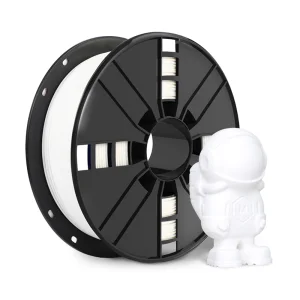
Extruded with real-time dual-axis laser micrometer monitoring. Guarantees zero nozzle blockage and consistent volumetric flow in continuous print operations across Copenhagen tech centers.
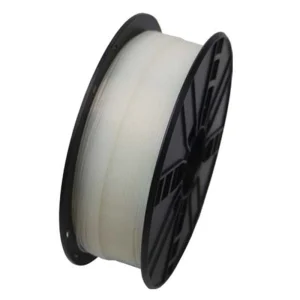
Bulk industrial supply on 1kg, 2.5kg, and 5kg spools. Designed specifically for enterprise-level additive manufacturing installations in Aarhus and Aalborg seeking low unit costs and high reliability.
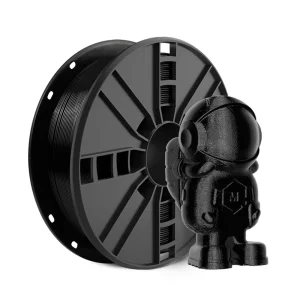
Deep carbon black pigmentation featuring enhanced polymer thermal conductivity. Tailored for high-speed enclosed FDM printers (up to 500mm/s) utilized in Danish green-tech R&D labs.
Denmark stands as a global beacon of industrial design, advanced manufacturing, and sustainable engineering. From the pioneering polymer developments historically associated with Danish industrial icons like LEGO to modern breakthroughs in offshore wind turbine manufacturing in Esbjerg and robotic automation clusters in Odense (Odense Robotics), Denmark’s demand for high-performance thermoplastic materials has undergone a dramatic quantitative and qualitative transformation.
While basic bio-polymers such as Polylactic Acid (PLA) satisfy architectural modeling and early-stage aesthetic concepts, Danish industrial original equipment manufacturers (OEMs), medical hardware designers in Medicon Valley, and automotive component suppliers require materials that withstand structural stresses, elevated temperatures, and chemical exposure. Herein lies the decisive role of Acrylonitrile Butadiene Styrene (ABS) filament.
As a thermoplastic terpolymer synthesized from acrylonitrile, butadiene, and styrene monomers, ABS delivers an indispensable balance of mechanical toughness, impact resistance, heat deflection, and post-processing versatility (including acetone vapor smoothing and precision CNC machining). However, procurement officers and additive manufacturing engineers in Denmark face significant challenges when sourcing industrial-grade ABS filament: managing volumetric shrinkage and inter-layer warpage, ensuring strict compliance with European Chemicals Agency (ECHA) REACH regulations, and securing stable direct-factory OEM pricing without sacrificing batch-to-batch consistency.
This technical whitepaper provides a comprehensive evaluation of ABS filament extrusion chemistry, quality control paradigms, local Danish market dynamics, and international supply chain solutions. Designed specifically for procurement executives, lead manufacturing engineers, and distribution partners serving the Danish market, this document serves as an authoritative benchmark for acquiring industrial 3D printing consumables.
Optimized ratio of Acrylonitrile (hardness & chemical resistance), Butadiene (low-temp impact strength), and Styrene (surface gloss & melt flow processability).
Glass transition temperature ($T_g$) of 105°C and Heat Deflection Temperature (HDT) of 95°C under 0.45 MPa load, enabling functional deployment under harsh conditions.
Fully compliant with EU REACH (EC 1907/2006) and RoHS Directives. Guaranteed free of toxic heavy metals, phthalates, and restricted Substances of Very High Concern (SVHC).
Understanding the molecular dynamics, crystallization behavior, and inline manufacturing tolerances required for zero-defect additive manufacturing in Denmark.
The mechanical efficiency of ABS filament is dictated by the precise stoichiometric ratio of its three base monomers during emulsion or continuous mass polymerization:
Unlike amorphous polymers like PLA, ABS exhibits a relatively high thermal expansion coefficient ($\alpha \approx 90 \times 10^{-6} \text{ K}^{-1}$). During the fused deposition modeling (FDM) process, melted filament exits the hotend at ~245°C and cools rapidly down to ambient room temperatures (~20°C in unheated Danish workspaces). This steep thermal gradient ($\Delta T \approx 225^\circ\text{C}$) induces significant isotropic thermal contraction.
If unmanaged, internal volumetric stress accumulates between printed layers, culminating in classic structural defects: bed delamination, corner lifting, and inter-layer shearing. To achieve zero-warp prints on industrial machines (e.g., Stratasys, Bambu Lab X1 Enterprise, Ultimaker, or custom Voron print farms operating in Denmark), our factory enforces strictly tuned polymer melt flow index (MFI) grades—typically 12 g/10 min at 220°C/10kg (ISO 1133)—which balances rapid inter-chain diffusion with controlled stress relaxation.
Our material engineers work directly with Danish procurement teams to develop customized flame-retardant (UL94-V0), ESD-safe, or fiber-reinforced ABS grades tailored to your technical requirements.
Send Inquiry NowExtrusion accuracy directly determines volumetric print stability. A variation of merely ±0.05mm in filament diameter yields an 11% variation in extruded volume, causing visible surface ringing, micro-blobs, or severe nozzle clogging. Our standardized manufacturing floor operates 6 high-speed extrusion lines equipped with inline dual-axis laser micrometers operating at 500 Hz feedback loops.
This closed-loop system monitors ovality and diameter continuously across every meter of filament. Any strand exceeding the strict threshold of 1.75mm ±0.02mm (or 2.85mm ±0.03mm) is automatically rejected and routed to closed-loop post-industrial recycling, guaranteeing that Danish customers receive only flawless, factory-certified spools.
How specialized Danish sectors leverage high-performance ABS consumables to drive innovation, reduce prototyping cycles, and manufacture end-use industrial components.
Odense is widely recognized as the cobot (collaborative robot) capital of Europe. Danish robotics engineers utilize our high-impact ABS filament to fabricate end-of-arm tooling (EOAT), lightweight custom grippers, sensor brackets, and protective shell housings that demand high mechanical durability and low dead weight.
Denmark’s wind energy leaders require specialized jigs, turbine blade inspection fixtures, and cable routing clips capable of withstanding harsh weather conditions. ABS offers the necessary heat resistance and structural stiffness to function effectively in offshore deployment testing setups.
In the Greater Copenhagen life science sector, ABS filament is extensively employed for non-patient-contact laboratory diagnostic equipment chassis, liquid handling mounts, and ergonomic device enclosures that require solvent cleaning and chemical resistance against standard disinfectants.
A rigorous empirical benchmark comparing Torwell Industrial ABS against alternative thermoplastic filaments utilized in Danish manufacturing facilities.
| Polymer Grade | Tensile Strength (MPa) | Izod Impact (kJ/m²) | Heat Deflection (°C @ 0.45MPa) | Warping Sensitivity | Chemical & UV Stability | Primary Danish Use-Case |
|---|---|---|---|---|---|---|
| Torwell Industrial ABS | 43 - 48 | 22 - 28 | 95°C - 98°C | Moderate (Chamber Recommended) | Good (Solvent Resistant, Acetone Smoothable) | Robotic Grippers, Enclosures, Tooling Jigs |
| Premium ASA | 40 - 45 | 18 - 22 | 98°C - 102°C | Moderate | Excellent (UV Weatherproof, Marine Grade) | Outdoor Wind Turbine Sensors, Maritime Fixtures |
| High-Toughness PETG | 48 - 52 | 8 - 12 | 70°C - 75°C | Very Low | High Chemical Resistance, Hydrophobic | Transparent Containers, Chemical Ducting |
| Polycarbonate (PC) | 60 - 70 | 30 - 40 | 135°C - 140°C | High (Heated Chamber Required) | High Flame Retardancy, Impact Proof | High-Temp Electronics Covers, Structural Gears |
| Tough PLA+ Pro | 55 - 62 | 15 - 18 | 55°C - 60°C | Negligible | Low Heat / Biodegradable Matrix | Rapid Aesthetic Concepts, Architectural Models |
Importing polymer consumables into Denmark and the broader European Union requires strict compliance with the European Chemicals Agency (ECHA) regulations. Danish customs authorities (Skatteforvaltningen / Erhvervsstyrelsen) and the Danish Environmental Protection Agency (Miljøstyrelsen) enforce stringent monitoring regarding SVHCs (Substances of Very High Concern).
All Torwell ABS filaments supplied to Denmark are certified under REACH Regulation (EC 1907/2006) and RoHS Directive 2011/65/EU (and amendment 2015/863). Laboratory documentation confirming zero detection of heavy metals (Lead, Cadmium, Mercury, Hexavalent Chromium) and restricted plasticizers (DEHP, BBP, DBP, DIBP) is supplied with every bulk shipping consignment.
During the thermomechanical extrusion of ABS at temperatures between 230°C and 260°C, micro-particulates and trace Volatile Organic Compounds (VOCs)—specifically Ultrafine Particles (UFPs) and trace Styrene vapors—are emitted. For Danish industrial facilities compliance with Arbejdstilsynet (Danish Working Environment Authority) indoor air quality benchmarks, we recommend:
To align with Denmark’s national circular economy goals and corporate ESG reporting metrics, our direct-factory supply chains offer eco-friendly packaging options. Danish enterprise clients can opt for 100% recyclable cardboard spools, reducing single-use plastic waste by up to 220 grams per spool, along with biodegradable desiccant packs and FSC-certified unbleached corrugated carton outer boxes.
Explore our full range of enterprise ABS, PETG, PLA+, and specialized engineering filaments designed for high-yield industrial supply chains in Denmark.
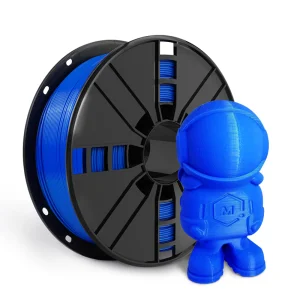
High-contrast RAL Signal Blue color matched for visual identification in industrial automation assembly lines in Esbjerg and Odense.
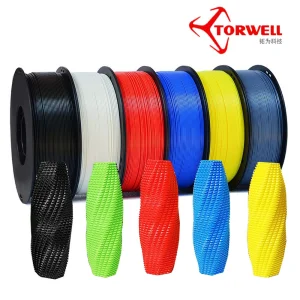
Direct OEM factory manufacturing offering custom Pantone color matching, private-label branding, and dedicated container shipping to Denmark.
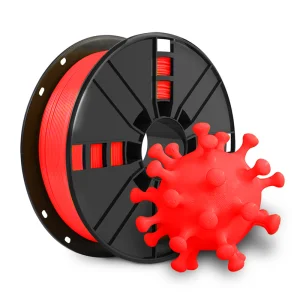
Vibrant red industrial filament with modified melt viscosity. Formulated for quick visual hazard identification tools and electrical junction box covers.
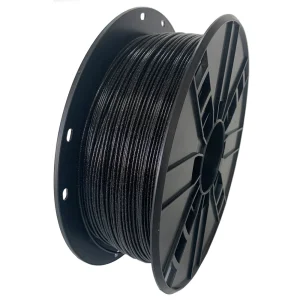
Infused with metallic micro-flakes to mask layer lines completely. Popular among Scandinavian design studios for rapid consumer product concept presentation.
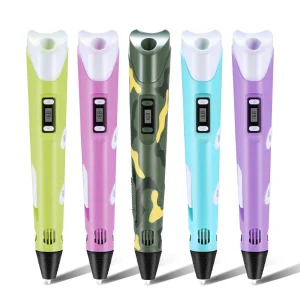
Safe, OLED-screen temperature-controlled 3D drawing pens supplied with multi-color ABS strands for educational institutions across Denmark.
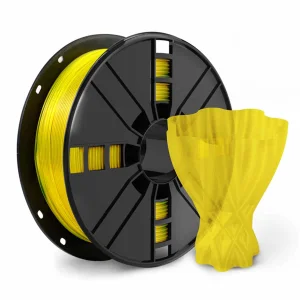
Combines the chemical resistance of PETG with high mechanical toughness. High visibility safety yellow tone for workplace safety equipment prototyping.
Non-reflective matte surface finish ideal for automotive interior ducting, dashboard component testing, and tactical gear brackets.
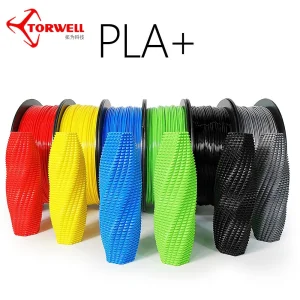
Advanced polymer composite blend delivering exceptional layer adhesion and flexural strength for heavy-duty mechanical prototyping in Denmark.
The additive manufacturing landscape is accelerating toward ultra-high-speed extrusion architectures and high-performance polymer composite blends. As Danish enterprises upgrade their print infrastructure to modern high-speed platforms (such as Voron 2.4, Bambu Lab X1E, and industrial Klipper setups operating above 500 mm/s), raw material requirements are shifting significantly:
Standard legacy ABS filaments exhibit shear-thinning limitations when forced through high-flow hotends at volumetric extrusion rates exceeding $30 \text{ mm}^3/\text{s}$. At elevated feed rates, non-optimized melt flows experience incomplete thermal homogenization, leading to severe inter-layer bonding degradation.
Torwell’s next-generation ABS High-Speed (ABS-HS) series incorporates thermal stabilizers and narrow molecular-weight-distribution (MWD) resins that increase melt flow index up to $25 \text{ g/10 min}$, allowing flawless layer fusion at print speeds up to $500 \text{ mm/s}$ without elevating nozzle temperatures beyond safety thresholds.
For structural load-bearing applications in the Danish maritime and aerospace engineering sectors, pure ABS is increasingly augmented with micro-carbon fiber reinforcement (typically 15% chopped carbon fiber by weight). ABS-CF reduces overall thermal contraction to near-zero levels, eliminating warping entirely on unheated beds while increasing tensile modulus by up to 140%.
Aligned with the European Green Deal and Denmark’s climate goal of 70% greenhouse gas reduction by 2030, our R&D team is establishing mass-balance bio-attributed ABS lines. By utilizing bio-naphtha derived from certified sustainable waste streams (such as used cooking oils and forestry byproducts), we reduce the carbon footprint of industrial ABS filament by up to 55% compared to fossil-based polymers, without altering mechanical or thermal performance.
Direct technical and commercial answers for procurement managers, print farm engineers, and importers in Denmark.
We offer flexible shipping terms tailored to Danish enterprise clients, including DDP (Delivered Duty Paid to Copenhagen, Aarhus, Odense, or Esbjerg), FOB Shenzhen/Ningbo, and CIF. Air freight shipments arrive within 5–7 business days, while full container load (FCL) or less-than-container load (LCL) sea freight typically arrives at Port of Aarhus or Port of Copenhagen in 28–34 days.
Our laboratory utilizes spectrophotometric color matching calibrated to standard Pantone or RAL color codes. Every masterbatch production run undergoes strict Delta-E ($\Delta E \le 1.0$) verification under D65 standardized lighting conditions, ensuring zero visible shade deviation across reorders.
For optimal mechanical layer bonding and dimensional accuracy, we recommend: Nozzle Temperature: 235°C – 255°C; Heated Bed Temperature: 95°C – 110°C; Enclosed Chamber Temperature: 50°C – 70°C; Cooling Fan: 0% – 20% (for bridging/overhangs only); Print Bed Surface: PEI sheet with glue stick or specialized ABS slurry.
Yes. Full material documentation—including comprehensive TDS, SDS according to EU Regulation 2020/878, REACH SVHC declarations, and RoHS 3 compliance certificates—is supplied in digital format to support your internal safety and regulatory compliance archives.
Filament is dried down to moisture levels under 0.04% before spooling. Each spool is immediately vacuum sealed within a heavy-duty multi-layer aluminum/polyethylene bag alongside a active silica gel desiccant packet, then boxed in reinforced corrugated cardboard to withstand high-humidity ocean shipping conditions.
Partner with a proven 3D printer filament manufacturer delivering certified industrial materials, custom color formulations, and dedicated OEM support for Denmark’s engineering leaders.
Send Inquiry Now