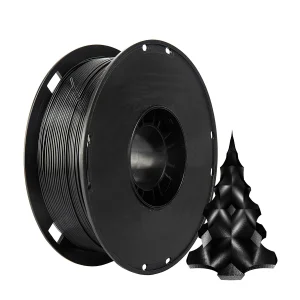
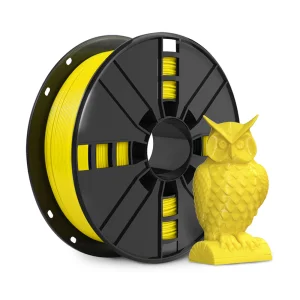
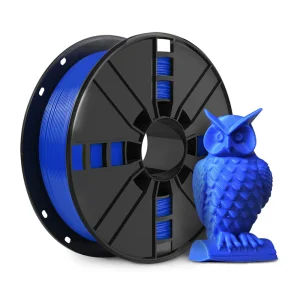
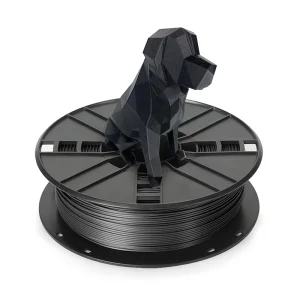
Engineered under stringent ISO 9001:2015 controls to deliver continuous extrusion reliability, minimal thermal warping, and batch-to-batch color stability.
Understanding the rheological dynamics, wood flour particle sizing, and matrix stabilization that separate high-flow commercial filaments from low-grade alternatives.
Our formulation incorporates recycled hardwood, pine, and bamboo micro-flour finely ground to a strict particle size threshold of under 50 microns (≤ 50 μm). This micro-scale geometry prevents nozzle agglomeration during melt extrusion while providing authentic timber tactile sensation, scent, and post-processing stainability.
We utilize prime-grade Poly-Lactic Acid (PLA) synthesized from renewable agricultural starch. The high molecular weight polymer matrix ensures low melt-instability, zero toxic fumes (VOCs) during hot-end heating, and inherent biodegradability conforming to ISO 14855 standards under industrial composting conditions.
Raw wood flour naturally repels hydrophobic PLA polymers. We introduce proprietary bio-based coupling agents (maleic anhydride grafted PLA) to bond wood fibers directly to the PLA polymer backbone. This eliminates interfacial micro-voids, increasing layer adhesion strength by over 35% compared to untreated wood fills.
| Material Metric / Parameter | Wood PLA 1.75mm | Standard Virgin PLA | Tough PLA+ Grade | PETG Industrial |
|---|---|---|---|---|
| Density (g/cm³) | 1.15 ± 0.03 | 1.24 ± 0.02 | 1.23 ± 0.02 | 1.27 ± 0.02 |
| Melt Flow Index (g/10min @210°C/2.16kg) | 6.5 - 9.0 | 7.0 - 11.0 | 5.0 - 8.0 | 15.0 - 25.0 (@240°C) |
| Tensile Strength (MPa) | 38 - 44 | 55 - 62 | 60 - 68 | 48 - 53 |
| Flexural Modulus (GPa) | 3.4 - 3.9 | 3.1 - 3.5 | 3.2 - 3.6 | 2.1 - 2.4 |
| Heat Deflection Temp (HDT @0.45MPa) | 54°C - 58°C | 55°C - 58°C | 58°C - 62°C | 70°C - 74°C |
| Surface Finish & Tactile feel | Matte Wood Grain / Stainable | Glossy Plastic | Semi-Gloss Uniform | High Gloss Transparent |
| Recommended Nozzle Diameter | ≥ 0.4mm (0.6mm Optimal) | ≥ 0.2mm | ≥ 0.2mm | ≥ 0.4mm |
Because our Wood PLA contains authentic organic lignin, adjusting your 3D printer's hot-end temperature directly alters the aesthetic finish of the printed part. Printing at lower thermal thresholds (190°C – 198°C) preserves a light maple shade, while higher printing temperatures (215°C – 225°C) gently caramelize the organic sugars inside the wood flour, yielding a deep walnut or mahogany tone. Custom slicer G-codes can manipulate nozzle temperatures layer-by-layer to automatically generate realistic natural wood grain rings!
Operating standardized automated extrusion workshops equipped with inline dual-axis laser feedback, continuous vacuum dehumidification, and neat spooling systems.
Every extrusion line is outfitted with ultra-fast dual-axis laser micrometers. Sampling at 500 Hz per second, the system continuously adjusts puller speeds to guarantee standard deviations under ±0.02 mm, preventing hot-end jams and under-extrusion.
Running 6 fully automated twin-screw compounding and extrusion lines inside our 2,500 m² factory floor allows us to serve large enterprise orders, container freight fulfillments, and fast private-label brand turnarounds seamlessly.
Wood fibers are naturally hygroscopic. Raw wood flour undergoes a 12-hour continuous vacuum desiccant baking cycle before compounding, reducing internal moisture to < 0.05% to eliminate moisture bubbling and stringing.
Automatic tension-sensing winders ensure layer-by-layer parallel alignment across every spool. This guarantees zero criss-cross overlaps or tangles during multi-day print farm runs or automated spool changers (AMS).
Empowering global distributors, e-commerce brands, and print farm operators with fully customized, environmentally responsible 3D printing supplies.
Our Wood PLA products comply fully with European and North American chemical and safety standards, including EU RoHS 2.0 (Directive 2011/65/EU), REACH (EC 1907/2006 SVHC list), and EN 71-3 toy safety regulations. Full Material Safety Data Sheets (MSDS/SDS) and Technical Data Sheets (TDS) are supplied for every batch.
We provide comprehensive OEM packaging customization. From high-tensile branded cardboard spools (FSC certified) to vacuum-sealed foil moisture barrier packaging, custom barcode stickers, inner retail display boxes, and reinforced corrugated master cartons tailored to your brand identity.
Formulated with reclaimed timber byproducts from certified sustainable forestry and renewable cornstarch-derived PLA. Using Wood PLA reduces petroleum polymer dependency by up to 30%, assisting corporate clients in achieving Scope 3 carbon reduction targets and zero-plastic waste mandates.
Discover how architectural studios, automotive designers, acoustic engineers, and artisan crafters leverage Wood PLA 1.75mm to bridge digital design and organic aesthetics.
Architectural firms eliminate hours of painstaking manual timber carving by direct 3D printing site models, roof structures, facade panels, and furniture miniatures. The matte timber finish paints and glues seamlessly with conventional wood cement.
Custom vehicle modifiers and luxury marine restorers use Wood PLA to print vintage dashboard trims, gear shifter handles, cup holder frames, and decorative accent paneling. Once sanded, stained, and polyurethane sealed, the parts mirror genuine hardwood inlays.
The organic wood fiber content dampens harsh high-frequency internal reflections inside speaker cabinets, custom headphone cups, tone boxes, and acoustic baffles, offering superior acoustic warm resonance over traditional plastic polymers.
Prop design studios utilize Wood PLA for historical weaponry replicas, movie set artifacts, sculpture prototypes, and tabletop gaming terrain. The printed parts absorb wood oil stains, antiquing gels, and laser engraving like natural wood.
Luxury cosmetic brands and boutique distilleries craft prototype perfume caps, wooden box inserts, and retail display stands that communicate organic sustainability to environmentally conscious consumers.
Printing decorative wall clock faces, planter pots, lamp shades, drawer knobs, and picture frames that blend into contemporary Scandinavian or rustic interior design aesthetics.
Mastering print settings, heat creep mitigation, and post-processing techniques to achieve perfect surface quality every single print.
Expand your product portfolio with our industrial PETG, flexible TPU, high-temp PC, UV-resistant ASA, and composite carbon fiber filaments.
Detailed technical and commercial answers regarding MOQs, OEM customization, moisture protection, compliance, and international shipping protocols.
Our standard MOQ for stock color formulations (Pine/Natural Wood) is 100 kg. For OEM private-label packaging or custom-tinted wood shades (e.g., Dark Walnut, Ebony, Bamboo, Cedar), our standard MOQ is 500 kg per SKU. We offer flexible mixed-SKU container loading for long-term wholesale distributors.
Because organic wood flour is naturally moisture-sensitive, every spool undergoes hot-vacuum drying to under 0.05% moisture before spooling. Each spool is immediately sealed inside a heavy-duty, multi-layer aluminum-plastic vacuum bag with a high-capacity active desiccant pouch. Master cartons are sealed with moisture-resistant tape and stretch-wrapped on wooden pallets prior to shipping.
Yes. Our latest Wood PLA formula features a modified melt flow index (MFI ~ 8.0 g/10min) engineered for high-speed coreXY 3D printers. When printing at speeds above 150 mm/s, we recommend bumping hot-end temperatures up by 5°C to 10°C to ensure complete polymer melt and prevent back-pressure jams.
Absolutely. Thanks to our 20%-30% real organic timber flour content, printed models can be post-processed using standard woodworking tools. You can sand the surface smooth using sandpaper (150 to 400 grit), apply traditional oil-based or water-based wood stains, coat with polyurethane varnish, or burn dark accents onto the model using a heat gun or pyrography pen.
While organic wood fibers are significantly less abrasive than carbon fiber or glass fiber additives, prolonged continuous printing through standard brass nozzles can gradually expand a 0.4mm orifice over time. For industrial print farms, we advise using hardened steel, stainless steel, or ruby-tipped nozzles for long-term diameter stability.
We provide a complete turnkey white-label service: custom spool selection (eco-friendly cardboard, transparent PC, or black ABS spools), custom Pantone wood color formulation, custom outer box artwork and logo printing, specialized inner vacuum bag branding, custom sticker labels with GTIN/EAN barcodes, and customized Technical Data Sheets (TDS) for your regional market.
All Torwell filaments comply with EU RoHS 2.0 (Directive 2011/65/EU), REACH (EC 1907/2006 SVHC), and EN 71-3 non-toxic child safety standards. Our production facility is certified under ISO 9001:2015 for quality control and ISO 14001:2015 for environmental management. Full SDS and compliance certificates are provided upon contract execution.
When stored in its original unopened vacuum packaging in a dry room between 15°C and 25°C away from direct UV sunlight, our Wood PLA maintains full mechanical performance and dimensional tolerance for up to 24 months from the date of manufacture.