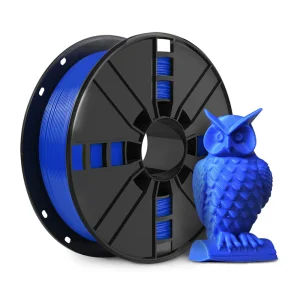
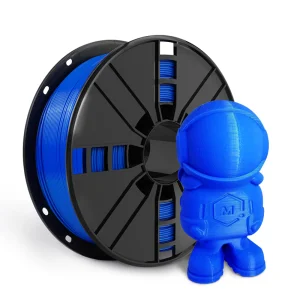
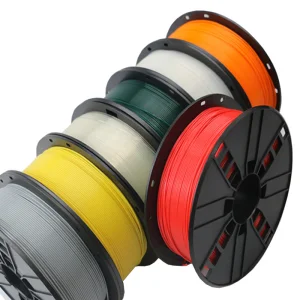
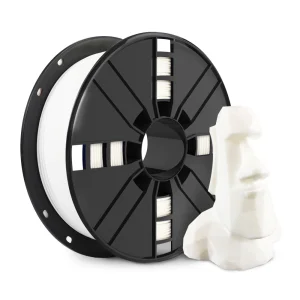
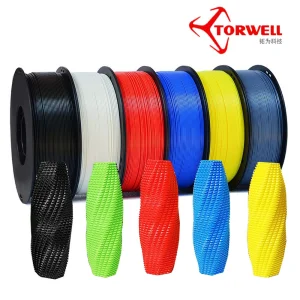
Explore our factory-direct bulk 3D printing filaments, rigorously tested for dimensional accuracy, low warping, and high layer adhesion across industrial and commercial printing systems.
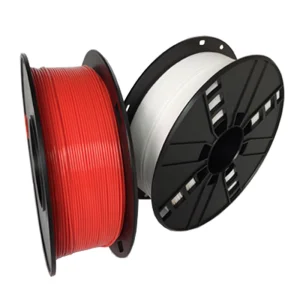
Wholesale Torwell ABS Filament 1.75mm for 3D printer and 3D pen Manufacturer, Factories
Inquire Wholesale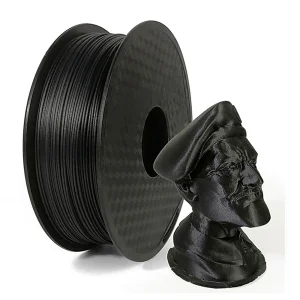
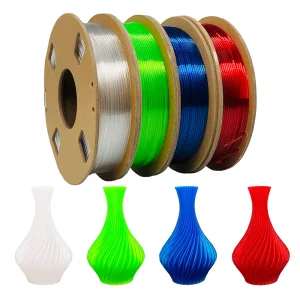
Wholesale PETG Carbon Fiber 3D Printer Filament, 1.75mm 800g/spool Manufacturers, Supplier
Inquire Wholesale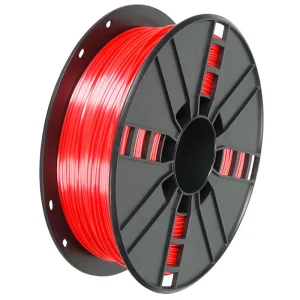
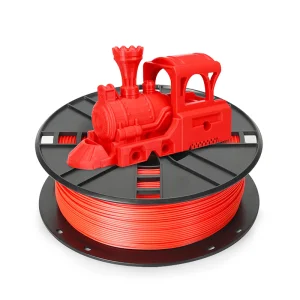
Wholesale Silk Red PLA 3D Printer Filament 1KG 3D Printing Materials Manufacturer, Factories
Inquire Wholesale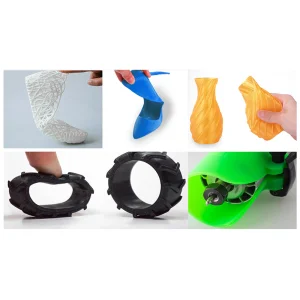
Wholesale Flexible TPU filament for 3D printing soft material Manufacturers, Supplier
Inquire Wholesale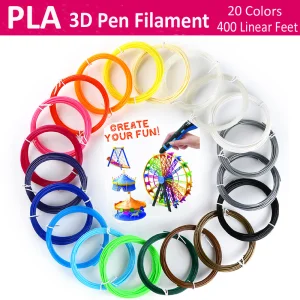
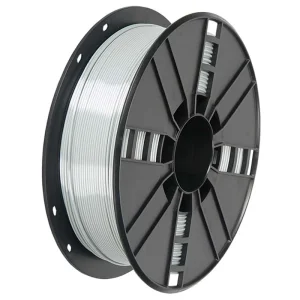
China Torwell PLA 3D pen Filament for 3D printer and 3D pen Manufacturer, Factories
Inquire WholesaleThermoplastic Polyurethane (TPU) has transitioned from an experimental niche material into an indispensable pillar of modern digital manufacturing. Industrial brands, OEMs, and print farms rely on engineered TPU to bridge the gap between rigid plastics and vulcanized rubber.
Traditional elastomers require complex injection tooling and expensive molds. Wholesale TPU filaments enable immediate batch manufacturing of custom energy-absorbing dampers, robotic bump stops, and automotive isolation mounts with fine-tuned infill geometries.
Formulated with high molecular weight polymer chains, our TPU filaments withstand millions of flexural cycles without micro-fracturing. Highly resistant to mechanical abrasion, DIN wear loss, dynamic friction, and shear forces across heavy industrial equipment.
Polyether and polyester-based TPU compounds offer robust resistance to mineral oils, greases, aliphatic hydrocarbons, and atmospheric ozone exposure. Essential for under-the-hood automotive components, fluid handling gaskets, and outdoor industrial installations.
Understanding the chemical architecture of Thermoplastic Polyurethane is vital for enterprise buyers selecting materials for high-stress applications. TPU consists of linear block copolymers containing alternating hard and soft segments.
Polyester-Based TPU: Synthesized through the reaction of polyester polyols with diisocyanates (MDI). Exhibits extreme tensile strength, tear propagation resistance, and outstanding resistance to oils, diesel, and chemical solvents. Ideal for industrial seals, drive belts, and automotive components.
Polyether-Based TPU: Utilizes polyether polyols (PTMEG). Delivers exceptional low-temperature flexibility ($T_g$ down to $-40^\circ\text{C}$), superior resistance to hydrolytic degradation in humid environments, and immunity to microbial attack. Designed for medical wearables, aquatic gear, and outdoor fixtures.
Extruding soft elastomeric filament requires specialized melt-flow index (MFI) control. As Shore hardness decreases (e.g., Shore 85A vs Shore 95A), filament flexibility increases, raising the risk of filament buckling within the extruder gear cavity.
Torwell's advanced compounding process adjusts the glass transition temperature ($T_g$) and melt strength. This ensures high column strength (column stability) under drive-gear pressure, allowing smooth feeding through direct-drive systems and optimized Bowden tube pathways without surface tackiness or binding.
| Material Grade | Shore Hardness | Tensile Strength (MPa) | Elongation at Break (%) | Tear Strength (kN/m) | DIN Abrasion Loss (mm³) | Optimal Extrusion Temp |
|---|---|---|---|---|---|---|
| TPU 85A Ultra-Soft | 85A | 35 MPa | > 650% | 80 kN/m | 35 mm³ | 210°C – 230°C |
| TPU 95A Industrial Standard | 95A | 48 MPa | > 580% | 110 kN/m | 25 mm³ | 215°C – 235°C |
| TPU 98A High-Speed Grade | 98A / 50D | 55 MPa | > 500% | 135 kN/m | 20 mm³ | 220°C – 240°C |
| TPU-CF Carbon Fiber Reinforced | 64D | 68 MPa | > 120% | 160 kN/m | 15 mm³ | 230°C – 250°C |
| TPE / TPV Flexible Elastomer | 75A - 80A | 28 MPa | > 700% | 65 kN/m | 45 mm³ | 200°C – 220°C |
Filament diameter variance is the primary cause of extrusion failure in flexible 3D printing. Torwell's automated extrusion lines employ multi-axis laser micrometer feedback loops. Every millimeter of extruded TPU is monitored in real-time. Any strand exceeding $\pm 0.02\text{ mm}$ tolerance or exhibiting ovality is automatically flagged and isolated, guaranteeing uninterrupted print farm operation.
As enterprise procurement teams shift away from single-source domestic suppliers toward scalable direct-factory partnerships in China, robust quality control, export compliance, and white-label capacity become critical decision factors.
We provide complete white-label manufacturing solutions for regional brands, 3D printer OEMs, and distributor networks. Services include custom Pantone/RAL resin color formulation ($\Delta E < 1.0$), customized spool designs (cardboard, recycled ABS, transparent polycarbonate), branded vacuum packaging, and customized outer retail cartons.
All Torwell TPU formulations are fully compliant with international chemical safety standards, including EU REACH (EC 1907/2006), RoHS 3 (Directive 2015/863), and SVHC allergen screenings. Specialized biocompatible and FDA food-contact compliant (21 CFR 177.2600) resin grades are available upon technical request.
TPU is inherently hygroscopic and susceptible to moisture absorption during trans-oceanic shipping. We utilize high-density multi-layer aluminum vacuum foil shielding with active desiccant packs. Export shipments are containerized with moisture indicators to guarantee pristine out-of-box printing performance.
From automotive assembly lines in Stuttgart to orthotics facilities in North America, TPU 3D printing filament solves critical engineering challenges across diverse industrial sectors.
Rapid prototyping and small-batch production of flexible door seals, wiring harness grommets, air intake hoses, and interior dampening pads. Polyester TPU filaments resist oil spray and engine thermal cycles, replacing expensive compression-molded rubber components during pre-series manufacturing vehicles.
Additive manufacturing enables patient-matched orthotic shoe insoles engineered with variable lattice density zones to correct gait abnormalities. Biocompatible TPU filaments provide soft-touch liners for prosthetic limbs, custom wrist braces, and ergonomic medical instrument handles.
Modern automated assembly lines utilize TPU for End-of-Arm Tooling (EOAT) soft grippers. Flexible pneumatic actuators printed from Shore 85A TPU adaptively grasp delicate glass containers, agricultural produce, and complex electronics without surface scratching or structural damage.
Global athletic footwear brands leverage high-rebound TPU to 3D print mid-soles featuring complex gyroid structures that maximize energy return. Additionally, protective gear manufacturers print custom impact-absorbing pads for helmets, drone bumpers, and ruggedized tablet cases.
Substandard filament causes extrusion jams, nozzle clogging, layer delamination, and print failures. Torwell operates a standardized 2,500 m² factory with 6 automated extrusion lines enforcing strict quality gates.
Virgin polyol and diisocyanate resins are pre-dried in dehumidifying hopper systems at a dew point of $-40^\circ\text{C}$ for 6+ hours, reducing initial moisture content below 100 ppm prior to melt compounding.
Precision temperature zoning (Zone 1 to Zone 5) across single and twin-screw extruders guarantees melt homogenization, eliminating un-melted polymer gels and pinhole air bubbles.
Dual-axis laser micrometers measure strand diameter 500 times per second. Closed-loop control systems automatically adjust haul-off speed to keep tolerances strictly within $\pm 0.02\text{ mm}$.
Automated tension-controlled spooling prevents filament stretching or compression during winding, guaranteeing smooth layer alignment that feeds reliably in AMS multi-material systems.
As additive manufacturing hardware advances toward high-speed printing (>300 mm/s), raw material formulations must evolve to match higher volumetric flow rates and dynamic thermal demands.
Developing low-viscosity, fast-crystallizing TPU compounds optimized for modern high-speed CoreXY 3D printers. Engineered to maintain high shear-thinning characteristics at print speeds exceeding $250\text{ mm/s}$ without stringing or layer separation.
Innovating bio-TPU formulations incorporating renewable polyols derived from castor oil, reducing reliance on petrochemical precursors by up to 45% while maintaining industrial-grade mechanical strength, oil resistance, and printability.
Integrating carbon nanotubes (CNTs) and graphene micro-particles into flexible TPU matrixes to achieve controlled volume resistivity ($10^3\text{--}10^5\ \Omega\cdot\text{cm}$) for ESD-safe electronics packaging, wearable strain sensors, and flexible printed circuitry.
Discover our comprehensive collection of 3D printing filaments, spanning standard PLA/PETG materials, high-strength ABS/ASA compounds, silk finishes, and specialized elastomeric formulations.
Detailed answers to critical technical, manufacturing, logistics, and private labeling questions for B2B buyers and industrial clients.