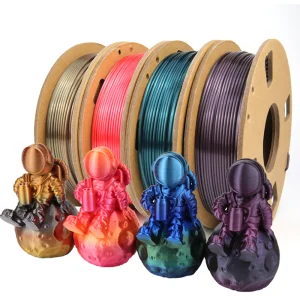
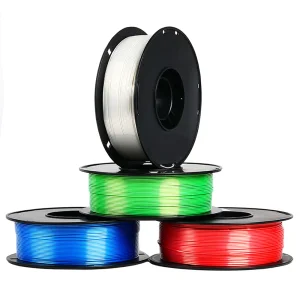
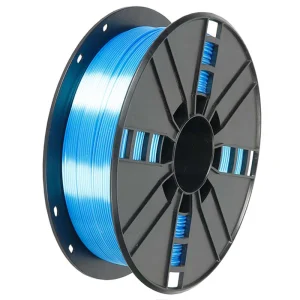
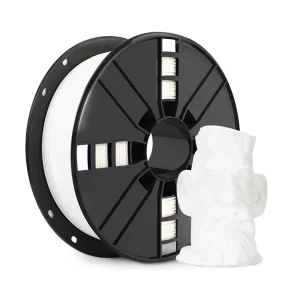
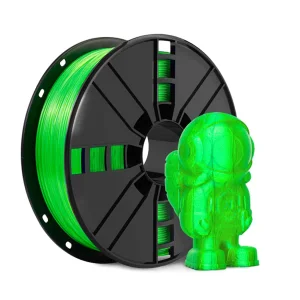
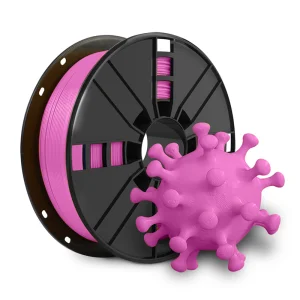
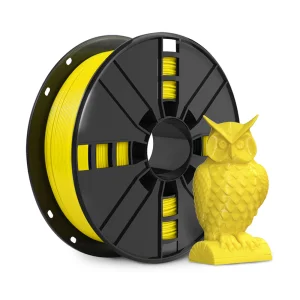
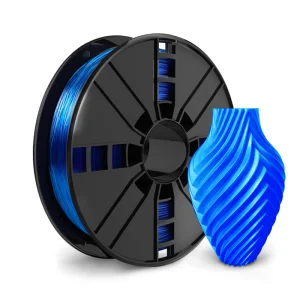
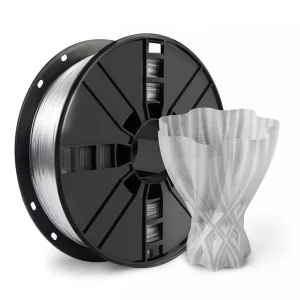
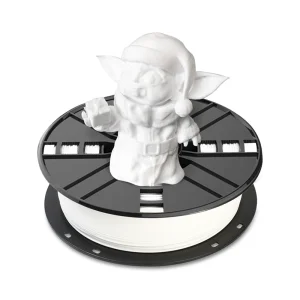
Factory-direct wholesale 3D printing consumables manufactured to ISO 9001 standards with ±0.02 mm laser-monitored tolerance.
The global market for additive manufacturing polymers is undergoing a fundamental structural transition. Where fused deposition modeling (FDM/FFF) was historically limited to rigid thermoplastic prototyping using PLA and ABS, modern industrial engineering demands elastomeric components that combine high fatigue resistance, mechanical dampening, and chemical durability. As a leading specialized manufacturer of wholesale rubber filament flexible solutions, our production facilities stand at the forefront of this industrial transformation.
Flexible rubber filaments—primarily encompassing Thermoplastic Polyurethanes (TPU), Thermoplastic Elastomers (TPE), and Thermoplastic Copolyesters (TPC)—bridge the critical operational gap between traditional vulcanized thermoset rubbers and high-throughput digital manufacturing. B2B procurement directors, print farm operators, and OEM product designers increasingly rely on customized flexible formulations to replace low-volume rubber injection molding, eliminating thousands of dollars in hard tooling costs while reducing product development cycles from months to days.
Engineered to withstand prolonged contact with hydrocarbons, greases, synthetic lubricants, and industrial solvents without volumetric swelling or polymer degradation.
Exceptional dynamic mechanical properties offering low compression set and superior rebound resilience for repetitive impact mitigation applications.
Formulated with optimized melt viscosity profiles that achieve near-isotropic Z-axis tensile strength, eliminating delamination under torsional loads.
Understanding the molecular dynamics of rubber-like filaments is vital for specifying the correct grade for enterprise applications. Thermoplastic Polyurethanes (TPU) consist of linear segmented block copolymers composed of hard segments (diisocyanates and chain extenders) and soft segments (long-chain polyols). The ratio between these hard and soft block segments determines the material's final Shore hardness, glass transition temperature ($T_g$), and elastic recovery percentage.
Our raw material compounding lines produce two distinct chemical families of flexible filaments tailored for specific operational environments:
The primary technical challenge in processing low-durometer rubber filament (e.g., Shore 70A to 85A) on FDM 3D printers revolves around column buckling (the "spaghetti effect"). When driven through a traditional Bowden tube setup, flexible filament acts like a compression spring. Our extrusion process solves this through precise molecular weight distribution control and proprietary anti-tack surface treatments, ensuring zero surface tackiness and smooth feeding through dual-gear direct-drive extruders.
| Elastomer Grade | Shore Hardness | Tensile Strength (MPa) | Elongation at Break | Tear Strength (kN/m) | Recommended Applications |
|---|---|---|---|---|---|
| Ultra-Soft TPE/TPU | 60A - 75A | 18 - 25 | > 700% | 45 - 55 | Medical simulation models, soft robotic grippers, vibration dampers |
| Standard Industrial TPU | 85A - 90A | 35 - 45 | > 550% | 80 - 95 | Automotive gaskets, protective boots, footwear outsoles, phone cases |
| High-Speed Flexible TPU | 95A | 45 - 55 | > 450% | 110 - 130 | High-throughput OEM production, functional prototypes, snapping latches |
| Rigid-Flex TPC/TPE | 55D - 65D | 50 - 65 | > 350% | 140 - 160 | Industrial bushings, noise-dampening gears, high-impact bumpers |
Flexible elastomeric filaments possess high moisture absorption rates due to polar urethane groups. Printing water-saturated TPU leads to hydrolytic degradation, steam micro-voids, severe stringing, and up to 40% loss in layer tensile strength. All Torwell wholesale flexible filaments undergo 8 hours of hot-air dehumidifying drying prior to spooling, followed by immediate inline nitrogen-purged vacuum packaging with industrial-grade silica desiccant pouches.
How international enterprises leverage our customized rubber flexible filaments across diverse industrial sectors.
Rapid manufacturing of custom grommets, weather-stripping seals, air-intake hoses, and internal cabin anti-vibration dampening pads, directly passing ISO/TS 16949 test standards.
Biocompatible, skin-contact safe TPU grades utilized for orthotic insole fabrication, customized prosthetic liners, patient-specific joint braces, and ergonomic surgical tool handles.
Soft-robotic end-effectors, compliant mechanical grippers, protective sensor covers, and heavy-duty conveyor belt links designed for high-cycle fatigue life.
As a specialized manufacturer, we provide end-to-end original equipment manufacturing (OEM) and original design manufacturing (ODM) services for worldwide brands, distributors, and high-volume print farms:
Navigating global regulatory frameworks is critical for institutional buyers and commercial distributors. All flexible rubber filaments manufactured in our facility undergo stringent third-party laboratory verification to guarantee global compliance:
100% compliant with EU Directive 2011/65/EU (RoHS 2.0) and EC 1907/2006 (REACH), fully free from heavy metals, SVHCs, and toxic plasticizers (phthalates).
Select polyether TPU formulations comply with FDA 21 CFR 177.2600 regulations for repeated-use rubber articles intended for food processing equipment.
Optimized freight options including DDP, FOB, and CIF with localized distribution hubs in North America and Europe for rapid order replenishment.
A leading Tier-1 German automotive manufacturer integrated our Shore 90A polyester TPU flexible filament for short-run protective robotic covers and custom assembly line jigs. By shifting from external rubber molding suppliers to an in-house print farm using our high-consistency spools, the client reduced lead times from 6 weeks to 14 hours while saving over €120,000 annually in custom tooling expenses.
A specialized medical footwear network across the US adopted our custom-formulated Shore 80A soft rubber filament for 3D printed corrective orthotic insoles. The superior fatigue resistance and long-term elasticity of our material ensured zero deformation even after 1.5 million heel-strike cycles under continuous dynamic load testing.
Our R&D engineering division continuously drives material innovation to meet the demands of next-generation additive manufacturing platforms. Key development milestones in our flexible filament technology roadmap include:
Developing rapid-crystallization TPU resins optimized for high-speed CoreXY 3D printers without nozzle clogging or inter-layer shear failure.
Formulating eco-friendly TPE filaments containing up to 60% bio-based polyols derived from non-food renewable biomass, achieving a carbon-neutral footprint.
Integrating multi-walled carbon nanotubes (MWCNTs) to manufacture piezoresistive flexible filaments for 3D printed soft sensors and strain gauges.
Expert guidance from our polymer application engineering team to support bulk buyers and technical staff.
For standard Shore 95A TPU, set hotend temperatures between 215°C and 235°C, with a bed temperature of 40°C to 60°C. For softer Shore 83A–85A grades, print speeds should be maintained between 20 mm/s and 40 mm/s with retraction disabled or set to minimal distance (<1mm) on direct-drive extruders.
Slightly stiffer grades (Shore 95A and 55D TPC) can be printed successfully on well-tuned Bowden systems using low friction PTFE Capricorn tubing. However, for soft elastomeric filaments (below Shore 90A), a direct-drive dual-gear feeder with a tight constrained filament path is strongly recommended to prevent buckling.
Flexible filaments are highly hygroscopic. Absorbed atmospheric moisture vaporizes at the nozzle tip, causing popping sounds, microscopic void formation, surface roughing, and severe degradation of inter-layer bonding strength. Always store spools in dry boxes or dry at 65°C for 4-6 hours prior to critical industrial prints.
Our standard wholesale MOQ for stock color flexible filaments is 50 kg. For custom Pantone color matching or modified OEM polymer compounds (e.g., conductive or flame-retardant grades), the MOQ is typically 300 kg per batch, complete with custom branded spools and packaging.
Yes. All raw polymer resins and masterbatches used in our factory are fully compliant with EU RoHS 2.0, REACH, and California Proposition 65 standards. Comprehensive Material Safety Data Sheets (MSDS) and Technical Data Sheets (TDS) are supplied with every commercial shipment.
Every spool is monitored in real-time during extrusion using online dual-axis laser micro-gauges. We guarantee a continuous diameter tolerance of ±0.02 mm for standard 1.75 mm and 2.85 mm filaments, ensuring consistent volumetric flow rates and preventing nozzle clogging.
Complete your supply chain requirement with our extensive range of technical materials for fused deposition modeling.