Direct factory supply of premium grade PLA, TPU, PETG, and specialty silk filaments tested for ±0.02mm diameter tolerance and seamless AMS multi-color compatibility.
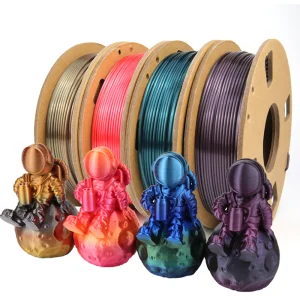
As desktop and industrial Fused Deposition Modeling (FDM) 3D printing transitions from rapid functional prototyping to consumer-facing manufacturing, surface finish aesthetics have emerged as a decisive market differentiator.
Historically, 3D printed components using standard PLA (Polylactic Acid) suffered from visually prominent layer lines, matte surface dullness, and anisotropic light reflection. Eliminating these defects required labor-intensive post-processing methods such as manual sanding, primer spraying, acetone vapor treatment, or epoxy coating.
Global 3D printer material buyers—ranging from Amazon brand sellers and regional e-commerce vendors to large-scale print farms—require strict batch-to-batch consistency. The market has moved beyond primitive material suppliers to demanding integrated engineering partners capable of supporting high-speed printing environments (300mm/s to 600mm/s).
Torwell’s proprietary PLA Silk formula relies on a precise ternary polymer blend, balancing bio-based Polylactic Acid resin with elastomeric impact modifiers and optical pearlescent pigments to deliver exceptional surface luster without sacrificing interlayer adhesion.
Standard PLA matrix resin is blended with 10%–15% high-purity Thermoplastic Elastomers (TPE/TPU) and specialized organic surface-coated mica flakes. During thermal extrusion through the nozzle, the micro-phase separation of the elastomeric domain creates controlled microscopic surface roughness that refracts incident light into a uniform satin sheen.
By calibrating the Melt Flow Rate (MVR: 6.8 to 8.5 cm³/10min at 190°C/2.16kg), Torwell PLA Silk maintains stable shear-thinning behavior under elevated hotend pressure. This prevents heat creep, nozzle clog, and severe stringing even when printing at rapid speeds up to 500 mm/s on modern coreXY printers.
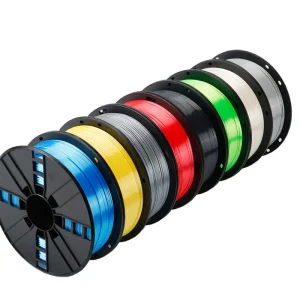
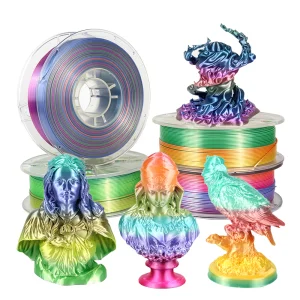
Torwell’s dual-color and tri-color co-extrusion technology embeds distinct color pigments radially along the filament axis. As the nozzle deposits plastic, the printed model dynamically shifts color depending on viewing angle and ambient light source, delivering mesmerizing multi-toned pearlescent optical effects.
Optimized melt kinetics allowing high-speed printing (300-600mm/s) without loss of surface gloss or layer strength.
Commercial production of bi-color and tri-color silk PLA co-extrusions featuring sharp axial phase separation.
Heat deflection temperature (HDT) enhancement via bio-crystallization agents, increasing thermal resistance to >75°C.
Integration of 100% bio-based elastomeric phase dispersants and fully marine-degradable organic mica pigments.
Operating from our 2,500m² advanced production center in China, Torwell Technologies combines raw material cost efficiency with rigorous inline quality control to deliver superior wholesale value for international partners.
We partner directly with leading global biopolymer resin suppliers (such as NatureWorks Ingeo and Sinochem PLA), procuring virgin grade polylactic acid pellets in bulk volume. This eliminates raw material impurities, moisture variances, and regrind contamination commonly associated with low-cost suppliers.
Our modern facility houses 6 fully automated continuous extrusion lines equipped with inline multi-axis laser micrometers. Operating with 100 Hz real-time feedback loop controllers, the system automatically adjusts screw speed and tractor pull rates to strictly maintain ±0.02mm diameter precision.
To prevent printing failures caused by filament overlapping or cross-knotting, our lines utilize CNC tension-calibrated spoolers. Every layer of filament is deposited with uniform pitch and spacing, ensuring smooth feeding in automated multi-material systems (AMS) and long print runs.
From high-end consumer products and architectural scale models to entertainment props and automotive design prototypes, Torwell PLA Silk provides direct aesthetic value across multiple industries.
Design studios utilize Silk Silver and Silk Gold filaments to print interior trim components, futuristic dashboard concepts, and scale car bodies. The specular luster accurately mimics painted metallic surfaces without costly spraying booth setups.
Architectural firms produce client presentation models using Silk Bronze and Silk White. The high contrast light diffusion highlights complex facade curves, roof cantilever details, and structural geometry with professional elegance.
Brand packaging designers rapid-prototype perfume bottles, cosmetic compact containers, and premium gift boxes. The silk satin sheen provides an immediate visual representation of luxury retail shelf presence.
Prop makers and gaming figurine print farms rely on Dual-Color Silk PLA to produce ornate armor, magical artifacts, and limited-edition statues that change color dynamically under stage or ambient room lighting.
Torwell Technologies adheres strictly to international environmental and chemical safety frameworks. Every batch shipped to global buyers is backed by full laboratory testing reports (RoHS, REACH, SDS).
Polymer degradation from humidity is the leading cause of brittleness and bubble formation during 3D printing. Torwell implements a 4-layer environmental defense packaging system for all sea and air freight exports:
Our products are engineered to satisfy stringent legal import compliance rules across Europe, North America, and Asia-Pacific markets:
| Property Parameter | Testing Standard | Torwell PLA Silk Value | Standard PLA Comparison |
|---|---|---|---|
| Filament Diameter | Dual-Axis Laser Micrometer | 1.75 mm ± 0.02 mm (2.85mm available) | 1.75 mm ± 0.05 mm |
| Density | ISO 1183 / ASTM D792 | 1.24 g/cm³ | 1.24 g/cm³ |
| Melt Volume Rate (MVR) | ISO 1133 (190°C / 2.16kg) | 7.5 – 9.0 cm³/10min | 4.5 – 6.0 cm³/10min |
| Tensile Strength at Yield | ISO 527 / ASTM D638 | 52 MPa | 60 MPa |
| Elongation at Break | ISO 527 / ASTM D638 | 18 % (Enhanced Toughness) | 6 % (Brittle) |
| Flexural Modulus | ISO 178 / ASTM D790 | 2,450 MPa | 3,150 MPa |
| Recommended Printing Temp | Torwell Lab Test | 200 °C – 230 °C | 190 °C – 210 °C |
| Heat Bed Temperature | Torwell Lab Test | 45 °C – 60 °C (No enclosure needed) | 50 °C – 60 °C |
From engineering composites to decorative silk blends, source factory-direct 3D printer filaments packaged under your brand name.
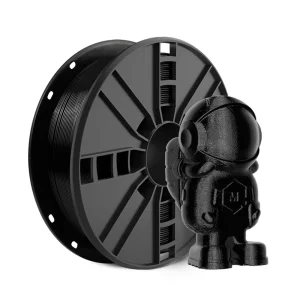
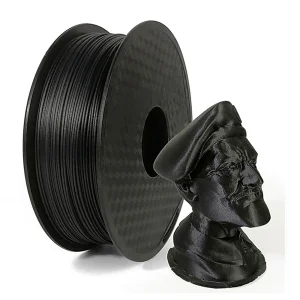
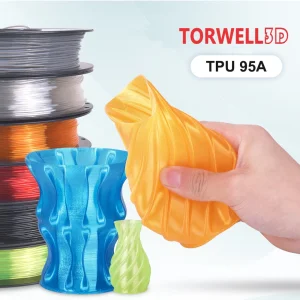
Get instant answers regarding manufacturing capabilities, OEM customization, technical parameters, export logistics, and quality assurance procedures.
Torwell PLA Silk is engineered by polymerizing high-purity biopolymer PLA resin with 10%–15% specialized thermoplastic elastomeric dispersants (TPE/TPU) and coated pearlescent mica pigments. This ternary blend creates controlled micro-phase light refraction upon extrusion, delivering a glossy satin luster that naturally conceals layer boundaries without needing post-processing sanding or painting.
Every extrusion line at Torwell operates inline dual-axis laser micrometers that measure diameter and ovality 100 times per second, enforcing a strict target tolerance of ±0.02mm. For color accuracy, pigment batches are color-matched using spectrophotometers against master Pantone/RAL standards, guaranteeing zero shade variation between initial samples and mass container orders.
For high-speed 3D printers (such as Bambu Lab, Creality K1 series, or Voron), we recommend setting hotend temperatures between 215°C and 230°C to maintain sufficient melt flow rate (MVR). Heated bed temperature should be set to 50°C–60°C. For maximum surface gloss, print speed can be set between 150mm/s and 300mm/s; printing at slightly higher hotend temperatures ensures full elastomeric gloss activation.
Yes. We specialize in turn-key OEM/ODM manufacturing for international 3D printing material brands. We provide custom-printed spool stickers, branded outer retail boxes, customized die-cut cardboard spools, customized spool weights (250g, 500g, 1kg, 3kg, 5kg), and bespoke pantone color development with low minimum order quantities (MOQ).
Absolutely. Our standard 1kg plastic and cardboard spools are engineered precisely to fit inside Bambu Lab AMS units and Prusa MMU systems. Spool rim width, outer diameter, and central hub dimensions comply with automated material system feeder requirements, preventing spool slippage or rotational binding.
Prior to spooling, polymer resins are dehumidified in industrial hopper dryers to moisture levels under 0.05%. Extruded spools are immediately vacuum-sealed in thick barrier PE bags with active silica desiccant pouches. Sealed spools are packed in rigid corrugated outer cartons and palletized with stretch film wrapping, guaranteeing 24-month moisture-proof shelf life during ocean freight storage.
With 6 continuous extrusion lines producing 50,000kg to 60,000kg per month, standard wholesale orders are fulfilled within 7 to 12 business days. OEM orders requiring custom box printing and color matching typically ship within 14 to 20 days upon artwork sign-off.
Every shipment comes with comprehensive compliance packages including Technical Data Sheets (TDS), Safety Data Sheets (SDS / MSDS), RoHS 2.0 test certificates, REACH SVHC declaration documents, and ISO 9001 Certificate of Analysis (CoA) for seamless customs clearance in North America, Europe, Australia, and East Asia.