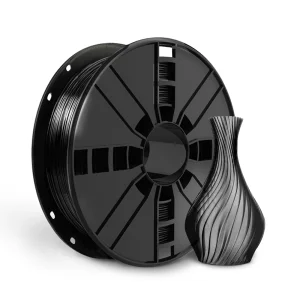
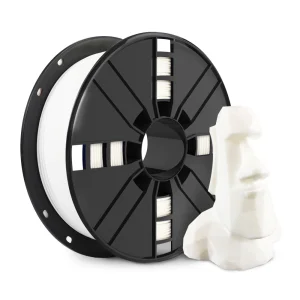
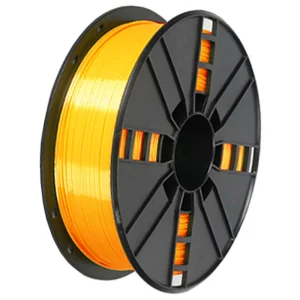
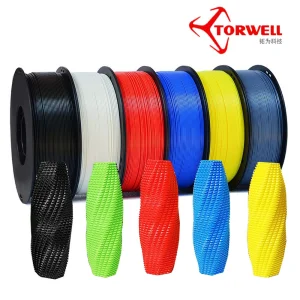
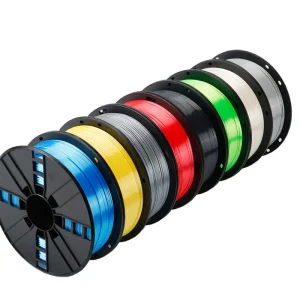
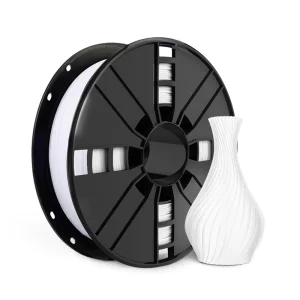
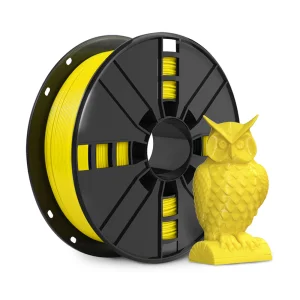
Explore our premium grade stock filaments manufactured under strict ISO 9001:2015 quality controls for global distributors, OEM brands, and enterprise print farms.
Quantifiable manufacturing standards backing global B2B procurement agreements.
A comprehensive analysis of modified polylactic acid formulations engineered for structural integrity, impact resistance, and high-speed FDM additive manufacturing.
In the rapidly evolving additive manufacturing ecosystem, standard Polylactic Acid (PLA) remains a cornerstone material due to its ease of printing, low thermal expansion coefficient, and plant-derived biodegradable nature. However, standard PLA exhibits inherent brittleness, low impact resistance (typically Charpy impact strength below 5 kJ/m²), and modest heat deflection temperatures (HDT ~55°C). To bridge the mechanical gap between entry-level biopolymers and engineering-grade polymers like ABS and PETG, leading high-capacity factories developed PLA Plus (PLA+).
PLA Plus is a molecularly modified formulation that incorporates specialized elastomeric impact modifiers, nucleating agents, and flow enhancers into a high-purity lactide monomer matrix (such as NatureWorks Ingeo or TotalEnergies Corbion resin). This chemical modification alters the polymer chain architecture, dramatically increasing crystal nucleation rates during melt deposition.
| Mechanical & Thermal Property | Standard PLA | Enterprise PLA+ (Torwell Grade) | Standard PETG | Industrial ABS |
|---|---|---|---|---|
| Tensile Strength (MPa) | 52 - 60 | 65 - 72 | 45 - 50 | 40 - 45 |
| Charpy Impact Strength (kJ/m²) | 3.2 - 4.5 | 16.0 - 24.5 | 7.8 - 9.2 | 12.0 - 15.0 |
| Elongation at Break (%) | 3.8% | 12.5% | 22.0% | 10.0% |
| Heat Deflection Temp (HDT @ 0.45MPa) | 53°C | 60°C - 68°C (Annealed) | 72°C | 85°C - 98°C |
| Max Print Velocity (mm/s) | 60 - 150 | 300 - 600 | 80 - 200 | 60 - 150 |
| Bed & Enclosure Needs | 50°C Bed / Open | 50°C Bed / Open | 75°C Bed / Open | 100°C Bed / Heated Chamber |
Leveraging world-class raw material synthesis, automated high-throughput extrusion lines, and cost-efficient global logistics.
China's chemical manufacturing infrastructure provides direct access to primary lactide monomer refining and specialized toughening additives. This vertical integration eliminates multi-tier middleman margins, securing cost stability and high-purity virgin resin feeds for enterprise volume orders.
Our automated extrusion facilities utilize multi-stage screw profiles paired with inline dual-axis laser calipers. Real-time feedback loops automatically adjust melt pump speed every millisecond, guaranteeing a non-negotiable standard deviation of ±0.02mm diameter and <1% ovality across 100% of spools.
Positioned near key Guangdong shipping ports (Shenzhen/Guangzhou), China factories offer rapid sea freight booking, ocean vessel consolidation, and complete customs documentation (MSDS, RoHS, REACH, FDA). Full container loads (FCL 20GP/40HQ) are dispatched with optimized volumetric palletization.
Key technological shifts redefining raw material specifications for next-generation additive manufacturing.
The global adoption of CoreXY high-speed printers (Bambu Lab, Creality K1, Voron, Qidi, Prusa MK4) has made standard filaments obsolete. Traditional PLA suffers from melt starvation, heat creep, and under-extrusion at volumetric speed rates above 15 mm³/s. Factory-formulated PLA Plus solves this through low-activation-energy polymer modification, permitting steady volumetric flow rates up to 30 mm³/s without raising nozzle temperatures to thermal degradation thresholds.
Enterprise procurement teams are replacing petroleum-derived plastics (like ABS and HIPS) with bio-based alternatives to satisfy Scope 3 ESG emission targets. PLA Plus is derived 100% from annually renewable agricultural starches (corn, sugarcane), offering a carbon-neutral cradle-to-gate footprint while providing the mechanical toughness required for industrial end-use parts.
Additive manufacturing is transitioning from desktop hobbyist modeling into distributed print farms operating hundreds of machines 24/7. Print farms require absolute spool-to-spool color consistency, zero tangling via automated tension winding, and moisture-sealed foil packaging to ensure unmonitored overnight success rates exceeding 99.2%.
Modern filament buyers demand multi-color capabilities (Bambu AMS, Anycubic ACE, Creality CFS). Factories are customizing spool dimensions, cardboard material compositions, and embedded RFID tags to seamlessly integrate into automated material switching units.
How global enterprises deploy PLA Plus across distinct commercial sectors to maximize efficiency and part longevity.
In assembly plants, lightweight custom holding fixtures, drill guides, and alignment templates are printed using PLA Plus. Its high impact strength withstands continuous shop-floor drops and tool impacts without structural cracking, offering a 70% weight reduction over aluminum tooling.
Product design agencies use PLA Plus to fabricate functional drop-test prototypes for smart home hubs, drone chassis, and handheld devices. The matte aesthetic finish and precise dimensional fidelity ensure snap-fit enclosures snap together perfectly straight off the print bed.
Universities and technical institutes favor PLA Plus for student prototyping labs. It emits zero toxic styrene fumes (unlike ABS), prints reliably without heated chamber hazards, and produces rugged structural gears, brackets, and robotic arm linkages capable of bearing mechanical loads.
End-to-end contract manufacturing built specifically for international brand owners, Amazon private label sellers, and regional distributors.
Navigating global supply chain volatility requires a resilient manufacturing partner. As an established China PLA Plus Factory, Torwell provides structured OEM/ODM private-label programs that transform raw polymer technology into fully branded, market-ready retail products.
Brand identity relies on color accuracy. Our laboratory technicians utilize spectrophotometers to develop custom pigment masterbatches matching exact Pantone, RAL, or physical plastic sample swatches with batch-to-batch Delta E < 1.0 color tolerance.
Choose between high-clarity recyclable PC spools, lightweight ABS spools, or 100% biodegradable heavy-duty cardboard spools optimized for AMS high-speed rewinding. Customized flange artwork, barcodes, and dynamic batch tracking stickers are applied in-line.
Hygroscopic degradation is the #1 cause of print stringing and brittleness. Each spool is oven-dried to <200 ppm moisture before immediate vacuum sealing inside heavy-gauge aluminum foil or transparent vacuum bags with active silica gel desiccants.
Streamline your market entry with factory-provided technical documentation. Every wholesale batch includes comprehensive Technical Data Sheets (TDS), Safety Data Sheets (SDS in 10+ languages), RoHS compliance certificates, and REACH SVHC reports.
Essential quality checkpoints professional B2B purchasing managers evaluate when selecting a wholesale filament supplier.
Ensure your supplier utilizes continuous laser micrometer logging during extrusion rather than manual offline sampling. Insist on live extrusion logs demonstrating 3-sigma limits within ±0.02mm to prevent nozzle clogging.
High-speed printers pull filament at extreme velocities. Irregular spool winding leads to criss-crossed filament overlaps, causing extruder stepper motor stalls mid-print. Look for automatic tension-controlled traverse spoolers.
Budget suppliers often cut costs by blending industrial plastic regrind or excessive calcium carbonate filler (CaCO3), resulting in nozzle abrasion and brittle prints. Demand 100% virgin PLA resin guarantees for consistent thermal behavior.
Expand your product line with our proven, highly requested 3D printing filament formulations.
Detailed technical answers to assist supply chain managers, brand directors, and import buyers.