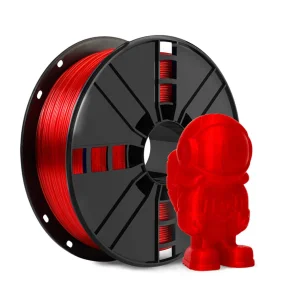
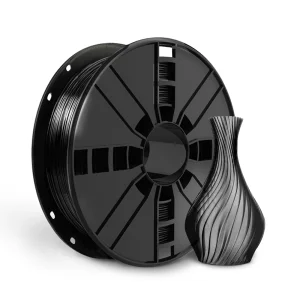
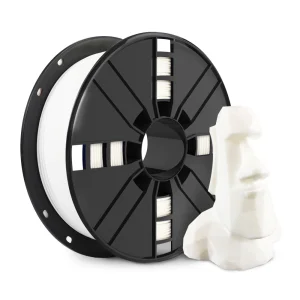
High-demand extrusion formulations engineered for high-speed print farms, retail distributors, and professional rapid prototyping.
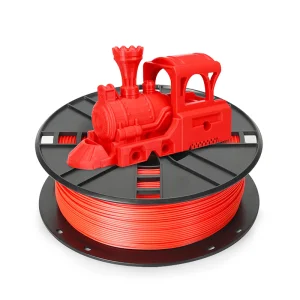
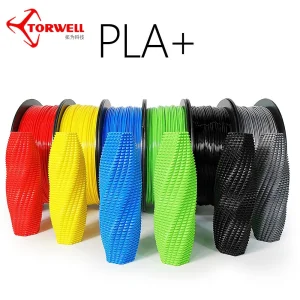
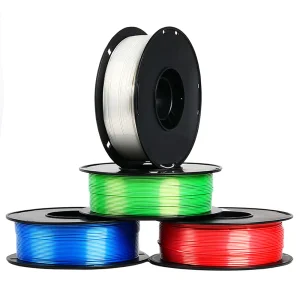
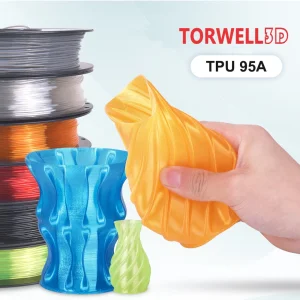
Resolving the rheological and thermal constraints of additive manufacturing materials for next-generation 600 mm/s high-speed printing environments.
Our proprietary PLA melt formulations utilize targeted chain-extenders and plasticizers to achieve an MFI of 12–16 g/10min (210°C / 2.16kg), ensuring instantaneous volumetric melting and zero heat-sink clogging at high volumetric flow rates.
By sourcing high-purity Poly-L-Lactide (PLLA) resin with residual monomer content under 0.3%, our PLA filaments eliminate micro-bubbling, thermal degradation, and toxic VOC off-gassing during prolonged thermal extrusion cycles.
Controlled cooling bath thermal gradients induce optimal polymer crystallization rates, preventing inter-layer delamination while enhancing tensile flexural strength across Z-axis print layers.
In the rapidly evolving landscape of additive manufacturing, global procurement teams and wholesale distributors face a crucial bottleneck: the disparity between standard low-speed printing materials and the extreme mechanical demands of modern high-speed CoreXY 3D printers. As print speeds accelerate from legacy baseline velocities of 50 mm/s to contemporary industrial thresholds exceeding 500–600 mm/s, conventional polylactic acid (PLA) filaments exhibit severe structural failure modes, including thermal shearing, nozzle backpressure jams, inter-layer adhesion failure, and non-uniform surface gloss.
Technical Insight for Bulk Buyers: High-speed FDM extrusion requires polymer chains to exhibit non-Newtonian shear thinning properties. When forced through a hotend within milliseconds, the melt viscosity must drop predictably without breaking molecular chains—a balance achieved exclusively through precision raw material synthesis and twin-screw compound blending.
At our specialized manufacturing facility, we solve these macro industrial challenges by engineering tailored polymer masterbatches. By controlling the stereochemical ratio of L-lactide to D-lactide monomers within the resin matrix, we systematically raise the Vicat softening temperature while stabilizing the melt pool. The result is a high-speed PLA formulation capable of maintaining uniform dimensional integrity, flawless bridges, and consistent color vibrancy, regardless of print bed velocity or volumetric extrusion limits.
Optimizing total cost of ownership (TCO) for large-scale additive manufacturing operators, international OEM brands, and regional warehouse networks.
We empower brand owners and Amazon top-sellers with end-to-end ODM/OEM production. From custom Pantone color matching to eco-friendly cardboard spools, customized vacuum bag packaging, desiccant sizing, and branded retail carton design, our factory operates as your invisible high-tech production line.
For commercial print farms running hundreds of automated 3D printers, material consistency directly dictates operating margins. A single spool tangles or diameter spike can ruin an 80-hour industrial build, damaging printhead extruders and incurring costly downtime.
Commercial viability in additive production requires absolute supply chain transparency. Our manufacturing complex features 6 continuous automated extrusion lines equipped with inline dual-axis laser interferometers. These instruments monitor diameter tolerance continuously across 360 degrees, automatically adjusting haul-off speed in real time if variances approach ±0.015 mm. By maintaining a strict manufacturing limit of ±0.02 mm, we eliminate variance in volumetric deposition, protecting your machinery from under-extrusion gaps or over-extrusion nozzle drag.
Empirical mechanical metrics compiled via ASTM D638, ISO 178, and ISO 179 standardized testing protocol laboratory benchmarks.
| Filament Material Grade | Tensile Strength (MPa) | Flexural Modulus (GPa) | Vicat Softening Temp (°C) | Melt Flow Index (g/10min) | Elongation at Break (%) | Recommended Nozzle Temp |
|---|---|---|---|---|---|---|
| Standard PLA Professional | 62.5 MPa | 3.15 GPa | 58 °C | 12.5 (210°C/2.16kg) | 5.2 % | 190 °C – 215 °C |
| PLA+ High Impact Pro | 68.0 MPa | 3.40 GPa | 63 °C | 15.0 (210°C/2.16kg) | 12.8 % | 200 °C – 225 °C |
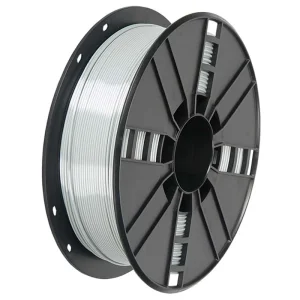
| Silk PLA Decorative | 54.2 MPa | 2.85 GPa | 55 °C | 14.2 (210°C/2.16kg) | 8.5 % | 205 °C – 230 °C |
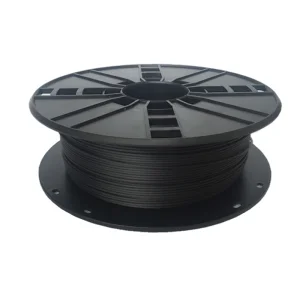
| Carbon Fiber Composite PLA | 84.6 MPa | 5.80 GPa | 68 °C | 9.8 (210°C/2.16kg) | 2.1 % | 215 °C – 240 °C |
| High-Speed PLA (600mm/s) | 65.0 MPa | 3.20 GPa | 61 °C | 18.5 (210°C/2.16kg) | 6.4 % | 200 °C – 235 °C |
Note: All laboratory tests are performed under stabilized ambient conditions (23°C, 50% Relative Humidity) on injection-molded and FDM-printed test specimens compliant with ISO standards. Technical Data Sheets (TDS) and Material Safety Data Sheets (MSDS/SDS) are available upon enterprise inquiry.
From automotive engineering to consumer package design, our PLA formulations power diverse market sectors across North America, Europe, and Asia-Pacific.
Rapid spatial verification of dashboard assemblies, HVAC ducting prototypes, and aerodynamic wind-tunnel scale models. High dimensional accuracy enables sub-millimeter snap-fit testing.
Surgeons and medical educators utilize our biocompatible, non-toxic PLA formulations to fabricate 1:1 patient-specific bone structure models and pre-operative planning tools.
Architectural firms rely on Matte and Silk PLA series for micro-detailed urban planning models, presenting sharp overhangs, clean facades, and flawless surface finishes.
Creation of bio-based cosmetic container mockups, ergonomic consumer electronics enclosures, and custom retail packaging prototypes prior to multi-million-dollar tooling investments.
Safe, odor-free printing for universities, high schools, and maker-spaces. Low thermal contraction prevents warping on non-heated print beds typical of entry-level educational hardware.
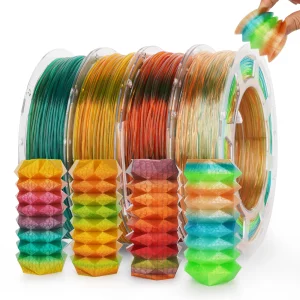
Specialty Silk, Rainbow, and Dual-Color PLA formulations reduce post-processing finishing labor for entertainment prop houses, delivering metallic lusters directly off the print plate.
Rigorous international compliance certifications and optimized DDP logistics networks ensuring seamless cross-border customs integration.
Navigating environmental compliance mandates is paramount for modern retail importers and enterprise procurement teams. Every single spool of PLA filament exported from our factory undergoes strict laboratory verification to ensure compliance with global environmental standards:
To reduce transit lead times and alleviate supply chain risk, we offer comprehensive international distribution infrastructure tailored to your commercial workflow:
Pioneering the next decade of sustainable additive material science, AI closed-loop control, and advanced bio-composite alloys.
Deploying machine-vision inline melt-pool monitoring systems. Real-time neural networks continuously adjust twin-screw extruders to maintain a near-zero standard deviation target of ±0.01 mm.
Developing 100% chemically recycled rPLA filaments that retain 98% of virgin mechanical tensile strength, reducing corporate carbon footprints without compromising print quality.
Formulating heat-treatable PLA alloys capable of achieving Heat Deflection Temperatures (HDT) exceeding 110°C post-annealing, challenging traditional ABS and PETG industrial applications.
Detailed technical answers for procurement directors, product managers, and wholesale importers.
Our production lines integrate dual-axis inline laser measuring optical sensors positioned immediately following the vacuum water cooling troughs. These sensors measure the filament diameter continuously across X and Y axes at 500 Hz. The data feeds into an automated closed-loop feedback controller that adjusts capstan pulling speeds in milliseconds. If any segment strays beyond ±0.02 mm, an automated multi-spool switching mechanism flags and segments that portion, ensuring only high-precision filament reaches the spooling station.
For standard stock PLA colors, our wholesale MOQ starts at 50 spools. For custom Pantone color matching and customized private-label packaging (branded spools, outer cartons, and custom labels), our standard base MOQ is 500 kg per color batch. We provide rapid physical masterbatch color chips within 5–7 business days for initial sample sign-off.
Polylactic Acid is a hygroscopic bio-polyester that absorbs atmospheric moisture over time, leading to hydrolytic degradation during extrusion (manifesting as popping sounds, high stringing, and brittle layer bonds). To counteract this during international sea transit, all our spools undergo a 4-hour thermal dehumidification drying cycle prior to winding. They are immediately vacuum-sealed in heavy-duty aluminum-coated barrier bags containing high-capacity active desiccant packs, backed by moisture indicator cards.
Yes! We engineer our standard 1kg spools specifically to meet the dimensions, flange spacing, and outer diameter limits required by leading multi-material automatic feeding systems. We offer both precision-molded rigid ABS/PC plastic spools and reinforced rolled-edge cardboard spools designed to prevent dust accumulation inside enclosed AMS drive rollers.
Standard PLA offers high surface hardness and stiffness but exhibits low impact toughness and brittle failure modes under flexural stress. Our PLA+ formulation incorporates dynamic elastomer impact modifiers and nucleating agents during compound extrusion. This increases Izod impact strength by over 150% and elongation at break from ~5% to over 12%, making it ideal for functional mechanical parts while retaining the easy printability of traditional PLA.
Every commercial wholesale order is accompanied by a full technical export documentation package, including Technical Data Sheets (TDS), Safety Data Sheets (SDS compliant with GHS formatting), Certificate of Analysis (CoA) for raw resin batches, and official REACH / RoHS compliance certificates.
Specialty composite materials, vibrant aesthetics, and high-performance engineering polymers direct from our extrusion lines.