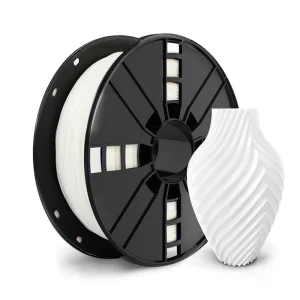
Explore our flagship 3D printing materials extruded under strict ISO 9001 micro-caliper dimensional monitoring. Engineered for minimal warping, high interlayer cohesion, and enterprise reliability.
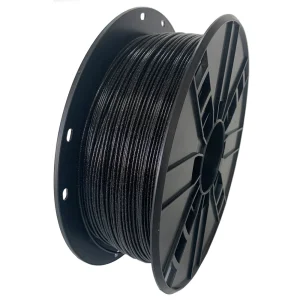
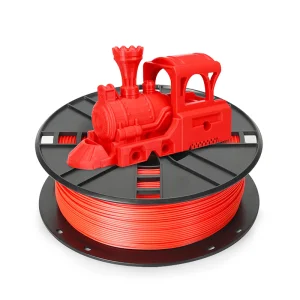
The additive manufacturing landscape has rapidly transitioned from rapid prototyping to full-scale end-use component fabrication. Among engineering-grade thermoplastics, Carbon Fiber Reinforced Polyethylene Terephthalate Glycol (PETG-CF) has emerged as a cornerstone material for industrial print farms, automotive design centers, and aerospace tooling facilities worldwide.
Unreinforced PETG has long been prized for its toughness, chemical durability, and moisture resistance compared to PLA. However, standard PETG suffers from moderate flexural stiffness and a lower Heat Deflection Temperature (HDT around 68°C to 72°C). By compounding micro-scale chopped carbon fibers (typically 15% to 20% by weight) into an optimized PETG matrix, polymer engineers unlock a synergistic composite that drastically reduces volumetric thermal shrinkage, increases tensile modulus, and provides an extraordinarily rich, matte dark-slate surface finish that eliminates visible layer lines.
Global market demand for carbon fiber composite filaments is expanding at a CAGR exceeding 22.4%. B2B procurement managers and commercial printing hubs seek out a reliable wholesale PETG CF filament supplier that can guarantee batch-to-batch chemical homogenization, zero moisture bubble formation, and strict diameter consistency (±0.02 mm). As enterprise customers replace heavy CNC-machined aluminum brackets with high-strength lightweight printed composite parts, sourcing direct from specialized manufacturing facilities becomes essential to maintaining competitive margin structures.
Evaluating high-performance composite filaments requires analyzing mechanical, thermal, and rheological trade-offs. PETG-CF offers a distinct advantage over Carbon Fiber Polyamide (PA-CF/Nylon-CF) and Carbon Fiber ABS (ABS-CF) due to its vastly superior hydro-stability and ease of processing on standard FDM/FFF machinery equipped with hardened steel nozzles.
| Material Metric | Standard PETG | Torwell PETG-CF (15% CF) | ABS-CF (15% CF) | PA12-CF (15% CF) |
|---|---|---|---|---|
| Tensile Strength (MPa) | 48 - 52 | 68 - 74 | 55 - 62 | 85 - 95 |
| Flexural Modulus (GPa) | 1.9 - 2.1 | 4.2 - 4.8 | 3.8 - 4.1 | 5.5 - 6.2 |
| Heat Deflection Temp (°C @ 0.45MPa) | 68°C | 82°C | 95°C | 145°C |
| Moisture Absorption (24h immersion) | 0.20% | 0.12% | 0.35% | 1.25% |
| Printability & Warping Risk | Low Warping | Near Zero Warping | Moderate Warping | Requires Chamber |
| Nozzle Temperature Range | 220°C - 240°C | 240°C - 260°C | 250°C - 270°C | 270°C - 300°C |
The integration of high-aspect-ratio carbon fibers alters the melt rheology during extrusion. As molten PETG-CF passes through the nozzle orifice, the short fibers align along the shear vector (x-y print path). This orientation drastically limits isotropic shrinkage, virtually eliminating part warping even when printing large geometric structures without a heated enclosure.
Navigating global polymer procurement requires a manufacturing partner capable of maintaining strict raw material compounding integrity while providing cost scalable volume economics. As an established pioneer operating since 2011, China's advanced polymer extrusion ecosystems offer unmatched advantages for B2B importers, OEM brands, and distribution networks.
Unlike mid-tier repackagers who purchase pre-mixed pellets, Torwell operates twin-screw compounding lines. We directly melt-blend virgin PETG resin with high-purity chopped carbon fibers, precise coupling agents, and anti-oxidants for superior fiber dispersion.
Every millimeter of extruded filament is scanned by inline dual-axis laser closed-loop feedback systems. Any deviation exceeding ±0.02 mm automatically triggers haul-off speed micro-adjustments or rejects the spool segment.
With 6 automated production lines spanning 2,500 m², our facility produces 50,000 to 60,000 kg monthly. Scale manufacturing reduces per-unit packaging, labor, and energy costs, passing margin directly to global B2B partners.
Wholesale PETG CF filament is rapidly displacing non-structural metals and unreinforced polymers in demanding real-world environments. The unique combination of light weight, matte aesthetics, chemical inertness, and structural rigidity unlocks high-value use cases:
Automation engineers print robot gripper arms and assembly fixtures using PETG-CF to reduce payload inertia. The high flexural modulus prevents flexing under rapid acceleration, while lower weight extends servo motor lifespans in high-cycle packaging lines.
PETG-CF exhibits remarkable resistance to under-hood fluids, including engine oils, coolant blends, and brake fluids. Custom intake scoops, sensor housings, and interior bracket prototypes perform reliably under ambient engine bay vibration and thermal cycles up to 80°C.
Unmanned Aerial Vehicle (UAV) manufacturers demand stiffness without weight penalties. PETG-CF frame arms dampen motor-induced vibration harmonics, providing clean camera stabilization and increased flight battery efficiency compared to standard ABS prints.
Thanks to PETG’s inherent UV resistance and waterproof polymer backbone, composite enclosures printed with PETG-CF withstand prolonged saltwater splash exposure and outdoor weathering without structural embrittlement or surface blooming.
When selecting a wholesale PETG CF filament supplier, procurement officers must look beyond simple price-per-kilogram metrics. Establishing a resilient supply chain demands evaluation of OEM/ODM packaging customization, spool material choices, export packaging security, and technical documentation readiness.
Choose from eco-friendly recycled cardboard spools optimized for automatic material systems (AMS), high-clarity polycarbonate spools, or heavy-duty high-temperature spools for industrial dry-boxes.
Filament is dried in commercial dehumidifying ovens prior to winding. Every spool is immediately vacuum sealed with premium silica desiccant in thick 8-mil anti-puncture barrier foil pouches.
Individual boxed spools are consolidated into heavy-duty corrugated master cartons, stacked on ocean-freight pallets, corner-boarded, and stretch-wrapped to prevent damage during long-distance transit.
As 3D printer hardware advances toward high-speed kinematics (print speeds exceeding 500 mm/s and accelerations past 20,000 mm/s²), raw material compounding must evolve in tandem. Torwell’s polymer laboratory is actively driving innovations across three core composite vector areas:
Next-generation PETG-CF formulations integrate specialty hyper-branched polymers that lower melt viscosity without sacrificing inter-layer shear strength. This allows high-speed printing without hotend volumetric extrusion starvation.
In alignment with global ESG goals, we are pioneering the incorporation of reclaimed aerospace-grade carbon fiber tow. Reprocessing post-industrial fiber reduces embodied carbon footprints by up to 45% while preserving mechanical rigidity.
Developing electrostatic discharge (ESD) safe PETG-CF composites with controlled surface resistivity (10^6 to 10^9 ohms/sq) tailored specifically for semiconductor assembly trays and electronics packaging tooling.
Key technical and commercial answers provided by Torwell’s senior material specialists and international export trade directors.
Expand your distribution catalog with our comprehensive selection of technical, aesthetic, and flexible polymers direct from our factory lines.