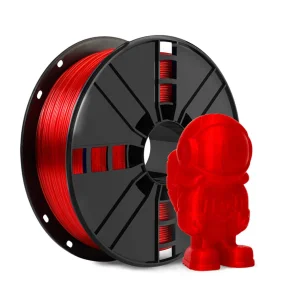
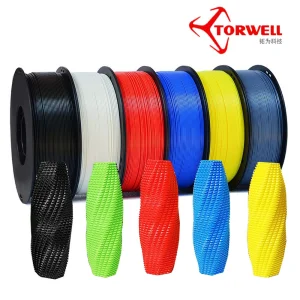
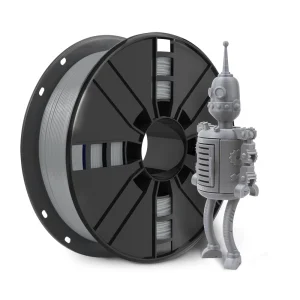
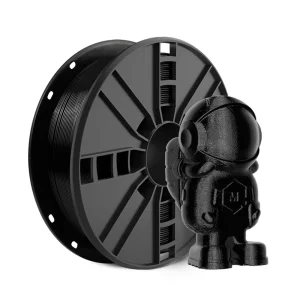
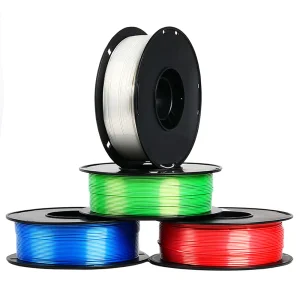
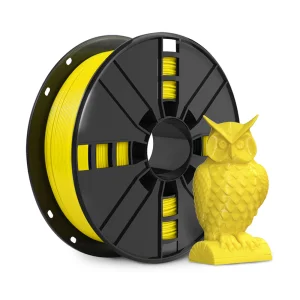
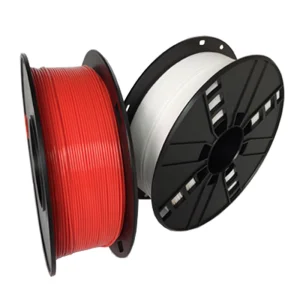
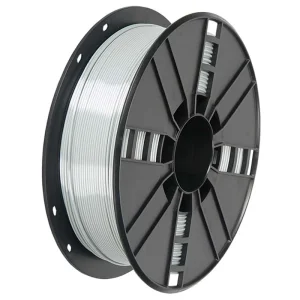
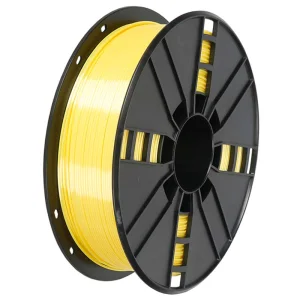
Direct factory supply of precision extruded materials. Monitored with real-time laser gauging for consistent print quality across global print farms, distributors, and private label brands.
The additive manufacturing sector has undergone a profound structural transformation over the past decade. Fused Deposition Modeling (FDM) 3D printing has transitioned from rapid prototyping in isolated engineering labs to large-scale distributed digital manufacturing, print farm production, and retail consumer creation. Within this evolving material ecosystem, Pearlescent PLA (Polylactic Acid) Filament has emerged as one of the most lucrative and high-growth material segments globally.
Industrial design houses, luxury packaging creators, architectural modeling firms, and consumer gaming hardware brands are increasingly moving away from matte or standard monochrome plastics. Instead, they demand premium visual finishes directly from the build plate without relying on post-processing labor, chemical smoothing, sanding, or toxic spray painting. Pearlescent PLA fulfills this exact market requirement by encapsulating light-scattering micro-platelets into a biodegradable, low-warp polylactic acid matrix, producing models with rich specular highlights, directional iridescence, and a silk-satin luster.
From a global procurement perspective, B2B buyers—including regional 3D printer material distributors, Amazon FBA brand owners, educational supply vendors, and industrial additive manufacturing bureaus—are recalibrating their inventory strategies. Standard PLA has become a highly commoditized baseline material with narrow margin structures. Conversely, specialized aesthetic filaments such as Pearlescent PLA, Silk PLA, and Dual-Color Pearlescent Co-extrusion Filaments command retail price premiums ranging from 40% to 75% while maintaining comparable raw material extrusion throughput.
According to recent additive manufacturing market intelligence, the global aesthetic 3D printing filament segment is expanding at a Compound Annual Growth Rate (CAGR) of 14.2%, outstripping standard utility polymers. B2B importers searching for a reliable wholesale pearlescent PLA filament manufacturer & factories require deep material stability, micro-pigment dispersion control, and verified batch-to-batch color repeatability to prevent nozzle clogging and customer returns.
Achieving a flawless pearlescent effect in extruded thermopolymer strands requires an intricate balance of physical chemistry, pigment geometry, and thermal rheology. Low-grade factories attempting to produce pearlescent PLA frequently encounter severe operational flaws: micro-nozzle clogging, diameter fluctuation, thermal degradation of pigment coatings, and brittleness in layer adhesion.
Pearlescent luster is not generated through chemical dyes or standard opaque colorants. Instead, it relies on physical light interference. High-grade pearlescent PLA incorporates natural mica (muscovite) or synthetic fluorophlogopite micro-platelets coated with nanometer-thin layers of metal oxides, such as Titanium Dioxide ($TiO_2$) and Iron Oxide ($Fe_2O_3$).
When light strikes the printed model, a portion of the light wave reflects from the outer polymer interface, while another portion penetrates the semi-translucent PLA matrix and reflects off the internal, oriented mica platelets. The resulting phase shift between reflected light waves produces a shimmering visual sheen. To ensure smooth passage through standard 0.4mm or 0.2mm brass and hardened steel 3D printer nozzles, Torwell Technologies enforces strict particle size distribution (<15 microns), entirely eliminating micro-agglomerates that cause heat-break jams.
The addition of inorganic mineral flakes significantly alters the viscosity and shear behavior of molten poly-lactic acid. Without proper polymer chain modification, filled PLA exhibits shear-thinning instability and die swell during extrusion. Torwell's R&D formulation team incorporates specialized bio-compatibilizers and thermal stabilizers that maintain a consistent Melt Flow Index (MFI) of 15–22 g/10 min (at 210°C / 2.16 kg). This guarantees that the material flows effortlessly in modern high-speed 3D printers operating at speeds up to 300 mm/s to 500 mm/s without experiencing volumetric flow starvation or dulling of surface gloss.
| Material Grade | Tensile Strength (MPa) | Vicat Softening Temp (°C) | Melt Flow Index (g/10min) | Surface Gloss Level (GU 60°) | Optimal Printing Speed |
|---|---|---|---|---|---|
| Torwell Premium Pearlescent PLA | 58 - 62 MPa | 58 °C | 16 - 20 | 88 - 95 (High Sheen) | 50 - 350 mm/s |
| Standard Virgin PLA | 60 - 65 MPa | 56 °C | 10 - 14 | 35 - 45 (Semi-Matte) | 40 - 150 mm/s |
| High-Speed Silk PLA | 45 - 52 MPa | 54 °C | 22 - 28 | 90 - 98 (Metallic Gloss) | 100 - 500 mm/s |
| PETG Engineering Grade | 48 - 55 MPa | 74 °C | 8 - 12 | 65 - 75 (Translucent) | 40 - 200 mm/s |
| ABS Industrial Grade | 40 - 46 MPa | 98 °C | 12 - 18 | 25 - 35 (Matte) | 40 - 150 mm/s |
Equipped with twin-screw compounding extruders, automated gravimetric feeders, and temperature-controlled multi-stage water cooling tanks ensuring tension-free polymer crystallization.
Continuous 100Hz real-time laser micrometer feedback automatically adjusts pulling capstan speeds, maintaining an ultra-strict diameter tolerance of ±0.02 mm across every 1,000-meter spool.
Fully automated tension-monitored spoolers layer the filament cleanly, preventing overlapping turns and cross-winding jams during long prints on Bambu Lab AMS or multi-material systems.
China remains the epicenter of global 3D printing polymer extrusion due to deep raw material integration, mature equipment manufacturing ecosystems, and logistical advantages. Torwell Technologies Co., Ltd., established in 2011 with a 2,500 m² standardized factory floor, epitomizes these advantages:
Pearlescent PLA filament is engineered to meet specific aesthetic and commercial needs across diverse consumer and industrial sectors. Its unique optical properties make it the material of choice for applications requiring sophisticated visual appeal without post-production surface finishing.
Global cosmetic brands and packaging design agencies utilize Torwell Pearlescent White, Rose Gold, and Pearl Champagne PLA to rapidly prototype high-end lipstick tubes, lotion pump housings, and compact mirror cases. The material faithfully replicates the iridescent pearl finish of injection-molded acrylics and ABS without requiring expensive prototype molding tooling.
Architectural design firms select pearlescent filaments to craft site models, structural facade concepts, and decorative lighting elements. When combined with internal LED backlighting, translucent pearlescent PLA diffuses light evenly, eliminating harsh hot-spots and creating a warm, elegant ambient glow ideal for retail display fixtures and hospitality spaces.
The aftermarket gaming hardware community—including custom mechanical keyboard enthusiasts, handheld console modders, and audio equipment designers—frequently selects Pearlescent PLA for custom keycaps, controller shell accents, and desktop headset stands. The subtle pearl luster effectively masks FDM print layer lines, giving end products a polished, retail-ready appearance.
In the entertainment and cosplay industries, weight and surface appearance are critical. Pearlescent PLA allows prop makers to print lightweight, durable armor components, crowns, fantasy weaponry, and jewelry replicas that possess metallic sheen without the heavy weight or oxidation risk of cast metals.
Next-gen core-XY printers run at 300–600 mm/s. Torwell's modified polymer formulas preserve high pearl sheen and layer bonding even at ultra-high volumetric flow rates.
Advanced dual-color and tri-color pearlescent co-extrusion blends two or three distinct pearl tones along a single strand, yielding dynamic optical shifts as models rotate.
To reduce plastic waste, Torwell offers high-durability recycled cardboard reels with pressed edges compatible with Bambu Lab AMS and automated material changers.
When sourcing 3D printing filament in container volumes, professional buyers evaluate manufacturers against rigorous operational criteria. Below is the quality control standard implemented across Torwell's manufacturing facilities:
Polylactic Acid is intrinsically hygroscopic. Absorbed atmospheric moisture leads to hydrolytic degradation in the printer hot-end, causing steam bubbles, excessive stringing, poor layer adhesion, and surface pitting. Torwell enforces a strict 4-step moisture protocol:
Torwell supports global brand owners, importers, and regional distributors with comprehensive OEM private label manufacturing services:
Expand your brand's market reach with our full selection of high-performance aesthetic and engineering filaments.
Clear, authoritative answers to common inquiries from wholesale buyers, importers, and print farm managers.
While both materials offer elevated surface aesthetics, their pigment formulations differ fundamentally. Silk PLA typically uses elastomeric additives (such as TPU/TPC modifiers) combined with standard glossy colorants to create a continuous metallic shine. Pearlescent PLA, by contrast, incorporates micro-encapsulated mica platelets ($TiO_2$-coated synthetic mica) into the PLA matrix. This produces a deep 3D optical refraction with iridescent highlight shifts under light, mimicking natural pearl, satin, and nacre finishes.
No. Torwell Technologies enforces strict particle size classification during compounding, keeping all mica micro-platelets below 15 microns. Because standard 0.4mm nozzle orifices are 400 microns wide, the particles flow freely without clumping, clogging, or wearing down standard brass nozzles. You do not need hardened steel nozzles to print Torwell Pearlescent PLA.
For maximum gloss and layer clarity, print at 200°C to 220°C with a heated bed temperature of 50°C to 60°C. Higher printing temperatures allow the polymer matrix to melt completely, enabling the embedded mica platelets to align parallel to the outer layer line. When printing on high-speed machines (above 200 mm/s), increasing hot-end temperature by 5°C–10°C preserves high surface sheen.
For standard stock colors under the Torwell brand, MOQ starts as low as 50 spools. For OEM private label packaging (custom box design, branded spool stickers, and user manual inserts), our standard MOQ is 500 spools per color batch. Custom Pantone color matching requires a compounding trial run MOQ of 1,000 kg.
All 6 production lines at our 2,500 m² factory feature dual-axis inline laser micrometers positioned after the cooling baths. The laser system continuously measures filament diameter and ovality across X and Y axes at 100Hz. If a deviation exceeds ±0.02 mm, closed-loop feedback automatically adjusts haul-off capstan speed, and out-of-spec sections are automatically flagged and rejected during winding.
Yes. Our cardboard spools feature high-density pressed edges treated with a smooth anti-dust coating. This prevents cardboard dust accumulation inside feeder gears and ensures seamless rotation inside automated material systems like Bambu Lab AMS, Creality CFS, and Prusa MMU3.
Torwell supplies complete international compliance documentation with every export shipment, including REACH SVHC chemical safety reports, RoHS 2.0 directive compliance, CE certifications, ISO 9001:2015 Quality Management System documentation, and detailed Safety Data Sheets (SDS) for transport safety.
Each spool is thoroughly dried before spooling, then immediately vacuum-sealed inside a heavy-duty 80-micron PE/PA barrier bag containing a 10g active silica gel desiccant. Vacuum-sealed spools are boxed individually and packed inside 5-ply double-corrugated export master cartons wrapped in moisture-resistant stretch film on wooden pallets.