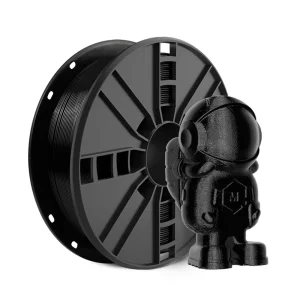
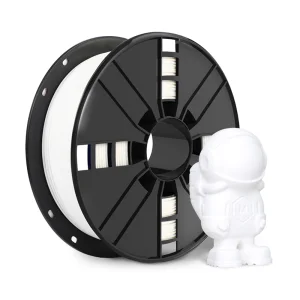
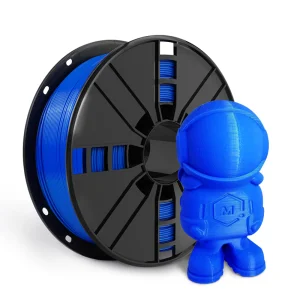
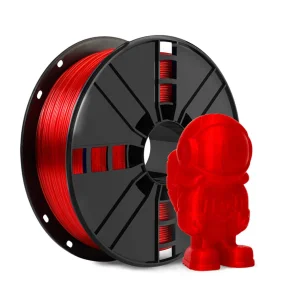
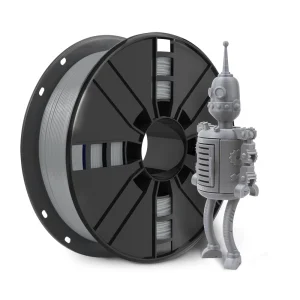
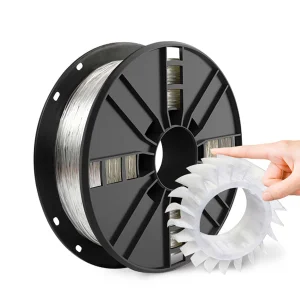
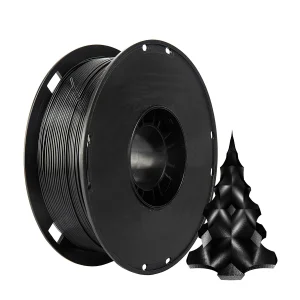
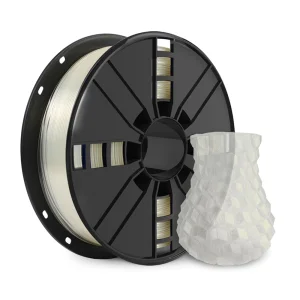
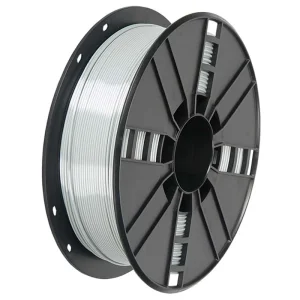
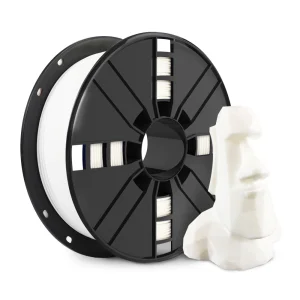
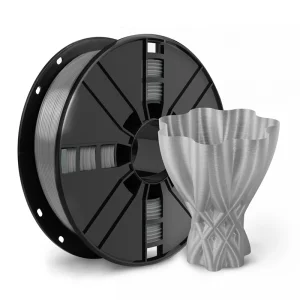
Explore our flagship wholesale extruded thermoplastic filaments engineered for industrial prototyping, consumer desktop 3D printers, and dual-extrusion additive manufacturing systems.
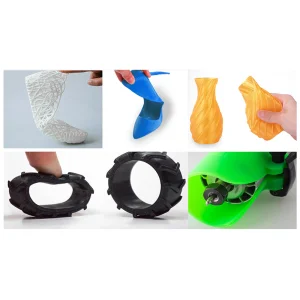
Understanding the molecular chemistry, phase morphing elastomer matrix, and thermal behavior of technical HIPS in Fused Deposition Modeling (FDM) additive manufacturing.
High Impact Polystyrene (HIPS) is a modified graft copolymer produced by polymerizing monomeric styrene in the presence of polybutadiene rubber particles (typically 8–12% rubber content by weight). This dispersed micro-phase rubber structure acts as a strain energy dissipation system, absorbing kinetic stress and transforming brittle crystal polystyrene (GPPS) into a ductile, high-impact technical thermoplastic ideal for rigid prototyping and sacrificial support structures.
The standout semantic utility of HIPS in dual-extrusion FDM 3D printing is its precise chemical dissolution behavior. While completely insoluble in water, dilute acids, and lower alcohols, HIPS dissolves rapidly in bio-derived cyclic terpene solvents, specifically d-Limonene (R-1-methyl-4-(1-methylethenyl)cyclohexene). Crucially, d-Limonene leaves companion polymers like Acrylonitrile Butadiene Styrene (ABS), Acrylonitrile Styrene Acrylate (ASA), and Polycarbonate (PC) completely untouched.
Formulated with a Glass Transition Temperature ($T_g$) of approximately 100°C to 104°C, wholesale HIPS printer filament exhibits near-perfect thermal contraction parity with industrial ABS polymers. This thermal expansion matching eliminates interface shear stresses during multi-material deposition, suppressing inter-layer delamination, warping, and corner lifting in enclosed high-speed 3D printing chambers.
Why leading global 3D printing material brands, regional distributors, and industrial additive print farms source HIPS filaments directly from specialized Chinese OEM manufacturing hubs.
Chinese filament manufacturers operate in close petrochemical proximity to primary styrene monomer (SM) synthesis plants and synthetic rubber refineries. This direct chemical chain integration ensures ultra-consistent virgin resin purity, reducing batch-to-batch polymer melt variation while insulating international bulk buyers from global raw material price spikes.
Our modern Chinese production lines feature dual-axis high-speed laser micrometers sampling filament roundness and diameter at 500 Hz. Automated feedback loops dynamically adjust melt pump pressure and haul-off puller speeds, securing an absolute target tolerance of ±0.02mm, preventing printer nozzle clogs and extrusion starvation.
HIPS polymer is passed through multi-stage industrial dehumidifying dryers (dew point below -40°C) prior to extrusion. Immediate post-wind packaging uses high-barrier aluminum vacuum pouching with active silica desiccant, preventing moisture absorption during sea freight and preserving shelf life for up to 24 months.
China factory infrastructure enables complete turnkey private label solutions for wholesale brands. From customized Pantone-matched color masterbatches, branded eco-cardboard or plastic spools, tailored spool weights (250g, 500g, 1kg, 3kg, 5kg), to custom retail carton printing and QR-coded batch traceability labels.
Analyzing the global shift towards high-speed FDM platforms, complex industrial geometry production, and zero-residual support dissolution engineering.
The rapid proliferation of high-speed CoreXY 3D printers operating at acceleration rates above 10,000 mm/s² and volumetric melt speeds over 24 mm³/s demands unprecedented polymer rheological consistency. Wholesale HIPS filament must feature tightly controlled shear viscosity and fast thermal solidification rates. Our optimized formulation prevents nozzle stringing and heat creep during high-speed dual-extrusion retractions, enabling flawless printing on modern Bambu Lab, Raise3D, and industrial IDEX machines.
As corporate ESG directives mandate sustainable manufacturing, chemical recovery systems for d-Limonene support bath waste have advanced significantly. Used Limonene containing dissolved HIPS polystyrene can be distilled via low-temperature vacuum evaporation, recovering up to 90% of the active solvent for reuse while leaving solid polystyrene residue that can be recycled into structural plastic components, significantly lowering industrial print farm operational expenses.
Water-soluble support polymers like PVA (Polyvinyl Alcohol) and BVOH suffer from high hydrolytic sensitivity, quickly degrading, bubbling, and clogging nozzles if exposed to ambient humidity above 30%. Furthermore, PVA/BVOH thermal stability breaks down above 210°C, making them unusable alongside high-temperature engineering plastics like ABS, ASA, and PC. HIPS offers superior thermal resistance up to 250°C nozzle temps and zero ambient moisture degradation at less than 40% of the material cost per kilogram.
Comprehensive technical metrics evaluating soluble support materials for enterprise industrial purchasing decisions.
| Material Metric | HIPS Filament (Torwell) | PVA (Polyvinyl Alcohol) | BVOH (Butanediol Vinyl Alcohol) | Breakaway Support |
|---|---|---|---|---|
| Primary Dissolution Solvent | d-Limonene (Bio-Terpene) | Tap Water / Warm Water | Rapid Tap Water | None (Manual Mechanical) |
| Target Companion Polymers | ABS, ASA, PC, High-Impact PETG | PLA, Low-Temp PETG, TPU | PLA, PETG, ABS (Limited) | PLA, ABS, PETG, PA, PEEK |
| Max Nozzle Printing Temp | 230°C – 250°C | 190°C – 210°C (Thermal Degradation) | 190°C – 220°C | 230°C – 320°C |
| Glass Transition Temp ($T_g$) | ~100°C (Matches ABS thermal shrink) | ~45°C (High Warping Risk) | ~68°C | N/A |
| Hygroscopic / Moisture Sensitivity | Low (Hydrophobic Rubber Matrix) | Extreme (Requires Drybox) | Extreme (Requires Sealed Enclosure) | Low to Moderate |
| Surface Finish Post-Dissolution | Flawless, Zero Residue Markings | Slightly Sticky Hydrophilic Film | Clean Water Washout | Rough Contact Points / Scars |
| Cost Index per Kg (Wholesale) | $ (Most Economical Bulk Choice) | $$$$ (High Price Point) | $$$$$ (Premium Specialty) | $$ (Moderate Cost) |
How global industries utilize HIPS filament for structural, soluble, and specialized manufacturing solutions.
When engineering parts feature enclosed hollow cavities, internal fluid channels, thread passages, or print-in-place ball joints molded in ABS or ASA, breakaway mechanical removal is physically impossible. HIPS support structures dissolve completely in a circulating d-Limonene bath, leaving perfectly clear, unmarred internal geometries with zero mechanical stress damage.
HIPS possesses an extremely low ash burn-off content ($<0.03\%$ at 600°C), making it a superior sacrificial material for foundry lost-wax investment casting processes. Complex metal casting patterns 3D printed in HIPS can be embedded in ceramic slurry and burned out completely in kilns without cracking the mold shell or leaving carbonaceous residue on cast metal parts.
Beyond soluble supports, HIPS is widely used as a direct standalone structural printing material. It produces an aesthetically pleasing, non-reflective matte surface that hides layer lines exceptionally well. HIPS models accept paints, primers, acrylic coats, and plastic cements (solvents like acetone or methyl ethyl ketone) easily, making it a favorite for scale architectural modeling.
Our 5-stage quality assurance protocol ensuring defect-free bulk shipments for international importers and distributors.
Every lot of virgin high-impact polystyrene pellets undergoes Melt Flow Index (MFI) verification, moisture titrimetry testing, and Fourier-Transform Infrared (FTIR) spectroscopy to confirm exact polybutadiene rubber concentration prior to compounding.
Dual-axis laser micrometers continually measure diameter roundness across 360 degrees. Extrusion software automatically adjusts haul-off speeds to maintain a strict ±0.02mm tolerance line, rejecting out-of-spec segments automatically.
Using servo-driven tension monitoring systems, filament is spooled layer-by-layer without crossovers, tangles, or loose loops, guaranteeing smooth, uninterrupted feeding in automatic material switching systems (AMS / IDEX).
Spools are conditioned in vacuum chambers to drive out residual humidity, immediately followed by heat-sealing in high-grade thick foil pouches with heavy-duty silica gel desiccant packs.
Every shipment is accompanied by comprehensive Technical Data Sheets (TDS), Material Safety Data Sheets (MSDS), and RoHS 2.0 / REACH SVHC chemical compliance verification reports for international customs clearance.
We provide full white-label OEM manufacturing services, offering customized spool dimensions, high-strength cardboard spools, customized Pantone colors, master carton branding, and drop-shipping logistics for global distributors.
In-depth technical answers addressing common questions from 3D printing material wholesalers, brand owners, and industrial buyers.
High Impact Polystyrene (HIPS) is the premier soluble support material for Acrylonitrile Butadiene Styrene (ABS) and Acrylonitrile Styrene Acrylate (ASA) due to three key technical factors:
For optimal mechanical strength and support surface adhesion, use the following baseline printer settings:
d-Limonene is a natural terpene solvent extracted from citrus rinds. Its non-polar hydrocarbon chemical structure breaks down the polystyrene matrix of HIPS while remaining inert towards non-styrenic or cross-linked polymers. The dissolution time typically ranges from 2 to 12 hours depending on support structure volume, infill density, and bath agitation. Utilizing an ultrasonic cleaner or heated circulating solvent bath (30°C – 40°C) accelerates dissolution speeds by up to 300%.
Torwell extruded HIPS filaments are manufactured to strict industrial tolerances:
Yes. HIPS is an outstanding standalone structural engineering thermoplastic. It possesses mechanical properties similar to ABS, featuring high impact strength, excellent dimensional stability, and lightweight density (1.04 g/cm³ compared to ABS at 1.06 g/cm³ or PLA at 1.24 g/cm³). Standalone HIPS prints feature an elegant, matte-finish surface that is exceptionally easy to sand, post-process, glue, paint, and post-machine.
We offer turnkey OEM/ODM manufacturing solutions for global 3D printing material brands. Custom services include custom Pantone color matching, private-label spool sticker design, branded retail box printing, barcode integration, and custom spool flange dimensions. Standard wholesale MOQ starts at 100 kg per color/diameter, with scalable container discount tiers for high-volume enterprise purchasing.
All Torwell HIPS 3D printer filaments comply fully with international chemical and environmental safety standards, including EU RoHS 2.0 (Directive 2011/65/EU and amendment 2015/863), REACH SVHC (Substances of Very High Concern), and UL94 HB flame resistance testing. Comprehensive MSDS (Material Safety Data Sheets) and TDS (Technical Data Sheets) are provided with all wholesale bulk shipments.
HIPS filament should be stored in a cool, dry warehouse away from direct ultraviolet sunlight and heat sources. Torwell factory shipments are pre-dried to $<0.05\%$ moisture, vacuum-sealed in heavy-duty aluminum barrier bags with active silica gel desiccants, and packed in reinforced double-wall corrugated cartons. Under sealed vacuum conditions, HIPS filament maintains factory-grade printing performance for over 24 months.
Complete your supply chain portfolio with our factory-direct engineering thermoplastics, high-speed PLA blends, and ultra-tough carbon fiber composites.