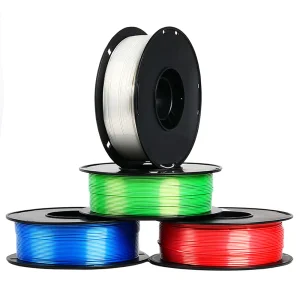
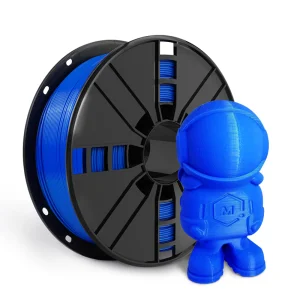
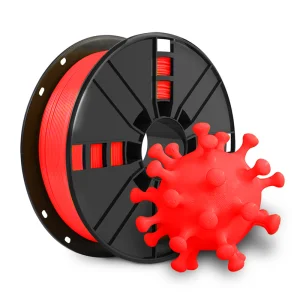
Factory-direct supply of premium 1.75mm elastomeric and engineering filaments, laser-guaranteed for consistent layer adhesion and high-speed extrusion.
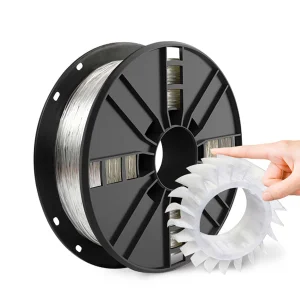
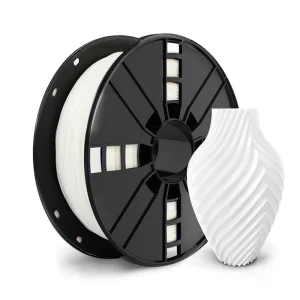
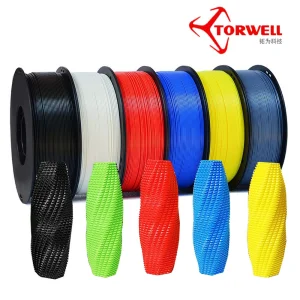
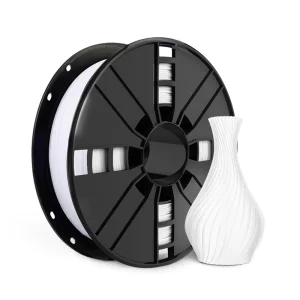
As fused deposition modeling (FDM/FFF) transitions from rapid prototyping to end-use component fabrication, elastomeric polymers—specifically 1.75mm Thermoplastic Polyurethane (TPU) and Thermoplastic Elastomers (TPE)—represent the fastest-growing sector in additive manufacturing.
While legacy industrial 3D printers historically utilized 2.85mm stock, modern direct-drive extruders, constrained path pushers, and high-speed motion engines (e.g., Bambu Lab, Voron, Creality K1 series) have standardized on 1.75mm. The smaller cross-sectional area drastically reduces the volumetric force needed to constrain flexible filaments during high-frequency retractions.
Wholesale buyers and industrial print farms are reporting a structural shift. Demand for decorative PLA is stabilizing while requirement for impact-dampening, chemical-resistant, flexible TPU spools (Shore 85A to 95A) is expanding at a CAGR of >18.5%. Key adoption drivers include custom automotive NVH grommets, robotic vacuum cups, and orthopedic footwear.
Flexible raw materials exhibit high melt elasticity and thermal expansion coefficient during extrusion. B2B buyers require manufacturers to provide verifiable inline laser diameter tracking (±0.02 mm), zero-tangle spooling tension control, and active desiccant vacuum barrier packaging to ensure zero hydrolysis during transit.
Extruding high-grade 1.75mm flexible filament demands a precise balance between hard phase (urethane/urea segments conferring tensile strength) and soft phase (polyether or polyester polyol chains conferring elasticity).
| Material Grade | Shore Hardness | Tensile Strength (MPa) | Elongation at Break (%) | Hydrolysis Resistance | Primary Industrial Application |
|---|---|---|---|---|---|
| Polyether TPU 85A | 85A (Soft) | 32.5 MPa | >650% | Excellent (Microbial resistant) | Medical wearable sensors, soft robotics, fluidics |
| Polyether TPU 90A | 90A (Medium) | 38.0 MPa | >550% | Excellent | Vibration isolators, protective boots, gaskets |
| Polyester TPU 95A | 95A (Standard) | 45.0 MPa | >480% | Moderate (High oil resistance) | Automotive bushings, footwear soles, AMS multi-color |
| Conductive TPU (ESD) | 92A (ESD Safe) | 28.0 MPa | >350% | Good (Surface Resistivity 10^4-10^6 Ω) | Electronics manufacturing trays, anti-static seals |
Unlike rigid thermoplastics such as PLA or ABS, flexible TPU can deform under tension during cooling baths. Torwell’s continuous closed-loop dual-axis laser optical micrometer measures diameter at 500 Hz. Any deviation beyond ±0.02 mm automatically triggers servomotor speed modulation on the puller wheel, ensuring zero jams in direct-drive extruders.
TPU is inherently hygroscopic. Absorbed atmospheric moisture causes ester link cleavage during extrusion at 210°C–230°C, leading to steam bubbling, popping noises, stringing, and up to 40% loss in inter-layer tensile strength. Torwell raw resins undergo vacuum desiccant drying down to <200 ppm water content prior to extrusion.
Wholesale 1.75mm flexible filaments power critical applications across diverse commercial sectors worldwide.
OEM tier suppliers employ 95A TPU for low-volume production of under-hood wire harness grommets, intake hose dampeners, and dust covers. Superior resistance to grease, diesel oil, and dynamic mechanical fatigue makes it an ideal alternative to molded EPDM rubber.
Podiatry labs utilize 85A and 90A flexible filaments to print patient-matched orthotic shoe insoles with variable gyroid infill densities. Soft Polyether TPU provides skin-compatible non-allergenic contact, shock absorption, and antimicrobial hydrolysis endurance.
Custom robotic End-of-Arm Tooling (EOAT) requires non-marring soft fingers and compliant pneumatic suction pads. 1.75mm TPU printed parts cushion delicate electronics during pick-and-place packaging operations without leaving silicone oil residue.
From raw virgin resin compounding to automated vacuum packaging, every spool follows a rigorous industrial quality protocol inside our 2,500 m² facility.
Polymer pellets are dried in continuous twin-tower desiccant air hoppers to achieve residual moisture levels <0.02%.
Precision single-screw extruders with custom L/D ratios deliver uniform thermal melt homogenization free from degradation shear.
Dual-axis laser micrometers measure diameter and roundness every 2 milliseconds, adjusting capstan speed automatically.
Servomotor-driven traverse winders lay parallel filament tracks onto cardboard or plastic spools to guarantee tangle-free feeding.
Spools are immediately sealed in heavy-duty foil/PE vacuum bags with fresh silica desiccant packets and batch QR tracking.
Torwell Technologies provides full turn-key manufacturing for global 3D printing brands, regional distributors, and high-volume industrial print farms. Partner directly with our engineering team for customized Pantone color matching, tailored Shore hardness formulations, private label spools, and custom box artwork.
Anticipating the next decade of additive polymer developments, our R&D center is advancing next-generation flexible materials.
Developing specialized rheology-modified TPU formulations engineered to maintain melt stability and inter-layer diffusion at volumetric flow rates exceeding 24 mm³/s (enabling print speeds over 250-300 mm/s on modern CoreXY systems without buckling).
Synthesizing bio-derived monomer polyols extracted from castor oil derivatives to produce high-performance TPE filaments with a 45% reduced cradle-to-gate carbon footprint, supporting global industrial carbon neutrality mandates.
Formulating halogen-free, non-toxic flame retardant TPU flexible filaments capable of meeting stringent UL94 V-0 vertical burn requirements for aerospace passenger cabin components and EV battery pack seals.
Comprehensive technical guidance from our lead polymer extrusion team.
1.75mm diameter flexible filament has become the universal industry standard because modern direct-drive extruders utilize dual drive gears positioned extremely close to the melt zone heatbreak. The smaller diameter requires less volumetric pushing torque and minimizes the flexural buckling distance inside the PTFE guide path, enabling precise retraction control, reduced stringing, and higher reliable printing speeds compared to stiff 2.85mm stock.
Shore Hardness measures elastomeric indentation resistance. 95A TPU is relatively stiff, making it easy to print on almost all standard FDM printers at speeds up to 100-150 mm/s. It is best for wear-resistant industrial covers, tires, and multi-color prints. 85A TPU is far more elastic and flexible, offering higher shock damping and soft-touch properties, but requires slower printing speeds (20-40 mm/s), direct-drive extruders with zero path gaps, and precise tension adjustment to prevent filament wrapping around drive gears.
For standard 95A Polyether TPU, we recommend a hotend nozzle temperature between 215°C and 235°C and a heated bed temperature of 40°C to 60°C using a PEI sheet, textured glass, or painter's tape. Retraction settings should be minimal (0.5 mm to 1.5 mm on direct drive extruders at 20-30 mm/s speed). Bowden extruders should turn off retraction or keep it strictly under 2.0 mm to avoid nozzle clogs.
Our facility runs automated continuous extrusion lines equipped with inline dual-axis laser micrometers that sample filament diameter and ovality at 500 Hz. The measurement feed connects directly to servomotor puller speed feedback loops. If any spool section exceeds ±0.02 mm, the automated winding system flags and rejects the batch automatically, ensuring 100% compliant shipments.
Polyether TPU offers superior hydrolytic stability, excellent resistance to microbes and water exposure, and stays flexible at low sub-zero temperatures—making it superior for medical devices, outdoor marine seals, and orthotics. Polyester TPU exhibits outstanding resistance to oils, fuels, grease, and high mechanical abrasion, making it the preferred choice for industrial machinery, automotive under-hood grommets, and tools.
Our specialized 95A high-modulus flexible TPU formulation is optimized for feeding through constrained pathways. However, very soft elastomeric grades (such as 85A or 90A TPU) are generally not recommended for long multi-stage pneumatic PTFE buffer lines like standard AMS units due to friction. For AMS users, we recommend our enterprise high-speed 95A series on cardboard or high-precision ABS spools.
Standard stock color spools have a low minimum order quantity (MOQ) starting at 100 spools per order. For custom Pantone color matching, private label branded boxes, customized spool stickers, and special weights (e.g., 250g, 500g, 1kg, 3kg, 5kg spools), the typical MOQ is 500 kg per color with a production lead time of 10 to 15 business days.
TPU is strongly hygroscopic and can absorb print-degrading moisture within hours of exposure to humid ambient air. If filament exhibits stringing, bubbling, or weak layer bonds, dry the spool in a dedicated filament dryer or forced-air oven at 65°C for 4 to 6 hours prior to printing. Always store unused spools inside sealed vacuum bags with active desiccant packs.
In addition to 1.75mm flexible filaments, Torwell manufactures a complete spectrum of high-performance rigid, aesthetic, and functional materials for global distributors.