Extruded with precision ±0.02 mm tolerance controls, customized spooling options, and laboratory-verified melt stability for seamless industrial deployment.
An in-depth analysis of high-volume OEM/ODM manufacturing demand, elastomeric material economics, and quality parameters driving corporate adoption.
The global industrial landscape for additive manufacturing materials has experienced a monumental structural shift. Where rigid thermoplastics such as PLA and ABS previously dominated rapid prototyping workflows, commercial enterprises, additive manufacturing print farms, and Tier-1 automotive/aerospace suppliers now demand high-performance flexible 3D printing materials. Thermoplastic Polyurethanes (TPU), Thermoplastic Elastomers (TPE), and Thermoplastic Polyester Elastomers (TPC) have transitioned from niche specialty filaments into fundamental engineering components required for end-use production parts, flexible ducting, custom orthotics, vibration dampening, and industrial seals.
As enterprise procurement directors and supply chain managers evaluate prospective Wholesale Flexible 3D Printing Material Manufacturers & Factories, procurement decisions extend beyond base unit economics. Sourcing resilient elastomeric polymers requires rigorous verification of batch-to-batch chemical homogeneity, precise melt flow index (MFI) consistency, strict inline laser diameter tracking, and stringent moisture mitigation systems. Minor variations in polymer chain chemistry or slight dimensional ovality can lead to extruder gear grinding, buckling in direct-drive feed systems, and catastrophic inter-layer delamination during multi-hour industrial print cycles.
Unlike standard rigid filaments, flexible filaments exhibit unique viscoelastic properties. Evaluating wholesale factory capabilities requires analyzing resin drying kinetics, inline dual-axis laser diameter monitoring metrics, shore hardness consistency (A-scale vs D-scale calibration), and specialized anti-tack spool winding mechanics engineered to eliminate layer-sticking during transit.
Decoding the molecular structure of industrial flexible filaments to optimize printability, fatigue resistance, and environmental stability.
Polyester-based TPUs deliver exceptional abrasion resistance and chemical stability against oils and fuels, ideal for industrial automotive parts. Polyether-based TPUs provide superior hydrolytic stability, low-temperature flexibility, and microbial resistance, making them essential for medical, marine, and outdoor wearable applications.
Controlling soft-segment and hard-segment block ratios allows precise tuning of Shore hardness. Standard 95A TPU offers maximum feedability on Bowden extruders; ultra-flexible 85A and 80A formulations provide true rubber-like elasticity with elongation at break metrics exceeding 550% for dynamic mechanical loading.
Unmodified flexible filaments exhibit high surface friction, leading to severe binding inside Bowden PTFE tubes and AMS (Automatic Material Systems). Factory-level inclusion of proprietary organic slipping agents reduces surface coefficient of friction without compromising inter-layer thermal diffusion.
During the extrusion of elastomeric filaments, polymer chains experience severe shear thinning inside the nozzle orifice. As the liquid melt exits the nozzle, it undergoes viscoelastic recovery, commonly known as extrudate swell. Factory polymer compounding must carefully control the molecular weight distribution (MWD) to maintain an optimal balance between low melt viscosity at high shear rates (inside nozzle tip) and rapid structural recovery post-extrusion (preventing part sag).
How global manufacturers leverage custom-formulated flexible materials to replace expensive injection tooling and traditional rubber vulcanization.
Supplying flame-retardant (UL94 V-0 ready) TPU formulations for automotive wiring grommets, cabin noise isolation pads, custom intake hoses, and protective sensor boots resistant to hydrocarbon exposure and under-hood temperature spikes.
Enabling mass-customization of footwear midsoles and orthotic insoles. Variable-density lattice structures printed from Shore 85A/90A TPU provide customized arch support, shock absorption, and energy return verified over 1,000,000 cyclic compression tests.
Industrial automation lines utilize soft TPU robotics grippers designed to handle fragile consumer goods, glass containers, and food packaging. High tear strength prevents mechanical failure when operating under continuous pneumatic cycling.
Biocompatible, ISO 10993 compliant soft TPE filaments engineered for skin-contact smartwatch straps, seal gaskets for respiratory equipment, and ergonomic surgical instrument grips requiring repeated chemical disinfection.
Inside our 2,500 m² state-of-the-art production facility: How inline laser measuring and climate-controlled packaging guarantee zero print failure.
Producing consistent flexible filament requires far tighter process control than rigid polymers due to the mechanical softness of elastomeric resins during hot-melt extrusion. At Torwell Technologies, our 6 automated extrusion lines operate under computerized close-loop feedback control systems designed to maintain strict spatial and mechanical uniformity.
Polyurethane resins are highly hygroscopic, absorbing ambient moisture within minutes. Prior to extrusion, virgin polymer chips undergo 6 to 8 hours of continuous drying in closed-loop dehumidifying hoppers maintaining dew points below -40°C, reducing moisture levels below 0.02%.
During high-speed cooling bath immersion, high-frequency dual-axis laser gauges scan the filament diameter and roundness (ovality) at 500 Hz per second. Real-time feedback automatically adjusts haul-off tractor speeds to lock tolerance tightly within ±0.02 mm.
Soft materials are susceptible to stretching and oval deformation if winding tension is excessive. CNC servo-controlled winding heads dynamically reduce spooling torque as the package diameter grows, guaranteeing neat, tangle-free, zero-overlap spooling.
Technical reference guide for procurement managers and mechanical engineers evaluating elastomeric vs standard engineering thermoplastics.
| Filament Grade | Base Polymer | Shore Hardness | Tensile Strength (MPa) | Elongation at Break (%) | Recommended Nozzle (°C) | Bed Temp (°C) | Extruder Compatibility |
|---|---|---|---|---|---|---|---|
| TPU 95A Industrial | Polyether Polyurethane | 95A | 45 – 50 | 480% – 520% | 210 – 230 °C | 30 – 60 °C | Direct Drive & Bowden |
| TPU 85A Super-Flex | Polyester Polyurethane | 85A | 35 – 40 | 580% – 650% | 220 – 240 °C | 40 – 60 °C | Direct Drive Preferred |
| TPE 80A Soft Rubber | Styrenic Block Copolymer | 80A | 25 – 30 | 700%+ | 210 – 230 °C | 20 – 50 °C | Direct Drive Only |
| PLA+ High Impact | Modified Polylactic Acid | 83D | 60 – 65 | 12% – 18% | 190 – 220 °C | 0 – 60 °C | Universal Fit |
| PETG Engineering | Glycol Polyethylene | 78D | 48 – 52 | 120% – 150% | 230 – 250 °C | 70 – 80 °C | Universal Fit |
| PC High Thermal | Polycarbonate | 85D | 70 – 75 | 8% – 12% | 260 – 290 °C | 100 – 120 °C | Enclosed High-Temp |
| Carbon Fiber Composite | PETG + 15% Chopped CF | 82D | 80 – 90 | 3% – 5% | 240 – 260 °C | 70 – 90 °C | Hardened Nozzle Required |
Empowering global distributor brands, e-commerce leaders, and 3D printing equipment vendors with full end-to-end custom manufacturing solutions.
Our pigment synthesis laboratory matches exact Pantone, RAL, or physical color swatches with minimal minimum order quantities. Spectrophotometer analysis ensures strict batch-to-batch color delta ($\Delta E < 1.0$).
From standard 1 kg retail spools to 3 kg, 5 kg, and 10 kg industrial master spools. Choose from eco-friendly recyclable cardboard spools or high-clarity transparent polycarbonate spools with private label branding.
Streamlined FCL and LCL container shipping directly from factory docks. Consolidated palletization, custom barcode generation, and Amazon FBA compliance labeling built into every shipment workflow.
Ensuring full regulatory compliance across North American, European Union, and Asia-Pacific industrial markets.
Commercial importation of polymeric additive manufacturing materials demands total transparency regarding hazardous substances, volatile organic compound (VOC) emissions, and chemical trace elements. Torwell Technologies enforces total compliance across our entire polymer raw material pipeline:
Expert answers to critical procurement, technical extrusion, and OEM private label questions.
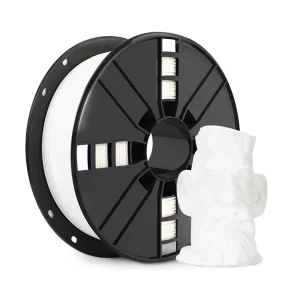
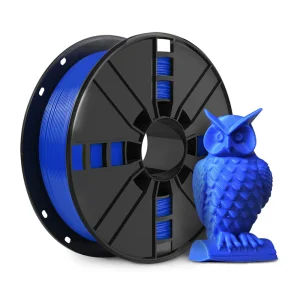
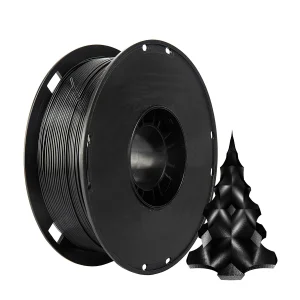
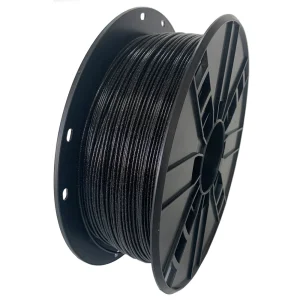
Select from our comprehensive portfolio of specialty aesthetic, structural, and flexible elastomeric 3D printer materials.