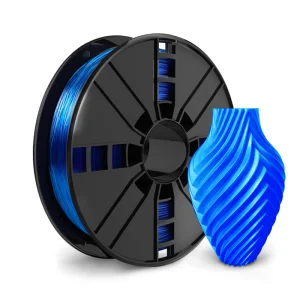
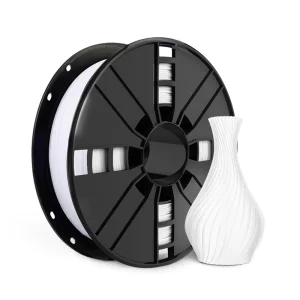
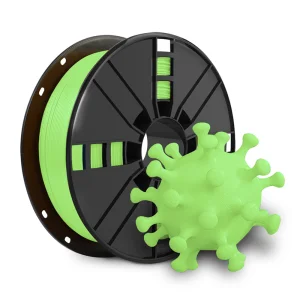
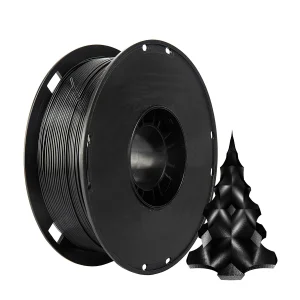
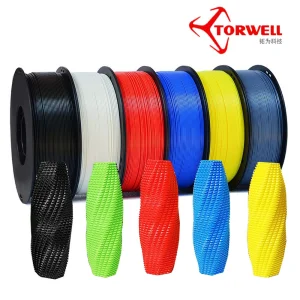
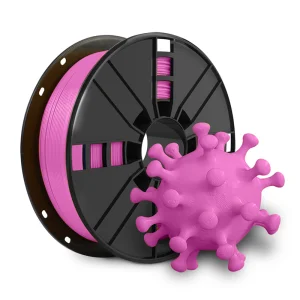
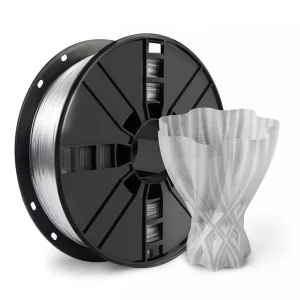
Engineered for extreme dimensional consistency, zero spool tangling, and seamless compatibility across all industrial and desktop FDM printer platforms.
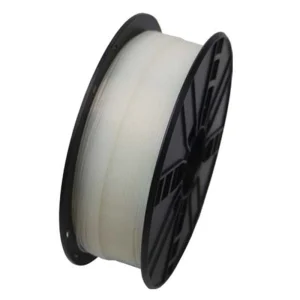
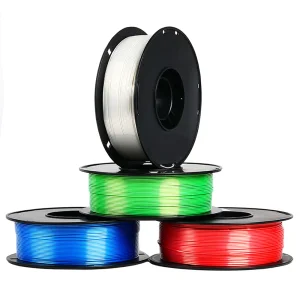
The global 3D printing industry has undergone a fundamental transition from low-volume desktop prototyping to high-throughput industrial production, digital inventory management, and distributed manufacturing print farms. At the center of this transformation is Polylactic Acid (PLA)—the world's most dominant fused deposition modeling (FDM) thermoplastic material. When sourcing from wholesale best PLA filament manufacturers & suppliers, corporate procurement officers, OEM brand owners, and regional distributors face operational challenges far beyond basic pricing per kilogram.
Modern FDM 3D printers, such as CoreXY kinematics operating at linear print speeds between 300 mm/s and 600 mm/s, place unprecedented structural demands on filament consistency. Minor imperfections that passed unnoticed on traditional 50 mm/s printers—such as ±0.05 mm diameter drift, microscopic moisture inclusions, or uneven pigment distribution—now cause catastrophic nozzle clogs, under-extrusion, layer delamination, and print farm downtime costing thousands of dollars per shift.
Traditional standard PLA resin formulations suffer from thermal degradation when subjected to high volumetric melt rates (>20 mm³/s). Leading wholesale manufacturers utilize specialized low-crystallinity lactide copolymers enhanced with high-melt-flow index (MFI) plasticizers. This enables rapid liquefaction inside the hotend thermal zone and instantaneous recrystallization upon deposition, preserving crisp geometry without stringing or warping.
Understanding molecular weight distribution, thermal glass transition, and tensile dynamics across wholesale material formulations.
Polylactic Acid (PLA) is an aliphatic polyester produced by ring-opening polymerization (ROP) of lactide monomers derived from fermented plant starch. For industrial procurement officers, selecting the right grade requires matching polymer rheology to specific end-use applications. Below is an authoritative technical comparison of our primary wholesale PLA variants:
| Filament Grade | Melt Flow Index (MFI) | Tensile Strength (MPa) | Glass Transition (Tg) | Heat Deflection (HDT) | Primary Industrial Application |
|---|---|---|---|---|---|
| Standard Wholesale PLA | 7 – 9 g/10min (210°C/2.16kg) | 62 MPa | 58°C - 62°C | 55°C | Retail distribution, educational kits, visual prototypes |
| High-Speed PLA+ (Pro Grade) | 14 – 18 g/10min (210°C/2.16kg) | 68 MPa | 60°C - 65°C | 62°C | Automated print farms, functional assembly jigs, tooling |
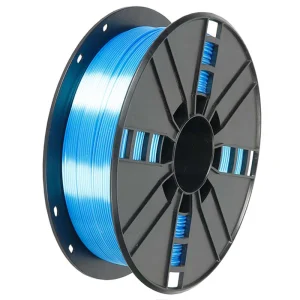
| Silk Pearlescent PLA | 10 – 12 g/10min (210°C/2.16kg) | 48 MPa | 55°C - 58°C | 52°C | Cosplay accessories, high-end visual displays, premium gifts |
| Matte Aesthetic PLA | 8 – 11 g/10min (210°C/2.16kg) | 55 MPa | 57°C - 60°C | 54°C | Architectural scale models, interior design, hidden seam parts |
| Carbon Fiber Reinforced PLA | 5 – 8 g/10min (210°C/2.16kg) | 85 MPa | 62°C - 68°C | 75°C | Drone chassis, robotics components, high-rigidity structural parts |
How vertical integration, raw resin synthesis proximity, and continuous extrusion automation reduce total cost of ownership (TCO).
Proximity to Asia's primary lactic acid polymerization chemical hubs ensures priority allocation of premium virgin resin pellets, shielding global enterprise partners from raw material market fluctuations and supply chain bottlenecks.
Operating multiple continuous automated twin-screw extrusion lines equipped with vacuum degassing and gravimetric dosing units, maintaining strict chemical homogeny across 50,000 kg monthly output.
By leveraging large-scale manufacturing, automated packaging systems, and direct container seaport logistics, wholesale buyers achieve up to 35% lower landed costs compared to regional domestic extruders.
How we eliminate diameter drift, ovality, moisture absorption, and spool tangles before shipment.
Raw polymer pellets undergo 4 to 6 hours of continuous desiccant air drying at dew points below -40°C, reducing moisture content under 200 ppm prior to melt processing.
Multi-zone temperature controllers regulate screw barrel temperatures to within ±0.5°C, ensuring thermal homogeny and preventing shear degradation of the polymer matrix.
High-speed dual-axis laser micrometers measure filament diameter at 100Hz frequency. Spun filament exceeding ±0.02mm tolerance is automatically flagged and rejected.
Precision servo-controlled traverse mechanisms guide the strand layer-by-layer across the spool arbor, guaranteeing 100% tangle-free feeding in multi-material systems (e.g., AMS).
Spools are immediately vacuum-sealed with high-absorption desiccant packs in heavy-duty thick barrier film to prevent moisture ingress during trans-oceanic container transport.
Ensuring full market compliance for North America, the European Union, Asia-Pacific, and Latin American customs borders.
Entering international markets demands strict adherence to chemical safety, environmental legislation, and product traceability. As a premier manufacturer, all our wholesale PLA filaments are backed by comprehensive certification packages that empower enterprise importers to pass border audits with zero friction.
Fully tested and verified free of SVHCs (Substances of Very High Concern), heavy metals, phthalates, halogenated flame retardants, and toxic organic dyes under EU Regulation (EC) No 1907/2006 and Directive 2011/65/EU.
Natural unpigmented PLA resin formulations comply with US FDA 21 CFR standards for food contact articles, suitable for direct contact applications when processed according to food-safe FDM guidelines.
Complies with DIN EN 13432 and ASTM D6400 industrial composting benchmarks. Under controlled high-humidity municipal composting environments (>58°C), PLA biodegrades into water, CO2, and biomass within 180 days.
From architectural master plans to rapid medical prototyping—how specialized PLA formulations deliver performance across industries.
Print farm networks operating 500+ FDM machines require maximum melt consistency. Our High-Speed PLA+ delivers flawless adhesion, zero first-layer failure, and ultra-smooth surface finish, maximizing yield rates per printer rack.
Architects and design studios rely on Matte PLA variants to eliminate plastic sheen under studio lighting. Crisp overhang performance ensures detailed facades, window frames, and complex topographies are rendered accurately.
Universities, secondary schools, and public maker spaces demand odorless, non-toxic filaments. Our standard wholesale PLA produces virtually zero VOC emissions, making it perfectly safe for enclosed classroom environments.
Using CT/MRI scan data, surgical teams print 1:1 anatomical scale models for complex procedure planning. High dimensional accuracy (±0.02mm) ensures bone structures and vascular paths map perfectly to patient anatomy.
Empowering global retail brands and Amazon sellers to build proprietary filament lines with full customization.
Building a successful retail or e-commerce 3D printing brand requires strong product differentiation and flawless packaging aesthetics. Our factory provides complete end-to-end OEM and ODM services, serving as your silent manufacturing partner while you scale your local presence.
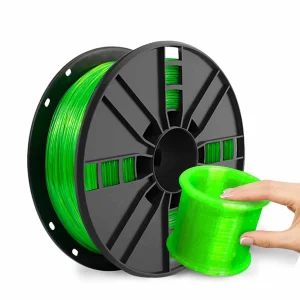
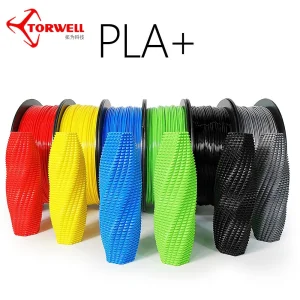
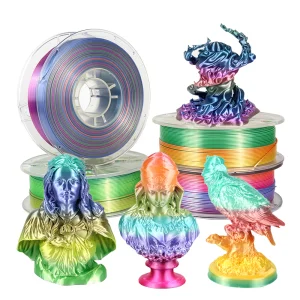
Explore our full line of PLA, ABS, PETG, TPU, PC, and silk specialty filaments available for container volume ordering.
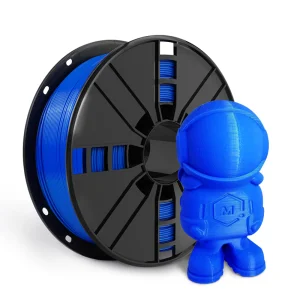
Next-generation technological developments shaping the high-volume wholesale marketplace over the coming decade.
As 3D printer hardware advances toward acceleration rates exceeding 20,000 mm/s², polymer melt rheology becomes the primary bottleneck. Future PLA extrusions will heavily leverage hyper-branched polymer structures that exhibit shear-thinning behavior—remaining fluid inside high-flow hotends while solidifying rapidly upon nozzle exit.
Global environmental mandates are pushing brands toward post-industrial (PIR) and post-consumer (PCR) bio-recycled PLA blends. Advanced chemical recycling technologies allow depolymerization of waste PLA back into pure lactide monomer, yielding recycled filament with identical mechanical properties to 100% virgin feedstock.
Smart factories are integrating computer-vision camera arrays and high-frequency ultrasound sensors directly onto extrusion lines. Machine learning models adjust screw RPM, haul-off speed, and cooling bath temperatures dynamically in real-time, eliminating micro-variations before they occur.
Detailed technical and commercial answers designed to assist corporate procurement teams and brand managers.
Our standard production lead time for a 20ft container (approx. 10,000 to 12,000 kg of custom branded filament) is 15 to 20 business days from art final approval and deposit receipt. LCL (Less than Container Load) standard stock color orders typically ship within 7 to 10 business days.
We utilize dual-axis high-frequency laser micrometers positioning inline immediately after the water cooling troughs. The laser gauge provides continuous 100Hz real-time feedback to the pulling capstan servo motor. If the filament diameter deviates beyond ±0.02mm, the closed-loop system automatically adjusts pulling speed, while an automated scrap gate diverts out-of-spec material.
For optimal results at printing speeds between 200 mm/s and 500 mm/s, we recommend nozzle temperatures between 210°C and 230°C, a heated bed temperature of 50°C to 60°C, and fan cooling at 100%. If printing on high-flow hotends (e.g., Volcano or HF nozzles), temperature can be bumped to 235°C to offset reduced dwell time.
The standard Harmonized System (HS) code for 3D printer PLA plastic monofilament is 3916.90.9000 (Monofilament of other plastics) or 3926.90.9990 depending on the destination customs authority guidelines. Complete commercial invoices and Packing Lists are issued with accurate HS classification for seamless clearance.
Yes. Our in-house color laboratory provides custom pigment matching service based on physical color chips, Pantone codes, or RAL color references. Minimum order quantity (MOQ) for custom color formulation is 500 kg per SKU. Sample swatches and test spools are delivered for customer sign-off prior to mass extrusion.
Every single spool is oven-dried immediately before spooling, wrapped with active silica gel desiccant packs, and vacuum-sealed inside thick multi-layer aluminum or PE/PA barrier film. Master cartons are reinforced with double-wall corrugated cardboard and palletized with moisture-proof stretch wrap to survive 45+ days of sea transit.
When stored in its original unopened vacuum packaging in a cool, dry environment away from direct sunlight (15°C - 25°C), our PLA filament has a shelf life exceeding 24 months without any degradation in tensile toughness, diameter, or print performance.