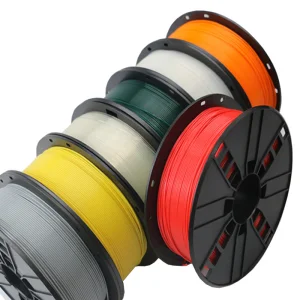
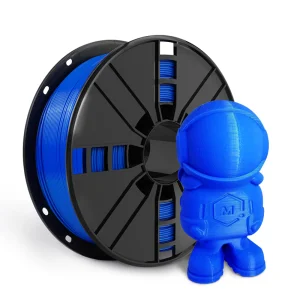
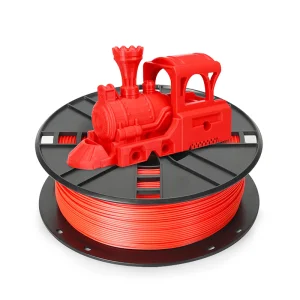
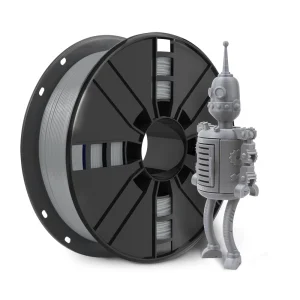
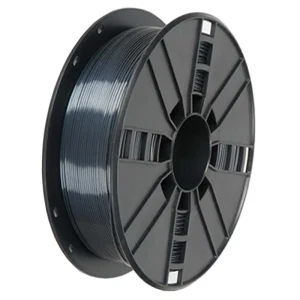
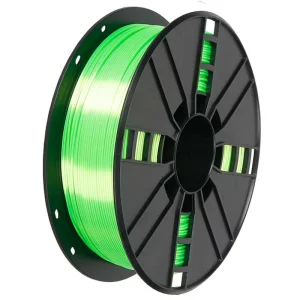
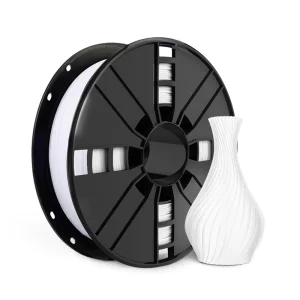
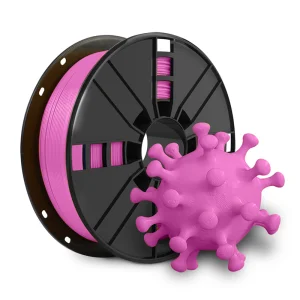
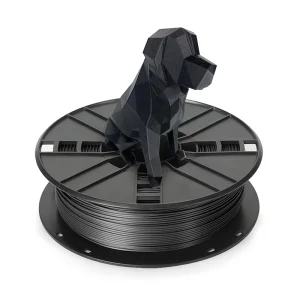
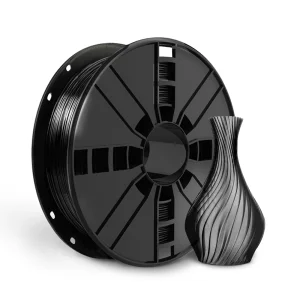
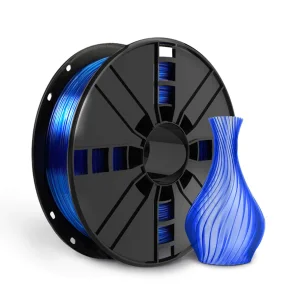
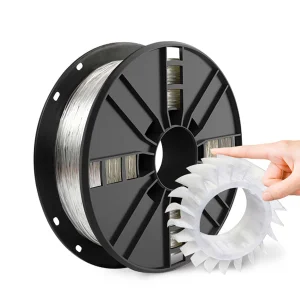
Direct factory extrusion line output engineered for consistent volumetric flow, ultra-tight diameter tolerance (±0.02mm), and high mechanical reliability across enterprise print farms.
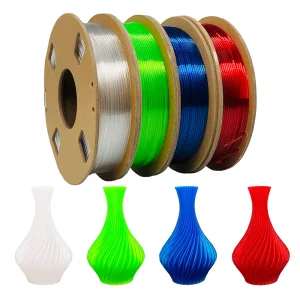
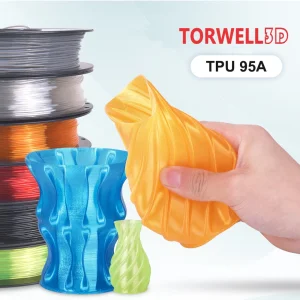
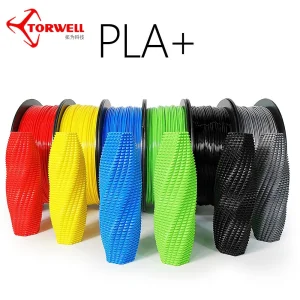
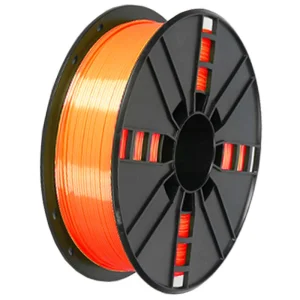
In the rapidly evolving landscape of industrial Fused Deposition Modeling (FDM) and Fused Filament Fabrication (FFF), Acrylonitrile Butadiene Styrene (ABS) remains an indispensable engineering thermoplastic. Formulated via the graft copolymerization of acrylonitrile, butadiene, and styrene monomers $(C_8H_8 \cdot C_4H_6 \cdot C_3H_3N)_n$, ABS provides a precise chemical equilibrium between structural rigidity, impact resistance, thermal endurance, and post-processing flexibility.
Provides polar chemical resistance, elevated thermal deflection thresholds ($HDT \ge 95^\circ\text{C}$), and high tensile stiffness, rendering parts impervious to functional oils, grease, and aliphatic hydrocarbons.
Functions as an elastomeric rubber matrix dispersed within the thermoplastic phase. Absorbs dynamic kinetic impact and prevents brittle shear failures during mechanical stress loading.
Imparts optical surface gloss, dimensional melt stability, and low melt viscosity under shear stress, enabling smooth layer extrusion without premature nozzle degradation or melt fracture.
| Material Grade | Tensile Modulus (MPa) | Izod Impact (kJ/m²) | HDT @ 0.45 MPa | Chemical Resistance | Primary Industrial Use |
|---|---|---|---|---|---|
| Enterprise ABS Standard | 2,300 MPa | 18.5 kJ/m² | 98 °C | High (Oils/Grease) | Automotive Jigs & Enclosures |
| High-Speed PLA Pro | 2,850 MPa | 5.2 kJ/m² | 55 °C | Low (Hydrolytic Sensitive) | Visual Rapid Models |
| Industrial PETG Commercial | 2,100 MPa | 7.8 kJ/m² | 72 °C | Moderate (Acids/Bases) | Chemical Containers |
| Engineering ASA UV-Grade | 2,350 MPa | 16.0 kJ/m² | 100 °C | Exceptional (UV/Weather) | Outdoor Fixtures & Signage |
| Reinforced Carbon Fiber ABS | 6,200 MPa | 11.0 kJ/m² | 112 °C | High (Solvent Resistant) | End-Use Tooling & Robotics |
Standardized factory-direct manufacturing requires rigorous eliminate-drift controls. Across our 2,500 m² automated production floor, 6 precision extrusion lines operate under strict environmental humidity and thermal profile settings to eliminate micro-voids, ovality, and diameter fluctuations.
ABS polymer pellets are inherently hygroscopic. Prior to extrusion, virgin resin undergoes desiccated air drying at 80°C for 4 to 6 hours, driving moisture content below 200 ppm (0.02%). This mitigates hydrolytic molecular weight degradation during thermal shear, preventing popping, stringing, and internal voids during 3D printing.
Continuous dual-axis inline laser measuring sensors monitor filament roundness and diameter at 500 Hz. Automated feedback loops dynamically adjust haul-off capstan speed and screw RPM to lock dimensional variance within an industry-leading ±0.02 mm tolerance window, preventing hot-end jam scenarios.
Variable-torque servo winders maintain uniform linear tension throughout the spooling process. Clean, side-by-side layer distribution eliminates overlapping strands and tangles, ensuring flawless spool rotation in multi-material systems (such as Bambu Lab AMS and Voron printers).
Immediately following quality inspection, spools are vacuum-sealed inside high-density moisture-proof foil or thick PE bags along with active desiccant packets. Every individual carton features batch trace numbers and barcoded tracking for complete supply chain transparency.
The shift from desktop rapid prototyping to distributed digital manufacturing networks has expanded global demand for factory-direct wholesale ABS plastic filament. Enterprise procurement departments and print farm managers face three core supply chain hurdles: batch-to-batch color variance, thermal warping instability, and unpredictable freight lead times.
High demand for functional automotive aftermarket parts, electronic housings, and heavy-duty tooling jigs. Preference for high-capacity spools (3kg, 5kg, and 10kg reels) with custom Pantone color matching for corporate branding.
Strict adherence to EU REACH (EC 1907/2006) chemical safety frameworks, RoHS 3 directives, and eco-friendly recyclable packaging (cardboard spool options and zero-single-use plastic packaging mandates).
Rapid growth in high-speed FDM print farms. Sourcing strategies focus on maximizing extrusion volume, minimizing cost per kilogram, and securing stable container-load OEM factory pricing.
ABS plastic filament is specified across high-demand industrial sectors where lower-tier polymers fail under mechanical fatigue or elevated operating temperatures.
Engineered for functional prototypes, air intakes, gauge pods, and interior trim components subject to cabin thermal conditions up to 90°C without post-print distortion.
Flame-retardant grade ABS options compliant with UL94 flammability safety thresholds, ideal for housing terminal blocks, microcontrollers, and industrial sensors.
High Izod impact absorption makes ABS perfect for shop-floor locator nests, robotic end-of-arm tooling (EOAT), and custom drilling templates exposed to repetitive shock.
ABS readily dissolves in liquid or vaporized acetone. Post-processing creates hermetically sealed, airtight fluid containers and injection-mold-like aesthetic models.
We provide end-to-end original equipment manufacturer (OEM) and private label solutions tailored to global distributors, brand owners, and high-volume enterprise users.
All ABS plastic filament batches undergo laboratory certification for RoHS 3 (EU 2015/863), REACH SVHC chemical declarations, and ISO 9001:2015 quality management audits. Comprehensive Technical Data Sheets (TDS) and Safety Data Sheets (SDS) are provided for seamless regional market clearance.
Establish your brand identity with customized spool graphics, branded die-cut retail packaging, custom Pantone filament color formulation, and tailored spool net weights (ranging from 250g sample spools to 10kg master reels).
Palletized ocean freight, air cargo consolidation, and localized warehousing support ensure predictable lead times. Protective corner caps and high-burst-strength corrugated cartons shield shipments against transpacific transit impact.
Our material research division continues to push the boundaries of thermoplastic extrusion, focusing on ultra-high-speed printing compatibility, reduced thermal contraction rates, and composite material enhancements.
Optimized Melt Flow Index (MFI > 25 g/10 min at 220°C/10kg) designed specifically for 500+ mm/s print speeds without thermal starvation or layer separation.
Incorporation of 15% high-aspect-ratio chopped carbon fiber to dramatically lower Coefficient of Thermal Expansion (CTE), enabling warp-free prints without an enclosed heated chamber.
Halogen-free self-extinguishing ABS formulation compliant with strict aviation and public transport electronic component safety codes.
AI-driven visual inspection nodes along line extruders to flag microscopic surface anomalies, ensuring zero defect rates on high-volume production spools.
Technical inquiries answered by our senior polymer engineers and global procurement specialists.
Our factory utilizes 6 fully automated extrusion lines equipped with 500 Hz dual-axis inline laser micrometers. We maintain continuous melt-temperature profiling, pre-extrusion desiccated drying (bringing moisture levels below 200 ppm), and automated tension winding to guarantee a consistent ±0.02 mm diameter tolerance and bubble-free printability.
ABS provides significantly higher heat deflection temperatures (HDT ~98°C) and superior Izod impact resistance compared to standard PLA (HDT ~55°C). While PETG offers excellent chemical resistance, ABS allows post-processing via acetone vapor polishing to produce airtight, injection-mold-quality surface finishes, making it ideal for automotive trim, electronics enclosures, and shop-floor tooling.
For optimal layer adhesion and minimal thermal stress, we recommend an extrusion nozzle temperature of 230°C–260°C and a heated bed temperature of 90°C–110°C. Printing inside an enclosed build chamber (ambient temperature 40°C–60°C) is strongly advised to prevent bed lifting and warping on large-footprint components.
Yes. We specialize in comprehensive OEM/ODM partnerships. Our R&D laboratory can match exact Pantone color codes or physical polymer samples. We provide branded spool stickers, customized retail cartons, localized barcode integration, and compliant SDS/TDS documentation tailored to your target geographic market.
Each spool is dried prior to winding, immediately packaged with an active desiccant pouch, and vacuum-sealed inside high-barrier moisture-proof foil or heavy-duty PE bags. Cartons are master-palletized and shrink-wrapped to protect against ocean humidity during international freight delivery.
Our raw materials and finished spools comply fully with EU RoHS 3 (Directive 2015/863), REACH (EC 1907/2006) SVHC chemical safety checks, and ISO 9001:2015 quality control management standards.
Partner with an established 3D printer filament manufacturer since 2011. Partner with us for reliable container shipments, custom color matching, and consistent batch quality across 75+ countries.
Explore our complete range of high-performance polymer spools, flexible elastomeric grades, and high-strength engineering formulations.