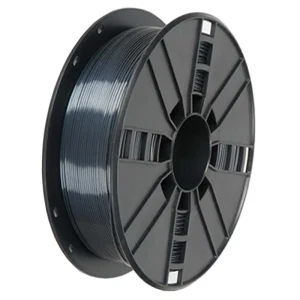
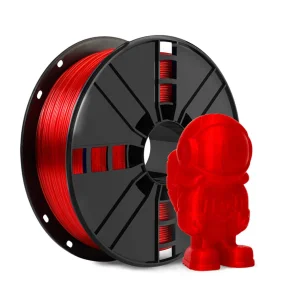
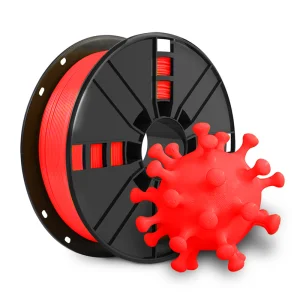
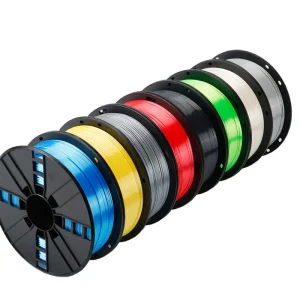
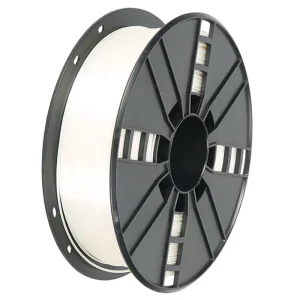
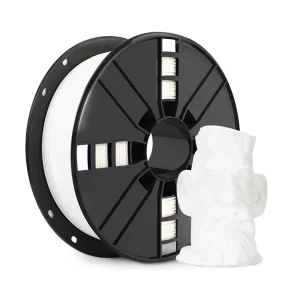
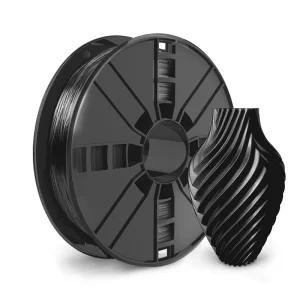
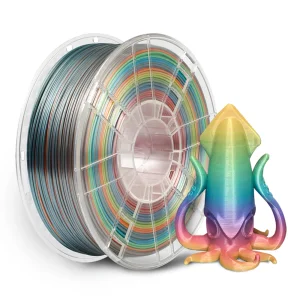
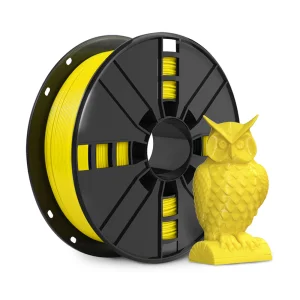
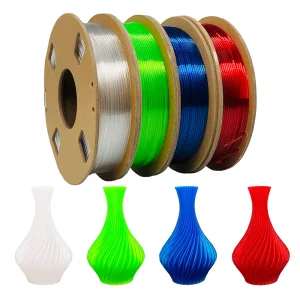
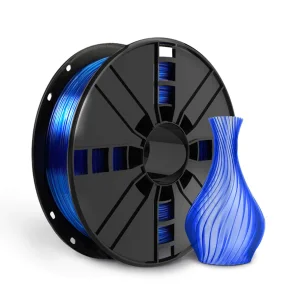
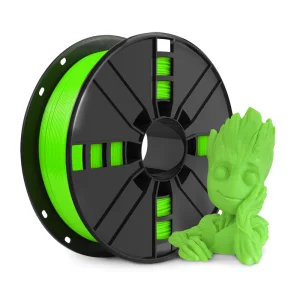
Engineered for high-speed FDM printers, consistent melt-flow indexes, and stringent ±0.02 mm diameter tolerances across all commercial production batches.
An authoritative analysis of polymer extrusion dynamics, supply chain shifts, and structural growth drivers across worldwide additive manufacturing sectors.
The global 3D printing supplies market has evolved from low-volume rapid prototyping into high-throughput, industrial end-use manufacturing. According to industry metrics, the fused deposition modeling (FDM / FFF) thermoplastic segment represents over 68% of total additive material consumption globally. B2B sourcing managers, global brand owners, and print farm operations demand rigorous raw material purity, thermal stability, and tight dimensional control to guarantee unmonitored 24/7 extrusion reliability.
Navigating global supply chain volatility requires direct integration with primary raw-material compounding factories and advanced extrusion facilities. Sourcing directly from verified Chinese manufacturing hubs provides global buyers with unprecedented pricing leverage, strict batch-to-batch traceability, and customized polymer formulations optimized for next-generation, high-speed 3D printers operating at linear print velocities exceeding 500 mm/s.
An engineering breakdown of base resins, impact modifiers, optical additives, and rheological adjustments engineered for professional FDM additive systems.
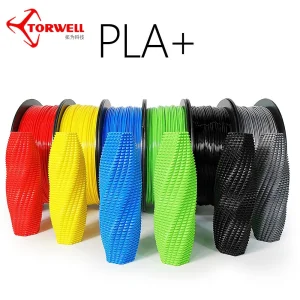
Synthetic biopolymers derived from lactide ring-opening polymerization form the backbone of commercial FDM printing. Torwell's proprietary PLA+ Pro formulation incorporates elastomer impact-modifiers and nucleation agents that elevate Charpy impact strength by over 300% compared to standard raw PLA resin. Thermal crystallization rates are specifically calibrated to allow fast layer solidifying without residual internal stress or shrinkage warping.
By introducing 1,4-cyclohexanedimethanol (CHDM) into the polyethylene terephthalate backbone, PETG prevents polymer crystallization during rapid cooling. This preserves optical clarity while imparting exceptional chemical resistance to acids, alkalis, and oils. PETG exhibits superior z-axis tensile adhesion (>48 MPa), making it the premier choice for functional fluid containers, electrical enclosures, and mechanical brackets.
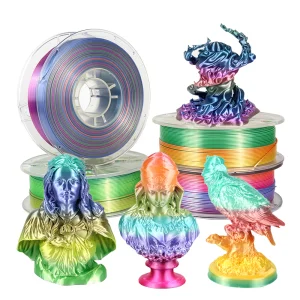
Engineered decorative materials combine high-purity PLA matrix resins with micro-pearlescent optical additives and thermoplastic polyester elastomers. Co-extrusion technology enables dual-color and tri-color split filaments within a single 1.75 mm strand. As the strand melts in the hotend, directional refraction creates dynamic metallic sheens and seamless color transitions ideal for high-end consumer products, art, and display prototypes.
Thermoplastic Polyurethanes (TPU) utilize alternating hard polyisocyanate blocks and soft polyol segments to achieve precise Shore hardness ratings (from 85A to 95A). Featuring high tear strength, superior fatigue resistance, and elasticity elongation up to 450%, TPU filaments provide structural dampening, custom gaskets, protective cases, and flexible robotic end-effectors.
For industrial applications requiring high heat deflection temperatures (HDT >95°C), ABS (Acrylonitrile Butadiene Styrene) and ASA (Acrylonitrile Styrene Acrylate) deliver rugged mechanical performance. ASA adds UV-stable acrylic ester rubbers for long-term outdoor weatherability. Additionally, compounding matrix resins with micro-milled carbon fibers (15-20 wt%) increases flexural modulus while dramatically reducing isotropic thermal expansion.
| Polymer Grade | Nozzle Temp (°C) | Bed Temp (°C) | Tensile Strength (MPa) | Impact Strength (kJ/m²) | Primary Industrial Use Case |
|---|---|---|---|---|---|
| Standard PLA | 190 – 215 | 45 – 60 | 58 – 65 | 16.5 | Rapid visual models, concept validation, educational kits |
| PLA+ Pro Grade | 205 – 225 | 50 – 65 | 62 – 68 | 42.0 | Functional enclosures, jigs, fixtures, high-speed print farms |
| Silk Shiny PLA | 200 – 220 | 50 – 60 | 52 – 58 | 22.0 | Cosplay accessories, luxury packaging, decorative goods |
| Industrial PETG | 230 – 250 | 70 – 85 | 48 – 54 | 38.0 | Chemical fluid conduits, outdoor housings, snap-fit components |
| High-Impact ABS | 240 – 260 | 90 – 110 | 42 – 48 | 45.0 | Automotive cabin trims, electronic casings, structural brackets |
| UV-Stable ASA | 245 – 265 | 95 – 110 | 44 – 50 | 40.0 | Exterior automotive housings, marine fixtures, outdoor IoT nodes |
| Flexible TPU 95A | 215 – 235 | 30 – 60 | 35 (Yield) | No Break | Industrial seals, vibration isolators, footwear prototypes |
| Carbon Fiber Composite | 250 – 280 | 80 – 100 | 75 – 90 | 28.0 | Drone frames, robotic arms, high-stiffness automotive tooling |
Exploring how global industries leverage wholesale additive supplies to optimize operational agility and localized supply chains.
Tier-1 automotive suppliers in North America and Europe utilize high-grade PETG and ABS filaments to produce localized assembly jigs, alignment gauges, and robotic gripper plates. Producing these custom tools on-demand inside manufacturing plants reduces lead times from 6 weeks to under 14 hours, yielding up to 80% reduction in tooling costs.
Hospitals and bio-medical research hubs employ precision PLA and Silk PLA filaments to convert patient CT/MRI DICOM scans into physical 3D anatomical models. These high-definition spatial models allow surgical teams to pre-plan complex orthopedic and cardiovascular procedures, significantly lowering intraoperative risks.
Tech hardware startups in Silicon Valley, Shenzhen, and Berlin rely on factory-direct TPU and PLA+ spools for functional fit testing. Rapid iterative physical prototyping of enclosure sealings, button tactility, and PCB mounts accelerates product launch cycles while protecting proprietary intellectual property prior to mass injection molding tooling commitments.
Anticipating material science breakthroughs, intelligent inline extrusion monitoring, and sustainable closed-loop biopolymer eco-systems.
Future extrusion lines are integrating closed-loop artificial intelligence models coupled with multi-axis high-speed laser micrometers sampling at 1,000 Hz. Real-time feedback loops dynamically adjust melt-pump pressure and puller speed, targeting ultra-tight diameter standard deviations under ±0.01 mm. This eliminates volumetric flow fluctuation and micro-clogging during high-speed prints.
With environmental mandates expanding across North America and the EU, factory R&D focuses on post-industrial and post-consumer recycled polymer matrices. Advanced chemical depolymerization technology restores scrap PLA and PETG back to virgin-purity monomer states, ensuring zero degradation in mechanical tensile strength or thermal flow behavior while drastically lowering carbon footprints.
As modern 3D printers standardise print speeds above 500 mm/s and accelerations beyond 20,000 mm/s², conventional polymer formulations experience severe thermal shear and under-extrusion. Future material roadmaps prioritize shear-thinning additive packages and elevated melt-flow indices (MFI), facilitating rapid melting within short hotend residence times without sacrificing z-axis inter-layer bond strength.
Turnkey B2B manufacturing services designed for global brand distributors, Amazon vendors, and high-volume commercial print farms.
Torwell operates an advanced spectrophotometer color laboratory capable of matching custom corporate pantone codes or physical master samples. Batch-to-batch color variance is strictly maintained under Delta E < 1.0, ensuring flawless visual consistency across massive international retail rollouts and multi-spool project builds.
We provide full OEM turnkey branding: custom-printed spools (eco-friendly cardboard or high-strength ABS plastic), private-label vacuum sealed foil bags, desiccant desiccation packs, customized color box cartons, and master container outer packaging tailored precisely to regional retail compliance and barcode guidelines.
Polymer raw materials undergo compulsory industrial hot-air dehumidification drying down to moisture levels under 200 ppm prior to extrusion. Immediate inline automated spool winding under constant tension prevents cross-tangling. Spools are immediately vacuum-sealed with active silica gel desiccants to guarantee long shelf-life during trans-oceanic freight.
In-depth technical and commercial answers addressing key OEM sourcing concerns for global buyers.
All standard 1.75 mm and 2.85 mm filaments are continuously measured using dual-axis inline laser micrometers. Extrusion lines enforce a target tolerance of ±0.02 mm with automatic ovality checks, ensuring smooth feeding without hotend jam risks.
We offer complete OEM/ODM solutions including custom masterbatch color compounding (Pantone/RAL matched), private-label spool sticker labels, branded inner display boxes, custom-printed cardboard spools, and technical compliance datasheets (TDS / SDS).
Yes. Our updated polymer formulations (including PLA+ Pro, PETG, and Silk PLA) feature enhanced melt rheology optimized for high-speed motion systems (such as Bambu Lab, Creality K1 series, Voron, and Prusa MK4) printing reliably at speeds of 300 mm/s to 600 mm/s.
Every spool is thoroughly oven-dried before winding, immediately vacuum-sealed in heavy-duty moisture-barrier bags with active desiccant packs, and boxed in rigid reinforced corrugated master cartons to withstand multi-week maritime transit.
Operating 6 automated extrusion lines over a 2,500 m² factory floor, our monthly capacity averages 50,000 kg to 60,000 kg. Flexible MOQs are available for trial stock orders, while customized OEM runs typically start at 100-300 kg per color grade.
Our products comply with RoHS, REACH SVHC, and CE environmental safety regulations. Technical documentation, safety data sheets (SDS), and material test certificates are fully supplied for seamless import customs clearance.
Explore our full line of specialty engineering materials, vibrant aesthetic PLA varieties, and robust PETG formulations ready for global container dispatch.