Factory-direct supply lines engineered for high-speed FDM/FFF additive manufacturing systems. Vacuum sealed with industrial desiccant for zero moisture degradation.
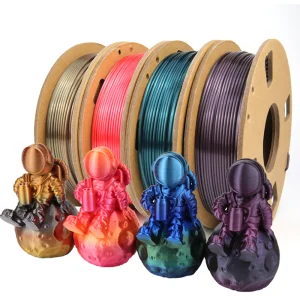
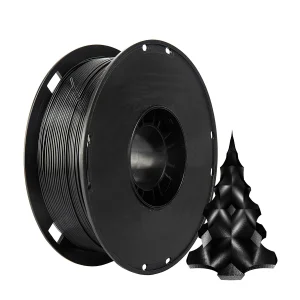
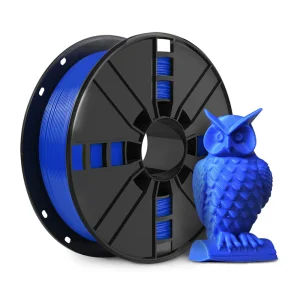
The global thermoplastic additive manufacturing market is undergoing a structural paradigm shift from rapid prototyping to direct end-use component fabrication. B2B procurement managers and print farm operators require strict polymer consistency, traceable melt behavior, and scalable supply chains.
High demand for engineering-grade composites (Carbon Fiber PLA, PETG, ABS, PC) driven by automotive prototyping, defense sub-contractors, and medical orthotics. Strict compliance with FDA biocompatibility for skin-contact devices and ASTM D638 mechanical standards is paramount.
The European Union market emphasizes REACH, RoHS, and EU Food Contact Regulation compliance. Demand for bio-based PolyLactic Acid (PLA), modified toughness PLA+, and zero-spool waste initiatives (spool-less refill coils and cardboard spools) dominates regional procurement tenders.
Rapid integration of automated high-speed print farms utilizing multi-material selector systems (AMS/MMU). Requirements focus on high-flowability polymers capable of maintaining layer bond strength at print speeds exceeding 300–600 mm/s without nozzle clogging.
As a premier wholesale 3D printer plastic filament manufacturer, we engineer raw virgin resins with targeted plasticizers, nucleating agents, and impact modifiers. Below is the technical performance baseline across our core product range.
| Polymer Type | Extrusion Temp (°C) | Bed Temp (°C) | Tensile Strength (MPa) | Heat Deflection (HDT @0.45MPa) | Density (g/cm³) | Primary Industrial Application |
|---|---|---|---|---|---|---|
| PLA / Premium PLA | 190 – 220 | 20 – 60 | 62 – 65 | 55 °C | 1.24 | Prototyping, Architectural Models, Educational Tooling |
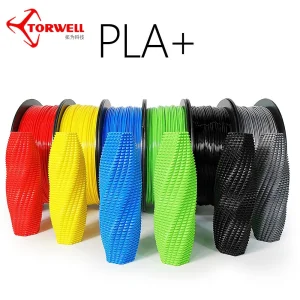
| PLA+ High Impact | 200 – 230 | 50 – 60 | 68 – 72 | 60 °C | 1.25 | Functional Assemblies, Jigs, Consumer Goods |
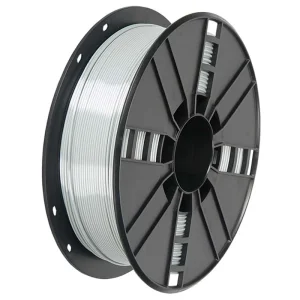
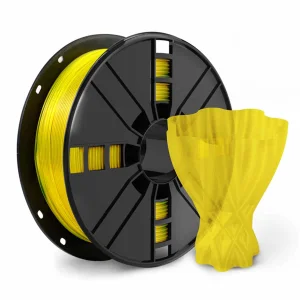
| Silk PLA Co-Extrusion | 205 – 225 | 40 – 60 | 58 – 60 | 53 °C | 1.23 | Cosplay, High-Aesthetic Displays, Retail Enclosures |
| PETG Industrial | 230 – 250 | 70 – 85 | 48 – 52 | 70 °C | 1.27 | Chemical Containers, Mechanical Guards, Outdoor Fixtures |
| ABS Heat Resistant | 230 – 260 | 90 – 110 | 42 – 46 | 85 °C | 1.05 | Automotive Interior Trim, Electronics Housings |
| ASA Weatherproof | 240 – 260 | 90 – 110 | 45 – 50 | 96 °C | 1.07 | Outdoor Electrical Junctions, Marine Parts, Signage |
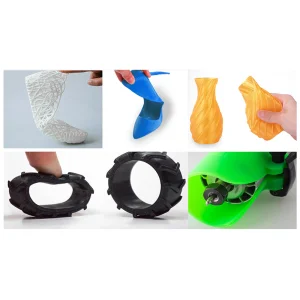
| TPU Flexible 95A / 85A | 210 – 230 | 30 – 60 | 35 – 40 | N/A (Shore 95A) | 1.21 | Gaskets, Vibration Dampeners, Footwear Solutions |
| Polycarbonate (PC) | 260 – 290 | 100 – 120 | 72 – 75 | 120 °C | 1.20 | Structural Components, High-Heat Shielding |
| Carbon Fiber Composite | 220 – 250 | 50 – 80 | 85 – 92 | 80 °C | 1.29 | Drone Chassis, Aerospace Assembly Jigs, Robotics |
Every millimeter of filament produced in our automated factory passes through dual-axis laser micro-measuring systems. If the diameter strays beyond ±0.02mm or ovality exceeds 0.01mm, automated closed-loop feedback dynamically adjusts melt pump speed or flags the spool for instant quarantine, eliminating under-extrusion and heatbreak jams.
Polymer chain degradation occurs when processing temperature and residence time are unoptimized. Our proprietary melt-extrusion screws utilize specialized mixing zones that homogenize pigment dispersion while preserving high molecular weight, ensuring maximum interlayer adhesion (Z-axis shear strength) during printing.
Additive manufacturing is undergoing rapid hardware evolution. High-speed CoreXY kinematics demanding 500+ mm/s print speeds necessitate newly formulated filament chemistry with accelerated heat absorption and rapid phase transition.
Incorporating specialized rheology modifiers into standard PLA, PETG, and TPU resins to reduce melt viscosity under high shear rates. This allows nozzles to deliver stable volumetric flow rates (up to 32 mm³/s) without causing hot-end backpressure, extruder gear slipping, or surface matte degradation.
Our dual-extruder and tri-extrusion dies split melt streams precisely along the filament axis. Products like Silk Dual-Color and Rainbow Co-Extrusion filaments transition colors seamlessly without batch color contamination, giving 3D printing service providers a competitive edge in visual display markets.
Dispersing surface-treated chopped carbon fiber and glass micro-fibers into Tough Polycarbonate and Nylon (PA) matrices. The resulting composites exhibit near-zero isotropic shrinkage, elevated heat deflection temperatures, and superior flexural modulus for metal replacement applications.
Developing 100% bio-based Polyhydroxyalkanoates (PHA) blended with modified PLA for marine degradability, while rolling out precision-wound spool-less refill systems to minimize plastic waste across industrial print farms.
Different industries require specialized material behavior. As a full-tier wholesale manufacturer, we tailor properties to meet sector-specific physical and environmental demands.
Utilizing high-impact ABS, ASA, and Carbon Fiber PLA for rapid master-pattern creation, ergonomic hand tools, assembly positioning jigs, and functional prototype testing under engine-hood thermal stress.
Flexible TPU 95A/85A and skin-safe PLA filaments for custom orthotic shoe insoles, patient-specific anatomical study models, prosthetic socket liners, and protective splints manufactured via localized digital scanning.
Flame-retardant PC and transparent PETG for small-batch enclosure production, sensor brackets, clear light-pipes, strain relief boots, and customized drone frames requiring high impact energy absorption.
We empower global brands, e-commerce retailers, and regional master distributors with custom formulation, custom color matching, private-label spooling, and retail packaging solutions.
Precise spectrophotometer color matching according to Pantone/RAL codes or physical plastic samples. Guaranteed batch-to-batch Delta-E < 1.0 color deviation.
Supplying 250g, 500g, 1kg, 3kg, 5kg, and 10kg master industrial spools in transparent PC, recyclable ABS, or eco-friendly high-density die-cut cardboard.
Industrial multi-stage baking prior to automatic vacuum sealing with heavy-duty desiccant packs, high-barrier thick poly bags, and reinforced custom retail boxes.
Comprehensive Technical Data Sheets (TDS), Safety Data Sheets (SDS), RoHS, REACH, and California Proposition 65 test documentation provided with every batch.
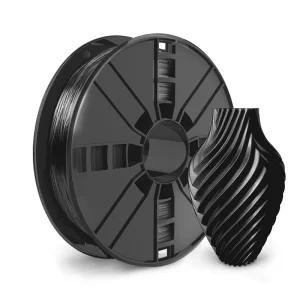
Discover our flexible elastomers, high-impact polymers, structural composites, and consumer retail packs.
Detailed answers on extrusion tolerances, OEM order minimums, moisture management, and material compliance for bulk 3D printer plastic filament orders.
We utilize dual-axis high-speed laser micrometers positioned directly after the cooling baths on every extrusion line. These units perform continuous non-contact measurement of diameter and roundness. Connected directly to our closed-loop puller control systems, any melt fluctuation triggers immediate micro-adjustments in line speed. Material exceeding ±0.02mm is automatically cut and purged before winding.
For standard stock formulations (PLA, PETG, TPU in common shades), our standard wholesale MOQ starts at 100 kg. For custom Pantone/RAL color matching or specialized brand packaging (custom box design, branded spool labels, and customized foil bags), our MOQ is typically 500 kg per color/material, which covers single-batch compounding setup.
Polymers are subjected to multi-stage dehumidifying hot-air drying down to ultra-low moisture content (<0.05%) prior to spooling. Spools are immediately vacuum-packed in high-barrier composite foil/poly bags containing active silica gel desiccant. Cartons are palletized, wrapped in moisture-barrier stretch film, and fitted with container desiccant poles to prevent ocean transit condensation.
Yes. Our spools feature standardized outer diameters (200mm for 1kg spools) and smooth rim flanges specifically calibrated for AMS/MMU drive rollers. In addition, our high-speed series (HS-PLA and HS-PETG) engineered for fast retraction dynamics prevent filament bulb formation at the hot-end tip during automated filament swaps, ensuring zero jam switching cycles.
Chopped carbon fiber particles within CF-PLA, CF-PETG, or CF-PC act as micro-abrasives. Standard brass nozzles will experience rapid orifice enlargement within 100–300 grams of throughput. We recommend utilizing hardened steel, tungsten carbide, or ruby-tipped nozzles with a minimum diameter of 0.4mm (0.6mm preferred to eliminate particle bridging) at elevated melt temperatures.