Precision-engineered thermoplastic extrusions for global distributors, OEM brands, and enterprise-scale additive manufacturing farms. Tested to ±0.02 mm tolerance.
Transitioning from rapid prototyping mediums to end-use structural polymers: How next-generation thermoplastics are driving the industrial additive ecosystem.
The global market for 3D printing plastics is undergoing a massive structural transformation. Historically utilized primarily for architectural concept modeling and aesthetic design verification, Fused Deposition Modeling (FDM) and Fused Filament Fabrication (FFF) polymers have matured into reliable structural materials deployed directly in production lines. This shift has placed unprecedented technical demands on **wholesale 3D print plastic suppliers and factories**, requiring polymer compounding laboratories to deliver higher melt-flow indices, ultra-consistent physical dimensions, and enhanced inter-layer thermal fusion.
With modern CoreXY print kinematics (such as Bambu Lab, Voron, and Creality K1 platforms) pushing print speeds beyond 500 mm/s, legacy PLA and PETG formulations suffer from severe under-extrusion and heat absorption bottlenecks. Advanced suppliers now utilize modified polymer chain architectures to achieve rapid shear thinning and instant thermal crystallization.
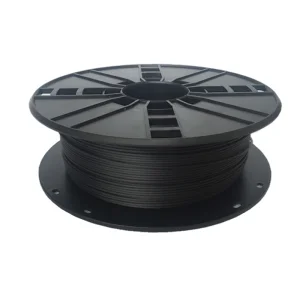
Reinforcing matrix plastics with chopped carbon fiber (15–20% loading by weight) or hollow glass beads dramatically elevates tensile modulus while virtually eliminating Z-axis thermal shrinkage. Carbon Fiber PLA and PA-CF have become standard requisites for functional jig, fixture, and drone component manufacturing.
Regulatory mandates, particularly in the European Union under ESG and REACH frameworks, are forcing commercial buyers to seek eco-conscious choices. Pure Polylactic Acid (PLA) synthesized from fermented plant starch (corn or sugar cane) offers zero toxic volatile organic compound (VOC) emissions during melting and a low carbon footprint.
Key operational metrics, quality assurance criteria, and customized OEM/ODM requirements evaluated by international procurement directors.
B2B buyers—ranging from Amazon private label brand owners to large-scale industrial 3D print farms—face severe financial risks when importing low-grade filaments. A single diameter spike over 1.80 mm can jam a print head, halting a 72-hour print farm job and causing thousands of dollars in lost production time. Consequently, procurement officers have instituted rigorous multi-tiered evaluation matrixes when auditing potential manufacturing partners in China.
Continuous dual-axis inline laser micrometers must continuously sample filament diameter and ovality at a rate of 100 times per second during extrusion. Batches failing the ±0.02 mm variance ceiling are automatically sliced and rejected before spooled packaging.
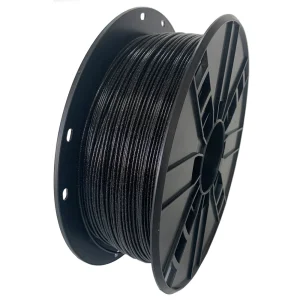
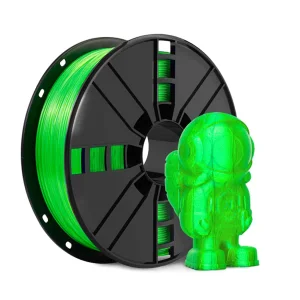
Automatic Material Systems (AMS) demand precise spool dimensions, smooth flange edges, controlled winding tension, and zero cross-layer overlapping. Modern factories must supply cardboard or anti-abrasion plastic spools optimized for high-speed multi-color switching without slipping.
Full OEM/ODM support includes matching exact target Pantone color codes, formulating customized polymer hardness levels (e.g., Shore 95A vs. 85A TPU), designing private-label retail boxes, high-barrier vacuum bags with active desiccants, and master carton drop-test validation.
How integrated raw material ecosystems, automated twin-screw extrusion lines, and smart quality control deliver unmatched value to international buyers.
China’s leadership in global 3D printing plastic supply chains stems from an unmatched density of chemical refining infrastructure, precision equipment engineering, and rapid industrial scaling capabilities. As a flagship 3D printer filament manufacturer established in 2011, **Torwell Technologies** operates a 2,500 m² standardized smart workshop equipped with 6 fully automated high-precision extrusion lines capable of outputting between 50,000 to 60,000 kg of industrial polymer filaments monthly.
Direct partnerships with tier-1 global resin producers (such as NatureWorks for PLA, Covestro for TPU, and Eastman for PETG) eliminate middle-tier distributor markups. Factory-direct raw material drying, masterbatch blending, and twin-screw melt homogenization ensure batch-to-batch color stability across multi-ton production runs.
Hygroscopic materials such as PETG, TPU, Nylon, and Polycarbonate quickly absorb ambient atmospheric humidity, leading to hydrolytic degradation during printing. China Factory 4.0 operations feature continuous inline desiccant dehumidification chambers during cooling and immediate vacuum packaging with aluminum foil barriers upon spooling.
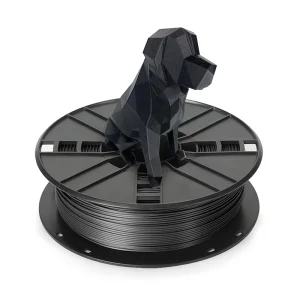
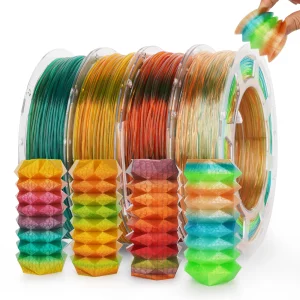
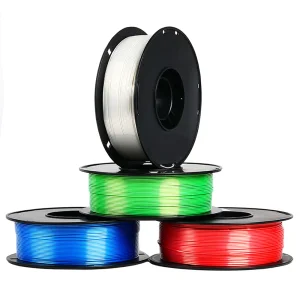
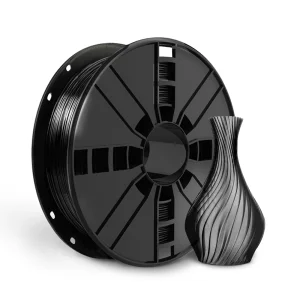
Flexible line scheduling allows simultaneous production of high-volume standard SKUs (like PLA Black 1.75mm) alongside specialized small-batch custom runs (such as Silk Co-extrusion Rainbow or Carbon Fiber PETG), offering container-load orders within 15–20 days lead time.
An engineering reference detailing extrusion temperatures, mechanical properties, and ideal application domains across major polymer grades.
| Polymer Grade | Nozzle Temp (°C) | Bed Temp (°C) | Tensile Strength (MPa) | HDT @ 0.45 MPa (°C) | Impact Resistance | Primary Commercial Use Case |
|---|---|---|---|---|---|---|
| PLA / PLA+ | 190 – 220 | 40 – 60 | 55 – 65 | 55 | Moderate | Consumer models, rapid prototyping, education, display packaging |
| Silk PLA | 200 – 230 | 50 – 60 | 45 – 52 | 52 | Standard | High-luster decorative items, cosmetics containers, cosplay, gifts |
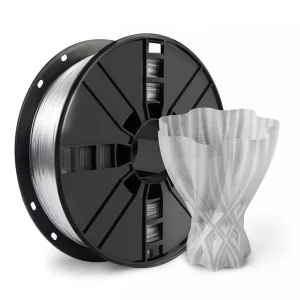
| PETG Clear/Color | 230 – 250 | 70 – 80 | 48 – 55 | 70 | High | Functional enclosures, fluid tanks, waterproof housings, snap-fits |
| ABS / ASA | 240 – 270 | 90 – 110 | 40 – 48 | 88 – 98 | Very High | Automotive exterior trims, outdoor electronic junction boxes, tooling |
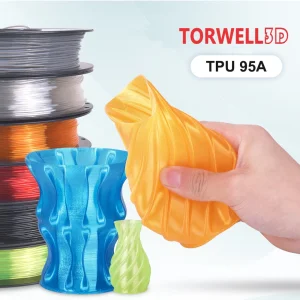
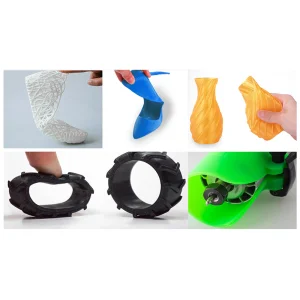
| TPU (Shore 95A) | 210 – 240 | 30 – 60 | 35 – 45 | N/A (Flexible) | Extreme | Vibration dampeners, footwear soles, gaskets, flexible seals, grips |
| Carbon Fiber PLA/PETG | 220 – 260 | 60 – 80 | 70 – 85 | 85 – 105 | High Rigidity | Lightweight drone frames, robotic end-effectors, mechanical gears |
| Polycarbonate (PC) | 260 – 300 | 100 – 120 | 65 – 75 | 120 | Ultra-High | High-temperature electrical insulators, structural safety shields |
How international enterprises in North America, Europe, Asia-Pacific, and the Middle East leverage specialized 3D printing plastics.
Tier-1 automotive suppliers in Germany and the USA use **PETG and Carbon Fiber composites** to manufacture low-weight assembly fixtures, sensor alignment brackets, and custom ducting. Replacing metal CNC fixtures with high-rigidity 3D printed plastics reduces weight by 60% and cuts lead times from weeks to hours.
Hospitals and surgical training facilities deploy high-clarity **Transparent PETG and Flexible TPU** to produce tactile 3D printed patient-specific organ models and vascular structures. These models allow pre-operative planning and custom orthotic fitting with bio-compatible synthetic plastics.
Commercial print farms in Western Europe operating hundreds of automated 3D printers rely heavily on bulk **PLA+ and Matte PLA** wholesale supply. Consistent filament density prevents nozzle clogs, ensuring continuous unattended 24/7 manufacturing of consumer products and custom enclosures.
Order direct from our automated manufacturing lines in China. Fully compliant with REACH, RoHS, and international export packaging standards.
Detailed answers regarding technical specifications, OEM capabilities, container shipping, and factory quality assurance.