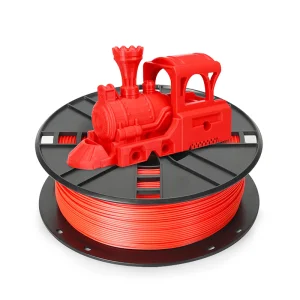
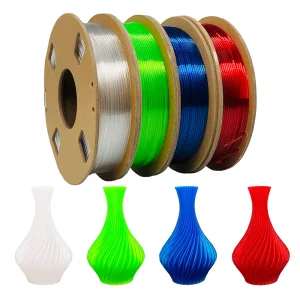
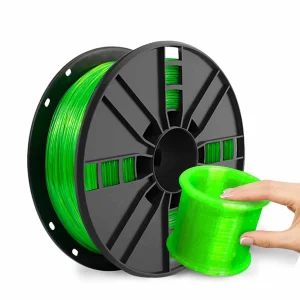
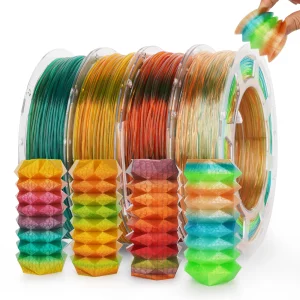
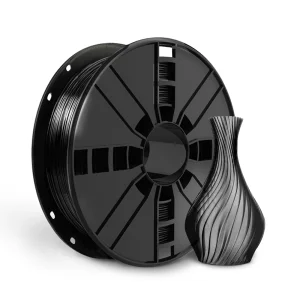
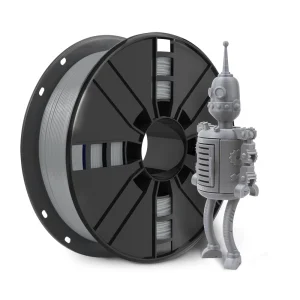
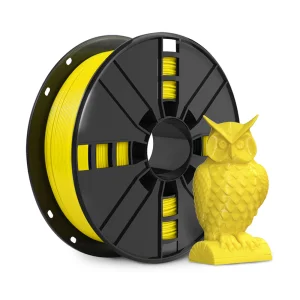
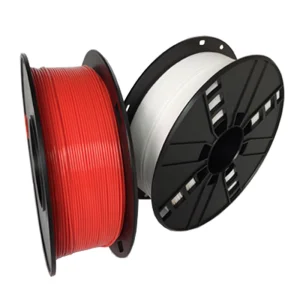
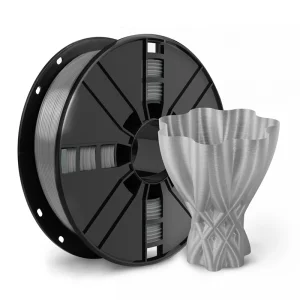
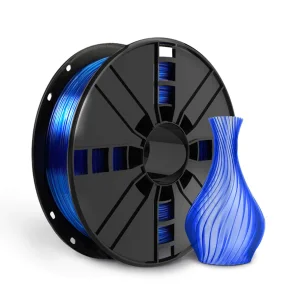
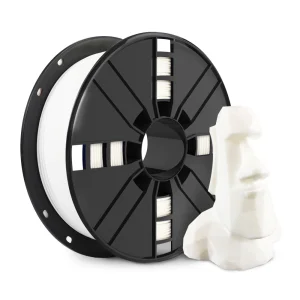
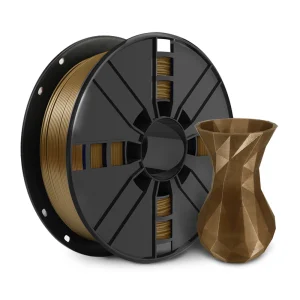
Explore initial high-demand FDM materials, engineered for commercial print farms, regional distributors, and OEM brands.
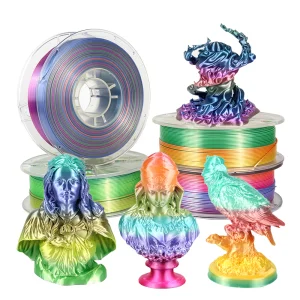
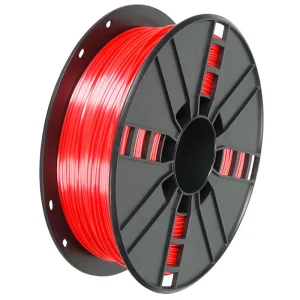
Thermoplastic Polyurethane (TPU) represents the gold standard in elastomeric additive manufacturing. Understanding its structural chemistry and extrusion dynamics is critical for commercial sourcing success.
In the rapidly maturing landscape of additive manufacturing, search intent for China TPU Filament 1kg Suppliers & Factories has evolved beyond basic price inquiries. Today's industrial buyers, print farm operators, and global OEM brands require deep technical validation, rigorous material traceability, and guaranteed dimensional tolerance. TPU (Thermoplastic Polyurethane) sits at the intersection of flexible rubber and rigid engineering plastics, offering structural resilience, high elongation at break, and extraordinary abrasion resistance.
Chemically, TPU is a linear block copolymer consisting of alternating synthetic segments: hard segments (typically formed by reacting diisocyanates such as 4,4'-methylene diphenyl diisocyanate [MDI] with short-chain diol chain extenders) and soft segments (long-chain polyether or polyester polyols). The ratio between these hard and soft segments dictates the exact durometer rating on the Shore Hardness scale—ranging from ultra-pliable 85A up to semi-rigid 98A and 55D grades.
The 1kg spool configuration (typically spooling 330–335 meters of 1.75mm strand) has emerged as the global standard for desktop and commercial Fused Deposition Modeling (FDM) / Fused Filament Fabrication (FFF) systems for three fundamental engineering reasons:
From automotive damping components to biocompatible wearable prototypes, 1kg TPU filaments serve demanding engineering environments globally.
Used for functional custom grommets, protective wiring harness boots, anti-vibration engine mounts, and flexible weather-seal prototypes where high chemical resistance to oils and grease is mandatory.
Pneumatic soft-robotic grippers, customized suction cups, and flexible joint bellows. TPU Shore 85A and 90A filaments provide non-marring contact surfaces for delicate automated assembly lines.
Custom 3D-printed orthopedic insoles, prosthetic socket liners, patient-specific shock-absorbing pads, and wearable medical device covers utilizing bio-compatible TPU formulations.
Lattice-structure shoe midsoles, high-impact smartphone protective cases, sporting gear impact bumpers, and custom watch straps requiring vibrant color retention and flexural fatigue endurance.
FPV drone shock-absorbing camera mounts, flexible landing gear bumpers, and lightweight protective antenna housings designed to withstand high kinetic impact without brittle fracture.
On-demand maintenance, repair, and operations (MRO) replacement of custom hydraulic seals, pipe flanging gaskets, and dust caps, drastically reducing spare parts inventory overhead.
Why sourcing direct from leading Chinese extrusion manufacturers delivers unmatched cost structures, technical consistency, and scalability.
The modern 3D printing filament supply chain relies heavily on raw material purity, automated temperature regulation, and precision winding. Key Chinese manufacturing hubs—particularly located in Guangdong (Shenzhen, Dongguan)—possess localized chemical supply chain clusters that grant direct access to global-grade TPU virgin resins (such as Wanhua Chemical, Covestro Desmopan, and BASF Elastollan lines).
Continuous inline laser monitoring measures strand diameter across X and Y axes 500 times per second. Deviations exceeding ±0.02mm automatically trigger servo adjustments or strand rejection.
Direct bulk resin purchasing in 20-ton lots reduces raw chemical costs by 30% compared to Western repackagers, passing direct structural savings onto global B2B buyers.
TPU is highly hygroscopic. Factories implement multi-stage dehumidifying hoppers (dew point <-40°C) before extrusion, followed by instant vacuum sealing with silica desiccant bags.
| Technical Parameter | Torwell TPU 95A | Torwell TPU 85A | Standard PETG | Standard PLA |
|---|---|---|---|---|
| Durometer / Hardness | Shore 95A | Shore 85A | Rockwell R105 | Rockwell R115 |
| Tensile Strength (MPa) | 45 MPa | 35 MPa | 50 MPa | 60 MPa |
| Elongation at Break (%) | 480% | 620% | 120% | 6% |
| Density (g/cm³) | 1.21 g/cm³ | 1.18 g/cm³ | 1.27 g/cm³ | 1.24 g/cm³ |
| Extrusion Temperature | 210°C – 235°C | 200°C – 225°C | 230°C – 250°C | 190°C – 220°C |
| Bed Temperature | 30°C – 60°C | 20°C – 50°C | 70°C – 80°C | 40°C – 60°C |
| Abrasion Loss (mm³) | 35 mm³ | 25 mm³ | 140 mm³ | 180 mm³ |
How next-generation polymer chemistry is enabling ultra-high-speed printing, functional conductivity, and sustainable bio-based production.
Developing high Melt Flow Index (MFI > 35 g/10min) formulations designed specifically for modern high-speed CoreXY 3D printers (Bambu Lab, Creality K1, Voron) achieving print speeds up to 250mm/s without nozzle clogging.
Integrating carbon nanotubes (CNTs) and conductive carbon black into soft TPU matrices to yield static-dissipative surfaces ($10^4$ to $10^7\,\Omega/\text{sq}$) for electronics cleanroom tooling and sensor housing.
Synthesizing up to 45% bio-based polyols derived from non-food castor beans, and establishing Post-Industrial Recycled (PIR) TPU spooling to help global OEMs meet strict Scope 3 decarbonization mandates.
Formulating halogen-free flame retardant flexible filaments certified under UL94 V-0 standards, unlocking critical applications in commercial aviation, rail transit interiors, and EV battery module cushions.
Ensuring seamless importation, product safety certification, and turnkey private label OEM/ODM support for international markets.
Navigating international trade laws requires strict alignment with chemical safety regulations. Leading Chinese TPU suppliers provide comprehensive compliance dossiers for target destination markets across North America, Europe, and Asia-Pacific:
Expert engineering answers to common procurement, processing, and quality control inquiries.
Shore 95A strikes the optimal balance between elastomeric flexibility and push-ability inside FDM extruders. It is rigid enough to be reliably pushed through standard Direct-Drive (and well-tuned Bowden) extruders without buckling, while retaining rubber-like flexibility, high impact absorption, and excellent structural recovery in final printed parts.
Extruding soft TPU requires specialized low-shear screw profiles, precision gear pumps (melt pumps) for constant volumetric flow, controlled multi-stage warm-water cooling baths to prevent rapid thermal shock deformation, and continuous dual-axis optical laser measurement with real-time extruder haul-off feedback loops.
Yes, provided Shore 95A or 98A filament is used alongside a PTFE tube with tight internal diameter tolerances (e.g., Capricorn XS tubing). Print speeds should be reduced to 20–30 mm/s, retraction turned off or minimized (0.5–1.0mm), and friction along the filament feed pathway minimized. For softer grades (85A–90A), Direct-Drive extruders are strongly recommended.
When stored in intact factory vacuum packaging with desiccant, Torwell TPU has a shelf life exceeding 24 months. If exposed to ambient humidity, TPU absorbs moisture rapidly, causing stringing and popping. It should be dried in a dedicated filament dryer or convection oven at 55°C–65°C for 4 to 6 hours prior to printing.
Polyester-based TPU offers superior cut, tear, and abrasion resistance along with higher mechanical strength, making it ideal for footwear and industrial buffers. Polyether-based TPU exhibits outstanding low-temperature flexibility, microbial resistance, and hydrolytic stability—making it mandatory for medical devices, underwater seals, and humid outdoor environments.
Standard stock colors (Black, White, Clear, Red, Blue) have minimal MOQs (often starting at 50–100 spools). Custom Pantone-matched TPU formulations typically require a minimum batch run of 300 kg to 500 kg to justify masterbatch dispersion and extrusion line purging setup.
TPU demonstrates exceptional resistance to aliphatic hydrocarbons, mineral oils, greases, and many common solvents (such as kerosene and motor oils). However, it can be degraded by strong acids, concentrated alkalis, aromatic hydrocarbons, and polar solvents like acetone or MEK.
Suppliers support FOB (Shenzhen/Hong Kong), CIF, CFR, and turnkey DDP (Delivered Duty Paid) ocean freight for 20ft (approx. 10,000–11,000 1kg spools) and 40ft HQ containers (approx. 22,000–24,000 spools), complete with palletization, stretch-wrapping, and export customs documentation.
Complete your catalog with specialized Silk PLA, engineering PETG, modified PLA+, and high-durability flexible spools direct from our factory lines.