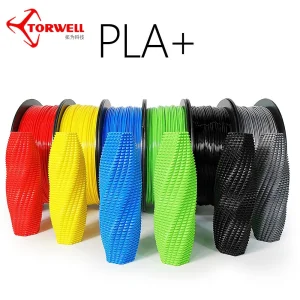
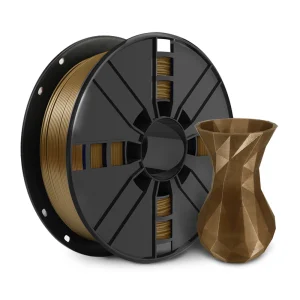
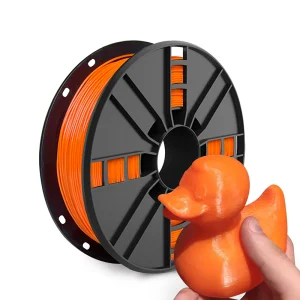
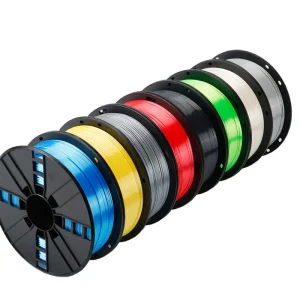
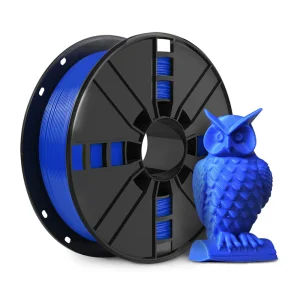
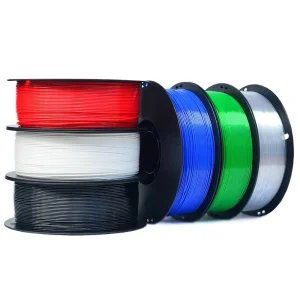
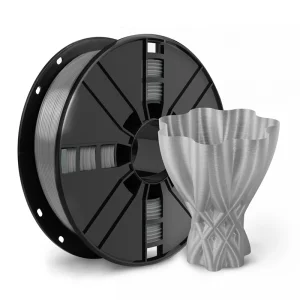
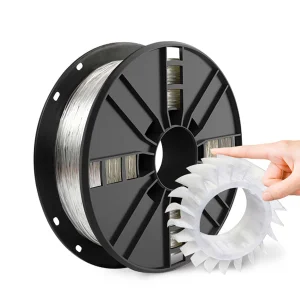
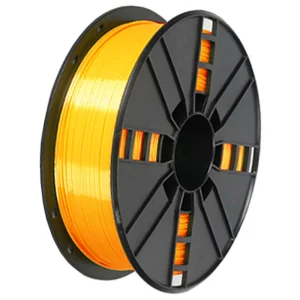
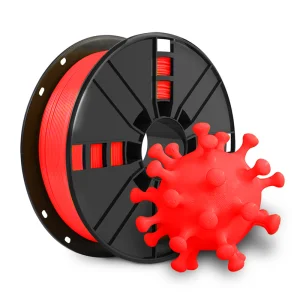
Direct from Torwell's automated extrusion lines — high-precision 1.75mm and 2.85mm spools engineered for OEM brands, global distributors, and additive manufacturing print farms.
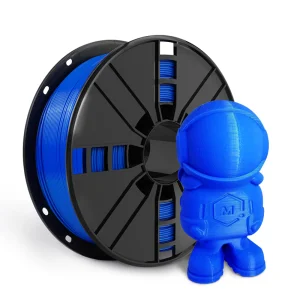
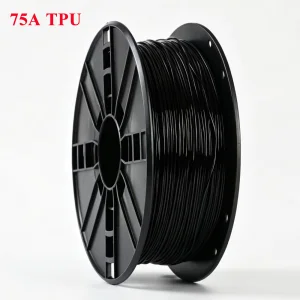
An in-depth analysis of Thermoplastic Polyurethane adoption across global additive manufacturing hubs, driving high-performance elastomeric production.
The global 3D printing polymer market is undergoing a rapid transition from rigid prototyping thermoplastics (such as standard PLA and ABS) toward functional elastomeric components. Thermoplastic Polyurethane (TPU) in 1.75mm diameter format has emerged as the global benchmark for Fused Deposition Modeling (FDM) and Fused Filament Fabrication (FFF) flexible applications.
As the world's leading manufacturing hub for additive manufacturing consumables, China supplies over 75% of global TPU filament demand. Factory-direct suppliers leverage specialized chemical compounding facilities, automated extrusion lines, and cost-effective bulk logistics to provide global buyers with unmatched cost-to-quality ratios.
The 1kg spool format has become the universal standard for enterprise procurement, offering optimal run-time without excessive spool weight overhead. For industrial print farms, this minimizes spool changeover downtime while maintaining ideal tension dynamics within automated feeding systems and temperature-controlled dry boxes.
Understanding block copolymer dynamics, micro-phase separation, and Shore hardness selection for demanding industrial environments.
Technical Insight: Thermoplastic Polyurethane (TPU) is a linear block copolymer consisting of alternating soft polymer segments (which provide flexibility and rubber-like elasticity) and rigid hard segments (which provide mechanical strength, thermal stability, and chemical resistance). Controlling this ratio during raw resin synthesis defines the mechanical behavior of 1.75mm 3D printing filaments.
| TPU Grade / Hardness | Polymer Base Type | Tensile Strength (MPa) | Elongation at Break (%) | Abrasion Loss (mm³) | Key Industrial Use Case |
|---|---|---|---|---|---|
| TPU 75A Ultra-Soft | Polyether Polyurethane | 28 - 32 MPa | > 650% | < 35 mm³ | Medical orthotics, soft prosthetic pads, vibration isolators |
| TPU 85A Flexible | Polyether / Polyester Blend | 35 - 40 MPa | > 580% | < 30 mm³ | Footwear midsoles, pneumatic tubing, wearable electronics |
| TPU 95A Industrial Standard | Polyester Polyurethane | 45 - 52 MPa | > 480% | < 25 mm³ | Automotive gaskets, protective bumpers, drone damping mounts |
| TPU 98A / 64D Semi-Rigid | High-Hardness Compound | 55 - 60 MPa | > 350% | < 20 mm³ | Industrial gears, drive belts, high-speed direct-drive parts |
TPU polymers contain polar urethane groups that aggressively absorb atmospheric moisture. If unmitigated, absorbed water hydrolyzes the polymer chain during extrusion at 220°C–240°C, causing micro-voids, steam bubbles, excessive stringing, and severe degradation of inter-layer bonding strength. Factory-level vacuum drying and aluminum-foil barrier packaging are essential standard operating procedures.
Polyether TPU: Offers superior resistance to microbial growth, hydrolysis, and low-temperature flexibility, making it ideal for medical and marine environments.
Polyester TPU: Delivers superior oil, fuel, and chemical resistance, along with higher mechanical cut-and-tear resistance for industrial automotive applications.
Extruding flexible TPU filament requires strict thermal control, low-shear screw design, and real-time laser gauging feedback loops.
Raw TPU virgin resin pellets are subjected to a continuous 4-hour desiccant dry tower treatment at 80°C, lowering moisture content below 0.02% (200 ppm) before feeding into the extruder hopper.
Custom-engineered single/twin screw geometry prevents thermal degradation and mechanical shear breakdown of TPU elastomer chains, ensuring stable viscosity and melt flow rate (MFR).
Inline dual-axis laser inspection devices scan the filament diameter at 1000Hz across 360 degrees. Automatic feedback loops dynamically adjust capstan puller speed to maintain strict ±0.02mm tolerance.
Specialized servo-driven spoolers apply precise, low-tension winding profiles. This prevents the flexible TPU strand from stretching during spooling, eliminating ovality and internal stress residual.
From modern robotics to high-performance footwear, 1.75mm 1kg TPU filaments unlock rapid prototyping and end-use manufacturing.
Used extensively for custom wiring harness grommets, vibration-dampening bushings, interior key fob covers, fluid seals, and dust boots requiring exceptional resistance to grease, oil, and road debris.
Ideal for 3D printed soft robotic end-effectors, compliant grippers, vacuum suction cups, and protective sleeve covers for multi-axis industrial articulated robotic arms operating on assembly lines.
Allows footwear developers to print customized lattice insoles, energy-returning midsoles, and ergonomic orthotic supports matched to individual patient 3D foot scan data.
Evaluating wholesale supplier capability, MOQ structures, private labeling (OEM/ODM), and total cost of ownership (TCO).
Torwell offers complete OEM/ODM solutions. Buyers can specify exact Pantone color codes, custom Shore hardness grades (75A to 98A), unique core dimensions, custom box design, and dual-branded spool labels.
1kg spools are individually vacuum-packed with activated desiccant sachets, bagged in thick aluminum moisture-barrier film, packed into sturdy master cartons (12 spools/carton), and fully palletized for sea freight (FCL/LCL) or air transport.
Direct factory manufacturing eliminates intermediary distributor markups. B2B buyers benefit from transparent tiered pricing scaled for MOQs starting at 100 kg up to full 20ft/40ft container loads.
Ensuring full international compliance for medical, consumer, and industrial end products.
| Regulatory / Quality Standard | Testing Parameter / Scope | Compliance Status | Target Sourcing Market |
|---|---|---|---|
| RoHS Directive 2011/65/EU | Heavy metals (Pb, Cd, Hg, Cr VI) & Phthalates | Fully Certified (Pass) | European Union, North America |
| REACH (EC 1907/2006) | Substances of Very High Concern (SVHC 235+ list) | Compliant (No SVHC detected) | European Economic Area |
| ISO 9001:2015 | Extrusion factory quality management system | Annual Audited Certification | Global Institutional Procurement |
| UL94 Flame Retardancy | Vertical burning flammability testing (Optional V0 grade) | Available on Request | Electronics, Aerospace, Automotive |
Practical guidelines for optimizing direct-drive and Bowden 3D printers with flexible 1.75mm TPU.
Direct-Drive Extruders: Highly recommended for TPU. Keep path between drive gears and melt zone as short and constrained as possible.
Bowden Extruders: Use stiffer TPU grades (Shore 95A or 98A). Reduce printing speeds to 15–30 mm/s and use low-friction Capricorn PTFE tubing.
Hotend Temperature: 215°C – 235°C (Higher temperatures improve layer adhesion but increase stringing).
Build Plate Temperature: 30°C – 60°C (PEI sheet, textured glass, or painters tape recommended).
Cooling Fan: 50% to 100% after layer 2 for crisp overhangs.
Direct-Drive: Retraction Distance: 0.5 mm – 1.5 mm; Speed: 15 – 25 mm/s.
Bowden Setup: Retraction Distance: 2.0 mm – 4.0 mm; Speed: 20 mm/s.
Tip: Disable retraction entirely if experiencing buckle wraps inside drive gears.
Next-generation material formulations designed for modern fast printers and circular economy goals.
Modern CoreXY 3D printers demand ultra-high flow rate materials. Next-gen high-speed TPU formulations incorporate specialized chain-extenders and slip additives, reducing melt viscosity to enable flawless printing at 200–300 mm/s without layer separation.
Moving toward circular sustainability, bio-derived TPU resins synthesize polyols from castor oil and non-food biomass, reducing the carbon footprint by up to 40% while matching standard petro-chemical mechanical performance.
Key considerations for procurement managers, brand owners, and importers sourcing TPU filament from China.
Explore our full line of engineering and consumer filament spools, manufactured in our 2,500 m² facility.