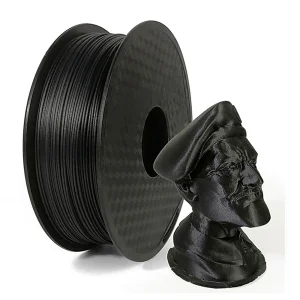
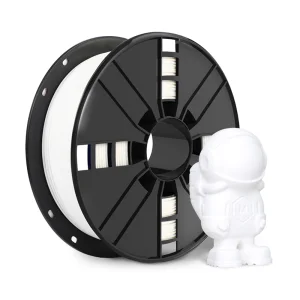
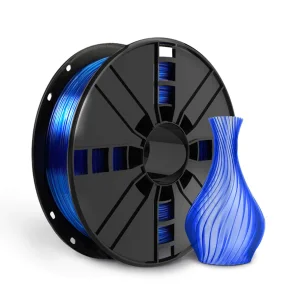
Factory-direct extrusion spools engineered with ±0.02 mm tolerance for industrial desktop and enterprise additive manufacturing.
Evaluating China's Dominance in Industrial Additive Manufacturing Consumables & Polymer Synthesis
Over the past decade, fused deposition modeling (FDM) and fused filament fabrication (FFF) 3D printing technologies have transitioned from rapid prototyping tools into full-fledged rapid tooling and end-use industrial manufacturing solutions. At the epicenter of this global additive revolution is China’s polymer processing ecosystem. Enterprise procurement teams, tier-1 distributors, and commercial print farm operators seeking the China Strongest 3d Printer Filament Suppliers & Factories face a complex matrix of choices involving material science rigor, batch-to-batch rheological consistency, dimensional control tolerance, and environmental compliance documentation.
Leading manufacturers like Torwell Technologies Co., Ltd. (founded in 2011) demonstrate how vertical integration—from raw polymer resin synthesis and color masterbatch compounding to multi-axis inline laser gauging and tension-controlled spooling—establishes the gold standard for global B2B procurement. Operating a 2,500 m² state-of-the-art production hub equipped with 6 fully automated extrusion lines, Torwell maintains a monthly output of 50,000 to 60,000 kg. This scale guarantees supply chain stability for enterprise buyers across North America, Europe, Asia-Pacific, and South America.
The true benchmark of a premier filament supplier is not merely low unit costs, but the elimination of hidden costs: nozzle clogging, inter-layer delamination, humidity-induced porosity, and filament diameter variance during un-attended 24/7 industrial production runs.
Technical Rigor Required by Commercial Print Farms, OEM Resellers, and Industrial Engineers
Equipped with dual-axis inline laser micrometer monitoring. Every meter of filament is scanned in real time to prevent feeder gear grinding, hotend clogs, and volumetric flow fluctuations.
Spectrophotometer-verified color compounding matching exact Pantone reference codes. Crucial for enterprise clients requiring uniform aesthetics across thousands of manufactured units.
Industrial desiccant pairing inside barrier foil/vacuum bags directly out of the oven chamber. Ensures moisture content remains under 0.05% weight threshold to prevent hydrolysis during printing.
Neat-layer digital spooling algorithms eliminate overlapping, crisscrossing, and physical tangles—a vital requirement for high-speed multi-material systems (e.g., Bambu Lab AMS, Prusa MMU).
For engineering departments specifying components for load-bearing or thermally harsh environments, raw polymer selection governs success. The matrix below outlines standardized mechanical properties maintained across Torwell's primary product lines:
| Polymer Material Grade | Tensile Strength (MPa) | Flexural Modulus (MPa) | Glass Transition (Tg °C) | Heat Deflection (HDT @0.45MPa) | Primary Technical Advantage |
|---|---|---|---|---|---|
| Standard PLA / PLA+ | 60 – 65 MPa | 2,800 – 3,200 MPa | 58 – 62 °C | 55 °C | High tensile rigidity, zero warping, bio-sourced biodegradability |
| PETG / PETG-Clear | 48 – 52 MPa | 2,100 – 2,400 MPa | 78 – 82 °C | 72 °C | Chemical resistance, high impact toughness, moisture tolerance |
| PETG Carbon Fiber (PETG-CF) | 75 – 85 MPa | 4,500 – 5,200 MPa | 85 °C | 80 °C | Ultra-high stiffness-to-weight ratio, structural dimensional stability |
| ABS (High Impact) | 40 – 45 MPa | 2,200 – 2,500 MPa | 102 – 105 °C | 96 °C | High heat resistance, post-processable via acetone vapor smoothing |
| ASA (UV Resistant) | 42 – 48 MPa | 2,300 – 2,600 MPa | 100 – 104 °C | 95 °C | Exceptional weatherability, UV degradation resistance for outdoor use |
| TPU 95A (Flexible Elastomer) | 35 – 40 MPa | Elongation: > 450% | -20 °C | 60 °C | Abrasion resistance, vibration damping, energy return elastomeric memory |
Translating Polymer Extrusion Capabilities into Domain-Specific Industrial Value
In modern automotive assembly lines and drone manufacturing facilities, replacing heavy CNC-machined metal fixtures with 3D printed end-use parts yields weight reductions up to 70% and cuts lead times from weeks to hours. Formulations such as PETG Carbon Fiber and ABS allow rapid fabrication of lightweight assembly jigs, CMM inspection fixtures, and robotic end-of-arm tooling (EOAT) capable of standing up to mechanical fatigue and oil exposure.
Standard polymers degrade rapidly when exposed to ultraviolet radiation and weather extremes. Torwell’s industrial ASA Filament is engineered with an acrylic-styrene-acrylonitrile terpolymer matrix that prevents yellowing, micro-cracking, and mechanical embrittlement caused by prolonged sunlight exposure. It is the material of choice for outdoor sensor housings, telecommunication antenna covers, and architectural scale models meant for prolonged field display.
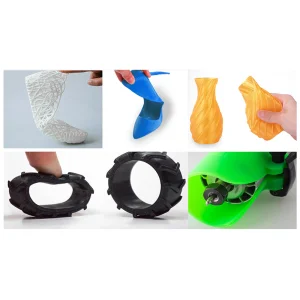
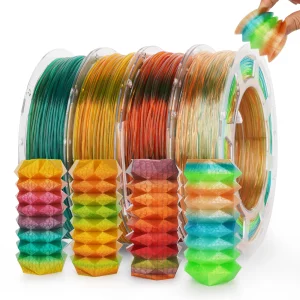
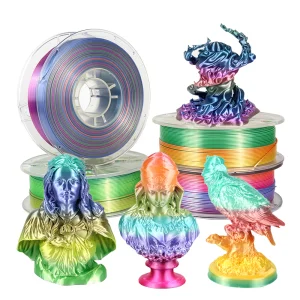
Pre-production verification requires visual and tactile fidelity. Designers utilize Silk PLA, Pearl White PLA, and Sparkling Glitter PLA to mimic injection-molded luxury cosmetics containers, retail packaging, and metallic decorative housings without costly tooling investments. Simultaneously, soft elastomeric materials like TPU 95A / Rainbow TPU serve to prototype overmolded grips, protective bumper cases, and sealing gaskets.
With hundreds of Core-XY machines operating at speeds up to 600 mm/s, print farm operators require high-flow filaments with consistent rheology. Torwell’s optimized PLA+ formulation features adjusted melt viscosity indexes, ensuring rapid thermal melting in high-flow nozzles and immediate solidifying upon extrusion—eliminating stringing, blobbing, and cold-extrusion extruder skipping.
Advancing High-Speed Extrusion, Sustainable Polymers, and Smart Inline Process Control
Next-generation hotends require polymers with accelerated thermal absorption and shear-thinning behavior. R&D efforts focus on modified PLA and PETG matrices that lower melt viscosity without sacrificing tensile strength after cooling.
Compounding short chopped carbon fibers (10-15% loading ratio) and graphene additives directly into engineering matrices (PA, PETG, PC) to achieve structural rigidity rivaling die-cast aluminum components.
Expanding the use of 100% bio-sourced polyamides and closed-loop recycled PLA/PETG feeds. Development of zero-carbon cardboard spools and fully compostable spool packaging to meet stringent EU ESG mandates.
Integrating machine learning algorithms with multi-point laser diameter sensors and infrared thermal cameras along the extrusion water-bath cooling line to predict and auto-correct ovality and tension deviations instantaneously.
Turnkey Manufacturing Capabilities for International Brands and Wholesale Distributors
For overseas brands, Amazon storefront owners, and national distributors, establishing a direct partnership with a premier Chinese manufacturer unlocks immense economies of scale. Torwell Technologies offers a comprehensive OEM/ODM workflow designed to seamlessly translate custom product ideas into market-ready boxed inventory:
Stringent Testing Frameworks Guaranteeing Safety, Sustainability, and Industrial Grade Consistency
International chemical and environmental safety compliance is non-negotiable for enterprise distributors. Manufacturers serving top-tier overseas markets must comply with rigorous international standards:
All materials are certified free of heavy metals, phthalates, toxic flame retardants, and SVHCs (Substances of Very High Concern), ensuring safety for classroom and indoor office usage.
Standardized operating procedures (SOPs) governing resin pre-drying, extrusion speed, inline gauging, spool tensioning, vacuum packaging, and final lot traceability testing.
Full Safety Data Sheets and Technical Data Sheets supplied for every polymer resin grade, detailing glass transition temperatures, thermal degradation limits, and tensile properties.
Expert Answers to Critical Additive Manufacturing & Supply Chain Questions
Filament diameter variance directly correlates with volumetric extrusion instability. If filament thickness swells from 1.75 mm to 1.85 mm, the volume of plastic delivered to the hotend increases by approximately 11.7%, causing severe over-extrusion, stringing, surface blobs, and potential hotend jamming. Conversely, under-diameter filament leads to under-extrusion and weak layer adhesion. Torwell's dual-axis laser feedback control guarantees strict adherence to target dimensions.
PETG Carbon Fiber incorporates high-modulus short chopped carbon fibers compounded directly into virgin PETG resin. This formulation drastically increases tensile strength and flexural modulus while lowering isotropic thermal expansion. The resulting printed parts exhibit negligible warping, crisp corner geometry, and a premium matte surface finish that effectively hides layer lines.
Polymers like PETG, TPU, ABS, and PC are hygroscopic, meaning they absorb humidity directly from atmospheric air. Prior to spooling, raw filament strands pass through high-temperature desiccant drying towers. Immediately after winding, rolls are sealed inside heavy-duty multi-layer barrier bags accompanied by active silica gel desiccant packs, then boxed inside reinforced corrugate shipping cartons designed to withstand maritime humidity.
For standard stock colors and formulas, MOQ starts as low as 100 to 300 spools per SKU. Custom Pantone color matching or specialized private-label retail box printing typically requires an initial order threshold of 500 to 1,000 spools to amortize set-up costs effectively.
Yes. All current Torwell PLA+, PETG, and Silk PLA series have been engineered with broad processing windows. Their rheological properties maintain controlled shear-thinning characteristics under high volumetric melt rates (up to 24-30 mm³/s), enabling clean printing at speeds exceeding 300 mm/s to 500 mm/s on modern Core-XY kinematics.
Explore specialized functional polymers, elastic materials, and industrial composite solutions factory-direct from China.