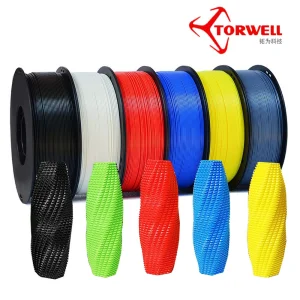
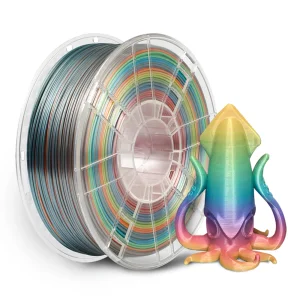
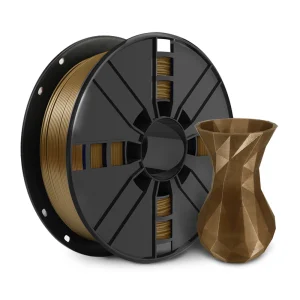
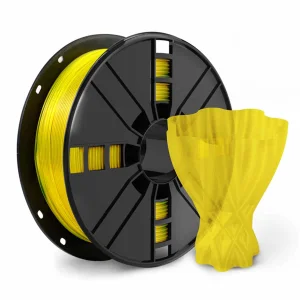
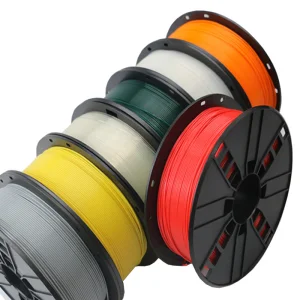
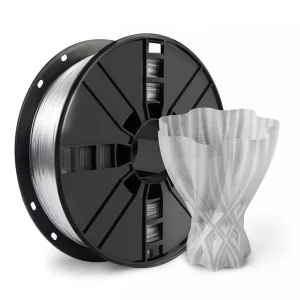
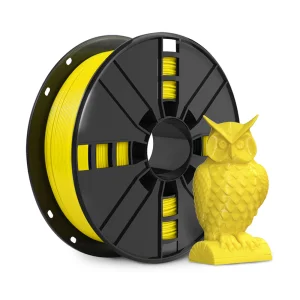
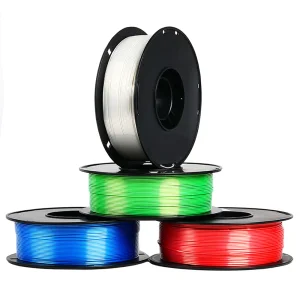
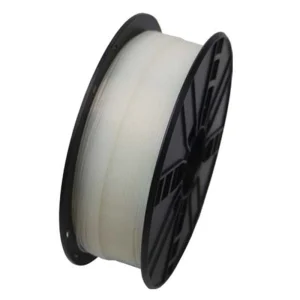
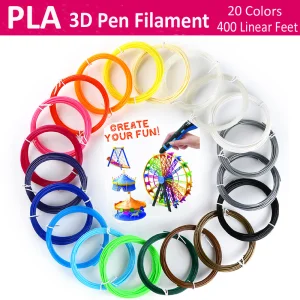
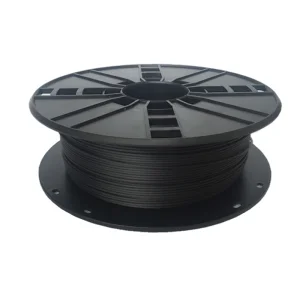
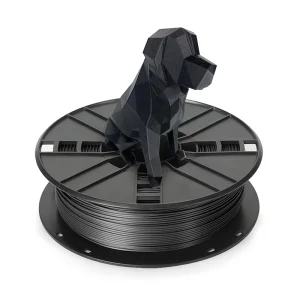
Standard & engineering-grade filament formulations manufactured in our automated factory facility.
As additive manufacturing shifts from decorative rapid prototyping to end-use industrial component production, the demand for high-performance elastomeric polymers—commonly referred to in commercial procurement as "Rubber 3D Printer Filaments"—has experienced exponential growth. Modern industrial production lines require components capable of absorbing mechanical shock, sealing complex fluid interfaces, and enduring cyclic deformation without plastic distortion.
Rubber filament is engineered primarily from Thermoplastic Polyurethane (TPU), Thermoplastic Elastomer (TPE), and Thermoplastic Vulcanizates (TPV). These block copolymers combine rigid crystalline urethane segments (providing thermal resistance and mechanical strength) with amorphous soft polyether or polyester segments (providing elasticity and shock damping).
Industrial rubber filaments span a spectrum from super-soft 60A to rigid 60D. Soft grades (60A–83A) deliver high elongation (>600%) and natural rubber tactile response, ideal for seals and gaskets. Firmer grades (90A–95A) balance flexible resilience with ease of extrusion across high-speed Direct-Drive extruders.
Extruding flexible rubber filament requires strict physical constraint of the melt zone. Because low-durometer filaments tend to column-buckle under drive gear pressure, precise laser-gauged diameter tolerance (±0.02 mm) and fully constrained, low-friction PTFE hotend paths are mandatory for reliable feeding.
Comparative physical parameters derived from standardized lab testing (ISO 527, ISO 868, ISO 34).
| Polymer Grade | Shore Hardness | Tensile Strength (MPa) | Elongation at Break (%) | Tear Strength (kN/m) | Melt Temp Range (°C) | Recommended Extruder Type |
|---|---|---|---|---|---|---|
| Ultra-Flex TPE | 60A - 70A | 18 - 22 MPa | > 750% | 45 kN/m | 205°C - 225°C | Direct Drive (Short Path, Dual-Gear) |
| Standard TPU Rubber | 83A - 87A | 30 - 38 MPa | > 650% | 65 kN/m | 215°C - 235°C | Direct Drive / Constrained Bowden |
| High-Speed Industrial TPU | 95A | 45 - 52 MPa | > 500% | 90 kN/m | 225°C - 245°C | High-Flow Direct Drive / AMS Compatible |
| Rigid Elastomer (TPV/TPU) | 60D | 58 - 65 MPa | > 350% | 120 kN/m | 230°C - 250°C | Universal (Bowden & Direct Drive) |
China's polymer synthesis and extrusion ecosystem offers unprecedented cost-efficiencies, raw material access, and technological agility for global buyers, OEM brand owners, and industrial additive manufacturing farms.
Located within China's primary advanced manufacturing hubs, our production facilities leverage direct supply chains with global top-tier polymer chemical suppliers (BASF, Wanhua, Covestro). This enables us to formulate custom TPU and TPE masterbatches tailored with UV-stabilizers, anti-static agents, flame retardants (UL94-V0), and custom Pantone color matching with zero middleman markups.
Our standardized 2,500 m² factory operates multi-stage high-precision extrusion lines equipped with dual-axis laser micro-micrometers. Real-time feedback loops automatically adjust extruder screw speed and haul-off tension to guarantee strict 1.75 mm and 2.85 mm diameter consistency with a tolerance limit of ±0.02 mm, preventing jams in high-speed printers.
Navigating international chemical regulations and customs requirements is crucial for global distributors. Our products undergo stringent lab certifications to ensure flawless market entry in Europe, North America, and Asia-Pacific regions.
All rubber filaments, TPE/TPU formulations, and color additives are fully certified under EU Directive RoHS 2011/65/EU (and amendment 2015/863) and REACH Regulation (EC No 1907/2006). Comprehensive Material Safety Data Sheets (MSDS) and Technical Data Sheets (TDS) are provided with every batch.
Elastomers such as TPU and TPE are naturally hygroscopic, absorbing ambient moisture that causes bubbling, hydrolysis, and stringing. We dry our polymers in industrial dehumidifying ovens (<0.04% water content) before automated spooling, sealing every spool in heavy-duty foil-laminated vacuum bags with activated silica desiccant.
We offer turn-key private labeling for global brands: custom branded cardboard or plastic spools, custom color box packaging, barcode harmonization, multi-language instruction inserts, and customized master carton bundling designed to withstand trans-ocean shipping.
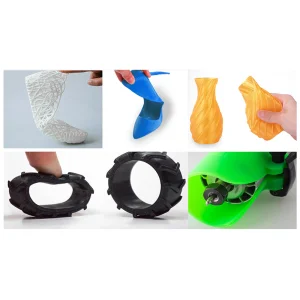
From automotive engineering to wearable medical devices, rubber-like 3D printing filament allows engineers to fabricate complex elastomeric geometries impossible to produce with traditional vulcanized rubber injection molds.
Automotive engineers use 85A and 95A rubber filaments to print custom fluid seals, protective wiring harness grommets, air intake hoses, and vibration isolation mounts. The material provides outstanding chemical resistance to oils, grease, and ozone, enduring ambient thermal cycling under the hood.
Leading athletic footwear brands utilize low-density TPE rubber filaments to print lattice-structured shoe midsoles, outsole treads, and custom orthotic insoles. FDM printing allows variable infill density mapping, tailoring cushion stiffness across different zones of the foot.
In automated assembly lines, rigid robotic claws can damage delicate objects. 3D printed soft robotic fingers, pneumatic bellows, and high-friction vacuum suction cups made from flexible rubber filament enable safe handling of fragile food, glass, and electronic components.
Tactile comfort and shock absorption make rubber filaments ideal for smartwatch straps, rugged smartphone protective boots, industrial power tool grips, and waterproof sealing rings for outdoor electronic enclosures.
The 3D printing landscape is changing rapidly. As high-speed core-XY printers redefine baseline print speeds, material science must keep pace.
Traditional TPU prints slowly (15–30 mm/s). Next-generation high-speed rubber filaments feature modified melt rheology and rapid thermal crystallization, supporting reliable printing at 150–300 mm/s on modern high-speed platforms without layer delamination.
Environmental standards are driving demand for sustainable polymers. Development of bio-derived TPU resins sourced from renewable castor oil, alongside post-industrial recycled TPE lines, reduces carbon footprints while maintaining mechanical performance.
Newer high-durometer rubber formulations (95A–70D) are engineered to prevent buckling in automated material systems (AMS) and multi-spool toolheads, opening doors to overmolded dual-material parts combining rigid spines with soft touch surfaces.
Explore additional OEM/ODM ready filaments available for container-load wholesale and custom packaging.
In-depth guidance from our chief extrusion engineers to assist procurement managers and 3D printing operators.
"Rubber filament" is an industry umbrella term. Technically, vulcanized natural rubber cannot be melted and extruded via FDM 3D printing. Instead, thermoplastic elastomers are used:
To successfully extrude soft rubber filaments, the extruder path must feature a fully constrained drive mechanism. This means the path from the dual-drive gears to the heatbreak inlet leaves zero open gap where flexible filament could bend or buckle sideways under extrusion backpressure. A Direct-Drive extruder with adjustable gear tension, short PTFE tubing, and a sharp drive gear tooth profile is strongly recommended. Bowden setups can print firmer 95A TPU, but generally fail on softer TPE grades.
Rubber filaments (especially polyether and polyester TPUs) are highly hygroscopic. Absorbed atmospheric moisture hydrolyzes the polymer chain during extrusion, resulting in popping sounds at the nozzle, extreme stringing, micro-voids in print walls, and poor tensile layer adhesion. We dry all filament prior to vacuum sealing. If exposed to air, store in a dry box and re-dry at 55°C–65°C for 4 to 6 hours in a dedicated filament dryer or convection oven before printing.
We enforce a strict ±0.02 mm diameter tolerance across both 1.75 mm and 2.85 mm production lines. Continuous inline dual-axis laser micrometer gauges scan the extrudate at high frequencies. If diameter drift exceeds set thresholds, automated haul-off tensioning dynamically corrects the filament thickness in real-time, guaranteeing zero ovality and smooth feeding.
Yes. As a direct chemical compounder and manufacturer, we support OEM/ODM custom formulations. We can formulate precise Shore hardness grades from 60A to 60D and provide exact Pantone or RAL color matching for bulk orders. Physical color samples or spectrophotometer target data can be submitted for laboratory verification prior to mass production runs.
For standard TPU 95A, print speeds of 30–60 mm/s are standard, while specialized high-speed grades can reach 150+ mm/s. For soft TPE (60A–80A), print speeds should be throttled to 15–25 mm/s. Retraction should either be turned off entirely or set to minimal distance (0.5–1.5 mm at slow speed 15–25 mm/s) on Direct-Drive setups to prevent the flexible filament from coiling inside the hotend heatbreak.
We provide comprehensive OEM manufacturing packages, including: customized cardboard or plastic spool designs, private label die-cut stickers, custom-printed outer retail cartons with client logos and barcodes, multi-language technical inserts, custom spool weights (250g, 500g, 1kg, 3kg, 5kg industrial master spools), and custom desiccant/vacuum bag branding.
Our manufacturing facility is ISO 9001:2015 certified. All produced filaments fully comply with EU RoHS (Directive 2011/65/EU and 2015/863) and REACH (EC 1907/2006 SVHC list). Food-contact grade raw materials compliant with FDA 21 CFR standards are also available upon request for specialized medical or culinary applications.