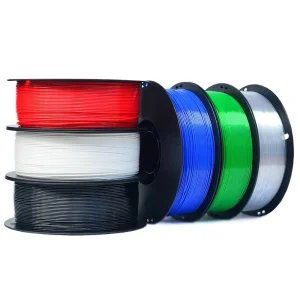
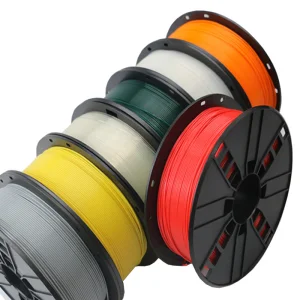
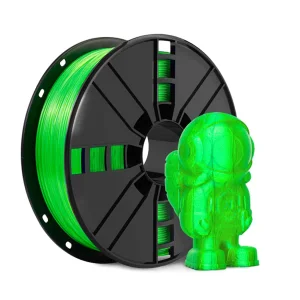
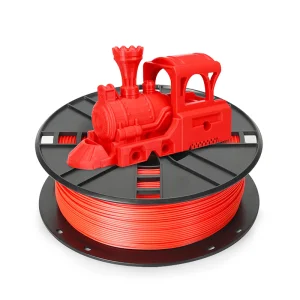
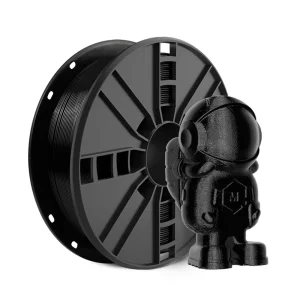
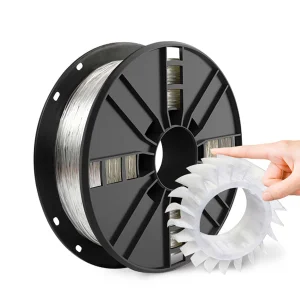
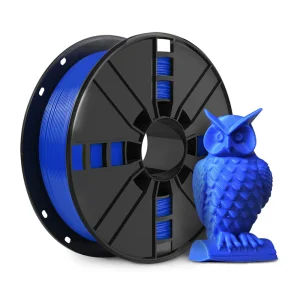
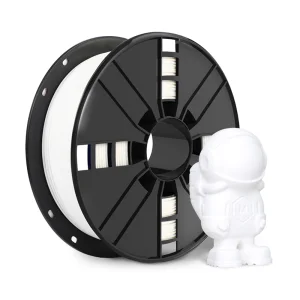
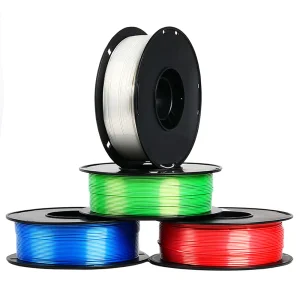
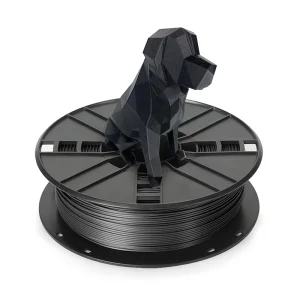
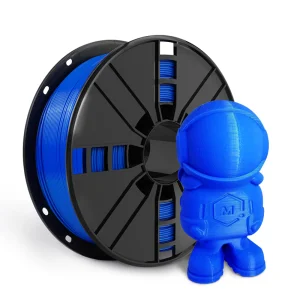
High-precision 3D printer materials manufactured under ISO 9001 certified inline laser tolerance control.
The global additive manufacturing sector has undergone a profound paradigm shift over the past decade. Fused Deposition Modeling (FDM) and Fused Filament Fabrication (FFF) technologies have transitioned from rapid prototyping tools in specialized engineering labs to ubiquitous digital manufacturing workhorses. At the heart of this revolution lies material innovation. Among aesthetic thermopolymer offerings, Rainbow PLA (Polylactic Acid) filament has emerged as one of the fastest-growing volume drivers for B2B distributors, e-commerce brand owners, and industrial print farms worldwide.
China stands as the global epicenter of 3D printing filament production, producing over 80% of the world's commercial thermoplastic spools. However, the manufacturing of premium multi-color gradient filaments—specifically Rainbow PLA—demands a far higher degree of polymer engineering and extrusion control than standard monochromatic filaments. Where basic single-color PLA extrusion requires standard thermal profiling, Rainbow PLA manufacturing requires precise multi-dosing masterbatch injection, dynamic co-extrusion control, complex melt-rheology stabilization, and strict inline thermal quenching to avoid layer-to-layer stress fractures.
For international procurement directors, OEM brand strategists, and enterprise distributors, sourcing directly from audited Chinese manufacturers like Torwell Technologies offers unmatched economies of scale, rigorous quality compliance, and custom formulation agility. Modern Chinese factories have upgraded from basic extrusion shops to high-tech polymer processing facilities equipped with dual-axis laser feedback loops, automated tension-controlled winding lines, and hydro-sealed vacuum packaging suites.
To understand why premium Rainbow PLA yields flawless aesthetic prints with smooth color transitions, one must examine the underlying polymer physics. Polylactic Acid is a bio-based aliphatic polyester derived from fermented plant starch (typically corn or sugarcane). Standard PLA resin exhibits high tensile strength and minimal thermal expansion, but creating a smooth, multi-hue gradient requires sophisticated polymer modification.
Precise carrier-resin loading (2.5% to 4.0%) ensures organic color pigments disperse evenly without clustering or clogging print nozzles down to 0.2mm.
Standardized MFI targets of 6–10 g/10 min (at 210°C / 2.16kg) guarantee consistent volumetric flow rate across all color transitions during high-speed printing.
Calculated gradient dosing permits either "Fast Rainbow" (color shifts every 5–8 meters) or "Long Gradient Rainbow" (color shifts every 15–20 meters) tailored to model size.
During sequential extrusion, colors are fed into the barrel through computerized gravimetric dosing units. The primary technical hurdle is preventing thermal degradation during pigment transition. If the melt temperature fluctuates by even 3°C across barrel zones, the melt viscosity shifts, causing localized diameter swell or shrinkage. Leading Chinese factories overcome this by utilizing multi-zone ceramic heating elements combined with water-jacketed feed throat cooling and dynamic static mixers.
Modern buyers distinguish between high-shine Silk Rainbow PLA and non-reflective Matte Rainbow PLA. Silk variants incorporate thermoplastic elastomers (TPE/TPU) and specialized mineral mica pigments that impart a pearlescent lustre, while lowering brittleness. Matte variants utilize calcium carbonate (CaCO₃) fillers and organic matte agents to scatter light, hiding 3D layer lines almost completely. Factory custom formulation allows B2B clients to specify exact gloss levels and color shift sequences.
Standardized mechanical, thermal, and optical parameters for Torwell export-grade PLA materials.
| Property Parameter | Standard PLA | Silk Rainbow PLA | Matte Rainbow PLA | High-Speed (HS) Rainbow PLA |
|---|---|---|---|---|
| Base Resin Origin | Virgin PLA (NatureWorks 4032D/similar) | PLA + Modified Polyolefin Elastomer | PLA + CaCO₃ Organic Fillers | Ultra-Low Viscosity Modified PLA |
| Density (g/cm³) | 1.24 g/cm³ | 1.21 g/cm³ | 1.28 g/cm³ | 1.22 g/cm³ |
| Tensile Strength (MPa) | 60 - 65 MPa | 52 - 58 MPa | 45 - 50 MPa | 55 - 60 MPa |
| Elongation at Break (%) | 4% - 6% | 12% - 18% | 3% - 5% | 8% - 10% |
| Glass Transition Temp (Tg) | 58°C - 60°C | 56°C - 58°C | 60°C - 62°C | 57°C - 59°C |
| Recommended Printing Temp | 190°C - 210°C | 200°C - 225°C | 190°C - 215°C | 210°C - 240°C |
| Max Flow Volumetric Speed | 12 mm³/s | 15 mm³/s | 14 mm³/s | 32 mm³/s (500 mm/s speed) |
| Gradient Shift Cycle Length | N/A (Monochrome) | 10m / 15m / 20m Options | 8m / 12m Options | 5m / 10m Options |
Selecting a reliable China Rainbow Filament PLA factory requires evaluating their quality assurance protocols. Filament defects such as ovality, diameter drift, bubbles, and tangled spools lead directly to nozzle jams, print failures, and costly product returns for distributors.
While standard PLA is heavily utilized for functional jigs, fixtures, and mechanical prototypes, Rainbow PLA serves specialized commercial and aesthetic niches across global markets:
Sculptors, toy designers, and 3D printing studios leverage Rainbow PLA to produce unique 1-of-1 figurines, dragon models, and decorative vases without post-processing or painting.
Schools and universities deploy multi-color PLA in maker spaces. Non-toxic, bio-friendly PLA combined with vibrant color shifts stimulates student engagement in spatial design.
Design agencies utilize gradient color shifts to highlight topographical contour lines in architectural models and visualize ergonomic zones in consumer product prototypes.
Establishing a robust OEM supply chain with a Chinese manufacturer requires understanding regulatory compliance, private label options, and global freight requirements:
Where Rainbow PLA polymer research is heading in the era of ultra-high-speed 3D printing.
Next-gen Rainbow PLA blends feature modified rheology allowing flow rates up to 35 mm³/s, meeting the demands of coreXY printers running at 500–600 mm/s without layer delamination.
Integrating thermo-chromic additives with multi-color gradient extrusion yields dual-spectrum materials that change colors both sequentially along the strand and dynamically with thermal shifts.
R&D efforts focus on replacing synthetic color pigments with fully bio-degradable organic dyes, rendering Rainbow PLA completely compostable under industrial EN 13432 standards.
Answers to common B2B sourcing, OEM integration, and material engineering questions.
High-performance TPU, ABS, PETG, and Specialty PLA filaments direct from China manufacturing facilities.