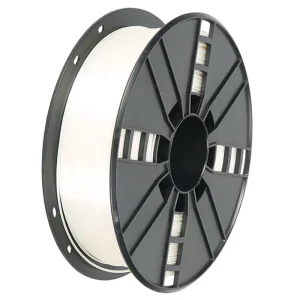
Direct factory-extruded 3D printing consumables meeting international ISO 9001, RoHS, and REACH benchmarks.
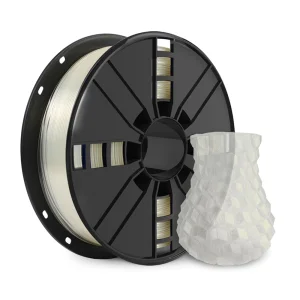
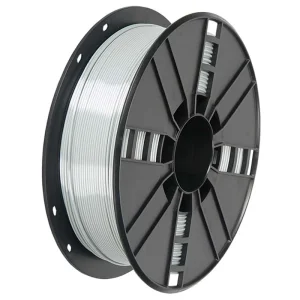
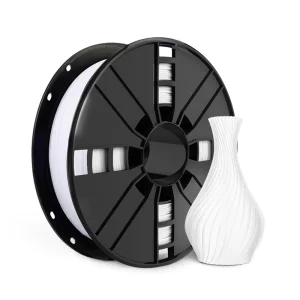
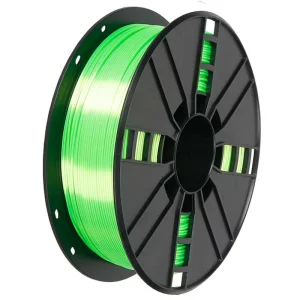
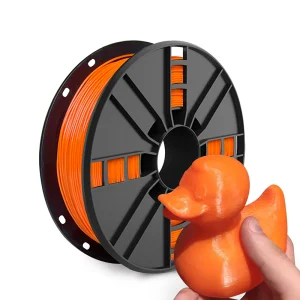
In the rapidly modernizing ecosystem of additive manufacturing (AM), Poly Lactic Acid (PLA) remains the cornerstone material powering both consumer Fused Deposition Modeling (FDM) and enterprise-scale rapid prototyping. As global demand shifts toward high-speed 3D printing engines (exceeding volumetric flow rates of 30 mm³/s and speeds above 500 mm/s), procuring PLA filament from an experienced China PLA filaments manufacturer is no longer merely a transaction of volume cost—it is a critical integration into an advanced material science supply chain.
China’s manufacturing landscape has transitioned from basic extrusion assembly to high-precision Industry 4.0 polymer synthesis. By pairing virgin L-lactic acid bio-resins with inline optical laser telemetry, dynamic melt flow indexing (MFI), and closed-loop thermal regulation, Chinese manufacturers set global standardizations in dimensional tolerance (±0.02 mm), spooling geometry, and chemical stability. This whitepaper provides procurement officers, OEM brand owners, and industrial print farm operators with deep information gain surrounding market shifts, engineering benchmarks, manufacturing automation, and supply chain resilience.
Modern PLA extrusion requires strict melt-rheology control. Selecting a manufacturer utilizing direct inline closed-loop dual-axis laser diameter monitoring ensures optimal layer adhesion, zero nozzle clogging under high thermal shear, and seamless compatibility with multi-material automated spooling systems (AMS/MMU).
Macro-market dynamics driving the next generation of bio-polymers, composite formulas, and high-throughput printing ecosystems.
The rapid proliferation of CoreXY 3D printers operating at speeds of 300 mm/s to 600 mm/s has created a sharp demand for low-viscosity, high-thermal-conductivity PLA compounds. Leading Chinese manufacturers are re-engineering the polymer chain through modified melt flow indexers (MFI 15-25g/10min), allowing instantaneous liquefaction in high-flow melt zones without sacrificing inter-layer shear strength or causing stringing during rapid retractions.
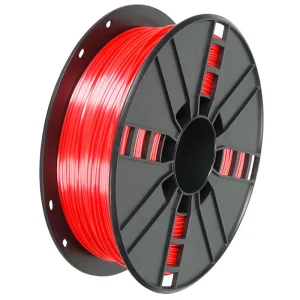
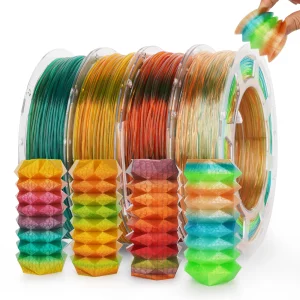
Consumer and commercial adoption has bifurcated into functional and aesthetic applications. Co-extrusion technology (dual-color, tri-color silk PLA), matte surface finishes that mask layer lines, and pearlescent luster additives have seen an exponential rise. Advanced multi-screw co-extrusion technology enables sharp radial alignment of distinct pigments within a single 1.75 mm strand.
Standard unmodified PLA exhibits brittleness, limiting its industrial structural applicability. The industry standard has rapidly shifted toward toughened PLA (PLA+), synthesized via elastomeric phase dispersion (such as core-shell rubber modifiers). This increases Izod notched impact strength from 2.5 kJ/m² to over 7.5 kJ/m², bridging the mechanical gap between PLA and ABS.
Corporate ESG directives are forcing global distributors to vet upstream suppliers for carbon footprint metrics. Tier-1 China factories utilize 100% bio-derived lactide resins sourced from corn starch or sugarcane (such as NatureWorks Ingeo), paired with fully recyclable cardboard spools, biodegradable vacuum bags, and zero-waste closed-loop water recirculation systems.
Key quality controls, auditing standards, and OEM specifications required by international brands and high-volume distributors.
Industrial buyers require a target diameter of 1.75 mm (or 2.85 mm for specialized industrial systems) with strict optical laser monitoring. Top-tier factories deploy dual-axis or triple-axis high-speed laser micrometers that scan the strand at 500 Hz. The feedback loop dynamically adjusts capstan puller speeds, eliminating cross-sectional ovality (elliptical deformation) that causes heat creep and mechanical jam in tight PTFE Teflon throat tubes.
With automated print farms running 24/7 and multi-material hubs (such as Bambu AMS or Prusa MMU3) relying on constant filament tension, uneven winding leads to catastrophic mid-print failure. Enterprise procurement demands step-motor-driven neat-winding systems with constant linear tensioning. This ensures side-by-side strand alignment across all 1kg, 3kg, or 5kg spool configurations.
PLA is intrinsically hygroscopic. Water molecule absorption induces hydrolysis during extrusion, resulting in steam micro-explosions, popping noises, surface stringing, and severe loss of tensile modulus. Reliable suppliers enforce continuous inline desiccant hot-air drying towers (reducing moisture to under 0.05% weight ratio prior to spooling) followed by immediate vacuum sealing in high-density aluminum/PE composite barrier bags with active silica desiccant packs.
Private label distributors require comprehensive OEM services: custom Pantone/RAL color matching using computerized spectrophotometers, customized die-cut spool sticker branding, specialized cardboard or high-temp ABS spools, individualized master carton branding, and batch-coded technical data sheets (TDS) detailing melt flow rate, density, flexural strength, and glass transition temperatures (Tg ~58-62°C).
Analyzing how China’s manufacturing infrastructure delivers cost leadership, rapid lead times, and uncompromised structural reliability.
China’s strategic proximity to raw biopolymer refineries (such as direct domestic lactide ring-opening polymerization hubs) minimizes raw material transport lead times and shields global buyers from geopolitical supply chain bottlenecks. Direct bulk procurement of medical-grade and industrial-grade PLA resin guarantees baseline batch purity.
Modern extrusion workshops utilize multi-zone temperature-controlled twin-screw extruders. Temperature gradients are controlled within ±0.5°C across feeding, melting, metering, and die head zones. This prevents thermal degradation of organic pigments and masterbatches while achieving perfect melt homogenity.
Standardized production lines allow rapid scaling for 20ft and 40ft high-cube container loads. Palletized stacking density is optimized to minimize per-kilogram ocean freight expenses. Integrated customs documentation (HS Code 39169090 for monofilaments) accelerates customs clearance across European, North American, and Asia-Pacific ports.
Technical properties and baseline processing guidelines across key product categories manufactured in China OEM facilities.
| Filament Category | Base Polymer Formulation | Tensile Strength (MPa) | Glass Transition (Tg) | Nozzle Temp Range | Bed Temp Range | Primary Industrial Use-Case |
|---|---|---|---|---|---|---|
| Standard PLA | 100% Virgin PLA Biopolymer | 58 - 65 MPa | 58°C - 60°C | 190°C - 215°C | 48°C - 60°C | Rapid Prototyping, Educational Models |
| PLA+ (Toughened) | PLA + Core-Shell Rubber Modifier | 62 - 68 MPa | 60°C - 62°C | 200°C - 225°C | 50°C - 60°C | Functional Snap-Fits, Enclosures, Jigs |
| High-Speed PLA | Flow-Modified Low Viscosity PLA | 55 - 62 MPa | 57°C - 59°C | 210°C - 240°C | 50°C - 65°C | High-Throughput Print Farms (500mm/s+) |
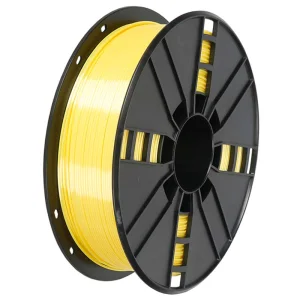
| Silk PLA | PLA + Polyester Luster Additives | 45 - 52 MPa | 55°C - 58°C | 205°C - 225°C | 45°C - 60°C | Display Models, Consumer Props, Toys |
| PETG Structural | Polyethylene Terephthalate Glycol | 48 - 55 MPa | 80°C - 85°C | 230°C - 250°C | 70°C - 85°C | Chemical Resistant Vessels, Outdoor Parts |
| Flexible TPU (95A) | Polyurethane Elastomer Block | 35 - 42 MPa | N/A (Shore 95A) | 215°C - 235°C | 30°C - 50°C | Gaskets, Seals, Dampers, Wearable Accessories |
| ABS Engineering | Acrylonitrile Butadiene Styrene | 40 - 48 MPa | 102°C - 108°C | 240°C - 265°C | 90°C - 110°C | Automotive Trim, Heat-Exposed Housings |
From commercial manufacturing floors to specialized design studios, high-grade PLA fulfills critical operational workflows.
Automotive R&D centers use PLA+ for quick geometric validation of interior ducting, dashboard clips, and engine bay spatial checks. Low thermal shrinkage permits full-scale 1:1 printing of large form-factor components without corner warping.
Commercial print farms managing hundreds of machines operating around the clock require identical spool-to-spool color consistency, reliable bed adhesion, and un-tangled spools to minimize operator intervention and unit labor costs.
Biocompatible and non-toxic PLA formulations are widely utilized in hospital environments and medical universities to print tactile 3D CT-scan reconstructions for pre-surgical planning and anatomical education.
Architectural firms rely on Matte PLA and Ultra-White PLA formulations to produce crisp, highly detailed physical building models. High feature retention allows microscopic details such as railings and facade structures to resolve cleanly.
Electronics assemblers produce custom anti-static assembly trays, holding fixtures, and protective enclosures using impact-modified PLA+, benefiting from low production costs and rapid iteration speed.
Due to its zero toxic styrene fumes and corn-starch biological origin, PLA is the safest 3D printing filament choice for elementary schools, maker spaces, and university engineering labs worldwide.
Direct answers to critical questions asked by procurement officers, importers, and brand managers.
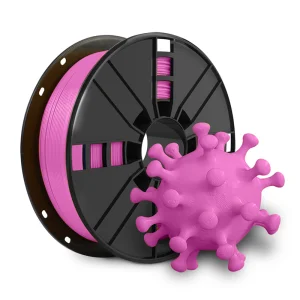
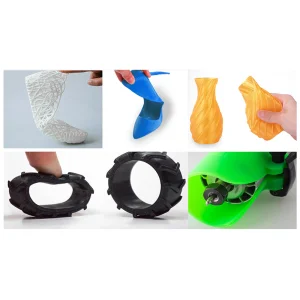
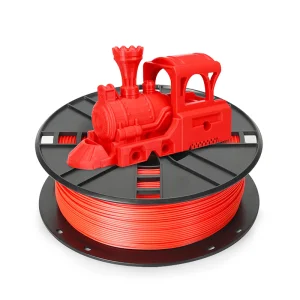
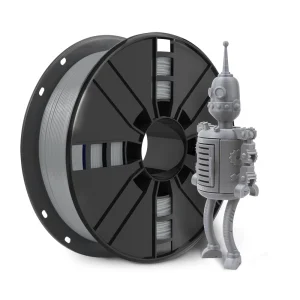
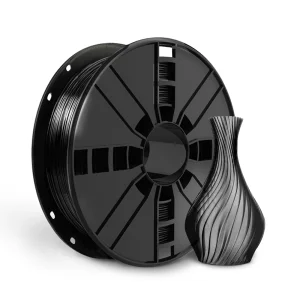
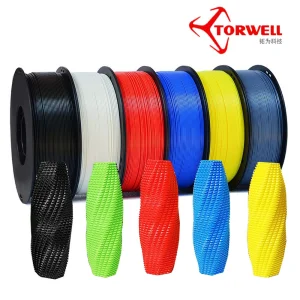
Diverse material options including PLA+, Silk Luster, High-Toughness PETG, and Flexible TPU grades.