Precision-extruded thermoplastic spools engineered for print farm scalability, high dimensional accuracy, and strict compliance with global industrial standards.
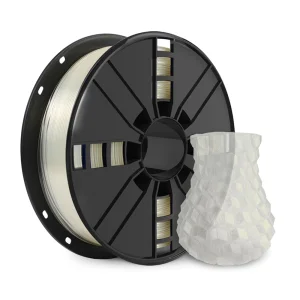
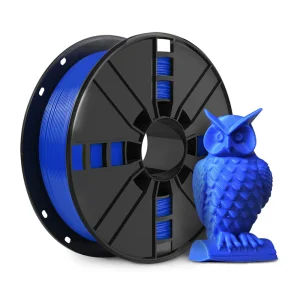
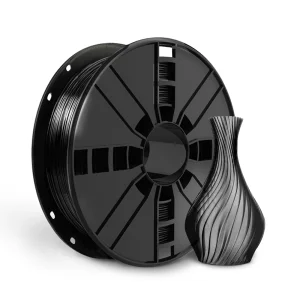
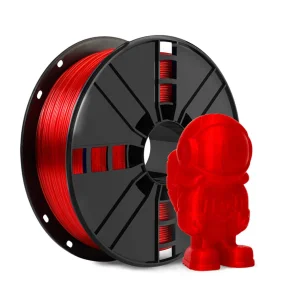
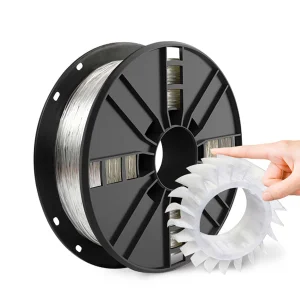
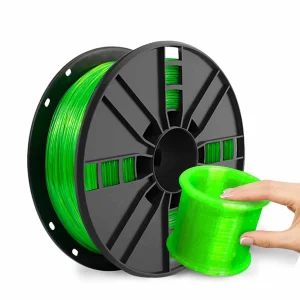
Standard Polylactic Acid (PLA) derived from fermented plant starch (such as corn starch or sugarcane) has long dominated the Fused Deposition Modeling (FDM) market due to its low thermal expansion coefficient, minimal odor, and exceptional printability. However, virgin PLA suffers from inherent polymer-chain limitations: high brittleness, low Izod impact resistance (typically 2 to 3 kJ/m²), narrow melt-processing windows, and a low Glass Transition Temperature ($T_g \sim 55\text{--}60^\circ\text{C}$). These shortcomings make unmodified PLA unsuitable for functional mechanical hardware, high-stress enclosures, or dynamic load-bearing prototypes.
The development of PLA+ (Enhanced Polylactic Acid) represents a major breakthrough in additive manufacturing polymer science. Designed specifically to overcome standard PLA’s physical constraints, China's leading PLA+ filament manufacturers employ advanced chemical modification techniques during resin compounding. By blending virgin PLA resin (such as NatureWorks Ingeo biopolymers) with high-efficiency toughening agents, core-shell rubber (CSR) nanoparticles, and elastomeric impact modifiers (such as ethylene-butyl acrylate-glycidyl methacrylate terpolymers), the resulting compound dramatically inhibits micro-crack propagation across fused print layers.
Incorporation of 3–8% Core-Shell Rubber nanoparticles acts as an internal stress absorber. When impacted, these nano-domains induce localized shear yielding rather than catastrophic brittle fracture, increasing impact strength by up to 400%.
Optimized Melt Flow Index (MFI) and extended thermal fusion windows allow polymer chains to diffuse across the melt boundary layer. This increases Z-axis tensile strength to 85–90% of X-Y plane strength, eliminating layer-cleavage failure.
By controlling the ratio of L-lactide to D-lactide monomers and adding proprietary nucleating agents, PLA+ achieves accelerated crystallization kinetics during cooling, preventing part warping and improving surface fidelity.
The quantitative performance advantages of industrial-grade PLA+ over conventional standard 3D printing filaments are outlined in the empirical laboratory data below:
| Mechanical / Thermal Property | Standard PLA | Engineered PLA+ | PETG | ABS |
|---|---|---|---|---|
| Tensile Strength (MPa) (ISO 527) | 55 – 60 | 65 – 72 | 48 – 53 | 40 – 45 |
| Charpy Impact Strength (kJ/m²) (ISO 179) | 2.5 – 3.2 | 9.5 – 14.0 | 7.8 – 9.0 | 12.0 – 18.0 |
| Flexural Modulus (GPa) (ISO 178) | 3.2 – 3.8 | 3.5 – 4.1 | 2.1 – 2.4 | 2.1 – 2.3 |
| Elongation at Break (%) | 3.0 – 4.5% | 12.0 – 18.0% | 20.0 – 30.0% | 10.0 – 25.0% |
| Heat Deflection Temp (HDT @ 0.45MPa) | 55 °C | 62 – 68 °C (95°C annealed) | 72 °C | 88 – 96 °C |
| Volumetric High-Speed Printing Flow | 12 – 15 mm³/s | 28 – 40 mm³/s | 14 – 18 mm³/s | 18 – 22 mm³/s |
The global additive manufacturing ecosystem is undergoing a fundamental transformation. The industry is moving away from slow, low-volume hobbyist desktop printing and toward automated high-speed print farms capable of mass customization and localized manufacturing. Modern CoreXY 3D printers operating at speeds between 300 mm/s and 600 mm/s—with accelerations reaching 20,000 mm/s²—require consistent, high-grade raw materials. Standard legacy filaments often suffer from hot-end starvation, nozzle clogging, layer delamination, and severe mechanical failure under these aggressive thermal and mechanical stress profiles.
This paradigm shift has established China PLA+ filament manufacturers as key supply chain partners for global brands, B2B distributors, and enterprise print farms. China’s advanced extrusion hub—supported by integrated chemical supply networks in Guangdong and Zhejiang—provides an ideal manufacturing environment. Modern facilities feature state-of-the-art multi-stage automatic extrusion lines equipped with inline dual-axis or triple-axis laser micrometer gauging, real-time melt temperature monitoring, and automated closed-loop tension winding systems.
Industrial print farm operators running hundreds of machines 24/7 prioritize three critical performance metrics: dimensional consistency (preventing hot-end pressure spikes), tangle-free spool winding (preventing print-stopping feeder jams), and batch-to-batch color reproducibility (ensuring identical quality across large production runs). Leading Chinese OEM manufacturers like Torwell Technologies have developed strict Quality Assurance (QA) protocols to meet these exacting B2B requirements.
Producing world-class PLA+ filament requires more than simply mixing raw resin with colorants. It demands precise control over thermal history, melt rheology, and cooling kinetics throughout the continuous extrusion process. Below is the multi-stage engineering roadmap employed by premier Chinese OEM manufacturers:
Virgin bio-polyester resin is highly hygroscopic. Raw pellets undergo 4 to 6 hours of continuous dehumidification drying under $-40^\circ\text{C}$ dew-point dry air, reducing internal resin moisture content to below 200 ppm (0.02%) before entering the extruder barrel. This prevents hydrolytic degradation of polymer chains during heating.
Extruders use specialized L/D ratio (30:1 to 36:1) twin screws with custom mixing zones. Dedicated gear melt pumps maintain ultra-stable, surge-free volumetric output, ensuring consistent strand density and preventing internal voids.
Strands pass through high-frequency dual-axis laser measuring gauges that monitor diameter and ovality 500 times per second. Real-time feedback automatically adjusts haul-off capstan speeds to maintain strict $\pm 0.02\text{ mm}$ tolerances, instantly discarding out-of-spec sections.
Instead of sudden ice-water quenching—which induces internal thermal stresses and brittleness—the extruded strand passes through a multi-stage, temperature-controlled water bath. This gradual cooling optimizes crystal morphology and relieves internal stresses.
The next generation of PLA+ filaments focuses on two primary technological advancements: thermal resistance enhancement and circular eco-sustainability.
Through post-print thermal annealing (baking printed components at $80\text{--}100^\circ\text{C}$ for 30 minutes), nucleated PLA+ formulations undergo a structural transition into a stereocomplex crystalline state. This boosts Heat Deflection Temperature (HDT) to over $95^\circ\text{C}$, matching traditional ABS performance while eliminating harmful styrenic fumes during printing. Furthermore, forward-thinking manufacturers are transitioning to 100% recyclable cardboard spools, modular masterspool refills, and bio-based carrier masterbatches certified under EN 13432 and ASTM D6400 industrial composting standards.
PLA+ has expanded beyond standard aesthetic models into demanding industrial, commercial, and technical sectors worldwide:
Manufacturing plants utilize PLA+ to 3D print custom assembly jigs, drill guides, and robotic end-of-arm tooling (EOAT). High flexural modulus prevents tool deflection under load, while improved impact resistance ensures long operational life on production lines.
Hardware startups and electronics manufacturers rely on PLA+ for rapid functional prototyping of drone frames, action camera mounts, wireless router housings, and wearable enclosures requiring precise snap-fit joints without layer splitting.
Hospitals and medical device developers print high-resolution diagnostic bone structures and vascular models derived from patient CT scans. PLA+ delivers crisp geometric fidelity, clean bridges, and easy sterilization compatibility for surgical review.
Architectural firms construct complex, large-format spatial models with PLA+. Its near-zero shrinkage rate prevents corner warping on large print beds ($400\text{mm} \times 400\text{mm}$ and above), providing smooth, seamless wall surfaces.
Selecting a reliable supplier in China requires assessing more than just baseline pricing per kilogram. Enterprise buyers, international distributors, and private-label brand owners must evaluate raw material traceability, quality control protocols, packaging integrity, and international regulatory compliance.
Using advanced industrial spectrophotometers, manufacturers can precisely match custom Pantone, RAL, or physical plastic samples within a color deviation delta of $\Delta E_{ab} < 0.8$. This guarantees consistent color accuracy across continuous production batches.
To prevent ocean freight humidity absorption, spools are hot-sealed immediately after extrusion inside thick, multi-layer aluminum-foil or heavy-duty PE vacuum bags along with high-absorption silica gel desiccants, protecting shelf life for up to 24 months.
Industrial grade PLA+ formulations exported to North American and European markets include comprehensive documentation: Technical Data Sheets (TDS), Safety Data Sheets (SDS), and compliance certifications for RoHS, REACH, and FDA food-contact standards.
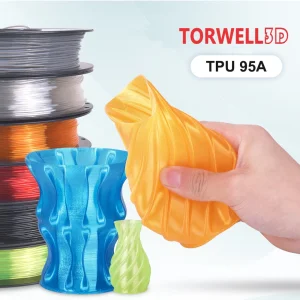
Explore our complete OEM range including modified PLA+, high-clarity PETG, impact-resistant ABS, and elastomeric TPU options.
Answers to common questions regarding manufacturing specifications, OEM terms, and print farm performance.
Standard PLA is a raw bio-polyester synthesized from lactide monomers. PLA+ incorporates proprietary additives, including Core-Shell Rubber (CSR) impact modifiers and nucleating agents. These additives increase Charpy impact strength by up to 400%, enhance interlayer adhesion (Z-axis strength), and extend the thermal processing window, allowing for high-speed printing without brittleness.
All 1.75 mm and 2.85 mm filament strands are monitored continuously during extrusion using inline dual-axis laser micrometers. Production lines enforce a strict diameter tolerance target of ±0.02 mm and an ovality threshold below 1.5%, preventing hot-end clogging and feeding fluctuations on modern high-speed 3D printers.
Yes. As a direct OEM manufacturer, Torwell provides complete turnkey solutions for global brands. We offer precise color matching based on Pantone codes, RAL numbers, or physical plastic samples (achieving a color deviation delta ΔE < 0.8). OEM services also include custom spool designs (cardboard or plastic), branded stickers, customized vacuum bags, and retail outer cartons.
For standard speed printing (50–100 mm/s), recommended hot-end temperatures range from 200°C to 215°C with a heated bed temperature of 50°C to 60°C. For high-speed CoreXY printers (300–600 mm/s), hot-end temperatures should be increased to 225°C–240°C to maintain fluid volumetric flow rates above 28 mm³/s.
Absorbed atmospheric moisture causes hydrolytic polymer degradation during printing, leading to surface bubbling, excessive stringing, low layer adhesion, and nozzle sputtering. Prior to extrusion, Torwell dries raw polymer pellets for 4 to 6 hours under -40°C dew-point air. Immediately after spooling, every roll is vacuum-sealed with active silica gel desiccant inside a protective barrier bag.
For standard stock formulations and colors, MOQs start as low as 100 kg. Custom OEM color compounding or private label packaging orders typically require an MOQ of 500 kg per color batch. Standard factory lead times range from 10 to 18 business days depending on total order volume and customization specifications.