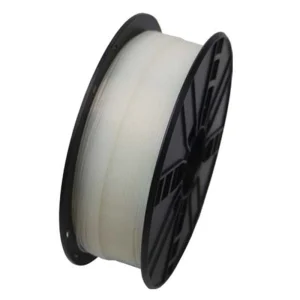
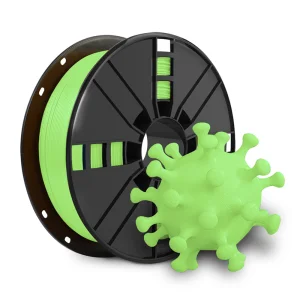
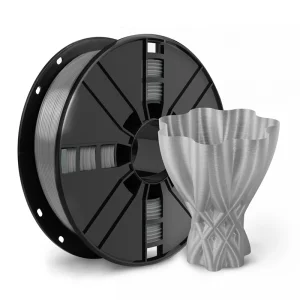
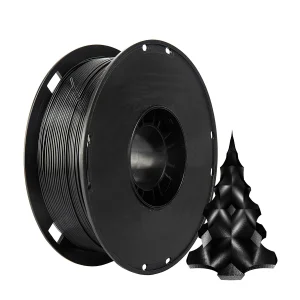
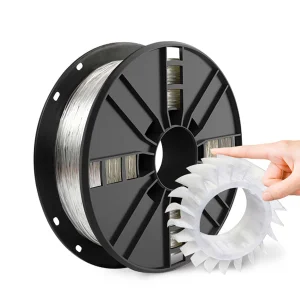
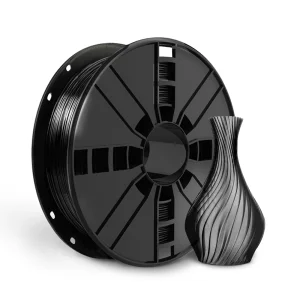
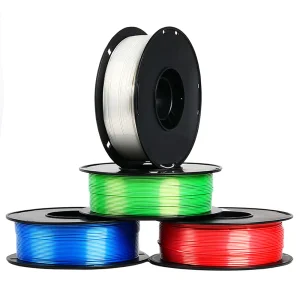
Factory-direct high-precision thermoplastics manufactured under strictly monitored laser diameter control systems (±0.02mm tolerance).
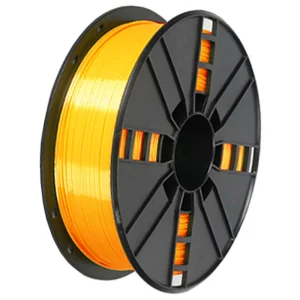
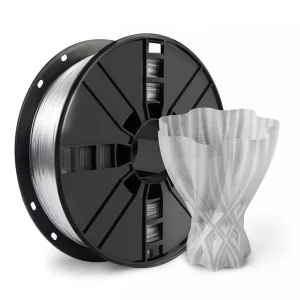
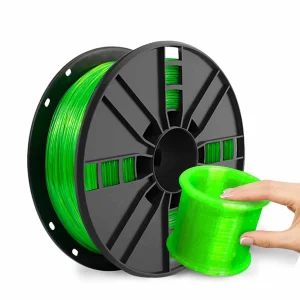
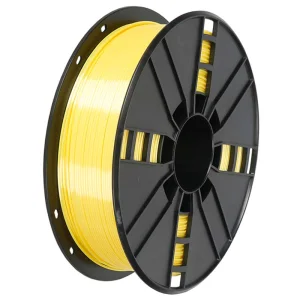
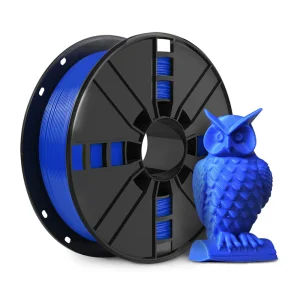
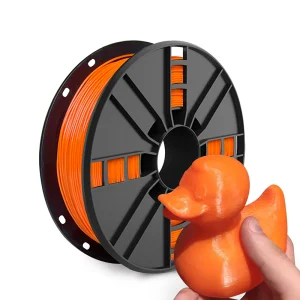
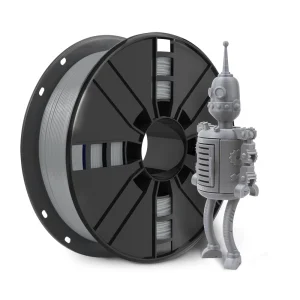
Understanding the synthesis pipeline, lactide monomer purity, and scale economics that establish China as the premier manufacturing hub for biopolymer fused deposition modeling (FDM) consumables.
Polylactic Acid (PLA) is synthesized via ring-opening polymerization (ROP) of lactide derived from fermented plant starches (corn and cassava). Leading Chinese factories integrate upstream raw material purification to maintain an L-lactide stereochemical purity exceeding 99.5%, ensuring elevated glass transition temperatures ($T_g \approx 58\text{--}62^\circ\text{C}$) and robust thermal stability under rapid extrusion speeds.
Modern additive manufacturing has shifted toward high-velocity printing ($>500\text{ mm/s}$). Advanced PLA formulations engineered in specialized Chinese extrusion facilities feature tailored melt flow indices (MFI of $8\text{--}12\text{ g}/10\text{ min}$ at $210^\circ\text{C}/2.16\text{kg}$) to prevent shear-thinning failure, heat creep clogging, and stringing in modern AMS and high-flow hotends.
By housing raw material drying, masterbatch color matching, twin-screw compounding, multi-axis laser gauging, and automated spooling under a single production ecosystem, Chinese PLA factories deliver unmatched cost-to-quality ratios, driving global accessibility for desktop and industrial FDM deployment.
Established in 2011, Torwell Technologies operates a 2,500 m² standardized manufacturing facility equipped with 6 automated extrusion lines. Here is how our engineering protocols guarantee consistent batch-to-batch output.
PLA is naturally hygroscopic, absorbing ambient moisture that causes hydrolytic degradation during extrusion. Torwell utilizes continuous desiccant dehumidification systems that dry virgin pellets at $80^\circ\text{C}$ for 4 consecutive hours, maintaining resin moisture levels below $0.05\%$ ($500\text{ ppm}$) prior to melt processing.
Each of our 6 automated extrusion lines is fitted with real-time dual-axis laser diameter monitoring gauges operating at a 500 Hz sampling frequency. If filament diameter strays beyond the strict $\pm 0.02\text{ mm}$ window or displays ovality, closed-loop servo feedback automatically adjusts capstan speed in real time.
Tangled filament is the leading cause of print failure in 24/7 commercial print farms. Torwell employs automated tension-controlled winding stations that lay down uniform, parallel filament layers across cardboard and plastic spools, eliminating overlapping crossovers and securing AMS feed reliability.
Comparative engineering analysis of Torwell's proprietary PLA compounds against standard industrial polymers. Engineered to meet strict international standards (RoHS, REACH, FDA compliance).
| Filament Grade | Nozzle Temp (°C) | Bed Temp (°C) | Density (g/cm³) | Tensile Strength (MPa) | Key Performance Feature |
|---|---|---|---|---|---|
| Standard PLA | 190 – 220 | 0 – 60 | 1.24 | ≥ 60 | Low thermal warping, crisp visual detail, low odor |
| Toughened PLA+ | 200 – 230 | 50 – 60 | 1.25 | ≥ 65 | 3x higher impact resistance than standard PLA resin |
| Silk PLA (Co-Extrusion) | 200 – 230 | 50 – 60 | 1.23 | ≥ 55 | High specular shine, metallic luster, dual/tri-color gradient |
| PETG Clear/Opaque | 230 – 250 | 70 – 80 | 1.27 | ≥ 50 | Chemical resistance, high toughness, low hygroscopic drift |
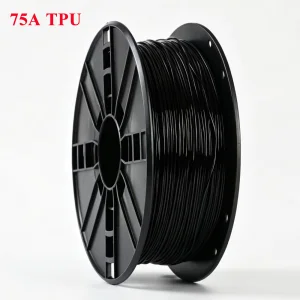
| Flexible TPU (75A - 95A) | 210 – 230 | 30 – 60 | 1.21 | ≥ 35 | High elasticity, oil/grease resistance, Shore hardness choices |
| ABS Engineering Grade | 230 – 260 | 90 – 110 | 1.04 | ≥ 43 | High heat deflection temp ($85^\circ\text{C}$), high impact strength |
| Polycarbonate (PC) | 260 – 300 | 100 – 120 | 1.20 | ≥ 70 | Extreme toughness, optical clarity, flame retardant grades |
How high-purity PLA and specialized engineering filaments power global commercial operations across diverse verticals.
Mass-production print facilities operating hundreds of high-speed FDM machines require strict filament diameter consistency ($\pm 0.02\text{ mm}$) and uniform melt viscosity to avoid mid-print nozzle jams during continuous 24/7 printing cycles.
Non-toxic, low-odor, bio-based PLA is the gold standard for educational environments. Compliant with RoHS and REACH standards, Torwell PLA filaments provide safe, reliable printing for students, researchers, and university labs.
From automotive housing concepts to architectural models, PLA+ and carbon fiber composite materials offer tight dimensional accuracy ($<0.2\%$ shrinkage), enabling rapid iteration cycles before final injection molding tooling.
Torwell provides end-to-end white-label manufacturing, custom color formulation (Pantone matching), and certified export logistics for international brand owners and distributors.
We offer precise color-matching services for branded filament lines. Whether matching a physical plastic sample or a Pantone spot color code, our in-house lab formulates stable pigment blends with zero batch-to-batch color shift.
Choose between high-clarity PC spools, lightweight black plastic spools, or 100% recyclable heavy-duty cardboard spools. Complete OEM services include custom box design, branded die-cut labels, silica gel desiccant insertion, and hermetic vacuum foil sealing.
Exporting to over 75 countries requires robust compliance documentation. Torwell provides complete Technical Data Sheets (TDS), Safety Data Sheets (SDS), RoHS 2.0 test reports, REACH SVHC certifications, and FDA food-contact compliance declarations.
How next-generation material science and smart factory automation are shaping the future of industrial FDM thermoplastics.
As CoreXY printers breach speeds of $600\text{ mm/s}$ to $1000\text{ mm/s}$, traditional PLA formulations face shear failure. Next-gen PLA compounds incorporate modified chain extenders and fast-crystallizing nucleating agents to allow rapid solidification upon deposition without sacrificing interlayer adhesion.
Future OEM lines from Torwell are designed for seamless integration into multi-material automatic feeding systems (AMS), utilizing precision-dimensioned spool rims and embedded RFID chips for automatic material parameter synchronization.
Partnering with global distributors to build circular economy frameworks, processing clean post-industrial PLA print waste back into high-grade secondary extrusion feeds for non-critical architectural model printing.
Direct engineering answers to common procurement, compliance, and material performance questions asked by global distributors.
Torwell guarantees a standard diameter tolerance of ±0.02mm for 1.75mm and 2.85mm filaments across our entire production range. Every millimeter of extruded filament is verified continuously in real-time by inline dual-axis laser measurement systems.
We offer complete OEM/ODM solutions. This includes matching custom Pantone colors or physical plastic chips, printing private-label die-cut spool stickers, customizing retail box graphics, offering eco-friendly cardboard spools, and vacuum sealing each spool with active silica gel desiccant packs.
Our 2,500 m² factory operates 6 automated extrusion lines with a monthly output of 50,000 kg to 60,000 kg. Standard lead time for full container load (FCL) orders or OEM private label production ranges between 15 to 20 business days.
Prior to spooling, all raw pellets undergo 4-hour desiccant dehumidification drying to maintain moisture below 0.05%. Immediately after winding, spools are hermetically sealed inside thick barrier vacuum bags containing active desiccant packs, protecting the material against atmospheric humidity during 30-to-45-day ocean freight transit.
Yes. All Torwell PLA resins and masterbatch additives strictly comply with EU RoHS 2.0 (Directive 2011/65/EU), REACH SVHC standards, and CE requirements. Detailed Technical Data Sheets (TDS) and Safety Data Sheets (SDS) are supplied with all orders.
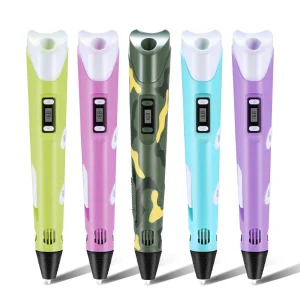
Explore our full line of wholesale polymers including ABS, PC, Fluorescent PLA, High-Toughness PETG, and Specialty 3D Pen accessories.