Explore our top-tier polymer formulations manufactured with tight ±0.02 mm laser diameter tolerance for global distributors and high-volume print farms.
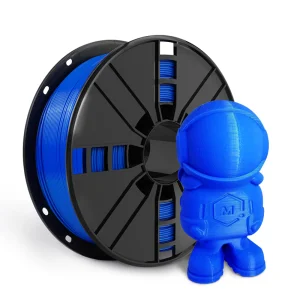
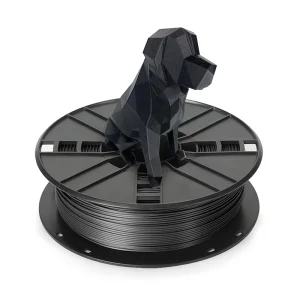
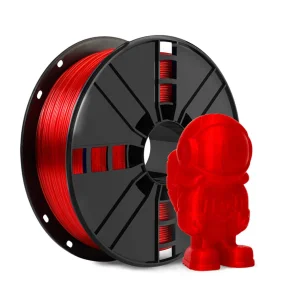
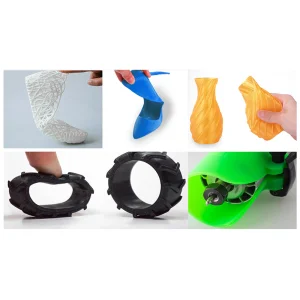
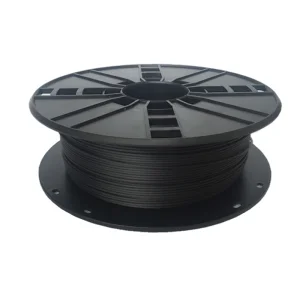
An authoritative technical synthesis analyzing Polyethylene Terephthalate Glycol compounding, carbon black dispersion, and industrial adoption trends.
In the evolving additive manufacturing ecosystem, Polyethylene Terephthalate Glycol (PETG) modified with specialized carbon black formulations has emerged as the definitive bridge material between entry-level biopolymers (PLA) and high-cost engineering plastics (Nylon/PPA). As additive manufacturing shifts from aesthetic prototyping toward end-use functional components, global enterprise buyers are seeking consistent, high-durability materials capable of maintaining dimensional fidelity under mechanical stress, environmental exposure, and chemical aggression.
Polyethylene Terephthalate Glycol is produced via the copolymerization of terephthalic acid (TPA), ethylene glycol (EG), and cyclohexanedimethanol (CHDM). The introduction of CHDM prevents the polymer chains from crystallizing into brittle structures, yielding an amorphous thermoplastic with outstanding optical clarity, impact strength, and ductility. When expertly masterbatched with micro-milled specialty carbon black pigments, PETG Filament Black achieves a rich, opaque matte or semi-gloss jet-black finish while gaining enhanced ultraviolet (UV) stabilization and structural integrity.
Evaluating rheological behaviors, tensile properties, thermal deflection, and layer adhesion across industrial FDM thermoplastics.
Selecting the optimal thermoplastic filament requires rigorous evaluation of mechanical parameters. Industrial Black PETG manufactured by top China extrusion facilities provides an optimal trade-off between processability and mechanical toughness. Below is a comprehensive engineering comparison detailing key polymer properties across core FDM materials:
| Material Metric | Black PETG (Standard) | Black ABS | Black PLA+ | Black PC (Polycarbonate) |
|---|---|---|---|---|
| Tensile Strength (MPa) | 50 - 53 | 40 - 45 | 58 - 65 | 65 - 72 |
| Flexural Modulus (GPa) | 2.1 - 2.3 | 2.0 - 2.2 | 3.1 - 3.4 | 2.3 - 2.5 |
| Izod Impact Strength (kJ/m²) | 7.5 - 9.0 | 12.0 - 18.0 | 5.0 - 6.0 | 30.0 - 45.0 |
| Heat Deflection Temp (HDT @ 0.45 MPa) | 74°C - 78°C | 92°C - 98°C | 53°C - 56°C | 130°C - 140°C |
| Volumetric Shrinkage Rate (%) | 0.2% - 0.4% | 0.8% - 1.4% | 0.1% - 0.3% | 0.5% - 0.7% |
| Enclosed Chamber Requirement | No (Optional) | Yes (Required) | No | Yes (High Temp) |
| Chemical & Water Resistance | High (Acids/Alkalis/Water) | Moderate (Soluble in Acetone) | Low - Moderate | High |
How Torwell Technologies leverages advanced automation, bulk resin procurement, and strict quality control to deliver competitive global advantages.
Direct strategic partnerships with petrochemical giants (such as Eastman and Sinopec) allow us to source virgin PETG resin at tier-1 bulk pricing, passing significant cost savings down to enterprise OEM buyers and distributors.
Operating 6 fully automated extrusion lines around the clock, our facility achieves a monthly output of 50,000 kg to 60,000 kg. High-speed screw barrels maintain uniform melt homogenization, preventing localized thermal degradation.
Every millimeter of Black PETG filament passes through dual-axis inline laser micrometers. Real-time feedback loops automatically adjust puller speed to preserve an industry-leading ±0.02 mm diameter tolerance and high roundness.
Quality issues in 3D printing—such as nozzle clogging, stringing, moisture popping, or filament tangling—stem from inadequate manufacturing controls. At Torwell, every production lot of PETG Filament Black adheres to a rigid 5-stage QC system:
From automotive prototyping to print-farm automation, discover where enterprise engineers deploy Black PETG filament.
Used for custom dashboard mounts, sensor brackets, climate vent ducting, and prototype trim panels. Black PETG withstands cabin temperatures up to 75°C without softening while offering UV resistance under sunlight exposure.
Ideal for end-of-arm tooling (EOAT), pneumatic vacuum grippers, assembly alignment fixtures, and protective covers. The impact absorbing properties protect sensitive electronics during high-speed robotic actuation.
Enclosures for IoT sensors, wireless weather stations, security camera mounts, and drone airframes. The carbon black pigment blocks light penetration, preventing internal optical interference.
Print farm operators rely on Torwell's Black PETG for continuous 24/7 production runs. Consistent diameter and zero-tangle spooling eliminate unattended printer downtime and costly mid-print failures.
Custom power tool handles, protective sporting gear, ergonomic camera grips, and heavy-duty brackets benefit from PETG's semi-rigid flexural yield, resisting structural fatigue under cyclic loading.
Provides a non-toxic, low-odor industrial printing material for university engineering labs and R&D departments requiring reliable structural test specimens without toxic styrene fumes.
Exploring advanced formulations including high-speed printing grades, matte visual finishes, and electrostatic discharge (ESD) composites.
The global 3D printing material market is experiencing rapid technological evolution. As CoreXY and high-speed FDM printers achieve print speeds of 300 mm/s to 600 mm/s, traditional polymers face flowability bottlenecks. Torwell Technologies is leading material research across several key frontiers:
By optimizing the Intrinsic Viscosity (IV) index of raw PETG resin to 0.74 dL/g and incorporating specialized thermal lubricants, our upgraded Black PETG maintains volumetric melt rates up to 24 mm³/s. This ensures zero under-extrusion or layer starvation when printing at 400 mm/s on modern high-speed platforms.
Standard PETG natively exhibits a glossy finish that highlights layer lines. Torwell’s specialized Micro-Matte Black PETG incorporates organic light-diffusing agents that scatter surface reflection, delivering a sleek, professional matte aesthetic comparable to carbon-fiber composites without abrasive nozzle wear.
For semiconductor manufacturing and electronics assembly environments, Torwell manufactures Electrostatic Discharge (ESD) safe PETG. Compounded with multi-walled carbon nanotubes (MWCNTs), this specialty grade delivers controlled surface resistivity ($10^6$ to $10^9$ ohms/sq), preventing static discharge damage to sensitive microchips.
In response to global ESG (Environmental, Social, and Governance) mandates, Torwell offers post-industrial recycled rPETG Black filament. Sourced from clean industrial scrap, our rPETG undergoes multi-stage re-granulation, melt filtration, and re-stabilization, achieving 95% of virgin polymer mechanical performance while lowering carbon footprint by 65%.
Comprehensive private label services, regulatory compliance certifications, custom spools, and international freight packaging.
Partnering with a reliable China PETG Filament Black supplier requires clear protocols for OEM private labeling, quality verification, and shipping logistics. Torwell Technologies provides turn-key solutions tailored for international brand owners, Amazon sellers, and regional industrial distributors.
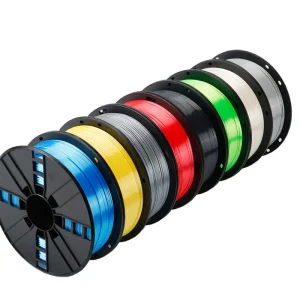
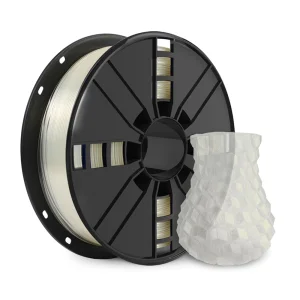
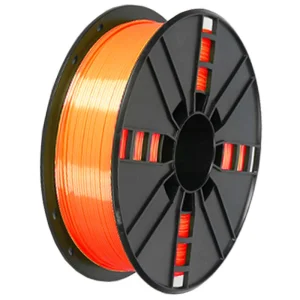
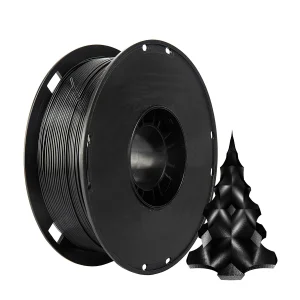
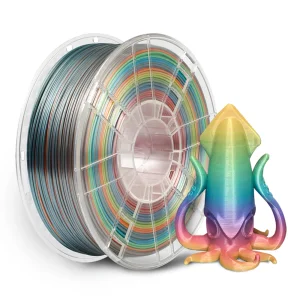
Explore complementary material grades engineered for specialized printing demands across global markets.
In-depth technical answers addressing print profiles, storage guidelines, OEM branding, and factory quality standards.
For optimal mechanical performance and surface finish, set nozzle temperature between 235°C and 245°C, with a heated bed temperature of 70°C to 85°C. Print cooling fan speed should be set to 30%–50% for standard structural parts, or turned off for maximum interlayer fusion strength. A printing speed of 60 to 150 mm/s is ideal on standard printers, while updated Speed-Max formulations support up to 350 mm/s on high-speed CoreXY platforms.
We utilize dual-axis inline laser micrometers on every production line, continuously measuring the strand at 500 Hz to guarantee a tight ±0.02 mm tolerance. Auto-feedback systems instantly adjust the extrusion puller speed if drift is detected. Spooling is governed by servo-driven tension units, laying down clean, parallel winds that prevent criss-crossing and line snags during extended prints.
Like all glycol-modified polymers, PETG is moderately hygroscopic. Extended exposure to ambient humidity (>40% RH) can lead to moisture absorption, causing stringing, micro-void popping, and weakened layer adhesion. We recommend drying moisture-exposed spools in a filament dryer or convection oven at 60°C–65°C for 4 to 6 hours before printing. Unused spools should be kept sealed in vacuum bags with active desiccant pouches.
Torwell offers comprehensive OEM/ODM customization services. We support custom spool colors, custom-printed inner boxes, private brand labels, custom spool weights (from 250g to 10kg master reels), customized vacuum bag printing, and tailored technical datasheets (TDS) ready for direct retail or distribution in your target country.
Yes. All Torwell PETG filaments are manufactured using virgin polymer resins and non-toxic carbon black masterbatches. Our products are fully compliant with RoHS 3.0 (Directive 2011/65/EU and amendment 2015/863), REACH SVHC standards, and Halogen-Free directives. Full laboratory test reports and Safety Data Sheets (SDS) are provided upon request.
Our standard MOQ for stock color formulations is 100 kg per batch. For custom OEM private label packaging, the standard MOQ is 500 spools. Lead time for standard orders is typically 7 to 12 working days, while full 20ft/40ft container orders are completed within 15 to 20 days thanks to our 60,000 kg monthly production capacity.