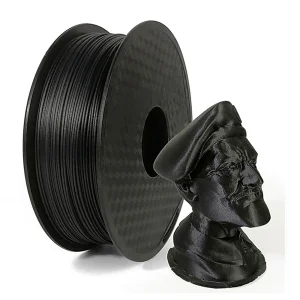
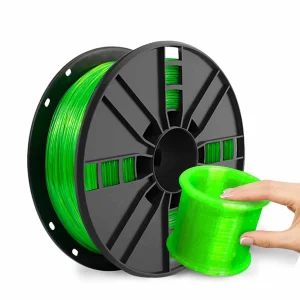
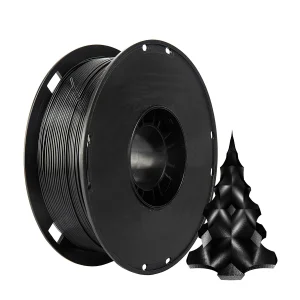
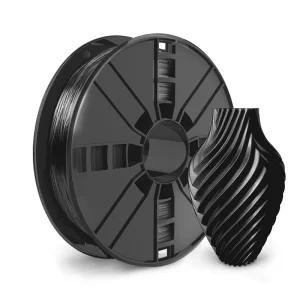
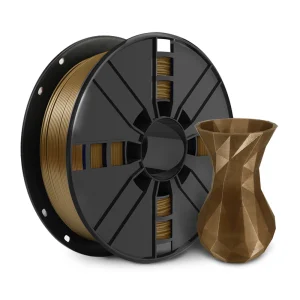
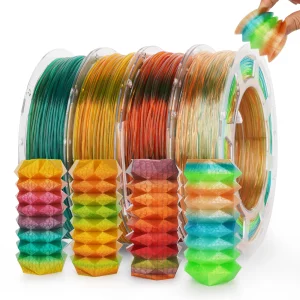
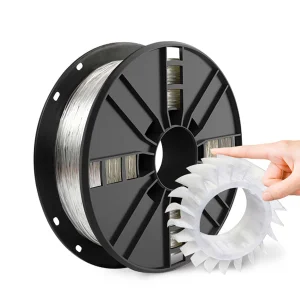
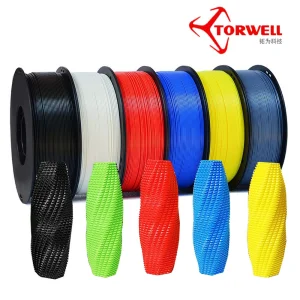
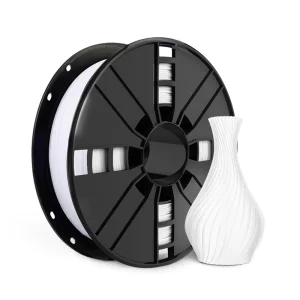
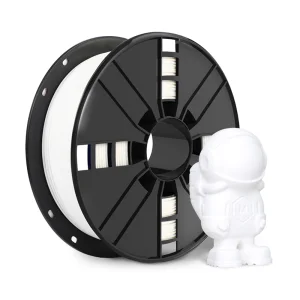
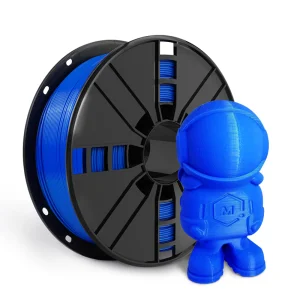
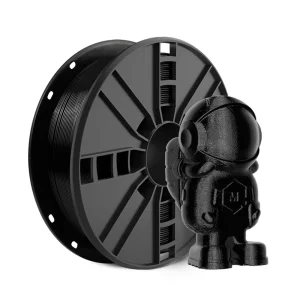
Explore our tier-1 OEM factory-supplied 3D printing filaments engineered to strict dimensional tolerances ($\pm 0.02\text{mm}$) for demanding worldwide distribution and industrial print farm operations.
Understanding the macro shift in industrial additive manufacturing toward ultra-rigid, heat-resistant thermoplastic composite materials.
Global procurement teams across North America, Europe, and Asia-Pacific are increasingly replacing machined aluminum (6061-T6) and die-cast zinc parts with PC Carbon Fiber composites. Offering a tensile modulus exceeding 6.5 GPa and density reduction up to 55%, PC-CF provides an unprecedented stiffness-to-weight ratio for functional end-use parts.
Industrial applications in under-hood automotive environments and aerospace avionics housings demand heat deflection temperatures (HDT) far surpassing standard PETG or ABS. PC Carbon Fiber achieves HDT values up to 145°C under 1.8 MPa load, ensuring dimensional stability under intense continuous thermal stress.
As premier China PC Filament Carbon Fiber manufacturers, domestic chemical compounding facilities utilize advanced high-temperature twin-screw extrusion technology. Overseas buyers gain substantial cost advantages while maintaining rigorous ISO 9001:2015 quality standards and tight diameter variances ($\pm 0.02\text{mm}$).
Empirical performance metrics supporting high-volume B2B contract manufacturing and distribution.
Deep-dive polymer formulation: Synergizing Bisphenol A Polycarbonate with High-Modulus Chopped Carbon Fibers.
Polycarbonate (PC) is an amorphous thermoplastic resin featuring long-chain linear carbon polymers connected by carbonate groups (-O-CO-O-). Its high molecular weight gives it superior impact toughness and optical clarity in virgin state. With a glass transition temperature ($T_g$) of approximately 147°C, the amorphous polymer chains exhibit zero crystallization shrinkage, enabling superior dimensional accuracy when correctly processed in heated build chambers.
Our formulation incorporates high-purity, chopped PAN-based carbon fibers milled to an average diameter of $7\,\mu\text{m}$ and length distribution of $150–300\,\mu\text{m}$. By maintaining a strict 15% to 20% carbon fiber mass fraction, the filament achieves optimal percolation threshold. This ensures maximum rigidity and tensile modulus gain without inducing excessive melt viscosity or nozzle clogging during high-speed extrusion.
Unmodified carbon fiber exhibits poor thermodynamic compatibility with hydrophobic polycarbonate matrices. To eliminate microscopic voids and interfacial fiber pull-out under stress, our chemical compounding process applies reactive silane sizing agents and organo-functional coupling additives. This chemical bridge enhances interfacial shear strength (IFSS), transferring structural mechanical loads directly into the carbon backbone.
How China's leading PC Carbon Fiber suppliers maintain zero-defect output across multi-ton production batches.
Polycarbonate is highly hygroscopic. Raw resin pellets undergo industrial desiccant air drying at 120°C for 8 consecutive hours to reduce moisture content below 0.02% (200 ppm) prior to compounding, completely preventing hydrolytic degradation.
High-shear co-rotating twin-screw extruders melt and blend PC resin with chopped carbon fibers across 10 controlled heating zones. Triple vacuum degassing ports evacuate volatile organic compounds (VOCs) and trapped air.
Extruded strand passes through a dual-plane, quad-axis high-speed laser diameter gauge. Monitoring at 1000 Hz ensures automated closed-loop puller speed adjustments, locking tolerances strictly within $\pm 0.02\text{mm}$.
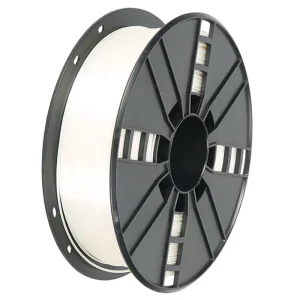
Finished PC-CF filament is spooled under constant tension control to prevent overlap tangles. Spools are immediately vacuum-sealed with high-absorption silica desiccant inside moisture-proof aluminum foil barrier bags.
Comprehensive technical property comparison based on ASTM & ISO test standards.
| Mechanical / Thermal Property | Test Standard | Unfilled PC | PETG-CF (15%) | PA12-CF (15%) | PC Carbon Fiber (20%) |
|---|---|---|---|---|---|
| Density ($g/cm^3$) | ISO 1183 | 1.20 | 1.32 | 1.08 | 1.24 |
| Tensile Strength (MPa) | ISO 527 / ASTM D638 | 62.0 | 54.0 | 85.0 | 98.5 |
| Tensile Modulus (MPa) | ISO 527 / ASTM D638 | 2,300 | 4,500 | 5,800 | 6,850 |
| Flexural Strength (MPa) | ISO 178 / ASTM D790 | 90.0 | 78.0 | 120.0 | 142.0 |
| Flexural Modulus (MPa) | ISO 178 / ASTM D790 | 2,200 | 4,200 | 5,200 | 6,400 |
| Heat Deflection Temp (HDT @ 1.8 MPa) | ISO 75 / ASTM D648 | 132°C | 74°C | 110°C | 145°C |
| Izod Impact Strength ($kJ/m^2$) | ISO 180 / ASTM D256 | 25.0 | 6.2 | 11.5 | 9.8 |
| Layer Adhesion Retention (%) | In-house Test | 85% | 70% | 60% | 88% |
Where high-modulus Polycarbonate Carbon Fiber delivers maximum ROI across commercial industries.
Utilized for additive manufacturing of lightweight structural arms, motor mounts, and gimbal brackets in commercial uncrewed aerial vehicles (UAVs). High stiffness prevents high-frequency motor vibration resonance.
Custom race car intake manifolds, brake cooling ducts, and engine compartment sensor housings. PC-CF withstands exposure to fuels, oils, and continuous temperatures exceeding 130°C without creep.
Pneumatic vacuum end-of-arm tooling (EOAT) for high-speed assembly line robots. Lowering arm mass increases payload capacity and acceleration rates while maintaining zero compliance under load.
Dissipative ESD-safe custom housings, burn-in test sockets, and production alignment jigs. Carbon fiber addition provides structural rigidity and surface resistivity tuning for electronic manufacturing.
Recommended machine setup parameters to guarantee maximum interlayer adhesion and warp-free printing.
To relieve residual internal thermal stresses and maximize Heat Deflection Temperature (HDT), place printed PC-CF parts in a temperature-controlled convection oven at 110°C for 2 to 4 hours. Allow slow cooling to room temperature to optimize dimensional stabilization.
Full-service OEM/ODM support for international brands, Amazon top-sellers, and enterprise procurement partners.
We offer customized compounding including variable carbon fiber loadings (5% to 25%), flame-retardant UL94 V-0 modifications, and ESD anti-static blends. Spooling options range from standard 1kg spools to 2.5kg, 5kg, and 10kg industrial print farm rolls on cardboard or high-temp plastic spools.
Turnkey OEM branding services: custom printed outer boxes, branded spool sticker labels, vacuum seal bags, customized batch tracking barcodes, and included technical datasheets (TDS) and safety datasheets (SDS) in multiple languages.
All PC Carbon Fiber products strictly comply with EU REACH (EC 1907/2006), RoHS Directive 2011/65/EU, and Conflict Minerals regulations. Our manufacturing facility operates under ISO 9001:2015 Quality Management and ISO 14001 Environmental Management Systems.
Strategic R&D trajectory driving polymer composite innovation over the next half-decade.
Incorporating up to 30% aerospace manufacturing carbon fiber scrap into PC matrix to minimize carbon footprint while retaining 92% mechanical properties.
Developing shear-thinning additive packages optimized for next-generation coreXY printers operating at linear print speeds exceeding 600 mm/s.
Synthesis of plant-derived ISCC PLUS certified bio-polycarbonate resins to create 100% sustainable industrial composite filaments.
Micro-filament formulations tailored for continuous carbon fiber co-extrusion 3D printing systems, achieving metallic-level tensile strength (> 600 MPa).
In-depth engineering answers addressing high-intent sourcing queries regarding PC Carbon Fiber manufacturing and processing.
Explore our full product lineup including specialty composites, high-flexibility TPU, PLA variants, and ABS engineering spools.