Explore our export-ready 3D printing consumables engineered with strict ±0.02 mm tolerance and enhanced melt consistency for global OEM distributors and industrial additive manufacturing networks.
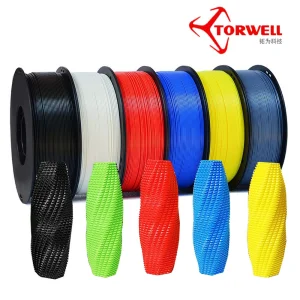
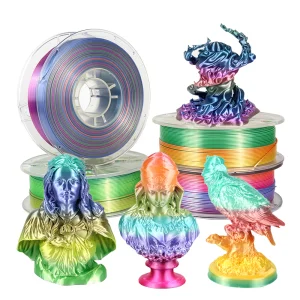
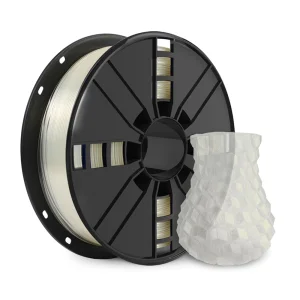
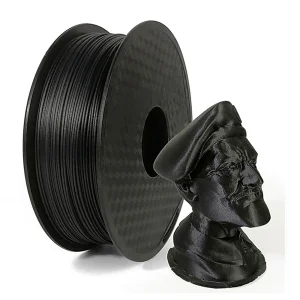
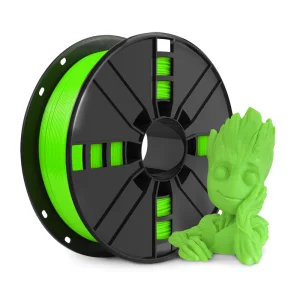
Understanding the molecular dynamics of Thermoplastic Polyurethanes (TPU) and Thermoplastic Elastomers (TPE) for high-speed, jam-free FDM 3D printing.
Flexible 3D printing filament represents one of the most chemically sophisticated segments in Fused Deposition Modeling (FDM) and Fused Filament Fabrication (FFF). Unlike rigid thermoplastics such as standard Polylactic Acid (PLA) or Acrylonitrile Butadiene Styrene (ABS), elastomeric filaments require precise polymer compounding to achieve a delicate balance between axial column strength (preventing buckling inside the drive gear) and flexural elasticity (delivering specified Shore hardness properties in printed parts).
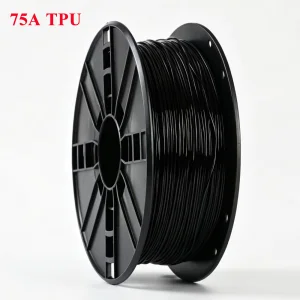
As a leading China flexible 3D printing filament manufacturer and supplier, our engineering lab formulates thermoplastic polyurethane (TPU) by polymerizing linear block copolymers containing hard segments (diisocyanates and chain extenders) and soft segments (long-chain polyols). The ratio of hard to soft segments directly dictates the mechanical response, tensile modulus, and Shore hardness—spanning soft 75A to rigid 95A formulations.
Polyether-based TPU filaments deliver superior hydrolysis resistance, low-temperature flexibility, and microbial resistance, making them ideal for outdoor and medical devices. Polyester-based variants offer enhanced oil resistance and tensile strength for automotive applications.
Flexible polymers exhibit pseudoplastic non-Newtonian flow. Under high shear rates inside the hotend nozzle, viscosity decreases significantly, allowing clean extrusion without excessive backpressure or filament grinding.
To ensure continuous feeding without looping around drive gears, our flexible filaments feature an optimized flexural modulus. This prevents structural collapse in both direct-drive extruders and constrained Bowden PTFE setups.
Extruding 75A TPU requires tight tolerances between the extruder gear and throat inlet (under 0.5 mm clearance) combined with low print speeds (15–30 mm/s). Conversely, 95A TPU acts more like a semi-rigid polymer, allowing modern high-speed CoreXY 3D printers to achieve printing velocities exceeding 150 mm/s with aggressive retraction settings.
| Grade / Hardness | Tensile Strength (MPa) | Elongation at Break (%) | Tear Strength (N/mm) | Nozzle Temp (°C) | Bed Temp (°C) | Optimal Speed |
|---|---|---|---|---|---|---|
| TPU 75A Super-Flex | 28 MPa | > 650% | 65 N/mm | 205 – 225 °C | 30 – 50 °C | 15 – 30 mm/s |
| TPU 85A Mid-Flex | 35 MPa | > 580% | 85 N/mm | 215 – 230 °C | 40 – 60 °C | 25 – 45 mm/s |
| TPU 95A High-Speed | 48 MPa | > 480% | 110 N/mm | 220 – 245 °C | 50 – 70 °C | 50 – 150 mm/s |
| TPE 80A Rubber-Series | 22 MPa | > 700% | 55 N/mm | 210 – 230 °C | 20 – 40 °C | 20 – 35 mm/s |
How direct-from-factory manufacturing scalability, closed-loop laser gauge monitoring, and strict raw material batching drive competitive advantages for international brands.
Extruding flexible filaments with consistent roundness is notoriously challenging due to thermal expansion and elastic recoil post-die melt exit. Our production lines integrate dual-axis laser diameter monitoring operating at 1,000 Hz real-time sampling rate. Any variance exceeding ±0.02 mm automatically adjusts the haul-off puller speed, ensuring flawless spooling without swell or necking.
Located in China's advanced polymer manufacturing hub, our factory benefits from direct integration with tier-1 raw TPU resin producers. By procuring virgin chemical pellets in multi-ton batches and conducting automated in-house drying and masterbatch compounding, we bypass intermediate markups—delivering premium grade filaments at unmatched wholesale pricing.
TPU and TPE are highly hygroscopic resins that rapidly absorb atmospheric moisture, resulting in steam pop-voids, stringing, and severe layer delamination during printing. Every batch undergoes 4–6 hours of desiccant wheel dehumidification to bring resin moisture content below 0.02% (200 ppm) prior to extrusion, followed by immediate inline vacuum packing with active silica desiccant.
Proper spooling tension is critical for flexible consumables; over-tight winding stretches the filament into oval cross-sections, while loose winding causes tangling. Our custom-designed automated spooling units maintain constant low-tension servo control, producing clean, side-by-side concentric layers compatible with automatic material systems (AMS).
End-to-end white-label solutions tailored for Amazon sellers, international distributors, print farms, and industrial end-users seeking private label partnership.
As global additive manufacturing shifts toward specialized end-use elastomeric applications, enterprise buyers require more than standard off-the-shelf reels. We offer complete OEM/ODM manufacturing capability designed to turn your brand specifications into market-ready retail products.
Achieve absolute brand consistency with precision color matching according to Pantone (PMS), RAL, or physical target samples. Our color laboratory verifies spectral uniformity under $\Delta E < 1.0$ tolerances across multi-ton production runs.
Supply options range from consumer 250g mini-spools and 1kg retail boxes to high-capacity 3kg, 5kg, and 10kg industrial print farm reels. Spool material options include recyclable cardboard spools, clear polycarbonate, or recycled ABS.
Complete custom branding package including die-cut retail cartons, custom label stickers, QR code batch tracking, barcode integration, and moisture-proof aluminum foil vacuum shielding with high-density protective master cartons.
From automotive damping seals to customized orthopedic insoles, discover how TPU and flexible 3D printing filaments drive functional end-use production.
TPU flexible filaments are extensively utilized in prototyping and low-volume production of anti-vibration gaskets, weather-stripping seals, intake duct couplers, dust boots, and interior noise-damping bumpers. Chemical resistance to automotive grease, diesel, and hydraulic fluid makes 95A TPU the gold standard for under-the-hood functional parts.
Additive manufacturing enables patient-customized podiatric insoles, prosthetic socket liners, dynamic ankle-foot orthoses (AFO), and ergonomic surgical grips. Using soft 75A to 85A TPU allows designers to tune variable lattice infill densities across different regions of a single insole for tailored pressure relief.
Soft robotics relies heavily on elastomeric materials for pneumatic grippers, bellows, vacuum suction cups, anti-slip jaw pads, and protective cable drag-chain covers. The high tear strength and flex-fatigue resistance of flexible TPU ensure millions of continuous actuation cycles without mechanical degradation.
Leading footwear and athletic gear manufacturers leverage flexible 3D printing for shock-absorbing midsole structures, protective eyewear guards, smartwatch straps, cycling saddles, and drop-resistant smartphone enclosures engineered to absorb impact energy.
Meeting rigorous chemical safety and industrial standards to streamline custom clearances and commercialization in European and North American markets.
Fully compliant with EU REACH Regulation (EC No 1907/2006), verifying absence of Substances of Very High Concern (SVHC).
Adheres strictly to Directive 2011/65/EU and (EU) 2015/863, certifying heavy metals and hazardous flame retardants are excluded.
Select TPU formulations comply with FDA 21 CFR 177.2600 for repeated food-contact rubber and elastomer applications.
Manufactured under audited quality control management protocols ensuring batch-to-batch repeatability and traceably logged TDS/SDS sheets.
Next-generation polymer advancements shaping high-efficiency additive manufacturing over the next decade.
The additive manufacturing landscape for flexible polymers is advancing rapidly beyond standard shore hardness variations. Key technical breakthroughs that our R&D facility is currently scaling include:
Direct answers to technical specifications, minimum order quantities, print parameters, and international distribution policies.
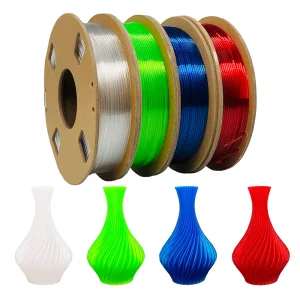
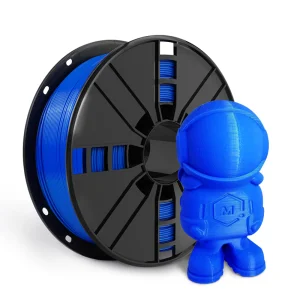
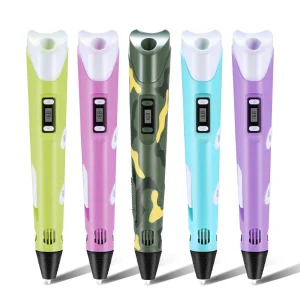
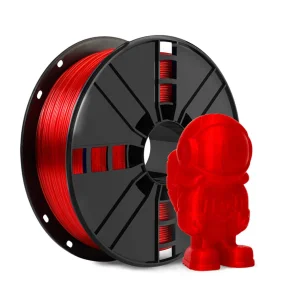
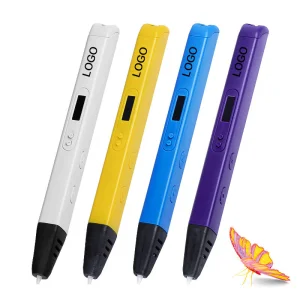
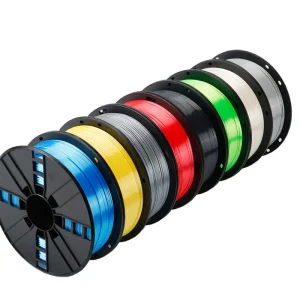
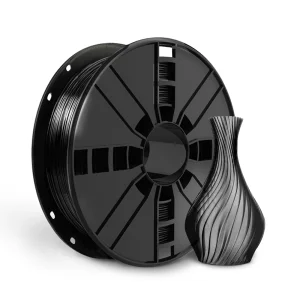
Discover our full range of 3D printer materials including soft TPU elastomers, high-impact ABS, PETG, Silk PLA, and 3D drawing pens ready for international OEM shipment.