High-precision FDM materials optimized for industrial prototyping, consumer goods, and high-speed desktop 3D printing systems.
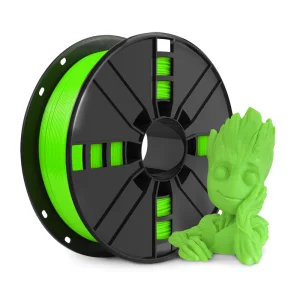
Wholesale Pla printer filament green color Manufacturers, Suppliers
View Product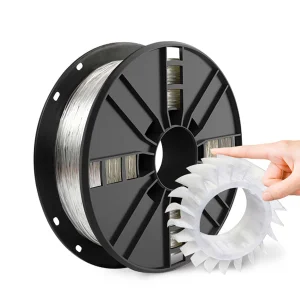
China TPU filament 1.75mm clear Transparent TPU Manufacturer, Suppliers
View Product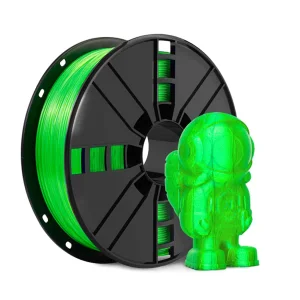
China Green 3D filament PETG for FDM 3D printers Manufacturers, Factories
View Product
Wholesale Silk PLA 3D Filament Silk shiny 3D filament Manufacturer, Factories
View Product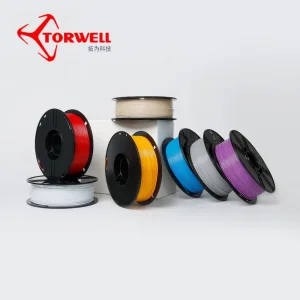
China PLA 3D Printer Filament 1.75mm/2.85mm 1kg per Spool Suppliers, Factories
View Product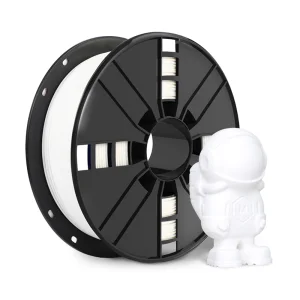
China Torwell ABS Filament 1.75mm, White, Dimensional Accuracy +/- 0.03 mm, ABS 1kg Spool Manufacturer
View Product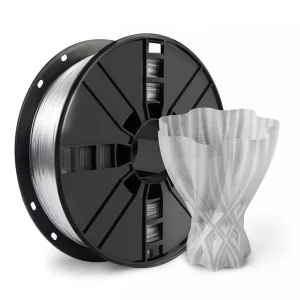
China PETG Transparent 3D filament Clear Supplier, Suppliers
View Product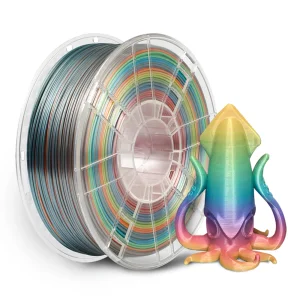
Wholesale PLA Silky Rainbow filament 3D printer Filament Manufacturer, Supplier
View ProductHow Chinese chemical compounding innovations and automated precision extrusion are redefining elastomeric FDM materials worldwide.
Thermoplastic Polyurethane (TPU) and Thermoplastic Elastomers (TPE) bridges the gap between rigid plastics and soft rubbers. By altering the ratio of hard segments (diisocyanates) to soft segments (polyols), Chinese chemical facilities engineer precise Shore hardness profiles ranging from ultracushioned 70A to semi-rigid 98A.
Flexible polymers exhibit non-Newtonian shear-thinning behavior. Unlike rigid filaments like PLA or PETG, molten flexible filaments tend to buckle inside direct-drive or Bowden extruder drive gears. Advanced extrusion lines utilize low-shear screw geometries and precise melt-temperature profiling to prevent structural kinking.
China accounts for over 65% of the global supply of finished 3D printer filament. By co-locating raw resin synthesis, masterbatch pigment formulation, and high-speed automated spooling, top manufacturers deliver unparalleled cost efficiencies without sacrificing micron-level dimensional stability.
A detailed comparative breakdown of elastomeric polymer characteristics engineered for industrial FDM 3D printing applications.
| Elastomer Grade | Shore Hardness | Tensile Strength (MPa) | Elongation at Break (%) | Recommended Nozzle Temp | Extruder Configuration |
|---|---|---|---|---|---|
| TPU Ultra-Soft 85A | 85 Shore A | 35 MPa | > 580% | 210°C – 230°C | Direct Drive (Short Path) |
| TPU Industrial 95A | 95 Shore A | 48 MPa | > 490% | 215°C – 235°C | Direct Drive & Optimized Bowden |
| TPU Semi-Rigid 98A / 55D | 98 Shore A / 55D | 55 MPa | > 380% | 225°C – 245°C | Universal FDM Compatible |
| TPE Foamed Light-Weight | Variable (60A–80A) | 18 MPa | > 320% | 230°C – 250°C | Direct Drive High Speed |
| TPC Medical Grade | 90 Shore A | 42 MPa | > 500% | 220°C – 240°C | Closed Loop Clean Room FDM |
Polyurethane elastomers are inherently hygroscopic. Absorbed atmospheric moisture vaporizes at the heated nozzle, leading to micro-cavitation, hydrolytic polymer chain cleavage, layer delamination, and excessive stringing. Professional Chinese manufacturing protocols involve high-vacuum continuous desiccation prior to spooling, followed by immediate vacuum packaging with multi-layer foil laminates and high-capacity silica desiccants to preserve mechanical integrity during ocean transport.
Maintaining strict dimensional accuracy in soft, elastic materials is exceptionally difficult due to elastic recovery (die swell) upon leaving the extrusion die. Top tier suppliers utilize dual-axis 1000Hz laser micrometers integrated into dynamic closed-loop haul-off speed adjusters. This guarantees that 1.75mm and 2.85mm flexible strands avoid ovality and diameter fluctuations that cause jams in feeding drive gears.
From automotive vibration isolation to custom medical orthotics, flexible 3D filaments unlock new engineering capabilities.
Used for rapid prototyping of custom weather seals, wiring harness grommets, intake ducting, and anti-vibration body mounts. Excellent oil, grease, and chemical resistance makes TPU 95A ideal for under-the-hood functional validation.
Custom orthotic shoe insoles, patient-specific prosthetics, and soft wearable sensor brackets utilize biocompatible TPE formulations. Varied infill densities allow localized stiffness tuning for targeted pressure relief.
Industrial robotic arms leverage 3D printed soft end-of-arm tooling (EOAT) to handle delicate glassware, food products, and electronics without causing scratch damage or structural cracking.
Leading athletic brands leverage Chinese TPU filament manufacturing for lattice mid-sole structures, flexible watch straps, phone protective cases, and impact-absorbing athletic protective equipment.
Turnkey OEM/ODM solutions engineered to satisfy global compliance standards and local market branding requirements.
Using spectrophotometer color matching technology, Chinese manufacturers formulate custom color TPU/TPE filaments tied precisely to Pantone (PMS) or RAL color codes. Batch-to-batch color delta ($E$) is strictly maintained under 1.0 for brand consistency.
Industrial grade flexible filaments comply with global environmental safety frameworks, including EU REACH SVHC, RoHS 3 (Directive 2015/863), California Proposition 65, and UL94 V-0 flame retardancy standards upon request.
Complete private label customization: custom-branded cardboard or plastic spools, QR-coded batch tracking labels, customized die-cut retail display cartons, and moisture-barrier vacuum packaging tailored for Amazon FBA or direct distribution.
R&D direction driving high-speed elastomeric printing, bio-based sustainability, and functional smart polymers.
Current high-speed FDM printers (speeds > 300mm/s) demand modified TPU formulations with rapid crystallization kinetics. New polymer grades reduce melt viscosity under high shear rates without compromising elasticity.
Transitioning from petroleum-derived TPU to bio-based PolyLactic Elastomers (PLE) synthesized from renewable agricultural starches, offering low carbon footprints and end-of-life industrial compostability.
Embedding carbon nanotubes (CNTs) or graphene nanoplatelets into flexible matrices enables 3D-printed piezoresistive strain sensors, flexible printed circuit boards (PCBs), and integrated haptic feedback devices.
Explore our full OEM portfolio of engineering ABS, ASA, PETG, Silk PLA, and specialty flexible polymers.
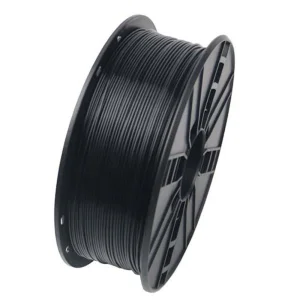
China ASA filament for 3D printers UV stable filament Supplier, Factories
View Product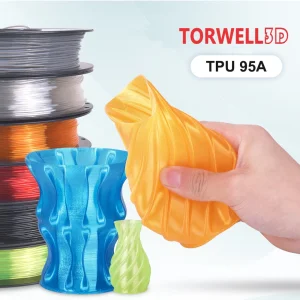
China Flexible 95A 1.75mm TPU filament for 3D printing Soft Material Suppliers, Factories
View Product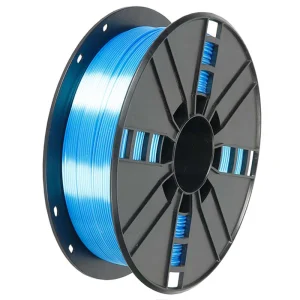
China PLA Silk 3D filament blue 1.75mm Suppliers, Factory
View Product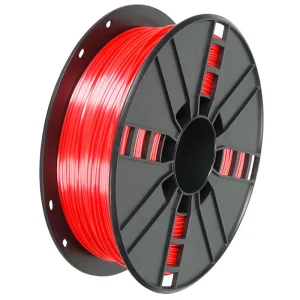
Wholesale Silk Red PLA 3D Printer Filament 1KG 3D Printing Materials Manufacturer, Factories
View Product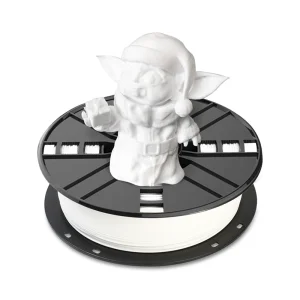
China 1.75mm PLA plus filament PLA pro for 3D printing Manufacturer, Supplier
View Product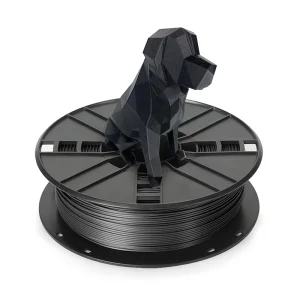
Wholesale PLA+ filament PLA plus filament Black color Factory, Factories
View Product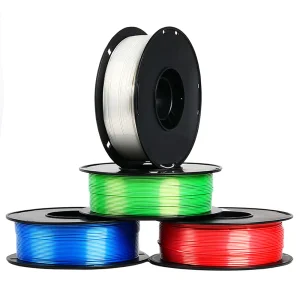
Wholesale Torwell Silk PLA 3D Filament with gorgeous surface, Pearlescent 1.75mm 2.85mm Manufacturers, Suppliers
View Product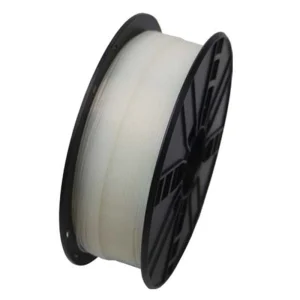
Wholesale Torwell ABS Filament 1.75mm for 3D printer and 3D pen Manufacturer, Factories
View ProductTechnical insights, ordering guidelines, and printing tips answered by senior material engineers.
Thermoplastic Polyurethane (TPU) is a specific sub-category of Thermoplastic Elastomer (TPE). TPU is generally stiffer, more durable, more resistant to abrasion, and easier to print on FDM machines (typically available in 90A to 98A Shore hardness). TPE encompasses softer block copolymers (such as SEBS) that can reach ultra-soft levels down to 60A–70A, but require specialized direct-drive extruders due to extreme flexibility.
Leading Chinese factories integrate continuous dual-axis high-speed laser measuring systems right after water cooling baths. The laser sensors provide real-time feedback to automated haul-off pullers and extruder screw drives, making millisecond micro-adjustments to ensure uniform cross-sectional diameter and circularity throughout 1000-meter spool runs.
Yes, TPU with a Shore hardness of 95A or stiffer can be printed on Bowden setups if printing speeds are kept low (15–30 mm/s) and retraction is minimized or disabled. However, for softer flexible filaments (such as 85A or lower), direct-drive extruders with a constrained, short filament path are strongly recommended to prevent filament buckling inside the drive gears.
TPU is highly hygroscopic. If exposed to ambient humidity, it should be dried in a dedicated filament dryer or forced-air oven at 60°C to 70°C for 4 to 6 hours before printing. Storing spools inside sealed dry boxes with active desiccant during active printing prevents stringing, bubbling, and weak layer adhesion.
Manufacturers offer comprehensive OEM services including custom Pantone color synthesis, private label spools (cardboard, ABS, or PC materials), custom net weights (250g, 500g, 1kg, up to 5kg industrial spools), customized foil vacuum packaging, and custom retail box artwork design with full regulatory documentation support (TDS, SDS, REACH, RoHS).