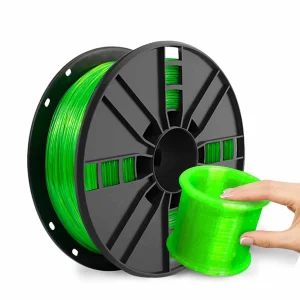
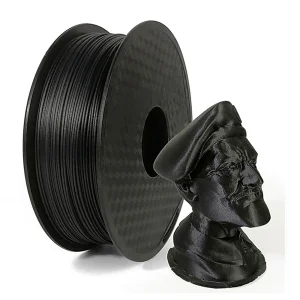
Precision-engineered 3D printing filaments manufactured under ISO 9001 certified inline laser control standards.
Analyzing the macro-shift of Polylactic Acid (PLA) from desktop rapid prototyping to high-speed industrial additive manufacturing.
Fused Deposition Modeling (FDM), also known as Fused Filament Fabrication (FFF), has transformed from a niche desktop hobbyist tool into a primary manufacturing pillar for rapid tooling, functional prototyping, and low-volume production. Among all thermoplastic feedstocks utilized globally, Polylactic Acid (PLA) remains the dominant material choice, capturing over 45% of the total worldwide 3D printing filament market share. This market position is driven by its exceptional dimensional stability, zero-warpage characteristics, low thermal expansion coefficient, and environmentally sustainable origin derived from fermented plant starch (corn or sugarcane).
However, the modern industrial landscape demands significantly more than standard PLA formulations of the past decade. The global rapid proliferation of high-speed CoreXY 3D printers (achieving motion speeds from 300 mm/s to exceeding 600 mm/s with accelerations up to 20,000 mm/s²) has placed unprecedented stress on material rheology. Enterprise print farms and OEM buyers require custom engineered PLA grades that possess rapid melt-flow indices (MFI), immediate thermal crystallization upon nozzle exit, superior inter-layer bond strength (Z-axis shear strength), and zero volumetric flow bottlenecking.
Precise molecular weight distribution tuning enables fluid shear-thinning behavior under high extrusion rates without inducing thermal degradation or nozzle droop.
Enhanced modified PLA (PLA+) formulations exhibit modified impact modifiers that elevate impact resistance from standard 2.5 kJ/m² to over 10 kJ/m².
Complying with EN 13432 and ISO 14855 industrial composting standards, offering bio-based solutions for environmentally conscious global corporate mandates.
How Chinese extrusion hubs combine chemical synthesis integration, automated multi-axis laser metrology, and massive economies of scale.
Direct integration with top-tier virgin PLA lactide polymerization facilities ensures uniform raw batch viscosity, zero recycled scrap contamination, and high optical purity for vibrant masterbatch dispersion.
Our automated extrusion lines incorporate real-time twin-axis laser micrometers that measure filament diameter every 10 milliseconds, dynamically adjusting puller speed to maintain strict ±0.02 mm tolerance.
Precision servo-driven traversing systems eliminate crisscross winding, spool overlapping, and tension spikes—guaranteeing smooth, snag-free continuous printing for multi-material AMS units.
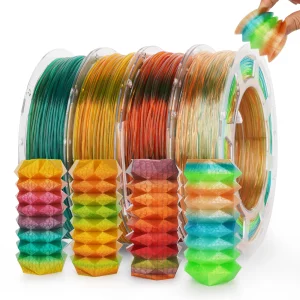
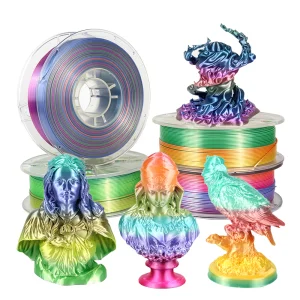
Partnering with a established China PLA factory offers international distributors and private label brand owners profound strategic leverage. Beyond unit cost optimization, Chinese manufacturing ecosystems provide rapid agility in custom compounding. Whether your customer base requires specialized color matching (Pantone/RAL pinpoint alignment), specialized aesthetic effects (Dual-Color Co-extrusion, Silk Finish, Fast Gradient Rainbow), or advanced engineering additives (Carbon Fiber, Matte Finishers, Glow-in-the-Dark Phosphors), our factory facilities deliver turn-key OEM/ODM fulfillment with comprehensive international trade compliance documentation.
Empirical mechanical property evaluation across standard PLA, engineered PLA+, PETG, ABS, ASA, TPU, and Carbon Fiber composites.
| Polymer Grade | Nozzle Temp (°C) | Bed Temp (°C) | Tensile Strength (MPa) | Flexural Modulus (GPa) | Impact Strength (kJ/m²) | Heat Deflection (HDT @ 0.45MPa) |
|---|---|---|---|---|---|---|
| Standard PLA | 190 – 215 | 20 – 60 | 55 – 65 | 3.2 – 3.8 | 2.5 – 3.2 | 55 °C |
| High-Speed PLA+ | 200 – 230 | 50 – 65 | 60 – 70 | 3.1 – 3.5 | 8.5 – 12.0 | 60 °C |
| Silk Metallic PLA | 205 – 225 | 50 – 60 | 45 – 52 | 2.6 – 3.0 | 3.8 – 4.5 | 52 °C |
| PETG Structural | 230 – 250 | 70 – 85 | 48 – 55 | 2.0 – 2.4 | 6.0 – 8.0 | 70 °C |
| ABS Industrial | 235 – 260 | 90 – 110 | 40 – 48 | 2.1 – 2.5 | 15.0 – 20.0 | 85 °C |
| ASA Outdoor UV | 240 – 265 | 95 – 110 | 42 – 50 | 2.2 – 2.6 | 12.0 – 18.0 | 92 °C |
| TPU 95A Flexible | 210 – 235 | 20 – 50 | 35 – 45 | Elastic (Shore 95A) | No Break | 60 °C |
| PETG-CF Composite | 240 – 270 | 75 – 90 | 75 – 90 | 6.2 – 7.5 | 9.0 – 11.5 | 82 °C |
* Test conditions: ASTM D638 / ISO 527 standard test bars printed at 0.2mm layer height, 100% infill, dry state. Actual mechanical metrics vary depending on printer enclosure parameters and cooling speeds.
How modern enterprise sectors leverage customized FDM PLA formulations for streamlined end-use production.
Utilized for rapid physical check-fixtures, HVAC ducting models, assembly alignment tools, and interior ergonomic mockups requiring absolute dimensional accuracy.
Enables complex structural geometry printing with crisp fine-detail overhangs and zero shrinkage across massive multi-tile urban masterplan representations.
Anatomical models reconstructed from patient CT/MRI scans. PLA's non-toxic processing enables rapid, highly detailed bone structure and organ spatial planning.
Rapid concept validation for luxury cosmetics containers, fast-moving consumer goods (FMCG) packaging prototypes, and short-run customized display props.
Key technology vectors transforming thermoplastic filament extrusion over the next 5 years.
As 3D printer hardware speeds surpass 500mm/s standard operation, polymer formulation shifts toward ultra-high Melt Flow Index (MFI) resins combined with rapid-crystallization nucleating agents that solidify instantaneously upon deposition.
Transitioning from single-use virgin plastic spools toward 100% recycled paperboard spools with precision rolled edges to eliminate dust generation inside automatic material management systems (AMS/MVS).
Compounding neat PLA resin with micro-carbon fiber, metallic powders, wood fibers, or phase-change thermochromic pigments to provide multi-functional structural and aesthetic properties for specialized retail and engineering markets.
Standard Operating Procedures (SOP) for international distributors, brand owners, and high-volume print farm managers.
Polymer resin pellets must undergo desiccant hopper dehumidification to guarantee moisture content below 0.02% (200 ppm) prior to extrusion, preventing hydrolytic degradation and micro-bubbles.
Automated spectrophotometer color checking guarantees Delta-E < 1.0 between production batches, ensuring identical visual tone across multi-container shipments over multi-year contracts.
Every extruded spool is immediately sealed with high-efficiency silica desiccant inside heavy-duty multi-layer aluminum-poly vacuum bags, tested against air leakage prior to master carton packing.
Complete private labeling customization: custom Pantone color matching, die-cut branded box design, QR-coded batch tracking stickers, custom spool flange dimensions, and localized safety datasheets (SDS).
Direct factory supply for specialized engineering thermoplastics, ABS, PETG, TPU, and specialty PLA series.
Engineering insights into material parameters, factory production tolerances, OEM customization, and global logistics.
Diameter variance directly dictates volumetric flow stability through the hotend. If a filament fluctuates from 1.75 mm up to 1.85 mm, it causes an over-extrusion of nearly 12%, resulting in nozzle clogging, surface blobs, dimensional inaccuracy, and layer lines. Conversely, under-extrusion leads to weak inter-layer adhesion and structural part failure. Our China factory utilizes continuous dual-axis laser closed-loop feedback systems to clamp tolerances tightly within ±0.02 mm across every 1kg spool.
Standard PLA is synthesized from pure poly-lactic acid polymer chains, offering high stiffness but inherent brittleness. PLA+ introduces elastomeric impact modifiers, nucleating agents, and chain extenders during twin-screw compounding. This molecular alteration increases Izod impact strength by up to 300% to 400%, improves layer boundary fusion, and expands the processing temperature window, allowing fast printing without structural brittleness.
For standard stock masterbatch colors with private-label client boxes and spools, our typical factory MOQ is 500 to 1,000 spools per order run. For fully customized Pantone color development, the compounding MOQ is 1,000 kg per color batch. Production lead times range from 10 to 18 business days upon art files and sample color sign-off.
All our FDM PLA filament series fully comply with EU RoHS (Restriction of Hazardous Substances) Directive 2011/65/EU and REACH (Registration, Evaluation, Authorization and Restriction of Chemicals) regulations. Material Safety Data Sheets (MSDS / SDS) and Technical Data Sheets (TDS) are provided with every batch, certifying zero heavy metals, phthalates, or toxic volatile organic compounds (VOCs) during extrusion.
While PLA is less hygroscopic than Nylon or PETG, ambient moisture absorption causes hydrolysis during hotend melting, creating steam bubbles, stringing, and degraded tensile strength. Our factory desiccates polymer melt to under 200 ppm, followed by instant vacuum packaging in heavy barrier foil pouches with active desiccant packets. Stored unopened in cool environments, shelf life exceeds 24 months without property loss.
Yes. Our High-Speed PLA+ series is specifically engineered for high-velocity CoreXY systems (e.g., Bambu Lab, Voron, Creality K1 series). By controlling polymer chain length and melt viscosity, the material maintains consistent melt volume up to 30 mm³/s without requiring excessive nozzle temperature elevations that degrade color vibrancy.