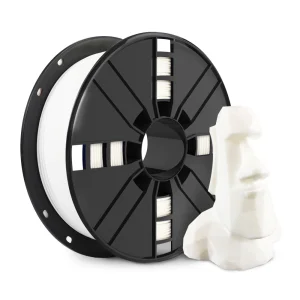
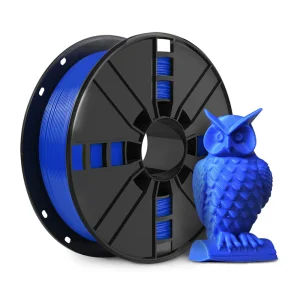
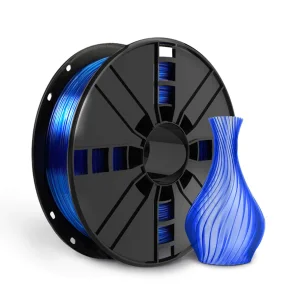
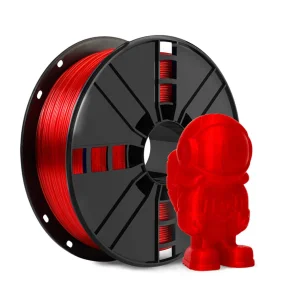
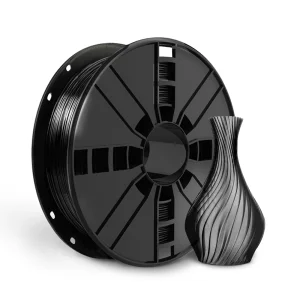
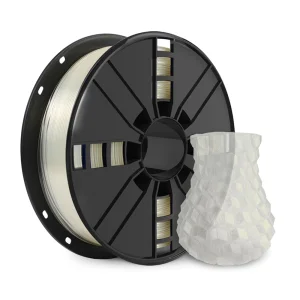
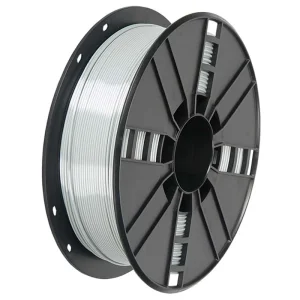
Factory-direct 1.75mm & 2.85mm engineering and aesthetic grade filaments engineered for high-speed additive manufacturing and wholesale distribution.
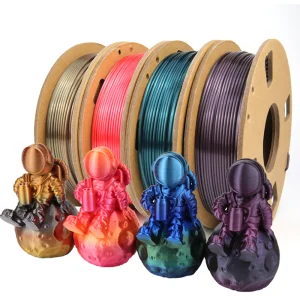
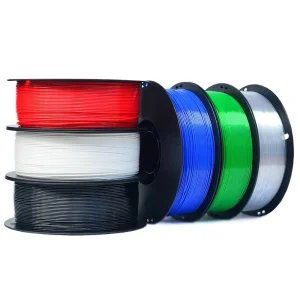
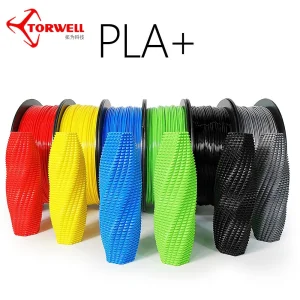
Bridging the gap between raw bio-polymer chemistry and high-throughput industrial additive manufacturing.
In the rapidly evolving landscape of global additive manufacturing, selecting a primary China Bulk PLA Filament Manufacturer & Factory is no longer merely a transaction of purchasing raw plastic spools; it is a strategic decision that dictates operational uptime, print farm yield, and end-product mechanical fidelity. As fused deposition modeling (FDM) and fused filament fabrication (FFF) technologies transition from rapid prototyping into direct digital manufacturing, material demands have escalated exponentially. Modern high-speed 3D printers—operating at velocity thresholds exceeding 500 mm/s and acceleration rates above 20,000 mm/s²—require polylactic acid (PLA) formulations engineered with precise melt flow indices, thermal stability, and tight dimensional tolerances.
Torwell Technologies has positioned its manufacturing architecture to directly address macro-level supply chain vulnerabilities, providing tailored PLA polymer matrix solutions for high-volume enterprise buyers across distinct industrial verticals:
Utilizing toughened PLA+ and carbon-fiber reinforced PLA to produce dimensionally stable interior trim concepts, ducting mockups, and ergonomic assembly jigs with minimal warping and zero thermal shrinkage during extended print cycles.
Supplying biocompatible-grade, low-odor PLA polymers suitable for pre-surgical planning models, patient-specific orthotic fit-checks, and educational anatomical displays requiring high visual clarity and crisp detail reproduction.
Enabling brands to meet rigid ESG (Environmental, Social, and Governance) targets by replacing fossil-fuel plastics with certified industrially compostable PLA blends (DIN EN 13432 compliant) for eco-friendly cosmetics packaging and retail containers.
| Filament Grade | Tensile Strength (MPa) | Heat Deflection Temp (°C) | Melt Flow Index (g/10min) | Primary Industrial Utility |
|---|---|---|---|---|
| Standard Virgin PLA | 60 - 65 MPa | 55 °C | 10 - 14 (210°C/2.16kg) | Visual prototypes, educational models, retail goods |
| High-Speed PLA Pro (PLA+) | 65 - 72 MPa | 62 °C | 18 - 24 (210°C/2.16kg) | Enterprise print farms, high-speed FDM (>500mm/s) |
| Carbon Fiber PLA (CF-PLA) | 75 - 85 MPa | 68 °C | 8 - 12 (210°C/2.16kg) | Structural jigs, fixtures, drone frames, tooling |
| Industrial PETG Composite | 50 - 55 MPa | 72 °C | 6 - 10 (230°C/2.16kg) | Chemical containment, outdoor housings, snap-fits |
Inside Torwell's 2,500 m² automated facility: How closed-loop feedback loops and scale economies ensure batch-to-batch perfection.
The single greatest cause of nozzle clogging, under-extrusion, and print failure in commercial 3D printing is diameter fluctuation. Standard marketplace filaments often exhibit variances of $\pm 0.05\text{ mm}$ or more, causing inconsistent volumetric flow rates through hotends. Torwell mitigates this structural flaw by utilizing in-line dual-axis laser micrometers operating on a real-time closed-loop feedback system.
During the extrusion process, raw lactide resin is melted and pulled through specialized cooling tanks. Dual-axis lasers measure the filament diameter across the X and Y planes at a frequency of 500 Hz. If the diameter strays by as little as $\pm 0.01\text{ mm}$ from the $1.75\text{ mm}$ target baseline, the system automatically adjusts haul-off tractor speed and melt pump RPM in real time. Any segment exceeding the strict $\pm 0.02\text{ mm}$ tolerance threshold is automatically flagged and rejected by mechanical drop-out gates prior to winding.
Cross-winding or tangled filament leads to catastrophic print failures in multi-day print farm runs. Torwell's automated winding stations utilize optical tension sensors and precision traverse guides to lay down uniform, layer-by-layer spooling that unwinds effortlessly, even under high-speed retractions in AMS (Automatic Material System) environments.
PLA is inherently hygroscopic. Water molecules absorbed into raw filament undergo hydrolysis at extrusion temperatures ($200^\circ\text{C}+$), severing polymer chains and causing popping sounds, stringing, and weak layer adhesion. Torwell subjects all spools to a continuous 8-hour inline desiccant drying cycle ($<0.05\%$ residual moisture content) immediately followed by automated vacuum sealing in moisture-impermeable foil/poly bags with fresh silica packs.
Turnkey private-label manufacturing, custom Pantone color synthesis, and compliance verification for international distributors.
Maintain brand identity across global retail channels. Torwell utilizes advanced spectrophotometers to match physical color chips or Pantone codes (Delta E $< 0.8$), ensuring batch-to-batch color repeatability over thousands of master spools.
Choose from cardboard spools (100% recyclable), high-heat ABS spools, or multi-kilogram industrial reels (2.5kg, 5kg, 10kg). We provide complete private-label branding, including custom box printing, barcode integration, and serialized batch tracking labels.
Protect your business from import liabilities. All Torwell export products come with comprehensive technical documentation: Material Safety Data Sheets (MSDS), Technical Data Sheets (TDS), RoHS 3.0 Compliance, EU REACH SVHC Verification, and FDA food-contact clearances.
Investigating next-generation polymer modifications, bio-recycling circularity, and thermal crystallization breakthroughs.
As FDM printing hardware advances toward ultra-high speed printing, traditional PLA resins hit physical bottlenecks—specifically melt-flow limitations, low heat deflection temperatures (HDT), and brittleness. As an industry-leading China Bulk PLA Filament Manufacturer & Factory, Torwell Technologies is actively deploying R&D resources into four core chemical and mechanical innovation vectors:
Standard PLA exhibits shear-thinning behavior, but high-speed extruders (>600 mm/s) generate immense backpressure inside narrow melt zones. By blending bio-based plasticizers and hyperbranched polymers, Torwell's next-gen PLA Ultra-Speed Pro increases volumetric melt flow rates by up to 120% while maintaining inter-layer chain entanglement, preventing cold-weld layer splitting.
Unmodified PLA is predominantly amorphous, causing models to soften at temperatures above $55^\circ\text{C}$. Through the integration of inorganic nucleating agents (such as nano-talc and organic phosphonate salts), our heat-resistant PLA formulations undergo accelerated crystallization during or post-printing, elevating Heat Deflection Temperatures (HDT) to over $105^\circ\text{C}$ after annealing—rivaling the thermal performance of ABS without the styrene off-gassing.
The future of bio-plastics lies in circularity. Torwell is establishing partnerships with industrial recyclers to pioneer closed-loop depolymerization. Scrap PLA from print farm waste is chemically broken down into lactide monomers through thermal catalysis, purified, and re-polymerized into virgin-equivalent PLA resin, reducing carbon emissions by an additional 65% compared to first-generation corn-starch synthesis.
Seamless cross-border commerce backed by robust logistics networks, clear Incoterms, and dedicated engineering consultation.
Navigating international shipping requires expertise in customs clearance and cargo protection. Torwell supports diverse commercial terms including FOB (Free on Board), CIF (Cost, Insurance, Freight), and DDP (Delivered Duty Paid) directly to your fulfillment warehouse. Container loading is optimized via custom palletization protocols that maximize sea-freight volumetric capacity while preventing box crushing.
Enterprise clients operating multi-hundred printer farms receive direct access to Torwell's Senior Polymer Engineers. We offer custom G-code slicing profiles (OrcaSlicer, PrusaSlicer, Bambu Studio), nozzle temp recommendations, and viscosity mapping for specialized high-speed extrusion heads.
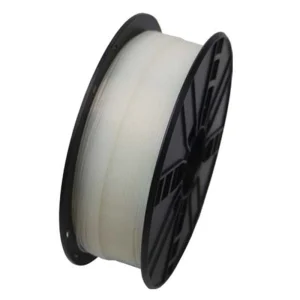
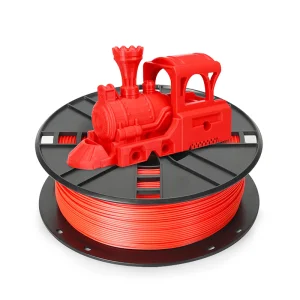
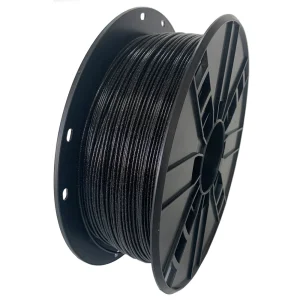
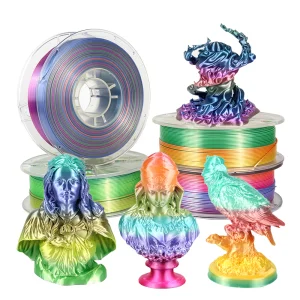
Explore our full line of specialized PLA, TPU, ABS, and aesthetic rainbow gradient spools for bulk procurement.
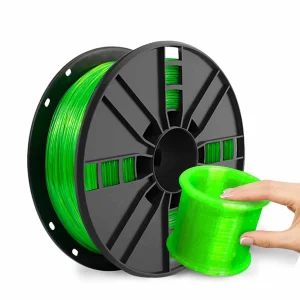
Clear, authoritative answers addressing common B2B purchasing inquiries, quality assurance standards, and OEM specifications.
Torwell Technologies has specialized exclusively in 3D printing polymer extrusion since 2011. Operating out of a standardized 2,500 m² factory equipped with 6 fully automated production lines, we combine raw resin synthesis expertise with closed-loop dual-axis laser diameter controls. We guarantee tight diameter tolerances ($\pm 0.02\text{ mm}$), low moisture levels ($<0.05\%$), and consistent batch color fidelity, supporting OEM brands and distributors in over 75 countries.
Our baseline standard for 1.75mm and 2.85mm filament is a strict target tolerance of $\pm 0.02\text{ mm}$. Extrusion lines utilize continuous inline laser measuring units calibrated at 500 Hz. If diameter variance strays beyond parameters, automated mechanical drop-out gates discard the off-spec filament before it reaches the spooling stage.
All extruded filaments undergo an intensive 8-hour inline desiccant drying protocol before spooling. Once spooled, filaments are immediately vacuum-sealed inside thick multi-layer moisture barrier bags alongside fresh active silica gel desiccant packs. Outer cartons are sealed and shrink-wrapped on heavy-duty wooden or plastic export pallets to endure long sea freight journeys without humidity ingress.
We provide comprehensive OEM customization: custom color matching via Pantone or physical samples (Delta E $< 0.8$), custom spool designs (standard plastic, eco-cardboard, high-temp ABS), custom reel sizing (250g, 500g, 1kg, 2.5kg, 5kg, 10kg), branded vacuum packaging, customized outer retail boxes, and integrated barcode/lot number labelling for seamless inventory management.
Yes. Our modified PLA Plus (PLA+) and high-flow PLA formulations are optimized for high-speed FDM printing exceeding 500 mm/s. Furthermore, our spools feature smooth, burr-free rims and neat, tension-controlled winding layers specifically engineered for seamless operation inside automatic material changing systems like Bambu Lab AMS or Creality K1 AMS units without mechanical binding.
Our PLA filaments are derived from renewable plant starches (such as corn and sugar cane) and comply fully with EU REACH regulations (EC 1907/2006), RoHS 3.0 directives (2015/863/EU), and FDA 21 CFR food-contact parameters. Additionally, raw PLA resin formulations meet DIN EN 13432 and ASTM D6400 industrial compostability benchmarks.
Torwell maintains a monthly output capacity of 50,000 to 60,000 kg across all filament categories. For standard stock colors, MOQs start as low as 50 to 100 spools per SKU. For custom Pantone color matching and private label OEM packaging, our typical starting MOQ is 500 spools per custom formulation.