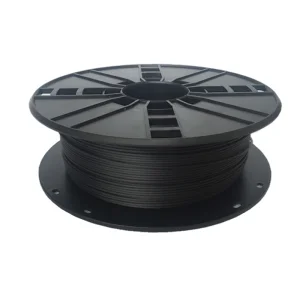
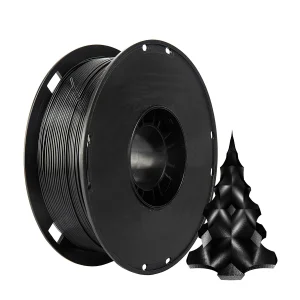
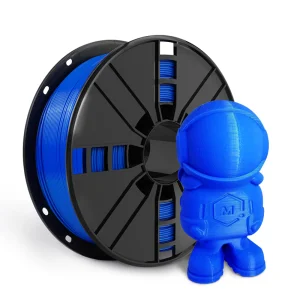
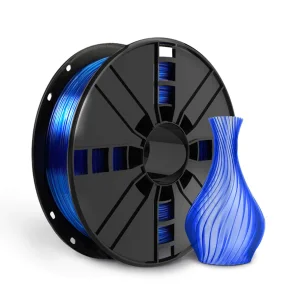
High-precision, lab-tested 3D printing spools for global distributors and industrial print farms.
The global additive manufacturing ecosystem is undergoing a seismic transition. As Fused Deposition Modeling (FDM) and Fused Filament Fabrication (FFF) 3D printers evolve from slow rapid-prototyping units into high-speed, continuous industrial production machines (exceeding printing velocities of 500 mm/s to 1000 mm/s), the demands placed on thermoplastic raw materials have multiplied exponential times. Today, purchasing managers, enterprise print farm operators, and global brand distributors require more than just plastic spools; they demand micro-engineered polymer matrices, tight dimensional stability ($\pm0.02\text{ mm}$), zero-void density, and ironclad supply chain resilience.
China has solidified its status as the world's premier manufacturing center for volume 3D printer filament production. This leadership position is supported by deep vertical integration across polymer chemical synthesis, specialized masterbatch compounding, automated multi-axis extrusion technologies, and streamlined international freight infrastructure. By sourcing directly from established tier-1 China factories, global procurement officers eliminate multiple intermediary markups, gain access to agile OEM/ODM customization, and secure the exact batch consistency mandatory for scaling commercial printing operations.
A common mistake in high-volume procurement is evaluating filament solely on a per-kilogram initial purchase price. In commercial print farms and retail distribution, hidden costs—such as nozzle clogging downtime, layer delamination failure rates, reel-tangle scrap losses, and moisture degradation during maritime transit—represent up to 35% of total operating expenditure. Enterprise-grade China bulk manufacturing integrates online laser feedback loops, dual-chamber desiccant vacuum packing, and anti-static spools to drive the operational failure rate down to under 0.05%.
Selecting the optimal polymer formula for technical, aesthetic, and structural applications.
Modern FDM materials span a wide spectrum from eco-friendly bio-polymers to heavy-duty engineering thermoplastics and fiber-reinforced composite structures. Matching the chemical formulation to the precise end-use scenario requires a deep understanding of thermal transitions, tensile strength, impact energy absorption, and melt rheology.
Polylactic Acid remains the workhorse of 3D printing. Modified PLA+ Filament formulations incorporate impact modifiers and nucleation accelerators to enhance layer adhesion, reduce brittleness, and sustain high volumetric flow rates up to 35 mm³/s on core-XY motion systems without stringing.
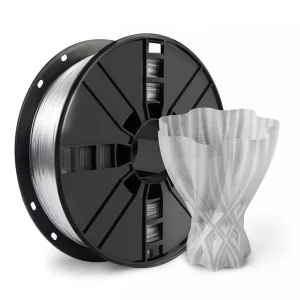
Glycol-modified Polyethylene Terephthalate bridges the gap between low-warp printing and mechanical durability. Featuring superior chemical resistance, zero water-uptake expansion, and exceptional impact strength, PETG Filaments are optimized for functional enclosures, liquid containers, and outdoor fixtures.
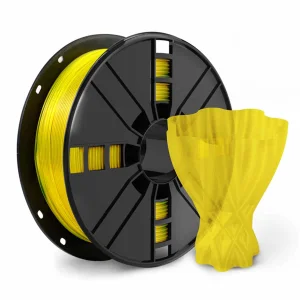
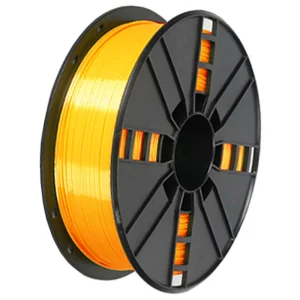
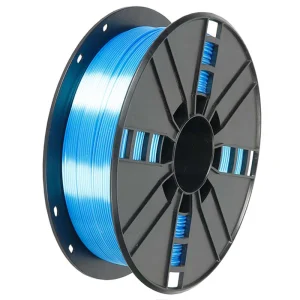
Utilizing elastomeric additives and high-luster pearlescent pigments, Silk PLA Filaments hide layer lines completely under a high-gloss metallic sheen. Advanced co-extrusion technology enables dual-color and tri-color splitting along the same strand for dynamic dichroic visual prints.
Thermoplastic Polyurethane ranges from flexible Shore 85A to rigid 95A. Formulated for high elasticity, chemical resistance, and fatigue life, TPU Filaments are ideal for shock-absorbing dampeners, seals, gaskets, custom footwear, and flexible robotics components.
ABS Filament delivers high impact strength and HDT up to 98°C for automotive and tooling applications. For outdoor environments subject to intense solar radiation, ASA Filament swaps butadiene for acrylic rubber, providing complete UV degradation immunity and weatherability.
Integrating high-aspect-ratio chopped carbon fibers (15–20% weight ratio) into base resins (PLA, PETG, PA, PC) creates unmatched flexural modulus and dimensional rigidity. Carbon Fiber Filaments yield lightweight structural drone frames and industrial jigs with a zero-shine matte finish.
| Polymer Category | Tensile Strength (MPa) | Flexural Modulus (GPa) | HDT @ 0.45 MPa (°C) | Glass Transition (Tg °C) | Extrusion Temp (°C) | Bed Temp (°C) |
|---|---|---|---|---|---|---|
| Standard PLA | 55 - 60 | 3.2 - 3.8 | 55 | 60 | 190 - 220 | 0 - 60 |
| High-Flow PLA+ | 62 - 68 | 3.4 - 3.9 | 58 | 62 | 200 - 230 | 50 - 60 |
| PETG / Clear PETG | 48 - 53 | 2.0 - 2.2 | 72 | 80 | 230 - 250 | 70 - 80 |
| ABS Technical | 40 - 45 | 2.1 - 2.4 | 95 | 105 | 230 - 260 | 90 - 110 |
| ASA Outdoor | 42 - 47 | 2.2 - 2.5 | 98 | 103 | 240 - 260 | 90 - 110 |
| TPU 95A Flexible | 35 - 42 | 0.15 - 0.25 | N/A | -40 | 210 - 230 | 30 - 60 |
| PC High-Temp | 68 - 75 | 2.3 - 2.6 | 135 | 147 | 260 - 300 | 100 - 120 |
| Carbon Fiber Composite | 75 - 110 | 6.5 - 8.5 | 110 - 160 | Varies | 240 - 290 | 70 - 100 |
* Note: Values represent typical laboratory test samples according to ISO 527 and ISO 75 standards. Actual mechanical figures may vary depending on nozzle geometry, layer print speed, and cooling parameters.
Building high-performance filament requires extreme process control. A variation of merely 0.05 mm in diameter causes a 6% volumetric flow fluctuation, resulting in under-extrusion gaps or over-extrusion nozzle drag. China's advanced manufacturing facilities implement smart Factory 4.0 protocols to enforce unyielding consistency across every batch.
Virgin resin pellets pass through continuous desiccant wheel dryers to reduce internal moisture content below 200 ppm prior to thermal melting, eradicating hydrolysis degradation and steam bubble formation.
Multi-zone single screw extruders equipped with precision melt pumps maintain constant hydraulic pressure, eliminating volumetric pulsations and ensuring isotropic polymer chain orientation.
Inline non-contact dual-axis laser micrometers measure diameter and ovality at 500 Hz. Closed-loop feedback automatically adjusts haul-off capstan speed to maintain a target tolerance of ±0.02 mm.
Servo-driven winding heads ensure uniform traverse laydown and dynamic tension control, guaranteeing tangle-free, crisscross-free spools compatible with high-speed AMS automatic material systems.
Industrial client trust is built on rigorous certification. Advanced China manufacturing plants operate under fully audited quality management frameworks:
Empowering enterprise sectors with targeted additive material solutions.
Engineers require high impact resistance and dimensional stability for functional jigs, CMM fixtures, and assembly guides. Utilizing high-temperature polymers such as PC Filament and ABS Filament allows factories to replace heavy aluminum tooling components with ultra-light, customized 3D printed alternatives, slashing lead times from weeks to hours.
Commercial print farm operators managing hundreds of machines simultaneously rely on zero-tangle guarantees and smooth high-flow behavior. Standardizing on bulk PLA+ Filament and transparent PETG Filament ensures continuous 24/7 printing without operator intervention, maximize farm uptime and profit margins.
Components exposed to exterior elements, rain, and intense sunlight require total UV stability. ASA Filament provides long-term resistance against yellowing, micro-cracking, and mechanical degradation, making it the ideal choice for automotive exterior trims, marine housings, and telecommunication sensor covers.
Flexible elastomers enable personalized healthcare innovations. Using bio-compatible TPU Filaments, medical technicians produce custom orthotic insoles, prosthetic liners, patient-specific anatomical models, and soft-touch surgical planning prototypes with tailored Shore hardness gradients.
Educational institutions and retail brands require safe, odor-free, non-toxic materials with appealing aesthetics. A wide range of non-toxic PLA Filaments, child-friendly 3D Pen Filaments, and specialty visual lines like Rainbow & Glow Filaments serve as reliable foot-traffic drivers for global distributors.
As 3D printer hardware advances toward higher acceleration rates ($20,000\text{ mm/s}^2$) and active chamber heating up to 90°C, material science must keep pace. The technical R&D roadmap for bulk filament manufacturing centers on four core innovation pillars:
Integrating hyper-branched polymer flow enhancers that dramatically reduce melt viscosity at high shear rates within the hotend nozzle, enabling crisp layer deposition at speeds beyond 800 mm/s without sacrificing inter-layer bond strength.
Transitioning from traditional fossil-based polymers toward 100% Post-Consumer Recycled (PCR) resins, ocean-bound plastic upcycling, and PHA (Polyhydroxyalkanoates) marine-biodegradable formulations paired with zero-waste cardboard spools.
Expanding commercial bulk extrusion capability for ultra-performance engineering resins like PEEK, PEKK, PEI (Ultem), and PPS-CF, opening new frontiers in aerospace structural parts and under-hood automotive applications.
A step-by-step roadmap for brand owners, Amazon FBA sellers, and regional distributors.
Partnering with a tier-1 China manufacturing facility allows global brands to create distinct product lines with custom aesthetics, specialized formulations, and targeted price points. Below is the standard OEM/ODM contract workflow designed to protect intellectual property and streamline international fulfillment:
Send any Pantone C/U code or physical plastic sample. Chemical engineers match the target color with a spectrophotometer Delta E (ΔE) < 1.0, ensuring absolute batch-to-batch color repeatability.
Select from standard 1 kg spools, 250 g mini-spools, or 3 kg / 5 kg / 10 kg industrial bulk spools. Options include recycled cardboard, transparent PC, high-impact ABS spools, custom die-cut box artwork, and private label barcodes.
Each spool is baked in dehumidifying ovens, wound, sealed in heavy-duty 4-mil vacuum bags with active silica desiccant pouches, and master-cartoned to withstand humid ocean freight transit.
Flexible Incoterms supported: FOB Shenzhen/Ningbo, CIF, DDP (Delivered Duty Paid directly to FBA warehouses or regional distribution hubs) with complete customs clearance documentation provided.
Proven volume SKUs ready for immediate bulk export and custom OEM packaging.
Technical solutions to common purchasing, operational, and material inquiries.
For standard stock colors in PLA Filament and PETG Filament, MOQs start as low as 50 to 100 spools per color. For custom Pantone color matching, private label printed boxes, and custom branded spool labels, the standard OEM baseline is typically 500 kg to 1,000 kg per batch. We also offer consolidated trial container orders combining multiple material types (TPU, ABS, Carbon Fiber).
During the extrusion process, hot polymer strands pass through a high-frequency dual-axis laser micrometer running at 500 Hz. The sensors constantly evaluate the strand's X and Y diameters to detect roundness errors (ovality). If any deviation exceeds ±0.015 mm from the 1.75 mm nominal target, an automated digital signal adjusts the capstan haul-off motor speed in real time to correct the mass flow, keeping every roll within strict ±0.02 mm boundaries.
Modern high-speed printers (Bambu Lab, Voron, Creality K1 series) run at volumetric flow rates of 20 to 35 mm³/s, compared to 5 to 8 mm³/s on traditional machines. Standard filaments fail at these speeds, producing severe under-extrusion due to incomplete thermal melting inside the hotend. High-speed modified PLA+ Filaments feature adjusted molecular weight distribution and thermal additives that melt faster and flow cleanly, preserving inter-layer bond strength at velocities up to 600 mm/s.
Hygroscopic materials like PETG, TPU, PC, and Nylon absorb atmospheric moisture, resulting in steam pop micro-voids, stringing, and hydrolysis during printing. To prevent this, our manufacturing process bakes filament prior to winding, packages each spool with active moisture-absorbing silica desiccant, and heat-seals the assembly inside a 4-mil thick puncture-resistant vacuum bag. Master shipping cartons are additionally wrapped in moisture-barrier stretch foil.
Yes. Automatic Material Systems (AMS) demand precise spool outer diameters (200 mm), specific hub widths (65–68 mm), smooth outer rim surfaces, and balanced spool weights to prevent rim slipping or jamming during retractions. We supply both specialized high-density cardboard spools with rolled edge sealing and precision plastic spools engineered specifically for seamless AMS integration.
Every commercial delivery includes a comprehensive Factory Acceptance Test (FAT) packet featuring: Material Safety Data Sheets (MSDS/SDS), Technical Data Sheets (TDS), RoHS 2.0 Compliance Certificates, REACH SVHC screening reports, and Melt Flow Index (MFI) batch inspection logs.
Dual-Color Silk Filaments utilize a specialized multi-manifold extrusion die that feeds two distinct colored polymer melts simultaneously into a single strand. As the strand freezes, each half maintains its distinct color boundary without bleeding, allowing printed parts to shift color visually as they rotate relative to the light source.
Standard lead time for a 20-foot full container load (approx. 10,000 to 12,000 spools) is 15 to 20 business days from deposit receipt and artwork approval. For repeat private label orders with pre-printed box inventory on file, production lead times can be compressed to 10 to 12 business days.