Explore our export-grade filament range manufactured under strict ISO 9001 quality controls with ±0.02 mm laser diameter precision.
Strategic insights into the shift from rapid prototyping to end-use industrial component production in demanding outdoor environments.
In the rapidly maturing additive manufacturing ecosystem, Acrylonitrile Styrene Acrylate (ASA) has emerged as the gold standard for high-performance, weatherable 3D printing filaments. As industrial design and digital manufacturing migrate from mere visual verification toward functional end-use parts, global demand for thermoplastic polymers that can withstand aggressive environmental stress has accelerated dramatically.
Traditionally, standard thermoplastics such as ABS (Acrylonitrile Butadiene Styrene) dominated industrial FDM (Fused Deposition Modeling) printing due to their mechanical toughness and heat deflection properties. However, ABS possesses a critical chemical vulnerability: the polybutadiene rubber phase contains double carbon bonds that quickly degrade under ultraviolet (UV) radiation and atmospheric oxygen. When exposed to outdoor sunlight, ABS parts suffer severe yellowing, micro-cracking, and loss of impact strength within months.
ASA solves this fundamental structural flaw by replacing the butadiene rubber component with a saturated acrylic ester elastomer. This chemical modification confers extraordinary resistance to UV degradation, thermal oxidation, and weathering while maintaining—and in many cases exceeding—the mechanical strength, heat deflection temperature (HDT), and impact toughness of standard ABS. Consequently, global procurement directors, OEM brand managers, and print farm operators are actively re-engineering their material supply chains around high-grade ASA filament sourced from specialized Chinese extruders.
Global procurement data reveals a 38% year-over-year increase in ASA filament adoption across automotive aftermarket, smart city IoT hardware, renewable energy installations, and marine equipment manufacturing. Sourcing direct from China ASA filament factories enables buyers to achieve up to 45% unit cost reductions while preserving strict ISO/ASTM material standards.
Quantitative performance comparison across key mechanical, thermal, and environmental parameters to inform technical material selection.
| Polymer Parameter | ASA (Terpolymer) | ABS (Standard) | PETG | Polycarbonate (PC) | PLA+ (Modified) |
|---|---|---|---|---|---|
| UV & Weathering Resistance | Exceptional (No Degradation) | Poor (Severe Degradation) | Moderate | Moderate (Yellows) | Poor |
| Heat Deflection Temp (0.45 MPa) | 98 °C – 105 °C | 95 °C – 100 °C | 70 °C – 75 °C | 135 °C – 145 °C | 55 °C – 60 °C |
| Tensile Strength (ISO 527) | 45 – 52 MPa | 40 – 48 MPa | 48 – 53 MPa | 60 – 72 MPa | 55 – 65 MPa |
| Notched Izod Impact (23 °C) | 18 – 24 kJ/m² | 15 – 20 kJ/m² | 8 – 12 kJ/m² | 35 – 50 kJ/m² | 6 – 10 kJ/m² |
| Layer Adhesion Integrity | High (Thermal Bonding) | Good | Exceptional | Good (Requires Heated Bed) | High |
| Warping Tendency & Shrinkage | Moderate (Needs Enclosure) | High | Very Low | High | Very Low |
| Matte Finish & Post-Processing | Satin Matte / Acetone Vapor | Glossy / Acetone Vapor | Glossy / Difficult Sanding | Glossy / Hard | Matte or Glossy |
The molecular backbone of ASA consists of graft copolymerized acrylic rubber particles dispersed within a styrene-acrylonitrile (SAN) matrix. This dual-phase system allows ASA to deliver a unique combination of aesthetic surface finish and industrial structural integrity:
During the thermal printing process, ASA exhibits shear-thinning behavior, reducing melt viscosity under high shear rates inside high-speed printheads (e.g., Bambu Lab, Voron, or industrial FDM platforms). This ensures consistent flow rates, minimal stringing, and precise corner crispness even at print speeds exceeding 300 mm/s.
Scale efficiency, upstream chemical integration, and advanced automation set Chinese suppliers apart in the global additive materials market.
China's Pearl River Delta and Yangtze River Delta petrochemical clusters house some of the world's most sophisticated polymer synthesis facilities. Torwell Technologies leverages direct access to premium virgin ASA pellets, eliminating intermediate trader markups and ensuring chemical purity free from post-industrial filler contamination.
Modern extrusion facilities utilize high-frequency, dual-axis laser micro-gauges operating at 500 Hz. These systems continuously monitor filament roundness and diameter across 1.75 mm and 2.85 mm formats, automatically adjusting haul-off speed in real time to lock tolerances within an ultra-tight ±0.02 mm threshold.
By operating high-capacity, multi-line automated production facilities capable of outputting 50,000+ kg monthly, China manufacturers provide volume pricing structures that allow global distributors, private label brands, and print farms to maximize profit margins without compromising material reliability.
Where weatherability, high HDT, and structural toughness meet critical real-world engineering demands.
Side mirror housings, roof rack end caps, bumper brackets, EV charging port doors, and customized radiator grilles printed in ASA remain color-fast and crack-free under extreme road conditions, salt spray, and solar radiation.
Outdoor 5G micro-base station covers, Wi-Fi router enclosures, security camera housings, and environmental monitoring sensor boxes rely on ASA's dielectric properties, impact strength, and long-term UV resistance.
Solar panel junction box covers, wind turbine sensor brackets, marine instrument dash panels, and boat deck fittings printed with industrial ASA withstand harsh marine environments and ultraviolet exposure without yellowing.
A leading European agricultural technology provider contracted a Chinese print farm supplier utilizing Torwell ASA filament to produce 15,000 outdoor weather station housings. Operating over 200 continuous FDM 3D printers, the farm required zero-spool-tangle reliability, consistent color matching across 500 kg batch orders, and high layer adhesion to achieve IP67 weather sealing.
By switching to Torwell's standardized ASA formulation, the print farm achieved a 99.4% print success rate, reduced warping rejects on large bed surfaces to under 0.5%, and passed 2,000 hours of continuous QUV accelerated weathering tests (ISO 4892-2) without measurable loss of Izod impact strength.
How to structure your procurement workflow, custom color matching, and packaging specifications with Chinese factory partners.
Whether you require standard signal black, ultra-white, or custom brand-specific Pantone / RAL colors, established factories utilize spectrophotometer colorimeters to formulate precise pigment masterbatches ensuring zero batch-to-batch shade shift.
Global brands can customize spool architecture—choosing between recyclable high-stiffness cardboard spools (compatible with automatic feeder systems) or transparent polycarbonate spools—alongside branded die-cut cartons, custom labels, and barcode integration.
Top-tier Chinese suppliers supply complete export compliance documentation for European and North American customs clearance, including Technical Data Sheets (TDS), Safety Data Sheets (SDS), RoHS compliance certification, REACH SVHC declarations, and UL94 flame retardancy ratings.
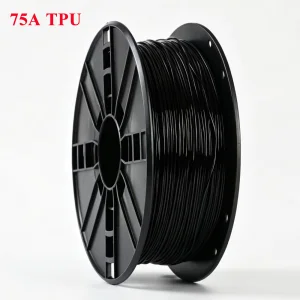
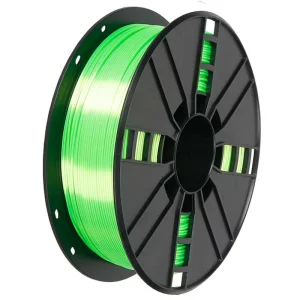
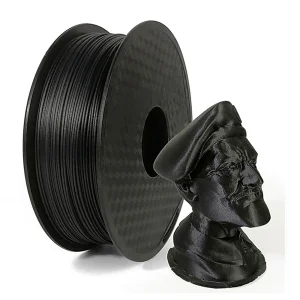
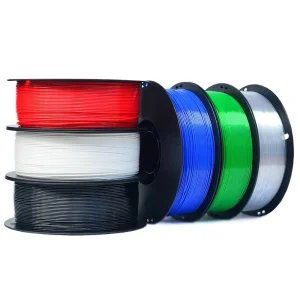
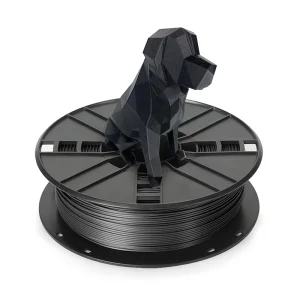
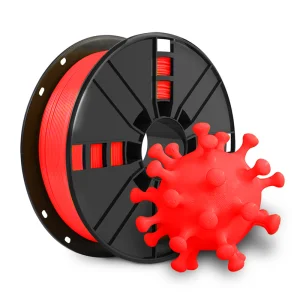
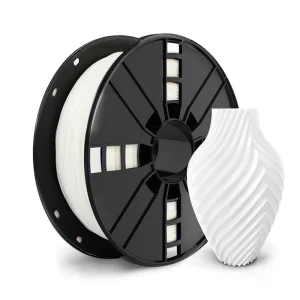
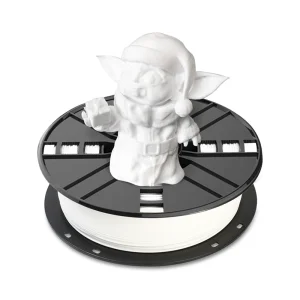
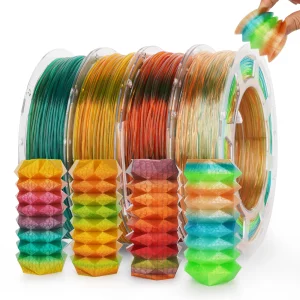
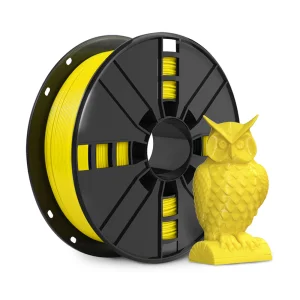
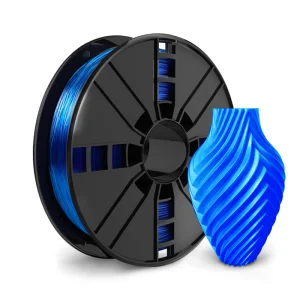
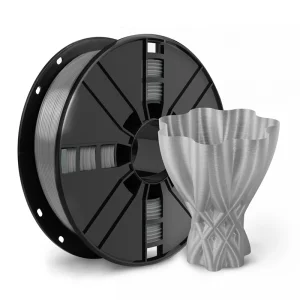
Complete your catalog with high-volume PLA, PETG, TPU, and functional composite spools shipped direct from our factory.
Expert guidance addressing technical printing parameters, factory production, OEM logistics, and material behavior.