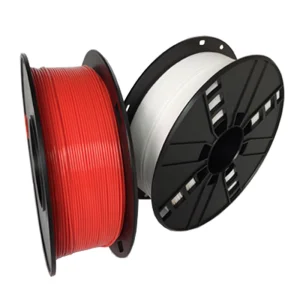
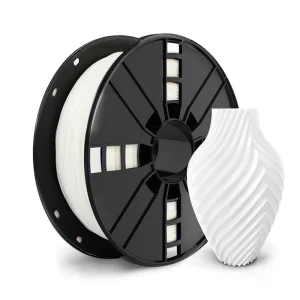
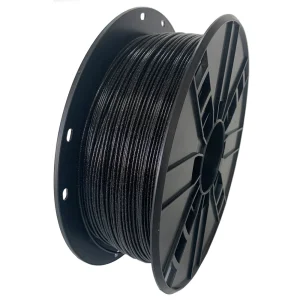
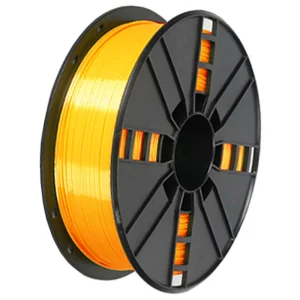
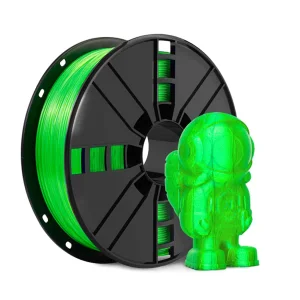
Explore our factory-direct 3D printing materials manufactured under rigorous ISO 9001 and ±0.02 mm laser tolerance controls.
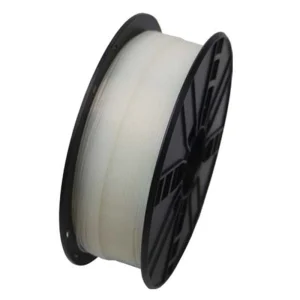
As Fused Deposition Modeling (FDM) transitions from rapid prototyping to functional end-use component production, the demand for engineering-grade thermoplastics capable of enduring severe environmental exposure has accelerated exponentially. Acrylonitrile Styrene Acrylate (ASA) stands at the pinnacle of weatherable industrial polymers.
Chemically synthesized as a terpolymer of acrylonitrile, styrene, and an acrylic elastomer rubber matrix, ASA was explicitly developed to surpass the critical vulnerability of Acrylonitrile Butadiene Styrene (ABS)—namely, photolytic oxidation. While ABS utilizes polybutadiene rubber for impact strength, the unsaturated double bonds ($C=C$) within the butadiene phase are highly susceptible to ultraviolet (UV) radiation cleavage. Prolonged exposure to solar radiation causes chain scission, micro-cracking, yellowing, and severe mechanical embrittlement in ABS components.
Conversely, China's leading ASA 3D printer filament factories substitute the polybutadiene phase with a saturated acrylic ester elastomer (butyl acrylate). Because acrylic ester lacks unsaturated double bonds, ASA exhibits exceptional UV stability, weather resistance, and thermal endurance without sacrificing the high tensile strength, impact resistance, and processability inherent to styrene-acrylonitrile (SAN) matrices.
Technical Insight: Torwell Technologies' proprietary ASA extrusion chemistry incorporates high-purity terpolymers with narrow molecular weight distribution (MWD). This minimizes melt flow index (MFI) variance across production batches, guaranteeing consistent thermal contraction, reduced volumetric shrinkage, and exceptional inter-layer cohesion during high-speed printing.
| Mechanical Property | ASA Filament (Torwell) | Standard ABS | Industrial PETG | Polycarbonate (PC) |
|---|---|---|---|---|
| Tensile Strength (MPa) | 45 - 52 | 40 - 45 | 48 - 53 | 62 - 70 |
| Flexural Modulus (GPa) | 2.1 - 2.4 | 2.0 - 2.2 | 1.9 - 2.1 | 2.3 - 2.6 |
| Izod Impact (kJ/m²) | 18 - 25 | 15 - 20 | 8 - 12 | 35 - 50 |
| Heat Deflection Temp (HDT @ 0.45 MPa) | 98 °C - 104 °C | 92 °C - 98 °C | 72 °C - 78 °C | 135 °C - 142 °C |
| UV & Solar Weatherability | Outstanding (5+ Yrs) | Poor (Yellows/Degrades) | Moderate | Moderate (Requires Coating) |
| Chemical Resistance | Hydrocarbons, Acids, Salt Spray | Mild Acids, Alkalis | Alcohols, Dilute Acids | Oils, Greases |
The global market for advanced FDM thermoplastics is experiencing a strategic pivot from indoor prototyping to exterior end-use engineering. China ASA 3D printer filament suppliers occupy a central position in supplying global OEM brands, enterprise print farms, and Tier-1 automotive sub-tier suppliers.
Automotive OEM manufacturers in Europe and North America utilize ASA filament for low-volume production of side-mirror housings, radiator grilles, bumper brackets, and roof rack components. ASA withstands thermal cycling (-40 °C to +90 °C) without dimensional drift or color degradation.
Outdoor IoT sensor enclosures, smart city traffic monitor housings, and 5G micro-cell antenna radomes require electromagnetic neutrality paired with extreme weatherproofing. ASA provides zero signal attenuation while protecting internal electronics from rain, ice, and solar radiation.
Saltwater environments rapidly degrade standard engineering plastics via environmental stress cracking (ESC). ASA’s chemical resistance against saline water, combined with zero moisture-induced swelling, makes it the ideal material for boat fittings, navigation light housings, and sonar mounts.
Standard 3D printing filaments fail when deployed in harsh micro-climates. China ASA 3D printer filament suppliers engineer specific formulation variants to combat localized environmental stressors.
In regions such as the Middle East, Northern Australia, and Arizona (USA), solar irradiance exceeds 2,200 kWh/m² annually, with ambient surface temperatures on dark components climbing past 80 °C. Torwell ASA filament features proprietary HALS (Hindered Amine Light Stabilizers) and UV absorbers. This prevents photodegradation and thermal sagging, guaranteeing structural integrity over a multi-year operational lifespan.
Coastal infrastructure exposed to persistent salt fog (ASTM B117 salt spray testing compliant) suffers from accelerated hydrolysis and oxidation when standard polymers are used. ASA exhibits exceptionally low moisture absorption (< 0.2% after 24-hour immersion) and complete chemical inertness to sodium chloride solutions, preserving mechanical ductility and surface cosmetics in marine environments.
Agricultural drone components, fertilizer spraying nozzles, and chemical plant sensor housings are routinely exposed to pesticides, diesel fumes, mild acids, and industrial detergents. Unlike Polycarbonate which crazes upon chemical contact, or ABS which dissolves in organic solvents, ASA maintains chemical resilience without stress-crack propagation.
At sub-freezing temperatures (-30 °C to -50 °C), plastics undergo a ductile-to-brittle transition. The acrylic rubber phase within Torwell ASA retains elastomer flexibility down to -40 °C, offering high impact resistance and preventing catastrophic shatter failures in alpine weather monitoring gear or winter sports equipment.
The additive manufacturing material landscape is undergoing rapid innovation. China’s premier filament factories are driving R&D initiatives to expand ASA’s mechanical envelope and processing speed capability.
Integrating 15-20% high-modulus chopped carbon fibers into the ASA matrix increases tensile modulus to over 4.5 GPa while virtually eliminating volumetric warping during printing of large-format industrial components.
Development of halogen-free flame retardant additives blended into ASA terpolymers allows compliance with stringent UL94 V-0 safety ratings, opening direct applications in public transit, aerospace interior ducting, and electrical junction enclosures.
Modern core-XY 3D printers print at speeds up to 500–600 mm/s. Torwell's next-gen ASA formulations modify polymer chain branching to optimize shear-thinning rheology, enabling complete layer fusion at elevated volumetric flow rates (>30 mm³/s).
In alignment with global net-zero carbon initiatives, ongoing chemical synthesis research focuses on replacing fossil-derived styrene and acrylic esters with bio-attributed monomers derived from agricultural waste stream side-products.
For international distributors, e-commerce brand owners, and industrial enterprise clients, selecting a China ASA 3D printer filament supplier requires strict evaluation of production scale, quality assurance protocols, and packaging reliability.
Founded in 2011, Torwell Technologies operates a state-of-the-art 2,500 m² manufacturing plant equipped with 6 high-precision automated extrusion lines. To eliminate diameter fluctuations—the primary cause of extrusion clogs and under-extrusion—each line incorporates dual-axis inline laser micrometers.
Our closed-loop feedback mechanism measures filament diameter continuously at 100 Hz, instantly adjusting extruder screw RPM and haul-off speed to maintain a strict ±0.02 mm tolerance across the entire 1.75 mm or 2.85 mm spool length.
Furthermore, raw polymer pellets undergo vacuum drying down to moisture levels below 0.05% before extrusion. Post-extrusion spools are automatically wound under tension control to eliminate tangles and overlapping loops, guaranteeing seamless operation in automated material systems (AMS).
Torwell provides full turnkey manufacturing solutions tailored to international OEM brands:
Detailed technical responses covering material performance, printing parameters, packaging, and factory ordering procedures.
While both ASA and ABS belong to the styrenic thermoplastic family and offer similar tensile strength, impact resistance, and heat deflection profiles (HDT ~95–104 °C), their rubber phase chemistry differs completely. ABS uses polybutadiene rubber, which deteriorates under UV light. ASA replaces polybutadiene with a saturated acrylic ester elastomer. This gives ASA supreme resistance to solar radiation, weathering, and color fading without requiring anti-UV surface coatings.
For optimal mechanical performance and minimal warping, we recommend:
Warping in styrenic polymers occurs due to thermal contraction stress during crystallization. Torwell optimizes raw polymer resin grade selection, balancing the SAN-to-acrylic monomer ratio to narrow the thermal shrinkage coefficient. Combined with strict inline diameter control (±0.02 mm) to maintain uniform thermal mass deposition, our ASA minimizes corner lifting and bed delamination.
ASA is moderately hygroscopic, absorbing ambient moisture if left exposed. Moisture contamination causes steam popping, stringing, surface voids, and degraded tensile strength. We recommend pre-drying moist ASA spools in a blast drying oven or filament dryer at 65 °C – 75 °C for 4 to 6 hours prior to high-spec industrial printing.
Yes. Torwell specializes in full OEM/ODM manufacturing. We offer custom Pantone color matching, private label spool branding, customized cardboard or plastic spools, custom outer cartons, customized user manuals, and specialized bulk packaging tailored to distributors in over 75 countries.
All Torwell filaments are manufactured under ISO 9001 quality management systems. Our ASA raw materials and masterbatches comply strictly with EU RoHS directives, REACH SVHC regulations, and CE safety standards, making them fully compliant for import into North America, Europe, Japan, and Oceania.
With 6 automated extrusion lines producing 50,000–60,000 kg monthly, standard sample orders ship within 3–5 business days. Bulk OEM orders (500 kg to full container loads) typically ship within 15–20 calendar days. Flexible MOQ options are available for new distributor market trials.
Immediately post-extrusion and quality inspection, each spool is sealed in heavy-duty moisture-barrier vacuum bags containing high-absorption desiccant packs. Individual spools are packed in reinforced corrugated inner cartons and stacked in robust export shipping master boxes wrapped in moisture-proof stretch film on wooden pallets.
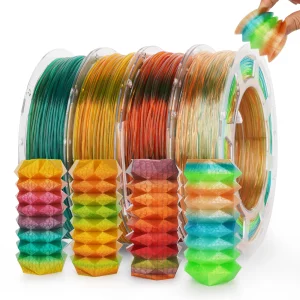
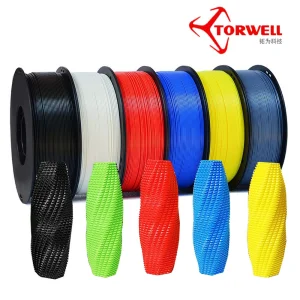
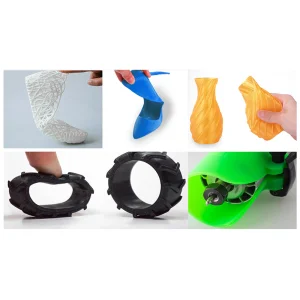
From consumer-grade aesthetics to functional flexible elastomers, discover our complete range of extruded polymers.