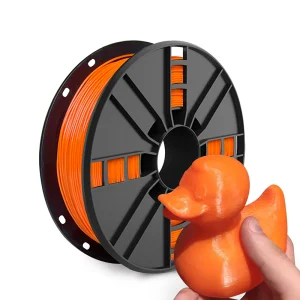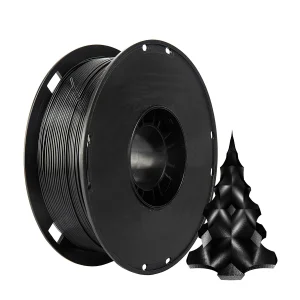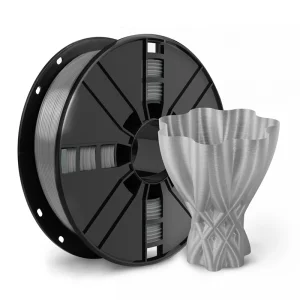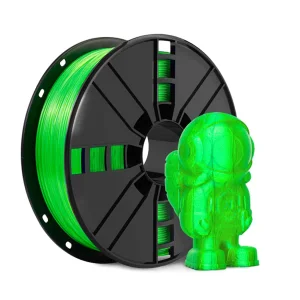
As additive manufacturing transitions from aesthetic prototyping to end-use tactile products, 3D Wood Filament has emerged as a crucial bridge between industrial polymer engineering and natural organic aesthetics. Sourcing high-grade wood-filled thermoplastics requires an in-depth understanding of rheological behavior, particle mesh size distribution, and thermo-viscoelastic polymer dynamics during the FDM/FFF printing process.
Partnering with an established China 3d wood filament supplier & suppliers ensures access to advanced bio-composite formulations. The manufacturing process incorporates 20% to 30% recycled pine, cedar, or bamboo micro-particles embedded into a high-purity PLA/PHA (Polyhydroxyalkanoate) bio-matrix. This engineered blend provides authentic grain tactile textures, aromatic wooden fragrance upon hot-end melting, and post-processing capabilities comparable to traditional timber, including sanding, staining, and varnishing.
Unlike standard un-filled PLA filaments, wood-polymer composite filaments exhibit non-Newtonian shear-thinning characteristics with elevated thermal sensitivity. Standard wood fiber thermally degrades at temperatures exceeding 225°C. Leading Chinese manufacturers solve this via specialized twin-screw compounding with organic coupling agents, optimizing melt flow index (MFI) while preserving cellular fiber integrity.
| Technical Parameter | Standard Wood PLA Grade | High-Detail Fine Wood Grade | Industrial Toughened WPC |
|---|---|---|---|
| Organic Wood Content | 20% Recycled Pinewood | 15% Micro Bamboo Fiber | 30% Hardwood Micro-mesh |
| Particle Size (Mesh) | 80 - 120 Mesh (125-177 µm) | 200 Mesh (<74 µm) | 60 - 80 Mesh (177-250 µm) |
| Diameter Tolerance | ±0.02 mm (Laser Monitored) | ±0.02 mm (Laser Monitored) | ±0.03 mm |
| Recommended Extrusion Temp. | 190°C – 215°C | 185°C – 205°C | 195°C – 220°C |
| Heat Bed Temperature | 45°C – 60°C (Optional) | 45°C – 60°C (Optional) | 50°C – 65°C |
| Minimum Nozzle Orifice | ≥ 0.4 mm (0.5 mm recommended) | ≥ 0.4 mm | ≥ 0.6 mm (Anti-clogging) |
| Flexural Modulus | 3.4 GPa | 3.1 GPa | 3.8 GPa |
Eliminate laborious hand-carving of balsa wood models. Architectural firms deploy 3D wood filament to produce high-precision topographical maps and structural prototypes featuring matte organic finishes with layer height imperceptibility.
High-end cosmetics and spirits brands utilize wood-filled polymers to manufacture custom rigid caps, perfume stoppers, and display cases. Delivers eco-conscious luxury aesthetics with zero tooling fees and rapid turnaround time.
Wood fiber particles increase internal acoustic damping compared to solid synthetic plastics. Manufacturers leverage wood filament for custom ukulele bodies, speaker enclosures, and acoustic diffusers with optimized resonance properties.
Tier-1 automotive suppliers use high-temperature wood WPC composites for decorative dashboard bezels, gear-shift handles, and interior accent trims, aligning with corporate ESG carbon-reduction mandates.
Museums and restoration labs digitize antique wooden artifacts via 3D scanning and reprint missing structural components with color-matched, sandable wood filament to achieve historically faithful repairs.
The additive manufacturing industry is rapidly shifting toward high-speed printing environments (exceeding 300 mm/s to 500 mm/s) enabled by modern CoreXY printer kinematics. Traditional wood composite filaments faced stringing, clogging, and thermal breakdown under extreme volumetric flow rates. A leading China 3d wood filament supplier continuously innovates to meet these evolving market demands.
Future iterations of wood filaments incorporate high melt-flow index (MFI) bio-polyesters engineered with nano-lubricants. This technology permits volumetric flow speeds above 24 mm³/s without nozzle clogging or phase separation between the wood particles and the polymer binder.
By altering the thermal reactivity of the lignin components, next-generation wood filaments enable dynamic color shading purely through temperature control. Printers can dynamically modify nozzle heat between 190°C (light birch color) and 230°C (dark walnut finish) within a single g-code layer stack to produce simulated natural tree rings.
Moving beyond PLA binders, ongoing material research aims to substitute petroleum derivatives and virgin plastics with industrial lignin byproducts from pulp manufacturing. The resulting 100% bio-circular filament delivers true carbon-negative industrial 3D printing capabilities.
Selecting the right international supply chain partner requires rigorous evaluation of factory automation, quality assurance processes, and raw material sourcing. Leading Chinese manufacturing hubs have modernized production lines into Industry 4.0 automated operations.
Extrusion lines integrate dual and quad-axis high-speed laser micrometers that measure filament diameter across 360 degrees. Automatic closed-loop feedback controls haul-off speed in real-time to guarantee ±0.02 mm tolerance, eliminating ovality and jams.
Wood fibers are naturally hygroscopic. Chinese facilities utilize industrial vacuum-desiccant dehumidifying towers operating at continuous dew points below -40°C. This reduces polymer moisture content below 0.04% prior to vacuum sealing.
Tangled spools cause mid-print failures. CNC-controlled traverse winding units lay down filament neatly across the spool width with uniform tension, preventing criss-crossing and ensuring seamless feeding in multi-material systems like Bambu Lab AMS.
When sourcing 3D wood filament from a China 3d wood filament supplier & suppliers, procurement departments must assess vendor flexibility across custom branding, packaging integrity, and international logistics. Enterprise buyers typically require structured contract manufacturing capabilities:
International distribution of composite 3D printing consumables mandates strict adherence to chemical, environmental, and international trade regulations. Top-tier Chinese manufacturers maintain comprehensive compliance documentation for smooth customs clearance and market compliance:
Compliance with the European Union Deforestation Regulation (EUDR). Organic wood powders are sourced exclusively from certified post-industrial lumber waste or FSC-certified sustainable forests, guaranteeing non-deforestation supply chains.
Filaments undergo third-party SGS/TÜV testing ensuring zero hazardous heavy metals, phthalates, or SVHC (Substances of Very High Concern), fulfilling strict European chemical standards.
Selected bio-based wood PLA formulations comply with FDA 21 CFR standards for indirect food contact and EN71-3 toy safety, enabling usage in kitchenware accessories and children's educational kits.
Wood filament contains real organic fiber particles. Standard 0.4mm nozzles can cause micro-agglomeration of wood particles under thermal shear, leading to localized carbonization and partial clogs. To prevent this, use a 0.5mm or 0.6mm hardened steel or ruby nozzle, lower retraction speeds (20-30 mm/s), and maintain printing temperatures between 190°C and 205°C to avoid thermal scorching of the organic fibers.
Due to the high cellulose content, wood filament is highly hygroscopic. Absorbed ambient moisture vaporizes inside the hot-end, causing micro-popping, extreme stringing, poor layer adhesion, and rough surface artifacts. Dry wet wood filament in a forced-air filament dryer or oven at 50°C – 55°C for 4 to 6 hours prior to printing, and store spools in sealed bags with active desiccant.
Yes! Because the polymer matrix encapsulates real wood fibers, prints can be sanded using progressive sandpaper grades (from 80-grit up to 600-grit) to reveal a smooth wooden texture. Wood stains (oil-based or alcohol-based) are readily absorbed by the exposed wood fibers, enabling custom staining from light oak to dark walnut tones.
When stored in original vacuum-sealed packaging with active silica desiccant in a cool, dry room away from direct UV sunlight, wood PLA filament maintains optimal print performance for 24 to 36 months. Once unsealed, spools should ideally be used within 30 days or kept inside a dry box.
Wood filaments react dynamically to thermal changes. Printing at lower temperatures (~190°C) produces a lighter, natural pine shade. Increasing temperature to ~220°C subtly scorches the organic fibers, producing a darker roasted finish. Slicer settings can vary print temperatures by layer height to create realistic wood grain rings.
For standard OEM branded orders (custom boxes, spools, and labels), factory production lead time is typically 15 to 20 business days post sample approval. Transit times vary by shipping mode: 7-10 days via Air Freight, or 20-35 days via Sea Freight to major European and North American ports.
While wood fibers are significantly less abrasive than carbon fiber or glow-in-the-dark additives, the higher viscosity and micro-particulates can cause gradual wear on soft brass nozzles over extended production runs. Hardened steel or nickel-plated copper nozzles are recommended for long-term reliability.
Direct factory partners offer complete transparency on raw resin grades, automated laser tolerance verification, immediate access to R&D chemical engineers for custom formulations, and significantly lower unit costs by eliminating middleman markups.