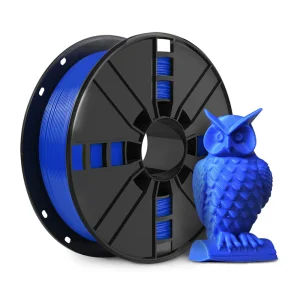
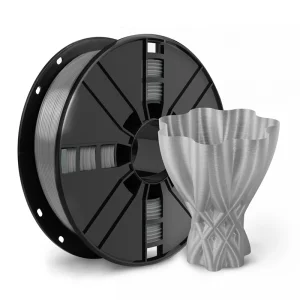
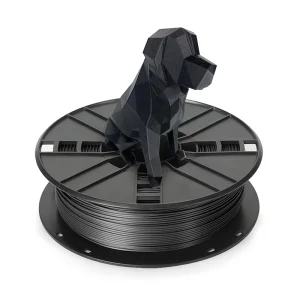
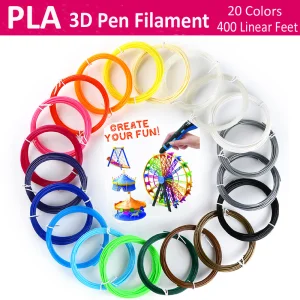
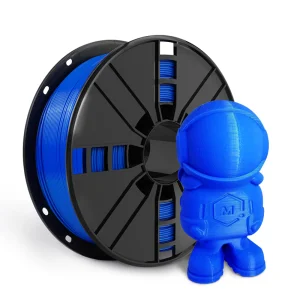
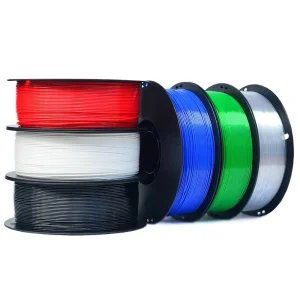
Direct factory supply with inline laser diameter verification, moisture-proof vacuum sealing, and customizable spooling options.
How high-speed FDM printers and digital print farms are reshaping global demand for thermoplastic raw materials.
The global 3D printing ecosystem is undergoing its most radical transformation since the expiration of key FDM patents. Next-generation CoreXY platforms (such as Bambu Lab, Voron, Creality K1, and Prusa MK4) now routinely operate at volumetric flow rates exceeding 30 mm³/s and print speeds ranging from 300 mm/s to 600 mm/s. This shift has placed unprecedented stress on polymer filament consistency.
Traditional filaments engineered for legacy 50 mm/s printing fail under high shear rates, causing hotend back-pressure, micro-voiding, and catastrophic layer delamination. As an authoritative China 3D printer filament manufacturer, our R&D center reformulates resin melt flow index (MFI) to achieve ultra-fast thermal absorption and rapid melt rheology tailored specifically for high-speed extruders.
Commercial print farms operating hundreds of FDM machines concurrently require 24/7 reliability where machine downtime translates directly to yield losses. In these environments, spool-to-spool physical uniformity is non-negotiable. Key operational bottlenecks include:
What Fortune 500 procurement managers, regional brands, and e-commerce sellers demand from a primary OEM factory partner.
Utilizing high-frequency dual-axis online laser measuring micrometers during extrusion. Real-time feedback loops adjust haul-off wheel speeds within milliseconds to maintain strict ±0.02 mm diameter precision across every meter of the 330-meter spool.
Modern multi-material AMS (Automatic Material Systems) demand exact spool dimensioning, optimized rim friction coefficients, smooth weight distribution, and dust-free plastic or eco-cardboard spools that prevent gear slippage during automated retraction cycles.
From custom Pantone color formulation (matching CIE $\Delta E_{ab} < 1.0$) to customized spools, high-barrier moisture-proof vacuum bags, customized desiccant packs, and customized retail packaging boxes ready for global distribution hubs.
Why leading global 3D printing brands consolidate their master production with audited manufacturing facilities in China.
China's Pearl River Delta and Yangtze River Delta industrial clusters provide unmatched access to top-tier virgin polymer resins (e.g., NatureWorks Ingeo PLA, Sabic ABS, Covestro TPU). Our direct bulk purchasing agreements eliminate intermediary markups and ensure raw material purity free from recycled scrap contaminants.
By blending primary resins with proprietary plasticizers, nucleating agents, and impact modifiers in-house, our engineering lab optimizes glass transition temperature ($T_g$), melt flow rate, and inter-layer adhesion kinetics at unmatched cost-to-performance ratios.
Our standardized manufacturing facility operates fully automated twin-screw extrusion lines equipped with multi-stage gravimetric loss-in-weight feeders, high-efficiency vacuum dehumidifying dryers, multi-zone water cooling baths, and continuous closed-loop laser monitoring systems.
Every batch undergoes stringent laboratory testing: Melt Flow Index (MFI) testing (ISO 1133), tensile testing (ASTM D638), Charpy impact strength testing (ISO 179), and 24-hour continuous test printing on mainstream open-source and commercial FDM hardware.
From bio-degradable modified bioplastics to ultra-stiff structural composites.
Engineered with enhanced thermal conductivity and fast-crystallization polymer architecture. High-Speed PLA flows effortlessly at high volumetric rates and solidifies instantly upon exiting the nozzle, eliminating overhang sagging and stringing at speeds up to 600 mm/s.
By compounding high-purity virgin PETG, PLA, or Nylon with 15–20% high-aspect-ratio micro-carbon fibers, CF-reinforced filaments exhibit extraordinary tensile modulus, zero thermal warping, and a matte industrial surface finish ideal for end-use drone frames and automotive fixtures.
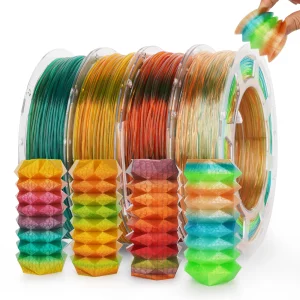
Advanced multi-layer co-extrusion technology enables dual-color and tri-color Silk PLA, producing dichroic optical effects across printed geometries. Combine this with pearlescent additives to create high-value consumer products, gifts, and display prototypes.
Matching material polymer formulations to real-world industrial and consumer deployment environments.
In assembly lines, lightweight custom assembly fixtures, robotic end-effectors, and alignment gauges require high dimensional stability and chemical resistance. PETG and Carbon Fiber PLA filaments replace traditional CNC-machined aluminum parts, reducing tooling cost by over 80% and lead times from weeks to hours.
Hospitals and medical device developers utilize bio-compatible, low-odor PLA and PLA+ filaments to produce 1:1 anatomical models from CT scans. Surgeons perform pre-operative practice on tactile physical bone structures, significantly reducing surgical operating times and improving patient safety outcomes.
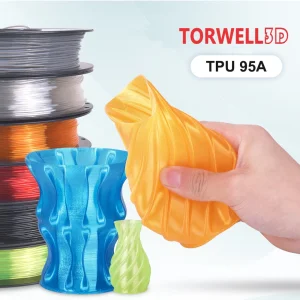
Prototyping rugged smartphone protection cases, seal gaskets, and flexible smartwatch straps demands elastomeric materials with high tear strength. Our Shore 95A TPU Filament offers exceptional rebound elasticity, oil resistance, and smooth feeding without buckling in direct-drive or Bowden extruders.
Educational institutions around the world require safe, non-toxic, eco-friendly bioplastics. Our certified pure PLA 1.75mm spools and 3D Pen Filament Refills produce zero hazardous fumes, compliant with EN71-3 and RoHS safety standards for young creators in classroom settings.
Engineering metrics to assist technical buyers and material engineers in choosing the ideal filament chemistry.
| Polymer Grade | Density (g/cm³) | Tensile Strength (MPa) | Heat Deflection Temp (°C @ 0.45MPa) | Nozzle Temp Range (°C) | Bed Temp Range (°C) | Key Mechanical Advantage |
|---|---|---|---|---|---|---|
| Standard PLA | 1.24 | 60 - 65 | 55 - 58 | 190 - 215 | 0 - 60 | Zero warping, high detail clarity |
| Enhanced PLA+ | 1.25 | 65 - 70 | 60 - 63 | 200 - 225 | 50 - 60 | 4x impact resistance vs standard PLA |
| Industrial PETG | 1.27 | 48 - 52 | 73 - 78 | 230 - 250 | 70 - 85 | Chemical resistance & flexural toughness |
| Flexible TPU 95A | 1.21 | 35 - 40 | 60 | 210 - 235 | 30 - 60 | High elasticity, Shore 95A flexibility |
| Carbon Fiber PLA | 1.29 | 72 - 78 | 65 - 68 | 210 - 230 | 50 - 65 | Ultra-high flexural modulus & matte finish |
| Structural ABS | 1.05 | 40 - 45 | 85 - 92 | 230 - 260 | 90 - 110 | Impact strength & post-processing sandability |
Bulk order options for global distributors, OEM brands, and enterprise buyers.
Expert insights addressing quality assurance, custom branding, logistics, and material behavior.
Leading China manufacturers offer direct access to upstream polymer resin supply chains, advanced automated extrusion lines, and rigorous in-house quality control testing. By integrating dual-axis laser diameter monitoring with automated tension-controlled winding, Chinese factories deliver premium filament quality (±0.02 mm tolerance) at highly competitive wholesale price points, allowing international distributors to maximize retail margins.
We employ closed-loop quad-axis laser measuring systems positioned immediately down-stream from vacuum cooling troughs. The laser gauge measures diameter and roundness thousands of times per second. If the strand deviates by as little as ±0.015 mm, automated signals instantly micro-adjust the extrusion screw RPM and haul-off puller speed, ensuring complete dimensional uniformity throughout the entire spool length.
For standard PLA, PETG, and TPU colors in stock, MOQs start as low as 100 spools per SKU. For custom Pantone color matching, masterbatch formulation, and fully customized box/label packaging, our baseline MOQ is typically 500 to 1,000 kg per color batch. We provide sample spools for visual and mechanical validation prior to full container production runs.
Prior to spooling, all extruded polymer strands undergo continuous hot-air desiccant drying to reduce moisture levels below 0.05%. Immediately after winding, each spool is sealed inside a heavy-duty, puncture-resistant vacuum pouch containing a 10g active silica desiccant pack. Master shipping cartons are additionally lined with moisture-barrier foil bags to ensure long-term shelf stability during maritime transport.
Yes. Our eco-cardboard spools feature reinforced outer flanges with pressed smooth edges or optional high-grip silicone rim coatings. This engineered design minimizes dust shedding and prevents gear slippage inside AMS and MMU multi-material feed units, blending environmental sustainability with flawless mechanical performance.
Our core raw materials and finished filament lines comply with global international standards including RoHS 2.0, REACH (SVHC 235 substances), REACH heavy-metal regulations, and FDA food-contact guidelines (applicable to selected natural PLA and PETG resins). Complete MSDS (Material Safety Data Sheets) and technical data sheets (TDS) are supplied for customs clearance and regulatory audits.
Standard PLA has a lower thermal dissipation rate and lower melt flow index. When extruded at high speeds, standard PLA does not absorb heat fast enough in the hotend, leading to under-extrusion and weak layer bonds. High-Speed PLA incorporates specialized melt modifiers that increase thermal conductivity, enabling rapid melting inside the heater block and rapid solidification under active cooling fans.
Chopped carbon fibers are highly abrasive. Standard brass nozzles will experience severe orifice erosion within 250 grams of printing CF composites. We recommend using hardened steel, tungsten carbide, or ruby-tipped nozzles (minimum 0.4 mm diameter). Printing temperatures should be increased by 10–15°C compared to neat base resins to compensate for the higher thermal mass of carbon fiber fillers.