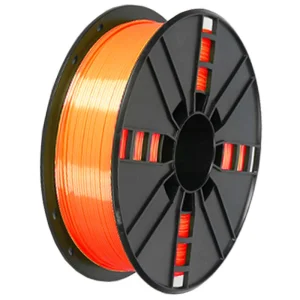
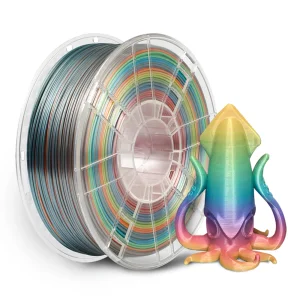
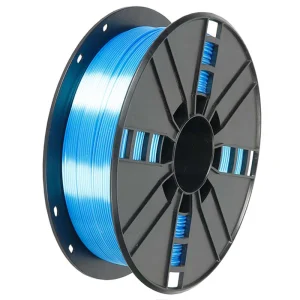
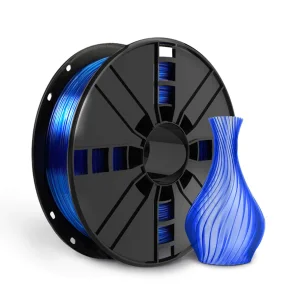
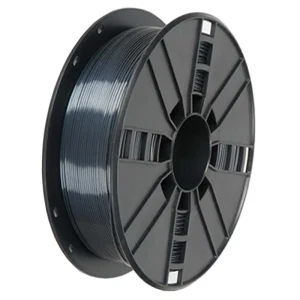
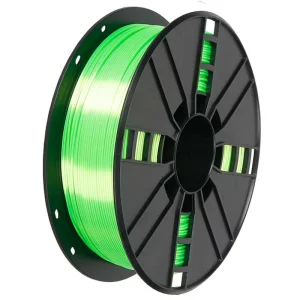
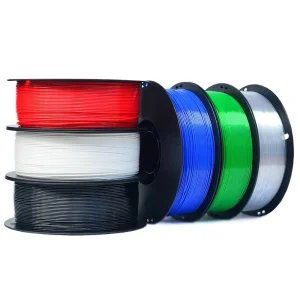
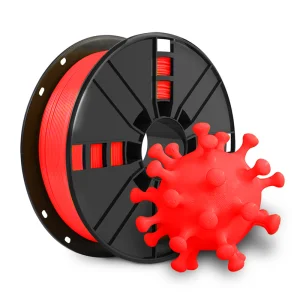
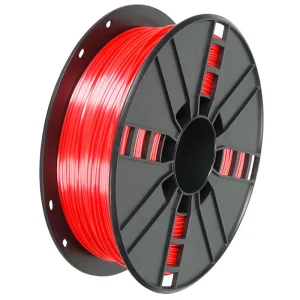
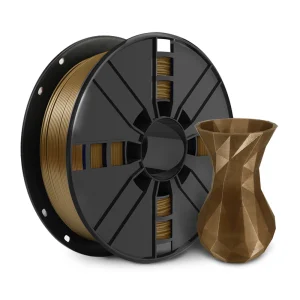
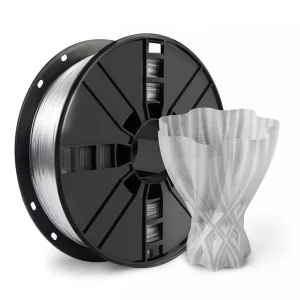
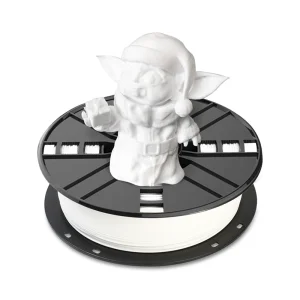
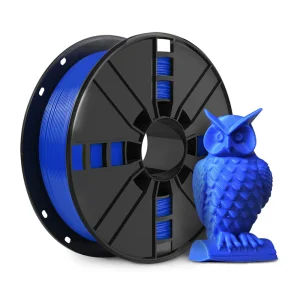
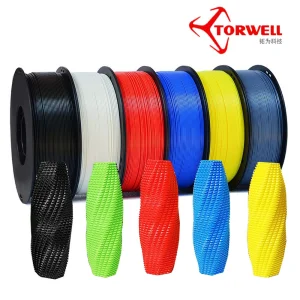
Featured standard and specialty formulations engineered for high-speed FDM/FFF printing platforms with tight tolerances.
Polylactic Acid (PLA) has evolved from an eco-friendly thermoplastic derivative into the undisputed benchmark material for Fused Deposition Modeling (FDM) and Fused Filament Fabrication (FFF) technologies worldwide. Driven by a global imperative for industrial decarbonization, bio-based raw material reliance, and high-speed desktop additive manufacturing, global demand for high-grade 3D PLA filament is projected to exceed $1.8 Billion by 2030, compounding at a CAGR of over 17.4%.
In this expanding market, Chinese manufacturers occupy a pivotal position. The industrial concentration in regions such as Guangdong and Zhejiang creates an integrated ecosystem spanning raw monomer polymerization, masterbatch synthesis, twin-screw compounding, and automated precision extrusion. Sourcing direct from a qualified China 3D PLA filament factory provides international buyers, brand owners, and industrial print farms with distinct strategic advantages: unprecedented economies of scale, micro-tolerance batch control, rapid OEM/ODM iteration cycles, and full international regulatory compliance.
Modern additive manufacturing requirements extend far beyond basic visual prototyping. Modern industrial consumers demand consistent melt flow indices (MFI), minimal moisture retention (<200 ppm), high tensile strength ($>60 \text{ MPa}$), zero spool tangling, and uniform thermal shrinkage coefficients. Meeting these demands requires deep mastery of polymer rheology and extrusion engineering.
At the chemical level, PLA is a bio-polyester synthesized via ring-opening polymerization of lactide, a cyclic dimer derived from fermented plant starch (corn or sugarcane). The physical performance of extruded PLA filament depends heavily on resin purity, molecular weight distribution ($M_w/M_n$), and optical purity (ratio of L-lactide to D-lactide isomers).
High L-lactide content ($>98\%$) increases polymer crystallinity, yielding higher heat deflection temperatures (HDT) and tensile stiffness. Controlled isomer blending prevents brittleness while ensuring rapid solidification during multi-axis printing.
High-speed 3D printing (300–600 mm/s) requires tailored melt viscosity. Factory modification balances MFI between 12 to 25 g/10min ($210^\circ\text{C} / 2.16\text{kg}$), preventing nozzle clogging while sustaining melt flow rates.
Advanced extrusion lines utilize dual-axis laser micrometers operating at 500 Hz. Real-time feedback loops adjust haul-off speeds automatically to maintain a strict ±0.02 mm diameter tolerance and ovality threshold under 1.5%.
Standard PLA exhibits excellent surface detail but higher brittleness under impact. Leading Chinese manufacturers resolve this through chemical compounding: PLA+ (PLA Pro) incorporates sub-micron elastomeric impact modifiers (such as core-shell rubber or acrylic blocks) that boost Izod impact strength from $2.5 \text{ kJ/m}^2$ to over $7.5 \text{ kJ/m}^2$. Conversely, Silk PLA blends thermoplastic polyester elastomers (TPE) with optical micro-shimmer agents, achieving high metallic luster while requiring careful extrusion temperature management ($200^\circ\text{C} - 225^\circ\text{C}$) to retain inter-layer bond strength.
| Filament Grade | Nozzle Temp (°C) | Bed Temp (°C) | Tensile Strength (MPa) | Impact Strength (kJ/m²) | Key Industrial Property |
|---|---|---|---|---|---|
| Standard Industrial PLA | 190 – 215 | 40 – 60 | 62 ± 3 | 2.8 | Low Warpage High dimensional fidelity |
| PLA+ / PLA Pro | 205 – 230 | 50 – 65 | 58 ± 4 | 7.9 | High Toughness Superior impact resistance |
| Silk PLA (Co-Extrusion) | 200 – 225 | 50 – 60 | 45 ± 5 | 3.5 | High Sheen Pearlescent visual surface finish |
| Engineering PETG | 230 – 250 | 70 – 85 | 50 ± 2 | 8.5 | Chemical Resistant Ductile flex fatigue life |
| High-Impact ABS | 240 – 260 | 90 – 110 | 42 ± 3 | 15.0 | Heat Resistance HDT up to 95°C |
| Flexible TPU (95A) | 210 – 230 | 30 – 50 | 35 (Shore 95A) | No Break | Elastomeric High abrasion resistance |
The versatility of China-manufactured PLA filaments enables deployment across diverse industrial sectors. By matching specific polymer masterbatches to targeted end-use environments, enterprises optimize cost structures while maintaining part reliability.
Rapid verification of ergonomic dashboard designs, ductwork mock-ups, and assembly line fixtures. High-dimensional accuracy PLA ensures flush fitment checks prior to expensive steel tool cutting.
High-volume additive manufacturing hubs deploying hundreds of high-speed FDM printers demand spool-to-spool uniformity. Low-variance PLA prevents print bed detachment, stringing, or nozzle abrasion over multi-day print runs.
Full-scale bio-compatible PLA anatomical models derived from patient CT/MRI scans. Allows surgical teams to practice complex orthopedic interventions, reducing intraoperative duration.
Silk PLA, dual-color co-extrusion, and rainbow gradients provide immediate high-gloss aesthetics without secondary painting or vapor smoothing, significantly lowering labor finishing costs.
Entering international retail distribution or participating in institutional procurement tenders requires strict adherence to global chemical and environmental directives. Leading export-oriented Chinese factories maintain comprehensive compliance frameworks:
Strict verification that filaments are free from heavy metals (Lead, Cadmium, Mercury), polybrominated biphenyls (PBBs), and Substances of Very High Concern (SVHC).
Formulated using FDA 21 CFR-compliant virgin resins and non-toxic color pigments, safe for non-direct food contact or educational classroom handling.
Verified industrial compostability. Under managed composting conditions ($58^\circ\text{C}$ with micro-organisms), pure PLA breaks down into $\text{CO}_2$ and water within 180 days.
PLA is inherently hygroscopic. Absorbed atmospheric moisture leads to hydrolytic degradation during hot-end extrusion, resulting in steam bubbles, severe stringing, popping noises, and weak layer bonding. Professional export packaging mandates a rigorous multi-stage seal process:
Building a successful 3D printing material brand requires a reliable factory partner capable of delivering consistent OEM/ODM customization. Chinese manufacturers offer comprehensive private-label solutions tailored to international distributors:
Precise matching to Pantone or RAL color codes, as well as physical sample replication. Color consistency between separate production batches is monitored using spectrophotometers ($\Delta E < 1.0$).
Options ranging from standard PC/ABS plastic spools to recyclable cardboard spools designed for automatic material systems (AMS). Custom spool sizing spans 250g, 1kg, 3kg, up to 5kg industrial master spools.
Full design and printing of custom branded cartons, stickers, QR-coded batch tracking, Material Safety Data Sheets (MSDS), and Technical Data Sheets (TDS) ready for regional regulatory filing.
As additive manufacturing scales from rapid prototyping into end-use part production, Chinese PLA filament manufacturers are advancing material R&D along four key vectors:
Developing low-viscosity, fast-crystallizing PLA blends optimized for print speeds of 600 mm/s to 1000 mm/s without compromising layer adhesion strength.
Blending continuous or chopped carbon fibers, glass spheres, and wood micro-fibers into PLA to boost heat deflection temperatures beyond 85°C.
Integrating computer vision and machine learning onto twin-screw lines to detect internal micro-voids, density variations, and real-time melt tension anomalies.
Depolymerizing post-industrial 3D print waste back into virgin-grade L-lactide monomers, achieving a zero-waste manufacturing lifecycle.
Explore our complete manufacturing lineup including high-impact ABS, clear PETG, flexible TPU, and vibrant color-matched PLA series.