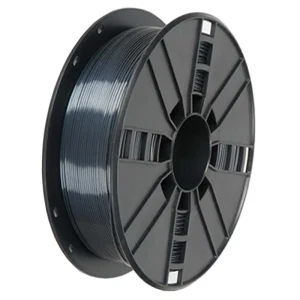
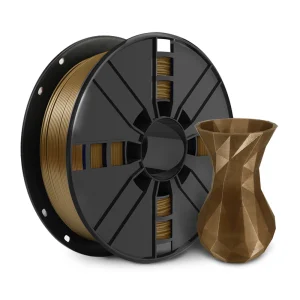
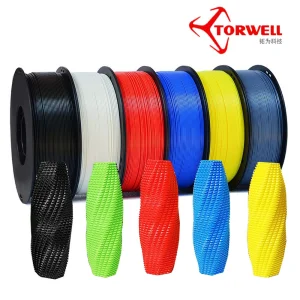
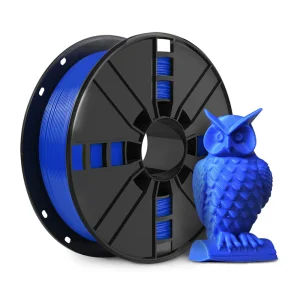
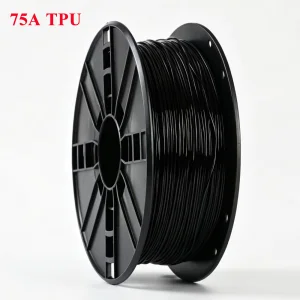
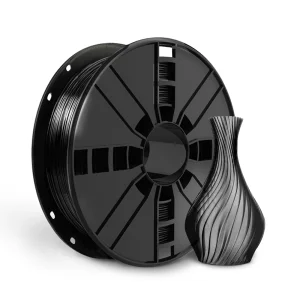
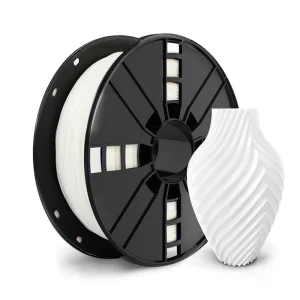
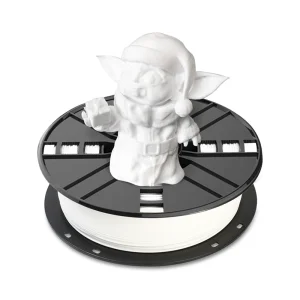
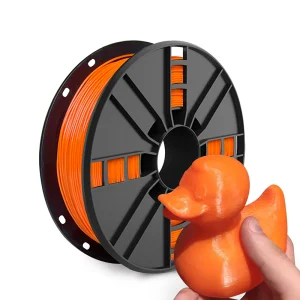
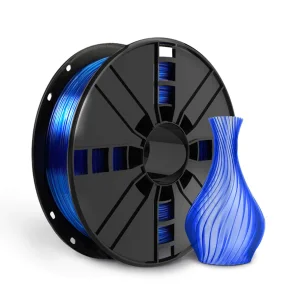
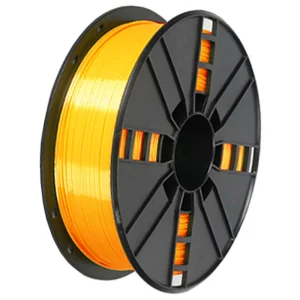
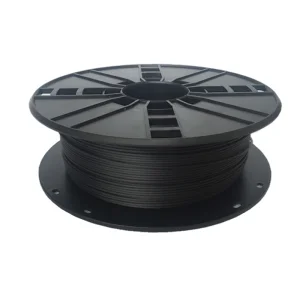
Explore our flagship 3D printing filament materials manufactured with precise ±0.02mm diameter tolerances for professional FDM/FFF applications.
A Comprehensive Whitepaper on China's 3D Filament Extrusion Capabilities, Material Sciences, and Strategic B2B Wholesale Benchmarks.
The global additive manufacturing landscape has undergone a tectonic shift over the past decade. Fused Deposition Modeling (FDM) and Fused Filament Fabrication (FFF) technologies have transitioned from rapid desktop prototyping into mission-critical production engines for industrial jigs, end-use components, medical devices, and consumer retail products. At the epicenter of this material revolution is China's advanced polymer processing sector. Searching for a reliable China 3D Filament Wholesale Factory is no longer just about sourcing low-cost consumables—it is a strategic business decision centered on material consistency, rheological precision, supply chain resilience, and rigorous regulatory compliance.
Modern high-speed 3D printers—executing print velocities exceeding 500 mm/s and accelerations upwards of 20,000 mm/s²—place unprecedented physical demands on thermoplastic filaments. Inconsistencies in filament diameter, microscopic voids, moisture contamination, or uneven pigment dispersion lead directly to catastrophic print failures, nozzle clogs, and thermal degradation. Leading Chinese filament manufacturing hubs have solved these challenges by integrating real-time dual-axis laser feedback loops, automated optical inspection system (AOI), closed-loop humidity controls, and high-purity virgin resin formulations.
How vertical integration, raw polymer synthesis, and scale economies deliver massive strategic advantages to global B2B buyers.
Chinese factories maintain direct partnerships with premier global and domestic resin synthesizers (NatureWorks Ingeo, Total Corbion, BASF, and Covestro). This grants direct access to medical, food-contact, and engineering grade bio-polyesters, ensuring batch-to-batch polymer weight distribution and stable Melt Flow Index (MFI).
State-of-the-art extrusion lines utilize multi-zone thermal controllers coupled with continuous melted polymer filtration screens. By filtering contaminants down to sub-micron thresholds, Chinese OEMs virtually eliminate thermal nozzle blockages during prolonged high-speed printing routines.
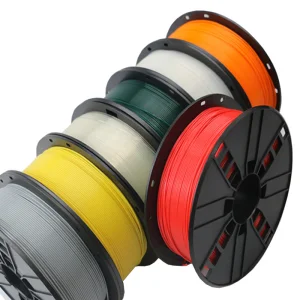
With monthly continuous outputs exceeding dozens of metric tons across standardized product lines (PLA, PETG, TPU, ABS, ASA, PC, Carbon Fiber), Chinese manufacturing plants minimize overhead costs, transferring substantial unit-cost savings directly to international white-label clients and enterprise distributors.
Industrial performance parameters guaranteed through automated quality control and international certifications.
Enterprise procurement managers evaluating a 3D Filament Wholesale Factory must demand transparent, quantifiable quality metrics. Below is an engineering comparison matrix of primary filament thermoplastics manufactured in China, detailing operating parameters and mechanical attributes required for specialized procurement planning:
| Polymer Grade | Recommended Extrusion Temp | Heat Deflection Temp (HDT) | Tensile Strength (MPa) | Flexural Modulus (GPa) | Target Applications |
|---|---|---|---|---|---|
| PLA / PLA Plus | 190°C – 220°C | 55°C – 60°C | 45 – 65 MPa | 2.8 – 3.4 GPa | Rapid prototyping, consumer goods, visual models |
| PETG Industrial | 230°C – 250°C | 72°C – 78°C | 48 – 52 MPa | 1.9 – 2.1 GPa | Chemical containers, mechanical housings, snap-fits |
| ABS / ASA UV-Shield | 240°C – 260°C | 85°C – 98°C | 40 – 46 MPa | 2.1 – 2.4 GPa | Automotive trim, outdoor electrical enclosures, ducting |
| TPU Flexible (75A - 95A) | 200°C – 230°C | N/A (Elastomer) | 30 – 45 MPa | Elongation > 450% | Gaskets, footwear soles, dampeners, medical seals |
| Carbon Fiber Composite | 250°C – 290°C | 110°C – 155°C | 80 – 120 MPa | 6.5 – 8.5 GPa | Aerospace tooling, drone frames, high-rigidity arms |
International distribution requires strict adherence to international environmental protocols and safety standards. High-tier Chinese factories maintain full compliance profiles, ensuring smooth customs clearance and market entry across North America, the European Union, and Asia-Pacific:
How tailored 3D printing filament materials drive real-world productivity across industrial, commercial, and educational sectors.
Carbon Fiber composites and High-Temp ABS/ASA polymers allow engineering facilities to print lightweight end-of-arm tooling (EOAT), check gauges, and functional cabin mock-ups with high dimensional stability.
Ultra-pure PLA, Silk PLA, and Flexible TPU 75A enable hospital networks and surgical centers to produce multi-hardness organ replicas, custom orthotic liners, and precise pre-operative planning models.
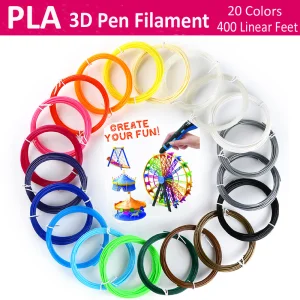
Low-odor, bio-based PLA and child-friendly 3D Pen filament packs supply university maker-spaces and elementary STEM labs worldwide with non-toxic, easy-to-print materials.
Large-scale print farms operating hundreds of high-speed FDM printers rely on bulk 1kg, 3kg, and 5kg spools featuring strict neat-winding algorithms that guarantee zero tangles during continuous 24/7 jobs.
Key technological shifts and market demands defining the next decade of additive polymer production.
The widespread adoption of high-speed CoreXY 3D printers (such as Bambu Lab, Voron, Creality K1 series, and Prusa MK4) has altered material chemistry requirements. Standard filaments extruding at elevated speeds frequently suffer from under-extrusion, poor layer adhesion, and matte dulness due to insufficient thermal transfer within the hotend melt zone. Advanced Chinese manufacturing factories have pioneered High-Speed PLA and PETG Formulations incorporating specific melt-flow modifiers and nucleating agents. These allow the material to liquefy instantly upon entering the heat block and solidify immediately upon exiting the nozzle, retaining 100% layer bonding strength even at 600 mm/s flow rates.
Environmental stewardship is now a non-negotiable procurement requirement across Western markets. Top-tier factories have transitioned away from single-use plastic spools toward high-density, moisture-resistant recycled cardboard spools. Furthermore, production processes are incorporating post-industrial recycled polymers (rPETG, rPLA, rABS) without sacrificing tensile performance. Closed-loop spool recycling and biodegradable bio-composite filaments represent one of the fastest-growing market segments in global distribution.
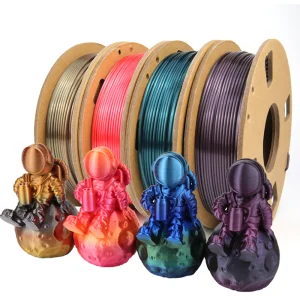
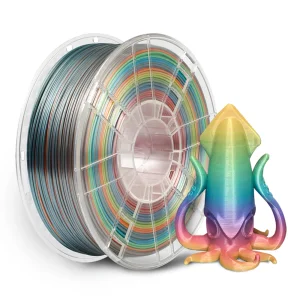
The consumer retail and hobbyist landscape has seen explosive growth in aesthetic multi-color materials. Co-extrusion technology allows manufacturers to combine two or three distinct colors within a single strand of 1.75mm filament (Dual-Color & Triple-Color Silk PLA). As the spool unrolls, the orientation of the print creates mesmerizing color-shifting optical effects on the finished model surface. Chinese factory innovation in precise co-extrusion die heads ensures exact 50/50 or 33/33/33 longitudinal alignment along thousands of meters of continuous strand.
End-to-end white-label manufacturing services designed to build and scale your regional brand footprint.
Utilizing high-precision spectrophotometers, our masterbatch engineers match exact brand colors within a Delta E < 1.0 threshold. Send us a physical sample or Pantone code to create exclusive proprietary colorways for your catalog.
We provide full structural box design, custom logo printing on spools, specialized barcode/FNSKU labeling, and branded vacuum desiccant pouches. Receive fully shelf-ready or Amazon FBA-compliant products direct from the factory.
Streamline logistics with flexible Incoterms (EXW, FOB, CIF, DDP). We partner with major freight networks to deliver bulk container loads or palletized shipments straight to local distribution centers in the USA, Europe, and Australia.
Discover additional high-demand specialty and engineering materials available for immediate bulk order production.
Comprehensive technical and commercial answers for corporate buyers, procurement officers, and brand owners.