
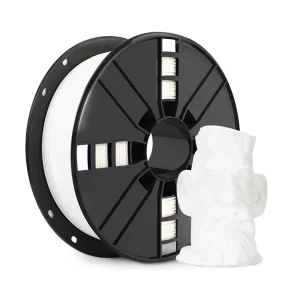
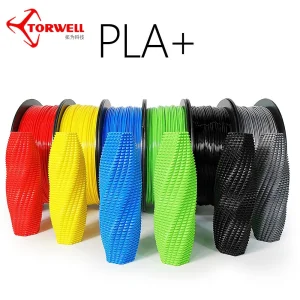
Precision-extruded, high-speed 3D printing filaments engineered for high layer adhesion, zero warping, and consistent batch tolerances.
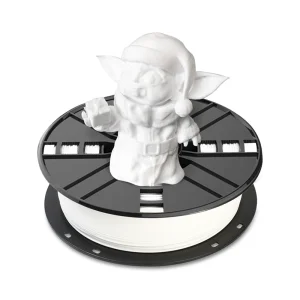
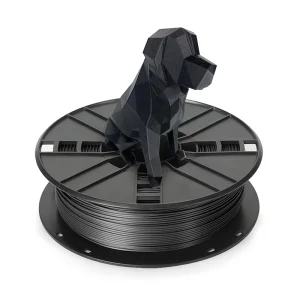
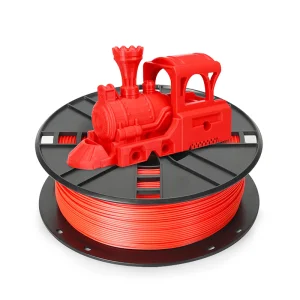
Analyzing the shift from rapid prototyping to low-volume direct digital manufacturing across Australia's largest economic corridor.
The additive manufacturing landscape in Greater Sydney and New South Wales (NSW) is undergoing a structural metamorphosis. Driven by major infrastructure initiatives—such as the construction of the Western Sydney Aerotropolis, expansion of tech precincts in Macquarie Park and Ultimo/Pyrmont, and modern defense prototyping hubs—commercial entities are moving away from traditional subtractive machining toward high-output Fused Deposition Modeling (FDM) print farms. In this high-duty environment, standard PLA (Poly-Lactic Acid) is no longer sufficient to meet enterprise demands for impact strength, thermal resilience, and continuous high-speed production.
Enter PLA+ (Poly-Lactic Acid Plus / Pro): a modified bio-based thermoplastic engineered through advanced polymer blending. By compounding high-purity lactide resin with specialized impact modifiers, nucleating agents, and flow enhancers, PLA+ overcomes the intrinsic brittleness and low thermal deflection of raw PLA while retaining its non-toxic, eco-friendly footprint. For commercial print farm managers, educational consortiums (USYD, UNSW, UTS), and local industrial prototyping operations across Sydney, sourcing reliable, direct-factory wholesale PLA+ filament has become a vital operational imperative.
Sydney's industrial users are rapidly deploying high-speed automated print farms running 24/7. Demand has migrated from aesthetic models to end-use structural enclosures, jigs, fixtures, and architectural masterplan physical renderings.
Under NSW government green procurement policies, commercial enterprises are under increasing pressure to utilize zero-carbon, compostable biopolymers, making certified premium PLA+ the default thermoplastic choice.
Sydney print farms cannot afford stockouts or filament diameter variances that trigger printer nozzle clogs. Factory-direct procurement delivers guaranteed continuity, bulk pricing, and custom spooling options.
Empirical mechanical testing data for polymer specifiers, production engineers, and commercial buyers.
Standard PLA is synthesized from polymerized lactic acid derived from fermented plant starch (corn or sugarcane). While it exhibits high tensile stiffness and excellent surface clarity, its macromolecular structure lacks chain flexibility, rendering parts brittle along the Z-axis (interlayer shear plane). Torwell's proprietary PLA+ formulation incorporates elastomer-toughened core-shell impact modifiers alongside a specialized crystallization accelerator.
This molecular re-engineering yields significant empirical performance advantages: higher Charpy notched impact energy, superior interlayer diffusion during molten extrusion, and dramatically reduced viscosity under high shear strain rates—making it fully compatible with ultra-fast FDM 3D printers operating at speeds exceeding 500 mm/s (such as Bambu Lab X1/P1P, Creality K1 Max, and Voron 2.4 architectures).
| Mechanical / Thermal Property | Standard PLA | Torwell PLA+ (Pro) | PETG Grade | ABS Industrial | Test Standard |
|---|---|---|---|---|---|
| Tensile Strength (Yield, MPa) | 58 – 62 | 65 – 68 | 48 – 52 | 40 – 44 | ISO 527 / ASTM D638 |
| Izod Impact Strength (kJ/m²) | 2.8 – 3.2 | 28.5 – 31.0 | 7.5 – 8.5 | 35.0 – 40.0 | ISO 180 / ASTM D256 |
| Flexural Modulus (MPa) | 2,800 | 3,150 | 2,100 | 2,250 | ISO 178 / ASTM D790 |
| Elongation at Break (%) | 4.5% | 22.0% | 120% | 25% | ISO 527 |
| Heat Deflection Temp (HDT @ 0.45MPa) | 53°C | 58°C – 62°C | 68°C | 85°C | ISO 75 / ASTM D648 |
| Melt Flow Index (MFI, g/10min) | 6 – 8 (210°C/2.16kg) | 14 – 18 (210°C/2.16kg) | 10 – 14 (240°C) | 18 – 22 (220°C) | ISO 1133 |
| Interlayer Adhesion Energy | Low (Fails brittle) | Very High (Ductile yield) | High | Moderate | In-House Cleavage Test |
| Print Odor / VOC Profile | Ultra-Low / Sweet | Zero Harmful VOCs | None | High (Styrene Fumes) | ISO 16000-6 |
Traditional PLA suffers from melt-bank starvation when pushed past 150 mm/s, causing under-extrusion and layer void gaps. Torwell PLA+ maintains consistent shear-thinning behavior, ensuring uniform volumetric flow rates up to 32 mm³/s inside hotend melt zones.
Sydney's oceanic atmospheric humidity can accelerate hydrolytic degradation in sub-standard filaments. Torwell PLA+ undergoes deep molecular drying and anti-hygroscopic surface conditioning to maintain stable spool feeding across NSW coastal workshops.
Evaluating commercial dynamics, price-per-kilogram elasticity, and regional distributor requirements in New South Wales.
The Australian 3D printing filament market has historically suffered from inflated retail pricing caused by multi-tiered importer markups, air-freight surcharges, and fragmented distribution networks. Local stockists in Sydney typically retail standard 1kg PLA spools at AUD $35 – $55 per roll. However, enterprise print farms operating 50 to 500+ FDM machines require bulk price points between **USD $5.50 to $9.50 per kg** to remain competitive against traditional injection molding.
By establishing a direct factory supply contract with Torwell Technologies, Sydney distributors and industrial print operations bypass intermediary middleman margins, securing factory-gate wholesale rates, guaranteed production batch consistency, and direct custom color-matching capabilities.
B2B direct sourcing drops Total Cost of Ownership (TCO) by over 60% compared to local retail stockists, unlocking profitable commercial print-on-demand services across Sydney.
Our premium PLA+ spools feature exact outer dimension rim tolerances (200mm diameter, 65mm width, 54mm core) ensuring smooth rotation in Bambu Lab AMS and automatic color changers.
Custom Pantone matching, custom branded spool stickers, eco-friendly cardboard spools, and custom barcode packaging ready for Sydney retail shelves and Amazon AU fulfillment centers.
How automated production lines and continuous laser feedback ensure sub-0.02mm diameter precision for Australian importers.
Filament failure in modern high-speed 3D printers is almost always traceable to upstream manufacturing defects: ovality drift, embedded micro-bubbles, dust contamination, or uneven spool winding tension. Founded in 2011, Torwell Technologies operates a state-of-the-art 2,500 m² standardized manufacturing facility equipped with 6 fully automated high-speed extrusion lines yielding 50,000 to 60,000 kg of premium filament monthly.
Our quality control protocol incorporates a 5-stage automated safeguard system:
Virgin NatureWorks / Total Corbion PLA resins are desiccant-dried to under 150 ppm moisture content prior to melting. Multi-zone temperature controlled single-screw extruders process the polymer melt under constant pressure profiles to eliminate thermal degradation.
Inline high-frequency dual-axis laser micrometers measure strand diameter and roundness 500 times per second. Real-time feedback loops automatically adjust haul-off capstan speeds to lock tolerances down to strictly ±0.02 mm.
Automated traverse winding heads position the filament strand layer-by-layer across the spool width. Controlled spooling tension eliminates criss-cross crossovers, preventing filament tangles that cause print failures in unattended commercial print runs.
Immediately after winding, spools pass into clean-room vacuum sealing lines with fresh active desiccant pouches. Sealed inside heavy-gauge moisture-proof barrier bags, filament arrives in Sydney port with zero hydrolytic degradation risk.
How specialized sectors across Greater Sydney utilize Torwell Wholesale PLA+ to drive operational efficiency.
Sydney's rapid urban expansion across Parramatta and the CBD requires scale physical topography and building models. Torwell White and Light Gray PLA+ offer crisp feature edge definition, zero thermal shrinkage over 500mm build plates, and clean post-sanding readiness.
Manufacturing operations in Wetherill Park, Blacktown, and Smithfield utilize PLA+ for custom assembly jigs, drill guides, and robot end-of-arm tooling. High Izod impact resistance enables 3D printed factory tools to withstand accidental drops without fracturing.
Educational facilities across NSW require non-toxic, safe printing materials. Torwell PLA+ releases zero hazardous VOC styrene vapors, emits low sweet odors, and complies fully with Australian safety standards for indoor classroom environments.
Streamlined international freight, customs clearance, and container shipping protocols into Port Botany.
Purchasing direct from Torwell Technologies is designed to be seamless for Australian importers, resellers, and enterprise consumers. We support flexible Incoterms including **FOB, CIF, DDP (Delivered Duty Paid)** directly to your warehouse address in Sydney, Melbourne, Brisbane, or Perth.
Regular LCL (Less than Container Load) and FCL (Full Container Load) shipments from Shenzhen / Ningbo ports to Port Botany (Sydney). Typical ocean transit time: 12 – 16 days.
Complete Technical Data Sheets (TDS), Safety Data Sheets (SDS / MSDS), RoHS, REACH, and Australian Customs compliance documentation supplied with every export shipment.
Low Minimum Order Quantities for initial market trial runs. Fast air-express sample boxes available within 3 – 5 business days for Sydney technical evaluation.
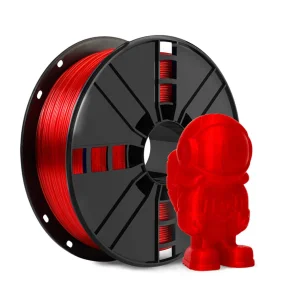
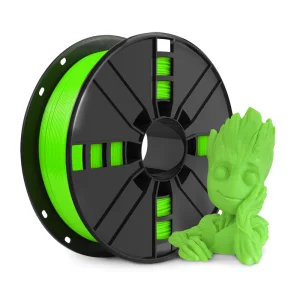
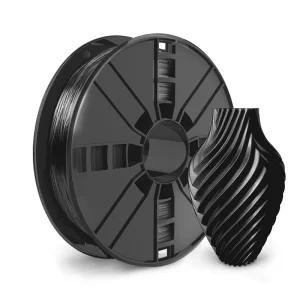
Explore our full line of PLA+, ABS, PETG, and TPU 3D printer materials available for bulk export to Sydney.
Answers to common technical, logistical, and commercial inquiries from Australian importers and print farm directors.
Elevate your Sydney 3D printing enterprise with factory-direct pricing, guaranteed ±0.02mm diameter precision, and flexible OEM branding. Speak directly with our export engineering team today.