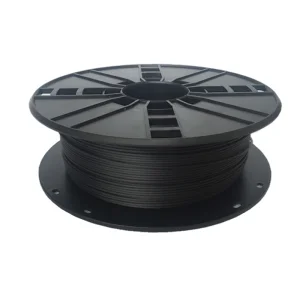
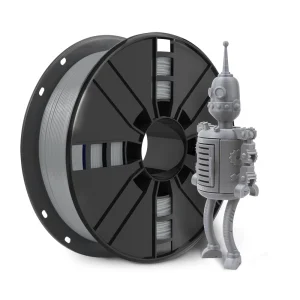
High-performance carbon fiber and engineering-grade polymers engineered for high stiffness, heat deflection, and dimensional stability.
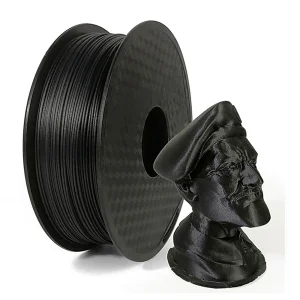
How the Eastern Economic Corridor (EEC) and Thailand 4.0 initiative are reshaping manufacturing requirements for high-performance carbon fiber filaments.
Bangkok sits at the commercial center of Thailand’s "Detroit of Asia." With major automotive assembly corridors expanding in Rayong, Chachoengsao, and Samut Prakan, leading original equipment manufacturers (OEMs) and Tier-1 suppliers are accelerating their shift toward Electric Vehicles (EVs). Light-weighting components and localized rapid tooling have become imperative. Carbon fiber reinforced filaments (CF-PLA, CF-PETG, CF-PA) are replacing heavy CNC-machined aluminum jigs, checking fixtures, and robotic end-of-arm tooling (EOAT), cutting tooling production cycles from weeks to hours.
With Suvarnabhumi Airport, Don Mueang, and the U-Tapao Aviation City project driving regional maintenance, repair, and overhaul (MRO) activities, aerospace engineers in the Bangkok Metropolitan Area demand high strength-to-weight ratio parts that comply with strict mechanical and thermal tolerances. Short-strand carbon fiber composites offer minimal thermal expansion, high flexural modulus, and non-corrosion properties crucial for custom ducting, specialized bracketry, and interior cabin service fixtures.
Industrial estates surrounding Bangkok, such as Lat Krabang and Bangchan, house extensive smart factory operations. Modern automated assembly lines utilize high-speed robotic pick-and-place grippers. 3D printed carbon fiber composites provide the structural rigidity necessary to withstand high kinetic accelerations without mechanical deformation, reducing inertia on servo motors and reducing line maintenance overhead.
Sourcing raw engineering materials directly from China via established Bangkok supply corridors eliminates long shipping delays from North America or Europe. Torwell Technologies provides seamless B2B import pathways with duty-optimized shipping to Laem Chabang Port, giving Thai distributors and factory managers uninterrupted production workflows.
Understanding micro-fiber dispersion, matrix bonding, nozzle shear stress, and thermal deflection metrics.
Carbon fiber composite filaments are not simply colored thermoplastics; they are advanced two-phase structural materials. Torwell Technologies utilizes high-modulus short carbon fibers (typically 5–10 μm diameter with micro-length aspect ratios) uniformly compounded into thermoplastic base resins including Polylactic Acid (PLA), Polyethylene Terephthalate Glycol (PETG), Polyamide (Nylon PA), and Polycarbonate (PC).
| Material Grade | Tensile Strength (MPa) | Flexural Modulus (GPa) | Heat Deflection Temp (°C @ 0.45MPa) | Moisture Rate (%) | Primary Industrial Application |
|---|---|---|---|---|---|
| Torwell Carbon Fiber PLA | 68 - 75 | 4.8 - 5.2 | 62 °C | < 0.3% | Visual Prototypes, Lightweight Structural Covers |
| Torwell Carbon Fiber PETG | 72 - 82 | 5.5 - 6.1 | 85 °C | < 0.2% | Chemical Containers, End-of-Arm Tooling, Jigs |
| Torwell Carbon Fiber PA (Nylon) | 95 - 110 | 7.2 - 8.5 | 160 °C | < 1.1% (Dry) | Functional Automotive Parts, Heavy Mechanical Gears |
| Standard Pure PLA (Control) | 45 - 50 | 2.8 - 3.1 | 55 °C | < 0.4% | Educational Modeling, Concept Prints |
Agglomeration of short carbon strands creates stress concentration points that lead to filament snap during extrusion. Torwell's proprietary twin-screw compounding process ensures homogenous fiber orientation along the longitudinal axis, increasing Z-axis layer adhesion while minimizing nozzle clogging.
Due to the high hardness of carbon strands, standard brass nozzles experience rapid orifice erosion during long extrusion runs. We advise industrial buyers in Bangkok to fit printers with hardened steel, ruby-tipped, or tungsten carbide nozzles (0.4mm to 0.6mm diameter) and maintain extrusion temperatures between 210°C–260°C depending on matrix selection.
Chopped carbon fiber dramatically reduces the thermal expansion coefficient ($\alpha$) of base polymers. This inhibits thermal shrinkage during bed cooling, enabling print farms to execute large-scale, flat geometrical components without edge curling or enclosure warpage.
How additive manufacturing is evolving from desktop hobbyism to core manufacturing infrastructure.
The global proliferation of high-speed FDM printers (such as Bambu Lab X1/P1 series, Creality K1 Max, Voron 2.4, and industrial CoreXY systems) requires filament resins with optimized melt flow indices (MFI). Torwell’s updated CF formulations maintain rapid shear thinning behavior inside high-flow hotends, preventing under-extrusion at print speeds exceeding 400 mm/s.
For electronic enclosures and public transport fixtures in Bangkok's expanding BTS Skytrain and MRT networks, fire safety is non-negotiable. Modern carbon fiber composite formulations are increasingly integrated with non-halogenated flame retardants to meet UL94 V-0 self-extinguishing criteria without sacrificing structural toughness.
Direct factory production, rigid quality assurance, and unmatchable cost-to-performance margins for international buyers.
Founded in 2011, Torwell Technologies operates a 2,500 square meter standardized factory equipped with 6 fully automated extrusion lines. With a monthly capacity reaching 50,000–60,000 kg, we ensure swift order fulfillment for high-volume wholesale distributors and commercial print farms in Thailand.
Diameter consistency is the single most important factor for reliable 3D printing. Torwell utilizes dual-axis inline laser measuring gauges during the extrusion phase. Any section exceeding the ±0.02mm tolerance threshold is flagged and purged automatically, ensuring jam-free performance in AMS systems.
Hygroscopic filaments such as Carbon Fiber PETG and Nylon absorb ambient humidity quickly, leading to steam bubbles and severe stringing. Every spool from Torwell undergoes prolonged pre-spool drying, followed immediately by high-vacuum heat sealing with active desiccant packs inside reinforced cardboard packaging.
From automotive assembly lines in Samut Prakan to agricultural drone manufacturing in Pathum Thani.
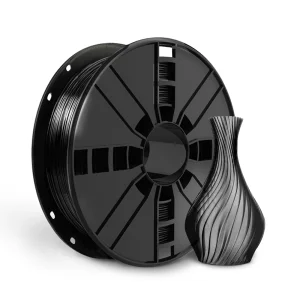
Automotive engineers across the Bangkok Metropolitan Region use Torwell PETG Carbon Fiber to produce dielectric, heat-resistant casing components for testing prototype EV battery modules. The matte black surface finish hides layer lines while the material withstands temperatures up to 85°C without structural softening.
Thailand’s agricultural robotics sector relies heavily on lightweight multi-rotor frames. Printing landing gear joints, motor mounts, and payload brackets with Torwell Carbon Fiber Composite Filaments decreases total frame weight by up to 35% compared to solid aluminum, directly translating into longer flight endurance over agricultural fields.
Metal components exposed to humid, marine environments along the Chao Phraya river and Thailand’s ports suffer rapid salt corrosion. Carbon fiber composite filaments provide chemical inertness, high stiffness, and complete resistance to saltwater degradation for custom mounting brackets and sensor housings.
High-speed bottling and electronics packaging operations require customized star wheels and guide rails. 3D printing these wear-prone parts with high-lubricity Carbon Fiber composite materials reduces friction, damps vibrational noise, and eliminates expensive long-lead machining orders from overseas vendors.
Streamlined import protocols, customs duty optimization under ACFTA, and OEM/ODM private label customization.
Under the ASEAN-China Free Trade Area (ACFTA), Thai businesses importing 3D printer filaments under HS Code 3916.90 / 3926.90 can utilize Form E certificates supplied by Torwell Technologies to drastically reduce or completely eliminate import tariffs at Thailand Customs checkpoints in Bangkok and Laem Chabang Port.
Looking to establish your own localized brand in Thailand? Torwell offers comprehensive OEM/ODM solutions. We provide custom Pantone color matching for base matrices, customized spool sticker branding, customized vacuum bag printing, and heavy-duty master cartons designed for export endurance.
From LCL (Less than Container Load) air freight direct to Suvarnabhumi Airport (BKK) for urgent print farm expansion, to full 20ft/40ft FCL ocean shipments to Laem Chabang Port, Torwell maintains flexible Minimum Order Quantities (MOQs) tailored to support emerging regional supply partners.
Request a comprehensive wholesale price catalog, material MSDS/TDS sheets, or custom sample spools directly from our engineering team.
Send Inquiry NowNext-generation high-temperature matrix polymers and sustainable carbon fiber recycling developments.
Environmental sustainability is rapidly becoming a core purchasing criterion for multinational corporations in Bangkok. Torwell is actively investing R&D into reclaimed carbon fiber (rCF) sourcing, blending post-industrial carbon waste with bio-based PLA and recycled PETG to deliver high-modulus, eco-friendly composite options without compromising mechanical yield strength.
For extreme thermal environments exceeding 200°C continuous service (such as aerospace engine bays and oil/gas exploration tools), ultra-polymers reinforced with continuous and short-strand carbon fibers represent the frontier of additive manufacturing. Torwell’s research laboratory continues to benchmark high-temperature extrusion parameters to support next-decade industrial advancements.
Answers to common technical, logistics, and manufacturing inquiries from purchasing managers and enterprise users.
Carbon Fiber Filament combines lightweight properties with ultra-high flexural modulus and minimal thermal warping. For industrial factories in Bangkok's automotive, robotics, and electronics hubs, this allows rapid on-demand printing of custom jigs, assembly fixtures, robotic end-effectors, and functional prototype components that replace expensive CNC-machined metal, cutting lead times from weeks to hours.
Because chopped carbon fiber strands cause rapid abrasive wear on soft metals, standard brass nozzles should not be used. We recommend using hardened steel, tungsten carbide, or ruby-tipped nozzles with an orifice diameter of 0.4mm or larger (0.6mm recommended for high-speed printing) to prevent fiber clogging and maintain consistent extrusion profiles.
High-humidity environments like Bangkok require extreme packaging precautions. Every spool produced by Torwell is baked in commercial dehumidifying ovens prior to spooling, immediately vacuum-sealed in thick foil/plastic barrier bags with active silica desiccant packs, and packed inside individual protective cartons to ensure 100% dry material upon arrival.
Yes. Torwell provides complete OEM/ODM solutions, including custom spool sticker design, branded retail boxes, custom master cartons, and technical data sheets (TDS/MSDS). Additionally, we provide official ASEAN-China Free Trade Agreement (Form E) documentation to help Thai buyers import shipments with zero or reduced customs duties.
Standard production lead times for wholesale container or pallet orders range between 10 to 15 business days depending on order volume and custom OEM requirements. Ocean freight from sea ports near our factory to Laem Chabang Port typically takes 5 to 9 days, while air express directly to Suvarnabhumi Airport (BKK) takes 2 to 4 days.
While Carbon Fiber PLA offers superior ease of printing, extreme stiffness, and negligible warping on standard non-enclosed 3D printers, Carbon Fiber PETG provides higher impact resistance, better chemical stability against industrial solvents/oils, and elevated heat deflection temperatures (85°C vs 62°C), making CF-PETG the preferred choice for demanding factory floor environments.
From ultra-flexible TPU to high-impact PETG and PLA+, explore factory-direct materials built for global performance.
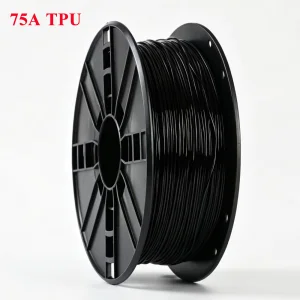
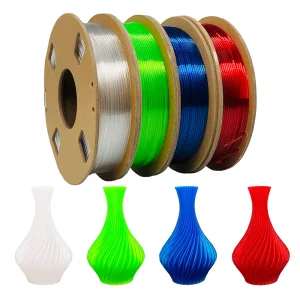
Empower your Bangkok commercial print farm, automotive assembly line, or retail supply operation with ultra-consistent, factory-direct composite materials from Torwell Technologies.