Extruded under strict ISO 9001:2015 quality standards with ±0.02 mm laser diameter monitoring, engineered specifically to withstand Nordic environmental conditions.
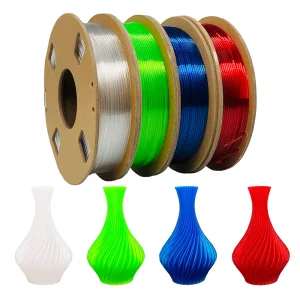
Norway stands at the global forefront of maritime innovation, offshore energy transitions, commercial aquaculture, and high-tech subsea engineering. As industrial sectors across Oslo, Bergen, Stavanger, Trondheim, and Tromsø accelerate digital transformation, additive manufacturing (AM) has shifted from simple aesthetic prototyping into a vital component of decentralized supply chains. Within this harsh North Sea climate and demanding regulatory framework, selecting the optimal 3D printing polymer is an operational necessity.
Historically, engineering teams relied heavily on ABS (Acrylonitrile Butadiene Styrene) for structural integrity or PLA (Polylactic Acid) for rapid visual verification. However, both traditional polymers present severe operational limitations in Norwegian field conditions: ABS suffers from high thermal warping coefficients, toxic styrene emissions, and embrittlement under freeze-thaw cycles; whereas PLA lacks chemical resistance, biodegrades under prolonged marine exposure, and deforms under modest thermal loads.
PETG (Polyethylene Terephthalate Glycol) exhibits extraordinary resistance to salt spray, hydraulic fluids, and severe marine salinity. Its hydrophobic matrix maintains chemical stability without moisture degradation in high-humidity fjord environments.
Unlike brittle polyolefins, glycol-modified PET maintains structural ductility and high Charpy impact resistance even at sub-zero temperatures down to -20°C, making it indispensable for Arctic sensor deployments and winter field operations.
PETG is 100% recyclable within standard code-1 resin recovery streams across Norwegian municipal and industrial waste systems, aiding enterprises in meeting strict EU and Nordic Swan environmental benchmarks.
Delivering certified quality, tight physical tolerances, and steady supply volume to Norwegian distributors, OEMs, and print farms since 2011.
PET (Polyethylene Terephthalate) in its raw form is a semi-crystalline polymer widely used in blow-molded bottles. However, during FDM/FFF additive manufacturing, un-modified PET crystallizes rapidly upon cooling, causing excessive shrinkage, severe inter-layer delamination, and opaque structural embrittlement.
Torwell incorporates controlled concentrations of Cyclohexanedimethanol (CHDM) during the polycondensation reaction. By substituting ethylene glycol units with bulkier CHDM rings, the molecular symmetry of the polymer chain is disrupted. This glycol modification inhibits crystallization, locking the polymer into a durable amorphous state.
| Physical / Mechanical Property | Testing Standard | Torwell Industrial PETG | Standard PLA | Standard ABS |
|---|---|---|---|---|
| Tensile Strength at Yield | ISO 527 / ASTM D638 | 50 MPa | 62 MPa | 40 MPa |
| Flexural Modulus | ISO 178 / ASTM D790 | 2.1 GPa | 3.5 GPa | 2.2 GPa |
| Izod Notched Impact Strength (23°C) | ISO 180 / ASTM D256 | 8.5 kJ/m² | 3.2 kJ/m² | 15 kJ/m² |
| Heat Deflection Temp (HDT @ 0.45 MPa) | ISO 75 / ASTM D648 | 70 °C | 55 °C | 85 °C |
| Melt Flow Index (MFI @ 240°C/2.16kg) | ISO 1133 | 12–18 g/10min | 6–10 g/10min | 15–20 g/10min |
| Layer Adhesion Energy (Z-Axis Strength) | In-House Fracture Lab | > 85% of X-Y Axis | < 50% of X-Y Axis | < 60% of X-Y Axis |
Modern Norwegian print farms utilizing Bambu Lab X1/P1P, Prusa MK4, Voron 2.4, and industrial Raise3D systems demand consistent volumetric flow rates. Torwell PETG is formulated with tight molecular weight distribution (MWD), supporting volumetric extrusion rates up to 24 mm³/s at nozzle temperatures of 230°C–250°C without nozzle clogging or thermal stringing.
From sub-zero Arctic weather stations to offshore drilling platforms in the North Sea, Torwell PETG filaments serve specific industrial use-cases across Norway.
Norway's energy sector relies on specialized ROV (Remotely Operated Vehicles) and subsea cabling. Custom strain-relief boots, cable guides, and junction boxes printed in Torwell PETG absorb high physical impacts and resist permanent hydrolysis during long-term immersion in cold saltwater.
In Norway’s multi-billion dollar salmon farming installations (e.g., along Vestland and Trøndelag coasts), automated feeding systems and sensor brackets require non-toxic, chemical-resistant polymers. PETG complies with EU/FDA food contact safety guidelines, eliminating harmful plasticizer leaching.
Meteorological stations, avalanche monitoring units, and smart grid sensors across Northern Norway operate in sub-zero environments. PETG’s superior weatherability and high glass transition stability prevent housing cracking or UV degradation during long polar days.
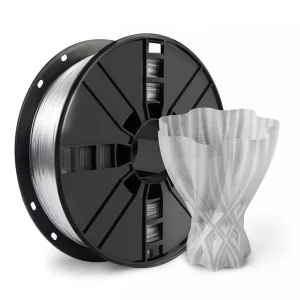
Norwegian interior architecture emphasizes minimal design and organic light diffusion. Torwell Transparent PETG provides over 90% light transmittance, permitting industrial designers in Oslo to 3D print custom luminaire shades and acoustic diffusers with glass-like clarity.
Eliminating Print Failures Before Filament Ships to Norwegian Ports
Raw PETG resin is vacuum dried at 80°C for 6 hours to reduce internal moisture content below 0.02% prior to melt extrusion.
Multi-zone temperature controllers maintain thermal stability along the screw barrel to prevent resin degradation or micro-voids.
High-speed laser micrometers Continuously measure diameter and ovality at 100 Hz, instantly flagging any deviation over ±0.02mm.
Precision tension spooling ensures tangle-free layer alignment, eliminating mid-print feeding jams in multi-material systems (AMS).
Spools are sealed immediately in heavy-duty aluminum-coated or transparent vacuum bags containing fresh silica gel desiccants.
Whether you are expanding a local 3D printing e-commerce platform in Norway, supplying regional municipal workshops, or operating a high-volume additive manufacturing bureau, Torwell provides complete white-label and contract manufacturing services.
Custom filament tolerance and color sample formulation dispatched via express courier within 3-5 days.
6 automated extrusion lines produce up to 2,000 kg daily under strict laser diameter monitoring.
Containerized sea freight to Oslo Harbor or express air cargo directly to Gardermoen Logistics Hub.
Torwell Technologies continuously invests in material science research to address emerging engineering challenges in Nordic sectors.
Compounded with 15% high-modulus chopped carbon fibers, PETG-CF increases flexural rigidity to 4.8 GPa while retaining hydrophobic water resistance. Engineered for lightweight marine drones and custom offshore tooling brackets.
Specially formulated with halogen-free flame retardants to pass UL94 V-0 flammability tests. Target applications include electrical control cabinets for Norwegian maritime vessels and public transport infrastructure.
Utilizing up to 100% post-industrial recycled PETG feedstock with restored molecular weight distribution, allowing Norwegian enterprises to achieve zero-waste manufacturing targets without sacrificing mechanical ductility.
Select from our full catalog of PETG, PLA, and high-aesthetic co-extruded materials for direct shipment into Norway.
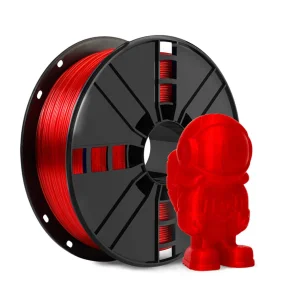
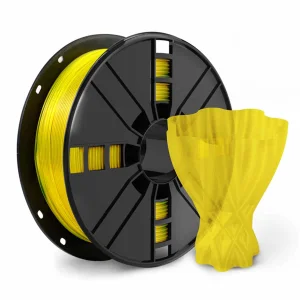
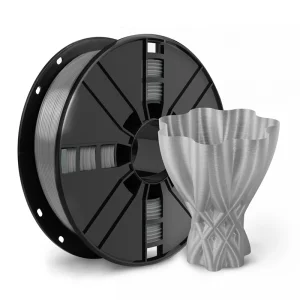
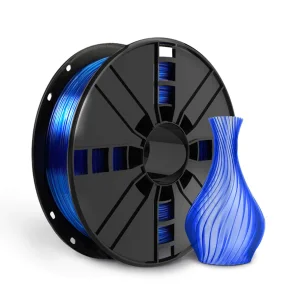
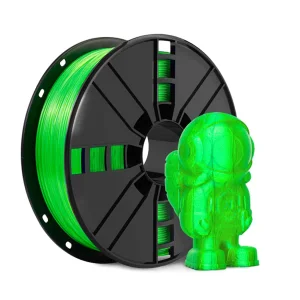
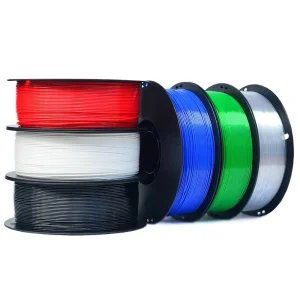
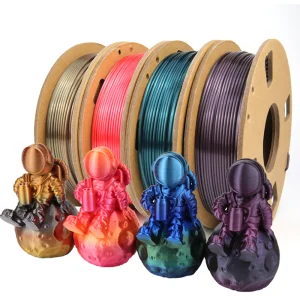
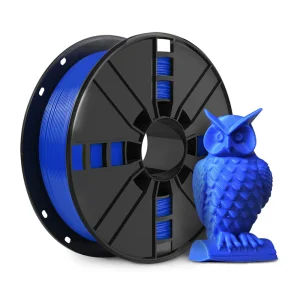
Addressing key technical, logistical, and commercial inquiries regarding PETG procurement in Norway.
Get direct access to factory pricing, certified material data sheets, and custom OEM packaging solutions tailored for the Norwegian market.