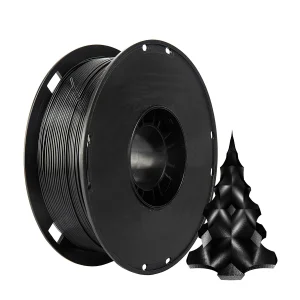
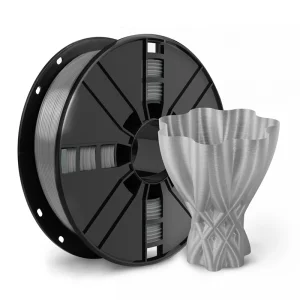
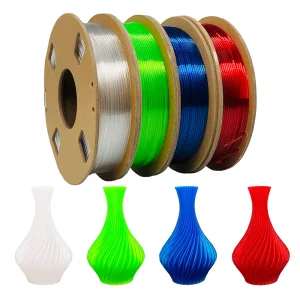
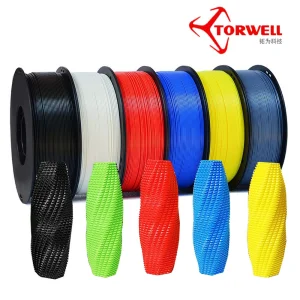
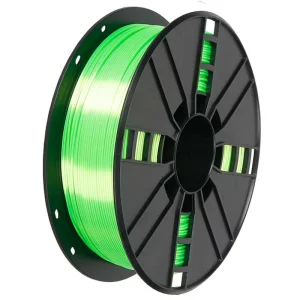
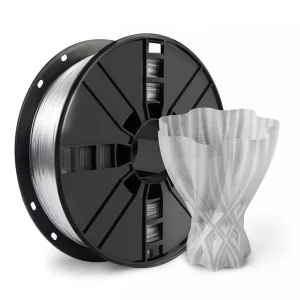
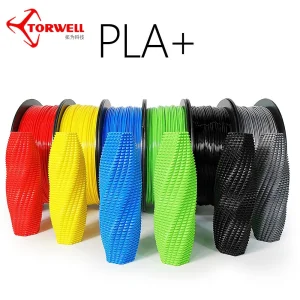
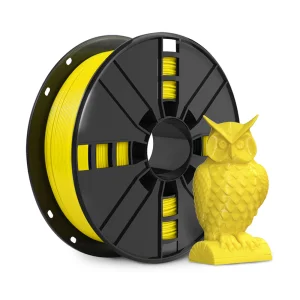
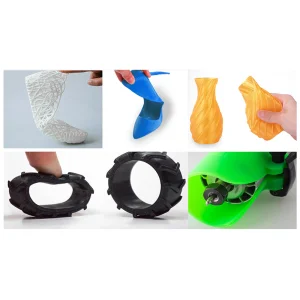
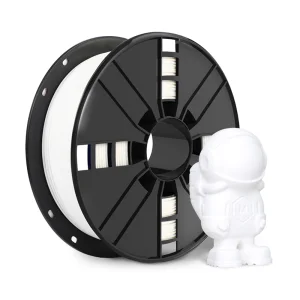
Direct factory-grade Polycarbonate (PC), PETG, and high-impact ABS materials precision-extruded for immediate dispatch to Addis Ababa, Hawassa, and Dire Dawa industrial corridors.
Ethiopia stands at a pivotal juncture in Sub-Saharan Africa's industrial modernization. Driven by national economic frameworks like the Homegrown Economic Reform Agenda 2.0 and the rapid expansion of specialized state-of-the-art industrial parks—such as Hawassa, Kilinto IT Park, Bole Lemi, and Kombolcha—the country is transitioning from agriculture-centric production toward advanced light manufacturing, electronics packaging, automotive component assembly, and defense engineering. As local manufacturing infrastructure matures, traditional subtractive tooling, CNC milling, and steel mold fabrication present significant bottlenecks due to lead times, capital expenditure, and forex allocations for foreign equipment.
In this macro environment, 3D printing (Fused Deposition Modeling - FDM) has evolved from an academic prototyping tool into an essential production catalyst. Local engineering institutions, spare parts fabricators, and multinational joint ventures in Addis Ababa require structural materials capable of replacing die-cast aluminum and machined plastics. Among the engineering thermoplastics available, Polycarbonate (PC) filament represents the gold standard for high-temperature resistance, high tensile strength, and optical clarity. Establishing a direct supply line with accredited China PC filament factories provides Ethiopian industrial operators with the material consistency, certification compliance, and economic feasibility required to scale rapid production.
Enabling facilities in Kilinto, Hawassa, and Bole Lemi to print custom jigs, fixtures, and replacement conveyor components without waiting for overseas mold imports.
By importing high-purity raw spool filament from Chinese manufacturers, local enterprises drastically minimize raw material import costs compared to finished plastic components.
With major energy infrastructure developments like the Grand Ethiopian Renaissance Dam (GERD), electrical equipment production demands UL94 flame-retardant PC components.
Polycarbonate is a naturally amorphous thermoplastic polymer characterized by high impact resistance, high modulus of elasticity, thermal stability up to $110^\circ\text{C}-135^\circ\text{C}$ (Vicat Softening Temperature), and excellent electrical insulation properties. Unlike commodity resins such as standard PLA or basic ABS, printing functional PC parts requires precise control over molecular weight, melt flow index (MFI), and thermal shrinkage dynamics during the FDM process.
Torwell Technologies leverages high-purity virgin resin formulations specifically tuned to prevent premature crystallite formation and moisture-induced hydrolytic degradation during processing. In East Africa’s varied ambient environments—ranging from the high altitude and lower humidity of Addis Ababa ($2,355\text{ m}$ above sea level) to the warmer rift valley zones—unprotected PC spools easily absorb atmospheric moisture. When hydroscopically compromised PC is extruded, water molecules vaporize inside the heated hotend ($260^\circ\text{C}-290^\circ\text{C}$), leading to micro-void formation, severe oozing, brittle layer lines, and reduced tensile strength.
| Physical / Thermal Property | Testing Standard (ISO/ASTM) | Torwell Industrial PC Filament Value | Standard ABS Benchmark |
|---|---|---|---|
| Density | ISO 1183 / ASTM D792 | 1.20 g/cm³ | 1.04 g/cm³ |
| Tensile Strength at Yield (50 mm/min) | ISO 527 / ASTM D638 | 65 - 72 MPa | 40 - 45 MPa |
| Flexural Modulus | ISO 178 / ASTM D790 | 2,300 - 2,500 MPa | 2,100 MPa |
| Izod Impact Strength (Notched, 23°C) | ISO 180 / ASTM D256 | 45 - 55 kJ/m² | 15 - 20 kJ/m² |
| Heat Deflection Temp (HDT @ 0.45 MPa) | ISO 75 / ASTM D648 | 115°C - 125°C | 85°C - 95°C |
| Melt Flow Index (MFI @ 300°C / 1.2 kg) | ASTM D1238 | 18 - 24 g/10 min | 12 - 15 g/10 min |
Procuring industrial 3D printing consumables directly from a China OEM factory involves rigorous operational workflows designed to streamline shipping, customs clearance at Djibouti, inland rail transit, and final delivery to Modjo Dry Port or Ethiopian Customs Terminals. To maintain product integrity across ocean voyages through the Red Sea and Gulf of Aden, packaging compliance is crucial.
As Ethiopia accelerates its digital transformation and local engineering capability, the demand for polymer material science will shift from basic prototype plastics (PLA/ABS) to composite and high-temperature polymers. Torwell Technologies is actively researching next-generation materials designed to support this evolution:
Carbon Fiber Reinforced Polycarbonate (PC-CF): Incorporating 15-20% chopped high-modulus carbon fibers into the PC matrix significantly boosts tensile strength ($\ge 95\text{ MPa}$), reduces shrinkage, and eliminates warping on unheated print enclosures. This allows users in Ethiopian educational institutions and automotive centers to print rigid end-use tools and drone frames.
High-Speed Extrusion (HSE) Formulations: Modern core-XY industrial 3D printers operate at volumetric speeds exceeding $24\text{ mm}^3/\text{s}$ ($300-500\text{ mm/s}$ travel speed). Torwell’s updated PC formulation features engineered polymer chain lengths that maintain shear viscosity stability at high temperatures, enabling ultra-fast printing without sacrificing Z-layer adhesion strength.
Direct from Torwell's 2,500 m² automated production facility. Fully customizable for OEM, private label branding, and bulk container shipping to Ethiopia.
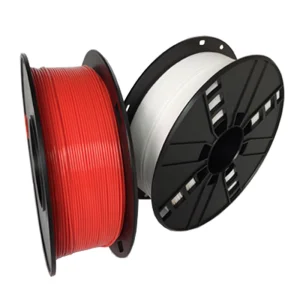
Comprehensive answers compiled by Torwell’s Senior Polymer Engineers and Export Compliance Team for Ethiopian B2B Buyers.