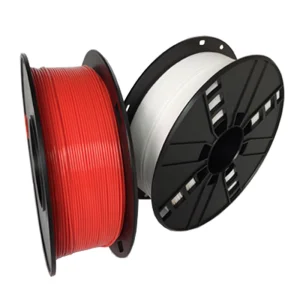
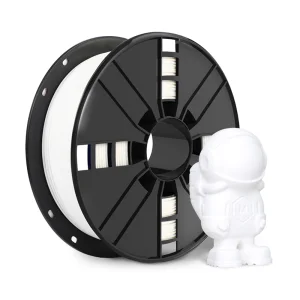
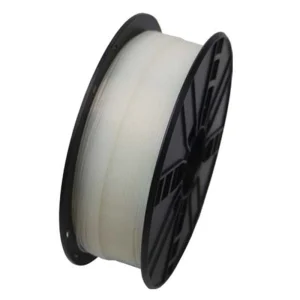
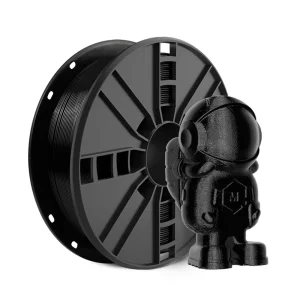
Tested for low-warping, exceptional inter-layer adhesion, and dimensional stability across high-temperature chambers.
As the Greater Tokyo Metropolitan Area maintains its standing as the world's most advanced urban manufacturing hub—spanning the precision workshops of Ota City (大田区), the automotive tech corridor of Kanagawa, and the hardware engineering incubators of Akihabara and Tsukuba—the demand for engineering-grade thermoplastics in additive manufacturing has undergone a fundamental shift.
Modern industrial applications in Tokyo require thermoplastics that transcend rapid aesthetics. Prototyping interactive automotive dashboards, housing sensitive sensor arrays for industrial robotics, and fabricating durable end-use jigs demand materials with strict physical stability. Acrylonitrile Butadiene Styrene (ABS) remains the gold-standard terpolymer for these applications due to its high Heat Deflection Temperature (HDT), impact resistance, and mechanical post-processability (such as acetone vapor smoothing and metal plating).
By precisely balancing Acrylonitrile (hardness & chemical resistance), Butadiene (toughness & low-temperature impact strength), and Styrene (surface gloss & print fluidity), Torwell engineers formulate ABS optimized for zero enclosure warping.
Utilizing high-speed closed-loop laser telemeters, our extrusion lines monitor outer diameter real-time at 1,000 Hz, maintaining tight tolerance limits (target ±0.02 mm) to prevent extruder clogging in continuous print farms.
ABS polymer matrices are intrinsically hygroscopic. Every single spool produced for Tokyo export undergoes high-vacuum desiccant baking followed by multi-layer foil barrier sealing to guarantee zero bubble formation.
To meet the stringent quality audit guidelines expected by Japanese B2B procurement managers, Torwell subjects every batch of raw virgin resin to comprehensive rheological and mechanical testing under ISO/JIS standards.
| Physical / Mechanical Property | Test Standard | Torwell High-Grade ABS | Commodity Market ABS | Performance Benefit for Tokyo Buyers |
|---|---|---|---|---|
| Melt Flow Index (MFI) | ISO 1133 (220°C / 10kg) | 12 – 15 g/10min | 5 – 8 g/10min | Higher speed printing capability (up to 300 mm/s) on Bambu Lab & Voron high-speed rigs. |
| Tensile Strength at Yield | ISO 527 (50 mm/min) | 43 – 48 MPa | 32 – 36 MPa | Enhanced structural load capability for functional drone arms & industrial robotic grippers. |
| Izod Impact Strength (Notched) | ISO 180 / 1A (23°C) | 22 – 26 kJ/m² | 14 – 16 kJ/m² | Superior energy absorption under dynamic shock and vibration testing. |
| Heat Deflection Temperature (HDT) | ISO 75 (0.45 MPa) | 96°C – 102°C | 82°C – 88°C | Resists deformation under high ambient operating heat (e.g., electronic enclosures, motor mounts). |
| Linear Thermal Expansion (CLTE) | ASTM E831 | 8.2 × 10⁻⁵ /K | 11.5 × 10⁻⁵ /K | Substantially reduced shrinkage factor, mitigating corner lift and bed warping during long print cycles. |
From specialized manufacturing facilities along the Tama River to modern multi-story R&D facilities in Shinagawa, Torwell ABS filament powers diverse industrial workflows.
Small-batch production facilities in Tokyo require high rigidity for customized End-Of-Arm Tooling (EOAT) components. Torwell ABS provides the impact resistance and threaded insert retention required for continuous pick-and-place operation.
Tier-1 automotive design centers situated around the Greater Tokyo area utilize our flame-retardant and thermal-resistant ABS formulations to 3D print HVAC duct prototypes, center console housings, and functional clips under heat testing.
For smart home device startups and IoT hardware engineering teams in Shibuya & Akihabara, our ABS filament offers precise post-processing tolerance, enabling seamless ultrasonic welding, solvent bonding, and smooth paint adherence.
Torwell Technologies operates a state-of-the-art 2,500 m² automated manufacturing facility with 6 high-speed extrusion lines. Our strategic supply chain infrastructure ensures seamless export to Tokyo with minimal lead times and optimized landed costs.
By procuring directly from our factory floor in China, Tokyo distributors and enterprise print farms reduce material procurement costs by 35% to 50% compared to local Japanese re-packagers, without sacrificing material quality.
Leveraging direct maritime routes from Shenzhen / Ningbo ports to Port of Tokyo (Aomi & Oi Terminals) and Yokohama Port, standard container freight arrives in just 3 to 5 transit days, guaranteeing continuous stock availability.
We provide comprehensive OEM packaging services for Japanese brands—including custom pantone color matching, branded cardboard or plastic spools, QR-coded batch traceability labels, and Japanese-language SDS documentation.
Our quality management systems ensure every spool shipped across the East China Sea meets exact mechanical specifications.
Operating 3D printing equipment in indoor Tokyo offices or shared industrial incubators requires strict adherence to environmental regulations and chemical safety standards.
Torwell ABS filament formulations are fully certified under EU RoHS (2011/65/EU) and REACH safety directives. Free from heavy metals, polybrominated biphenyls (PBBs), and hazardous plasticizers.
By utilizing purified styrene monomers and high-efficiency thermal stabilization during compounding, Torwell ABS minimizes volatile organic compound (VOC) emissions during hotend extrusion.
Every spool is automatedly layer-wound to guarantee smooth unspooling, preventing criss-cross tangles and feed interruption on high-speed multi-material systems like Bambu Lab AMS.
Explore our full spectrum of industrial ABS, flexible TPU, high-aesthetic Silk PLA, and engineering filaments available for bulk supply to Japan.
Essential technical, logistical, and OEM details for procurement leads, print farm operators, and regional distributors in Greater Tokyo.
Direct sourcing from Torwell's certified 2,500 m² factory offers Tokyo businesses a direct factory-to-door supply chain without middleman markups. With transit times between Shenzhen/Ningbo and the Port of Tokyo averaging only 3 to 5 shipping days, Japanese clients enjoy rapid inventory turnover, guaranteed batch consistency (target ±0.02 mm tolerance), and access to full OEM customization at a fraction of local procurement costs.
Torwell ABS is modified with low-shrinkage thermal additives that lower internal stress buildup during phase change. We recommend an extrusion temperature of 230°C–250°C, a heated bed temperature of 90°C–100°C, and an enclosed print chamber. For Japanese clients utilizing open-frame printers, we provide specialized ABS+ low-warp grades designed specifically for minimal thermal contraction.
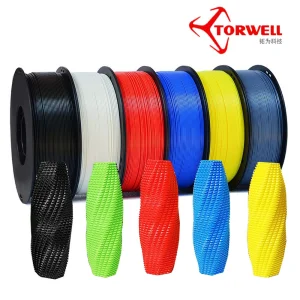
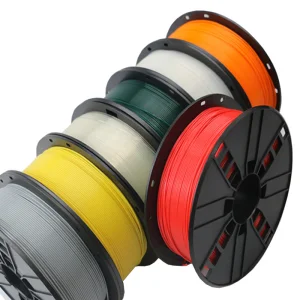
For standard stocked ABS colors (Black, White, Blue, Red, Grey), our MOQ is minimal (starting from 100 spools). For custom OEM Pantone color matching or private-label custom boxes with Japanese labeling, the typical MOQ is 500 spools per SKU. Production lead time is generally 7 to 12 business days, followed by express air cargo (2-3 days) or ocean freight (3-5 days to Tokyo Port).
Yes. Every batch of Torwell ABS filament is compliant with international environmental directives. We provide complete Safety Data Sheets (SDS), RoHS 2.0 10-substance chemical test certificates, and REACH SVHC clearance documentation required for seamless customs clearance at Tokyo and Yokohama ports.
Absolutely. Torwell ABS is extruded from 100% pure virgin ABS resin without unblended fillers. This high chemical purity enables flawless acetone vapor smoothing for high-gloss, injection-mold-like surface finishes. Additionally, prints maintain structural integrity during drilling, tapping, sanding, and metallic plating workflows.
Connect directly with our engineering sales specialists. Get instant access to wholesale volume pricing tier quotes, technical data sheets, and free OEM material samples shipped directly to your office in Tokyo.