Factory-direct technical thermoplastics tested for low warping, exceptional inter-layer adhesion, and reliable performance across modern high-speed FDM/FFF 3D printers.
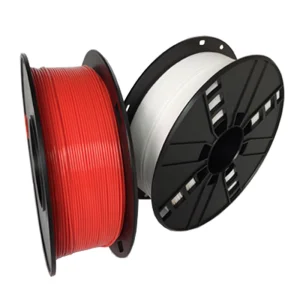
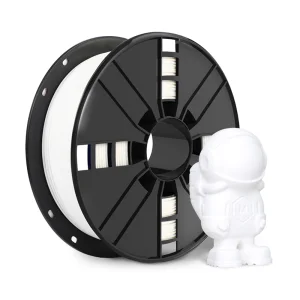
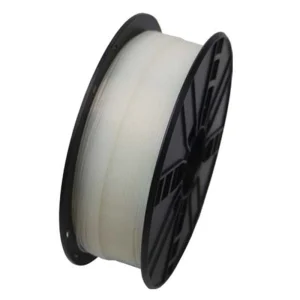
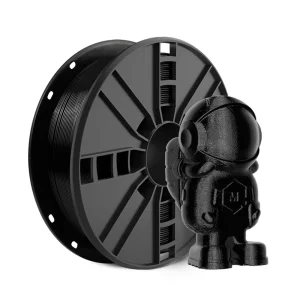
The Greater Boston metropolitan area—anchored by the technological nexus of Cambridge, the Route 128 innovation corridor, and the industrial parks of Waltham, Bedford, and Burlington—represents one of the world's most concentrated clusters for high-tech engineering, autonomous robotics, medical device manufacturing, and defense systems. As additive manufacturing transitions from aesthetic concept validation to functional, end-use component fabrication, regional procurement managers and additive laboratory directors face unprecedented demand for engineering-grade thermoplastics. Among these, Acrylonitrile Butadiene Styrene (ABS) remains a cornerstone material due to its balanced mechanical tough, thermal resistance, and cost-effectiveness.
Global demand for industrial 3D printing filaments is undergoing a structural shift. Modern production farms and commercial R&D suites are phasing out unverified commodity polymers in favor of enterprise-grade materials backed by rigorous batch-level Quality Assurance (QA). In Massachusetts, where organizations operate under stringent operational, safety, and regulatory compliance standards (such as OSHA indoor air quality rules and MassDEP environmental compliance), securing a reliable, verified ABS filament supplier serving Boston is vital for continuous operations.
Information Gain Insight: Unlike standard desktop PLA, enterprise-grade ABS engineered for industrial applications requires tight melt flow index (MFI) control and low residual monomer volatility to ensure consistent mechanical isotropy across both horizontal ($X/Y$) and vertical ($Z$) print axes.
Supplying high-impact chassis, protective sensor enclosures, and custom end-effectors for autonomous mobile robotics (AMR) developers in Cambridge and Waltham.
Precision prototyping of non-patient contact structural housings, diagnostic rig mounts, and chemical-resistant lab automation fixtures across the Longwood Medical Area.
Providing thermal-stable, impact-resistant components for defense contractors and aerospace hardware developers operating along the Hanscom Air Force Base corridor.
Acrylonitrile Butadiene Styrene is an amorphous terpolymer synthesized from three distinct monomers. Understanding the microstructural interplay of these monomers is critical for additive manufacturing engineers tasked with selecting the correct raw material formulations for critical hardware applications:
ABS exhibits a Glass Transition Temperature ($T_g$) of approximately $105^\circ\text{C}$. Unlike semi-crystalline polymers like PLA, ABS does not possess a sharp melting point; instead, it transitions gradually from a rigid glassy state into a viscous rubbery fluid. However, its relatively high Coefficient of Thermal Expansion (CTE)—typically between $70-90 \times 10^{-6}/\text{K}$—makes it susceptible to internal thermal stress during un-chambered cooling.
When printed in ambient room temperatures typical of Boston tech offices during winter months, uneven volumetric shrinkage can cause layer delamination and build-plate warping. To guarantee print success, Torwell’s ABS formulation incorporates modified low-shrinkage polymer additives optimized for print environments utilizing heated beds ($90^\circ\text{C}-110^\circ\text{C}$) and actively heated build chambers ($50^\circ\text{C}-70^\circ\text{C}$).
Comprehensive mechanical property matrix comparing Torwell ABS against standard PLA, PETG, ASA, and Carbon Fiber composites.
| Polymer Grade | Tensile Strength (MPa) | Flexural Modulus (GPa) | HDT @ 0.45 MPa (°C) | Izod Impact (kJ/m²) | Primary Boston Application Use Case |
|---|---|---|---|---|---|
| Torwell ABS Industrial | 43 - 48 | 2.1 - 2.4 | 98 - 105 | 35 - 42 | Robotics Chassis, Enclosures, Tooling Jigs |
| Torwell PETG Tough | 48 - 52 | 1.9 - 2.1 | 72 - 78 | 8 - 12 | Chemical Containers, Waterproof Mounts |
| Standard PLA Premium | 55 - 65 | 3.1 - 3.5 | 52 - 58 | 4 - 6 | Early Stage Aesthetic Models, Architecture |
| Torwell ASA Weatherproof | 40 - 45 | 2.0 - 2.3 | 96 - 102 | 25 - 30 | Outdoor Fixtures, Marine Sensor Housings |
| Torwell Carbon Fiber ABS | 65 - 75 | 4.5 - 5.8 | 108 - 115 | 18 - 22 | Lightweight Drone Arms, Aerospace Tooling |
From the hardware accelerators in the Seaport District to the advanced manufacturing plants along Route 3, ABS filament sourced from Torwell powers a wide variety of localized technical deployments:
Boston's world-leading robotics ecosystem demands materials capable of withstanding physical impacts, rapid acceleration stresses, and environmental abrasion. Torwell ABS filament is extensively utilized to fabricate structural battery trays, bumper guards, LiDAR mounts, and protective motor cowlings. Its high toughness ensures that components absorb mechanical shock without brittle failure during field testing.
In diagnostic lab environments, equipment housings must resist accidental exposure to mild cleaning agents while maintaining clean aesthetic surfaces. ABS printed parts can be vapor-smoothed using acetone to eliminate micro-grooves where contaminants could gather, providing smooth, sealable outer shells for prototype blood analyzers and benchtop centrifuges.
Academic research laboratories frequently require one-off custom test fixtures, wind-tunnel model mounts, and automated fluidic array holders. The predictable machining characteristics of ABS allow engineering researchers to drill, tap, sand, and solvent-weld 3D printed components directly, making it an ideal substrate for rapidly evolving experimental setups.
Extrusion inconsistency is the single primary root cause of nozzle clogging, under-extrusion, and print failure in commercial print farms. To deliver true enterprise-grade quality to Boston clients, Torwell implements a zero-defect manufacturing workflow across all production lines:
Continuous inline laser monitoring tracks filament diameter across two axes simultaneously at 500 Hz, enforcing tight tolerances of ±0.02mm and instantly flagging ovality drift.
Raw ABS virgin resin is vacuum-dried in industrial desiccant towers down to moisture levels under 0.04% before entering the extruder barrel, eliminating hydrolysis voids and bubbling.
Precision servo-driven winding machinery prevents line crossovers, snagging, and uneven spool tension, enabling unattended multi-day print runs in automated print farms.
Every single spool is vacuum-packed with high-absorption silica desiccant immediately upon leaving the winding room, protecting raw materials against sea-freight humidity.
Printing with ABS filament requires proper environmental controls to safeguard operators from volatile organic compounds (VOCs) and ultrafine particles (UFPs). When heated above $220^\circ\text{C}$, ABS emits trace amounts of styrene monomer gas and particulate matter. Compliance with Massachusetts safety frameworks and federal OSHA guidelines is vital for commercial lab setups:
As 3D printer hardware advances toward ultra-high-speed CoreXY platforms (achieving print speeds of 300 mm/s to 600 mm/s), traditional filament formulations face melt-zone flow limits. Torwell's ongoing R&D initiatives focus on meeting these high-speed requirements:
Engineered polymer chain branching provides higher Melt Flow Index (MFI) at standard temperatures, preventing extruder skipping during high-speed volumetric extrusion.
Integrating mass-balance bio-attributed styrene monomers derived from renewable waste feedstocks to support corporate net-zero carbon goals in Massachusetts.
Embedding RFID chips into custom OEM spools to enable automatic nozzle temperature and material profile loading on automated multi-material print systems.
Direct technical answers addressing common procurement, shipping, and material performance queries from Boston enterprise customers.
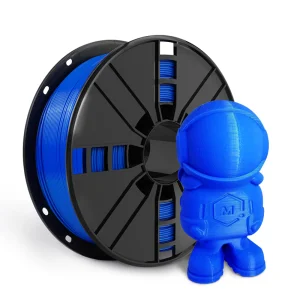
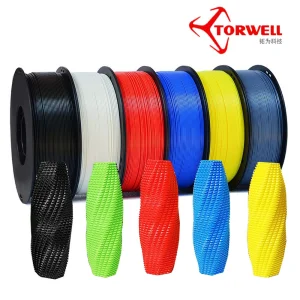
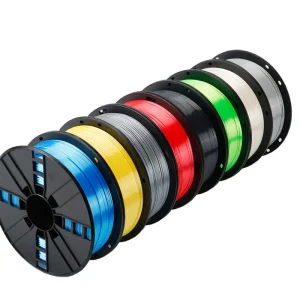
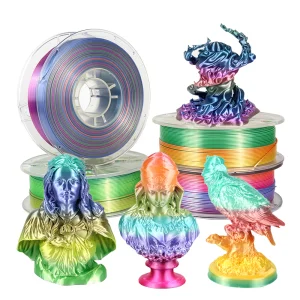
Explore our full line of functional engineering filaments, high-gloss silk PLA formulations, and chemical-resistant PETG products.
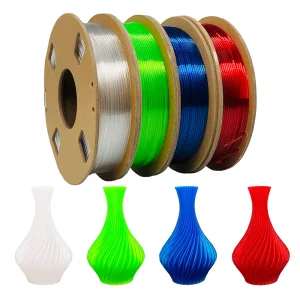
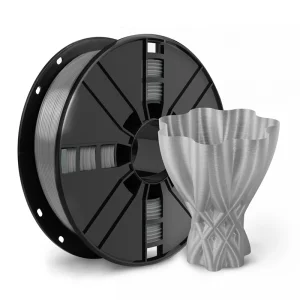
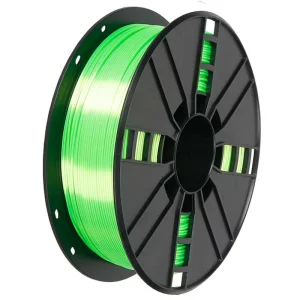
Partner directly with a leading 3D filament factory. Get tier-one volume pricing, technical data sheets (TDS), safety data sheets (SDS), and fast sample dispatch to Greater Boston.