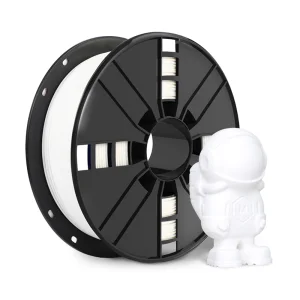
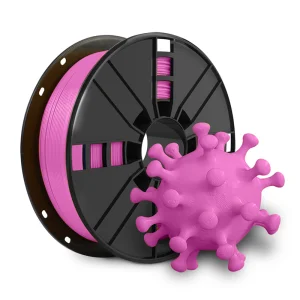
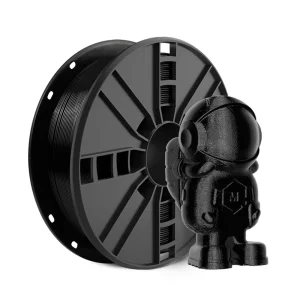
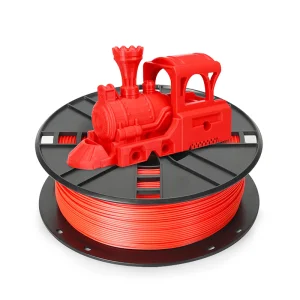
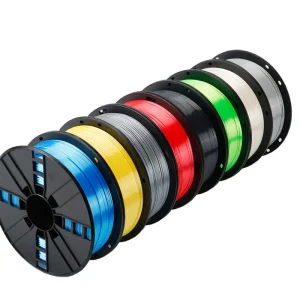
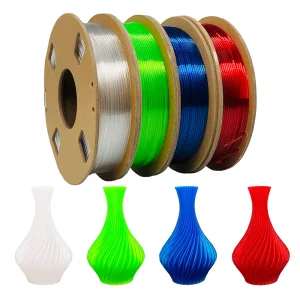
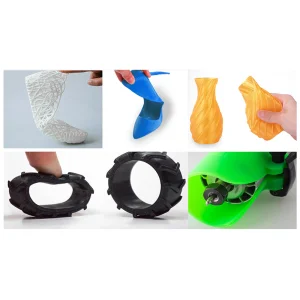
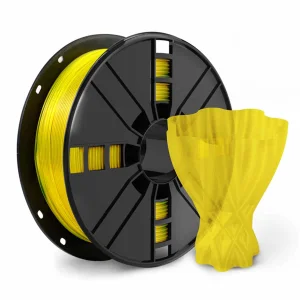
Explore our core OEM production line items engineered for high-speed printing, dimensional stability, and specialized visual applications.
Analyzing light transmittance metrics, layer boundary refraction, and material formulation strategies for optical-grade clear filaments.
The quest for glass-like transparency in FDM (Fused Deposition Modeling) 3D printing requires precise control over polymer chemistry and thermal history. Standard thermoplastic filaments scatter light due to microscopic internal voids, surface roughness, and semi-crystalline polymer domains. When light encounters the interface between printed layers, variations in refractive index ($n$) cause Fresnel reflection and scattering, turning optical clear resin into a milky white or translucent part.
Leading clear filament manufacturers solve this by utilizing fully amorphous polymer formulations—primarily modified Polyethylene Terephthalate Glycol (PETG), specialized Polycarbonate (PC), and Clear Thermoplastic Polyurethane (TPU). By preventing polymer chain crystallization during melt extrusion, these materials maintain a constant refractive index ($n \approx 1.57$ for PETG, $n \approx 1.586$ for PC), achieving light transmittance exceeding 90% to 92% in raw resin form.
In wholesale filament supply, providing high-purity clear resin is only half the equation. The physical extrusion process on FDM 3D printers introduces micro-air gaps between adjacent beads and layers. These cylindrical filament geometries create lens effects that diffuse light directionally.
Why leading global 3D printing brands and industrial distributors source clear materials from specialized Chinese production hubs.
China hosts the world's most integrated petrochemical cluster for optical-grade synthetic polymers. Access to virgin PETG modified resins (such as SK Chemicals Skygreen or Eastar PETG), optical polycarbonates, and bio-based ester PLA allows Chinese factories to maintain raw material purity, avoiding yellowing impurities or haze-inducing recycled content.
Top-tier Chinese suppliers utilize advanced extrusion lines equipped with high-speed, quad-axis inline laser micrometers. Operating at sampling frequencies over 500 Hz, these systems continuously measure diameter, ovality, and optical concentricity. Real-time feedback loops automatically adjust tractor pull speed and melt pump extrusion rates to guarantee a tight micro-tolerance of ±0.02mm.
Optical transparency is easily ruined by airborne particulate contamination. Modern factories operate ISO Class 8 cleanrooms for filament water-bath cooling and automatic neat-winding. Filament spools are dried in industrial dehumidifying hoppers down to <150 ppm before immediate vacuum sealing in aluminum moisture-barrier bags with high-capacity desiccant pouches.
Comprehensive physical, mechanical, and optical benchmark data across key clear filament polymer families.
| Polymer Type | Light Transmittance (%) | Tensile Strength (MPa) | Heat Deflection Temp (HDT @0.45MPa) | Chemical Resistance | Primary Industrial Use Case |
|---|---|---|---|---|---|
| Transparent PETG | 90% – 92% | 48 – 52 MPa | 70°C | Excellent (Acids/Alkalis) | Fluidic containers, clear enclosures, display prototypes |
| Clear Polycarbonate (PC) | 89% – 91% | 65 – 72 MPa | 120°C – 135°C | Moderate (High Impact) | High-temperature light pipes, protective shields, lenses |
| Clear PLA (Purified) | 88% – 90% | 55 – 60 MPa | 55°C | Low (Biodegradable) | Visual design models, architectural scale windows |
| Transparent Flexible TPU (95A) | 85% – 88% | 35 – 40 MPa (Elongation >450%) | 60°C | High (Oils & Grease) | Flexible clear gaskets, wearable electronics, suction cups |
| Clear PMMA/Acrylic Blend | 92% – 93% | 60 – 65 MPa | 85°C | Moderate (UV Stable) | Optical guides, light diffusion covers, luxury cosmetics packaging |
Strategic procurement criteria for brand owners, print farm operators, and regional distributors purchasing clear filament in bulk.
Global procurement teams require comprehensive regulatory documentation before onboarding wholesale suppliers. Industrial-grade transparent filaments must comply with global environmental and safety directives:
Customization goes far beyond simple box printing. Enterprise buyers benefit from fully tailored manufacturing services:
How specialized transparent filament formulations solve functional engineering challenges across diverse commercial sectors.
Automotive tier-1 suppliers utilize heat-resistant Transparent PC and PETG to rapidly prototype headlight light pipes, tail light lenses, and ambient cabin illumination guides. Post-processed clear parts allow engineers to test luminous flux distribution and internal LED beam angles prior to expensive injection mold tooling investment.
Biomedical researchers and surgical tool designers print biocompatible Transparent PETG microfluidic manifolds, anatomical bone surgical guides, and fluid flow monitoring blocks. The optical transparency allows clinical staff to visually inspect internal fluid lines for air bubbles, blockages, or contamination in real-time.
Transparent consumer electronics cases, clear wireless earbud charging boxes, and illuminated gaming peripherals rely on Clear TPU and Modified Transparent PLA. The materials provide scratch resistance, visual appeal for visible internal micro-circuitry, and structural drop-test protection.
Market forecasts, technological evolution, and chemical breakthroughs shaping the future of clear 3D printer filaments.
The rapid transition toward high-speed CoreXY 3D printers (Bambu Lab, Voron, Creality K1, Prusa MK4) requires clear filaments with accelerated thermal melt flow kinetics. Next-generation PETG formulations incorporate flow-enhancing core-shell modifiers that maintain optical clarity even under extreme volumetric extrusion speeds (>24 mm³/s).
Traditional clear plastics yellow when exposed to solar ultraviolet radiation due to photo-oxidative degradation of polymer chains. Future-ready clear ASA and UV-inhibited PETG lines incorporate Hindered Amine Light Stabilizers (HALS) that preserve crystal transparency during years of outdoor exposure.
Environmental regulations are driving demand for sustainable clear raw materials. Innovations in chemically recycled clear PETG (rPETG) and high-purity polylactic acid derivatives achieve bio-content rates exceeding 80% without sacrificing optical light transmission performance.
A rigorous, systematic engineering pipeline ensuring zero defects, uniform winding, and consistent melt clarity.
Pelletized polymer is pre-dried in desiccant twin-tower hoppers at 80°C for 6 hours until moisture falls below 0.02%.
Specialized screw geometry prevents shear-induced thermal degradation, preserving optical purity during melt processing.
Inline optical micrometers measure diameter continuously at 0.001mm resolution, automatically ejecting out-of-spec sections.
Tension-controlled winding machines stack rows uniformly, eliminating criss-cross knots and spool tangles.
Complete your sourcing catalog with our full range of specialty silk, flexible TPU, high-temp PETG, and multi-color PLA filaments.
Essential technical and procurement insights for OEM importers, distributors, and enterprise buyers.