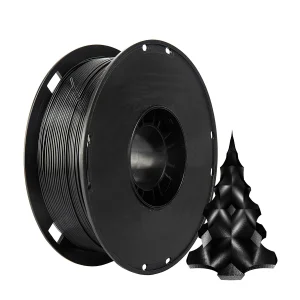
Directly source precision-extruded thermoplastics engineered for industrial prototyping, consumer goods manufacturing, and high-clarity optical applications.
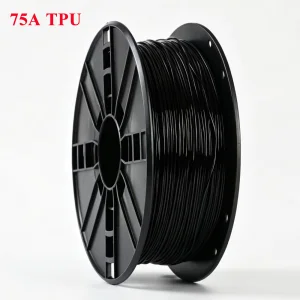
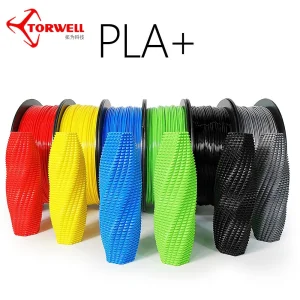
Transparent 3D printer filaments—specifically glycol-modified polyethylene terephthalate (PETG), optical-grade Polycarbonate (PC), modified Polylactic Acid (Clear PLA), and transparent Thermoplastic Polyurethane (TPU)—represent a fast-growing segment in additive manufacturing consumables. Unlike opaque filaments filled with titanium dioxide ($TiO_2$) or color masterbatches, transparent polymers require an exceptionally clean raw material matrix with zero thermal degradation during extrusion.
Achieving true optical clarity in Fused Filament Fabrication (FFF) or Fused Deposition Modeling (FDM) involves controlling light scattering. In raw filament form, clarity depends on amorphous polymer morphology. When printed, light scattering occurs primarily at voxel interfaces due to microscopic air gaps, surface roughness, and layer lines. Suppliers must maintain uniform polymer chain length and melt flow index (MFI) to help buyers achieve glass-like clarity post-processing.
For global procurement managers, OEM brand owners, and industrial print farm operators, sourcing wholesale transparent filament presents unique quality control demands. Minor inconsistencies in raw resin drying or extrudate cooling produce yellowing, micro-voids, or moisture bubbles that ruin optical clarity during high-speed printing.
Top-tier manufacturing facilities use closed-loop multi-axis laser measuring systems to ensure strict diameter tolerances ($\pm 0.02\text{mm}$). They also implement inline optical sensors to monitor internal voids and inclusions continuously. Strict raw resin desiccant drying before melt blending prevents polymer hydrolysis, keeping light transmission above 90% in raw filaments.
Modern engineering teams use clear PETG and high-clarity PC to build rapid functional prototypes for LED light pipes, automotive headlamp lenses, optical waveguides, and fluidic manifolds. Visualizing internal fluid flow or light diffusion directly within a 3D-printed part slashes R&D cycle times significantly compared to machining acrylic (PMMA).
Clear materials play a vital role in medical device development. Transparent TPU (Shore 85A to 95A) and medical-grade transparent PETG are widely used to print customized anatomical surgical models, clear dental alignment prototypes, peristaltic pump connectors, and fluid channels that demand real-time visual monitoring during operation.
With high-speed core-XY 3D printers operating at print speeds from 300 mm/s to 600 mm/s, transparent filaments must maintain thermal stability under high melt-flow rates. Advanced polymer formulations incorporate melt-strength enhancers and narrow molecular weight distributions to prevent haze formation during rapid extrusion.
In North America, demand focuses heavily on engineering-grade Polycarbonate (PC) and flame-retardant clear PETG. Aerospace research institutes and medical device incubators rely on transparent filaments to perform visual stress analysis under polarized light. Visualizing internal stress lines in photoelastic transparent FDM components lets engineers pinpoint failure locations before committing to expensive injection molding tools.
European buyers place strong emphasis on chemical compliance (REACH, RoHS) and circular economy principles. Transparent PETG and bio-based Clear PLA are extensively sourced by lighting designers in Germany, Italy, and Scandinavia to craft complex luminaire covers, customized diffusers, and luxury cosmetic packaging visual prototypes. Low optical haze and recyclable material footprints remain key selection criteria.
As the world's electronics manufacturing hub, the Asia-Pacific region utilizes transparent TPU and PETG for high-volume functional prototyping. Phone casing visual tests, waterproof seal validation, and wearable technology enclosures demand high structural clarity alongside mechanical flexibility. Wholesale buyers require reliable spool-to-spool color consistency and zero diameter drift across multi-ton factory orders.
Educational institutions and industrial energy sectors across LATAM and the Middle East employ transparent filaments for fluid flow visualization rigs, educational lab models, and custom pump impellers. Transparent parts allow real-time observation of cavitations, turbulence, and sediment movement inside pump casings without requiring expensive glass machining.
| Polymer Grade | Refractive Index ($n_D$) | Light Transmittance (%) | Tensile Strength (MPa) | Heat Deflection Temp (°C) | Post-Processing Clarity Method |
|---|---|---|---|---|---|
| Optical PETG Clear | 1.57 | 88% - 91% | 48 MPa | 70 °C | Heat Gun / Ethyl Acetate Vapor / Epoxy Coating |
| Polycarbonate (PC) Clear | 1.58 | 89% - 92% | 65 MPa | 115 °C - 130 °C | Dichloromethane Vapor Polishing / Wet Sanding |
| Transparent TPU (95A) | 1.51 | 82% - 86% | 35 MPa (Elongation 450%) | 60 °C | UV Resin Immersion Dip / Clear Polyurethane Spray |
| Crystal Clear PLA | 1.49 | 89% - 91% | 55 MPa | 55 °C | Ethyl Lactate / THF Vapor / Resin Polish |
Achieving crystal-clear printed parts starts during filament production. We use high-purity virgin resin, vacuum drying hoppers, dual-axis laser diameter monitoring ($\pm 0.02\text{mm}$), and dust-free cleanrooms to keep raw filaments free of micro-bubbles or dust inclusions.
To eliminate optical internal refraction, slice settings require 100% infill with aligned rectilinear paths, increased extrusion multiplier (102%–105%), zero fan cooling, elevated print temperatures (+10°C to +15°C above standard), and lower print speeds (20–30 mm/s) to merge extrusion paths seamlessly.
To transform a translucent 3D print into optical transparency, users employ progressive wet sanding (grit 400 up to 3000), solvent vapor smoothing, or dip-coating with low-viscosity UV-curable optical clear resin or clear acrylic spray coats to fill residual layer gaps.
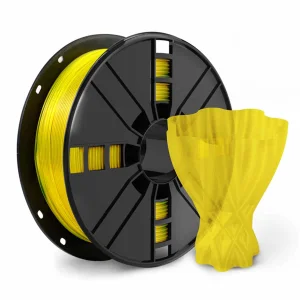
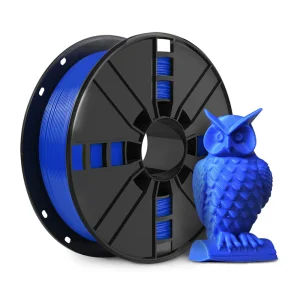
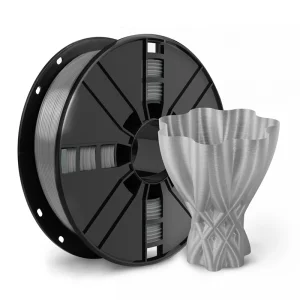
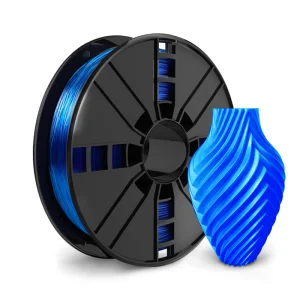
In addition to standard water-clear transparent filaments, our factory supplies custom transparent tints, including sapphire transparent blue, emerald transparent green, ruby transparent red, and smoked grey clear transparent formulations. Color matching uses precise spectrophotometer technology to maintain strict Delta-E values ($\Delta E < 0.5$) across bulk production runs.
Transparent polymers—especially PETG, TPU, and PC—are highly hygroscopic. Moisture exposure causes hydrolytic polymer chain degradation, bubble formation, and severe optical cloudiness during printing. Every spool undergoes vacuum drying before being sealed in high-barrier aluminum vacuum bags with fresh desiccant packs, protecting product quality during long sea shipments.
We provide full white-label and OEM production support. Choose from eco-friendly recycled cardboard spools, clear polycarbonate spools, or high-capacity industrial spools (1kg, 2.5kg, 5kg, up to 10kg spools for print farms). Custom master cartons, private labels, barcode compliance, and localized Technical Data Sheets (TDS/MSDS) are available on demand.
Every production lot undergoes rigorous laboratory verification. Our quality control protocol tests melt flow index (MFI), mechanical tensile strength, glass transition temperature ($T_g$), and real-world printability across top FFF 3D printer platforms. This ensures your customers receive dependable performance order after order.
When printing transparent filaments like PETG or clear PLA, light scattering occurs primarily at the boundaries between print layers and micro air gaps inside the infill. Standard slicing settings create curved perimeter surfaces and microscopic internal voids that reflect and refract light in random directions, creating a translucent white appearance.
Achieving optical transparency requires slicing parts with 100% solid infill, aligning infill lines in a single direction, increasing layer line height, elevating print temperatures slightly to promote complete melt fusion, and applying post-processing techniques like surface sanding, heat polishing, or clear resin coating.
Clear PETG: Offers an ideal balance of ease-of-print, chemical resistance, impact toughness, and low shrinkage. It is the most popular choice for general visual prototypes and fluidic models.
Transparent PC (Polycarbonate): Delivers maximum optical clarity, exceptional structural strength, and high heat deflection ($>115^\circ\text{C}$). However, it requires an enclosed print chamber and higher nozzle temperatures ($260^\circ\text{C}-290^\circ\text{C}$).
Crystal Clear PLA: The easiest to print with low thermal shrinkage, but offers lower heat resistance ($55^\circ\text{C}$) and lower chemical durability compared to PETG.
Transparent PETG, PC, and TPU absorb ambient moisture quickly. Moisture exposure leads to steam bubbling inside the nozzle, creating stringing, haze, micro-voids, and brittle layer bonds. We recommend pre-drying filament in a specialized filament dryer or convection oven:
Store spools in sealed dry boxes maintained below 15% relative humidity (RH) during printing.
For standard clear transparent stock (PETG, PLA, TPU in 1.75mm diameter), our factory minimum order quantity starts as low as 100 kg. For custom transparent color tints (pantone-matched translucent shades) or custom branded spool/box packaging, the standard OEM minimum order quantity is typically 500 kg per material grade. Bulk pricing scales efficiently for full container load (20GP/40HQ) orders.
Yes. Beyond standard 1kg spools, we supply industrial high-capacity spools including 2.5kg, 3kg, 5kg, and 10kg spools designed for continuous print farm operations. Custom spool dimension designs and continuous master spool systems are also available upon request.
All our transparent 3D printer filaments comply fully with international environmental and safety standards. Export documentation includes RoHS Test Reports, REACH SVHC Compliance Certificates, FDA Food Contact Material Compliance (for specified PETG grades), and complete Material Safety Data Sheets (MSDS) to streamline international customs clearance.
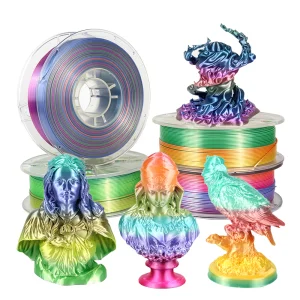
Browse our extended line of high-durability, specialty silk, flexible TPU, and engineering-grade polymers manufactured to global ISO standards.