Industrial Polymer Engineering White Paper

Wholesale TPU Flexible Manufacturers & Factory

An executive technical dossier on elastomeric thermoplastic polyurethane (TPU) extrusion science, global procurement dynamics, and OEM supply chain integration from China’s leading automated manufacturing hub.
Direct Factory Inventory

Featured Wholesale Polymer & Filament Portfolio

Precision-extruded technical materials optimized for high-speed FDM platforms, commercial prototyping, and large-scale industrial additive manufacturing.
China Silky Shiny PLA filament Yellow Color Manufacturer

China Silky Shiny PLA filament Yellow Color Manufacturer, Manufacturers

View Product Specs
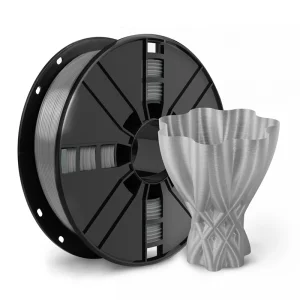
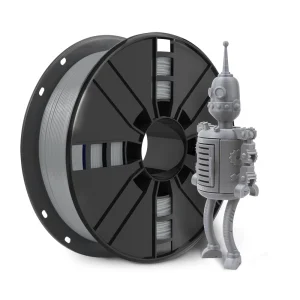
Wholesale PETG Filament Grey for 3D printing Supplier

Wholesale PETG Filament Grey for 3D printing Supplier, Suppliers

View Product Specs
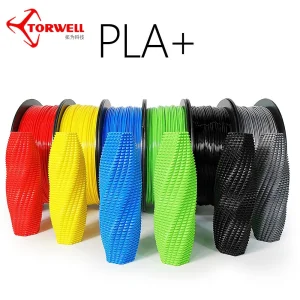
Wholesale Torwell PLA PLUS Pro PLA Filament

Wholesale Torwell PLA PLUS Pro (PLA+) Filament with high strength, 1.75mm 2.85mm 1kg spool Supplier, Factories

View Product Specs
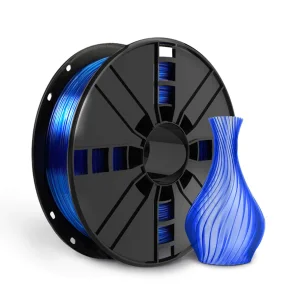
Wholesale PETG filament 1.75 Blue

Wholesale PETG filament 1.75 Blue for 3D printing Manufacturers, Factories

View Product Specs
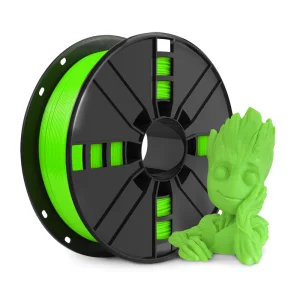
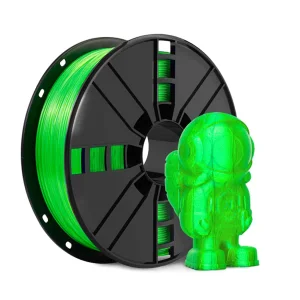
Wholesale Pla printer filament green color

Wholesale Pla printer filament green color Manufacturers, Suppliers

View Product Specs
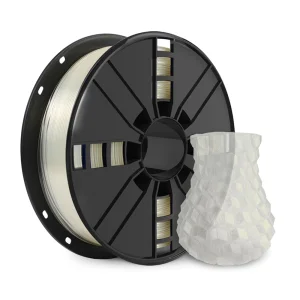
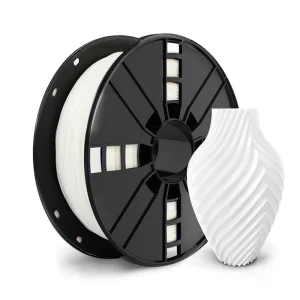
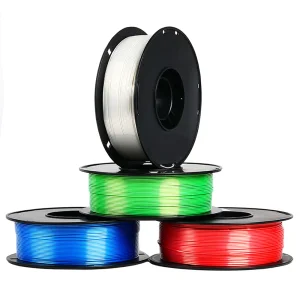
Wholesale 3D Print Transparent PLA Filament

Wholesale 3D Print Transparent PLA Filament Manufacturer, Supplier

View Product Specs
China PLA 3D Printer Filament 1.75mm 2.85mm

China PLA 3D Printer Filament 1.75mm/2.85mm 1kg per Spool Suppliers, Factories

View Product Specs
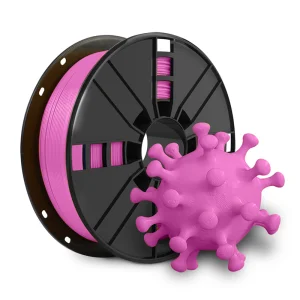
China 1.75mm 2.85mm Filament 3D PLA Pink color

China 1.75mm/2.85mm Filament 3D PLA Pink color Manufacturers, Factory

View Product Specs
Market Intelligence & Analysis

The Global Commercial & Industrial Landscape of Flexible TPU Filaments

Evaluating the paradigm shift from traditional elastomeric rubber molding to direct digital manufacturing via advanced Thermoplastic Polyurethane polymers.

In the contemporary additive manufacturing ecosystem, Thermoplastic Polyurethane (TPU) flexible filaments represent one of the fastest-growing material categories across automotive, aerospace, industrial automation, medical devices, and high-performance consumer goods. As enterprise manufacturing transitions from low-volume rapid prototyping toward fully integrated direct digital manufacturing (DDM), the reliance on specialized elastomeric filaments has reached unprecedented levels.

Unlike rigid polymers such as Polylactic Acid (PLA) or Acrylonitrile Butadiene Styrene (ABS), TPU bridges the engineering gap between structural plastics and vulcanized rubbers. Its intrinsic molecular structure—comprising alternating soft and hard chemical segments—endows TPU with exceptional elongation at break, high impact attenuation, superior chemical resistance against oils and greases, and remarkable abrasion resistance.

Automotive & Transportation

Extensive utilization for custom dust boots, protective wiring grommets, dynamic vibration dampers, structural door seals, and interior tactile touchpoints under rigorous temperature conditions.

Medical & Healthcare

Direct fabrication of patient-specific orthotic insoles, prosthetic liners, ergonomic surgical tool grips, and compliant external joint braces requiring skin-safe, biocompatible elastomer grades.

Robotics & Industrial Automation

Custom soft-robotic end-effectors, pneumatic suction cups, protective bumper guards for Autonomous Guided Vehicles (AGVs), and oil-resistant fluid conduits.

±0.02mm
Diameter Precision
60,000 kg
Monthly Factory Output
75+
Export Destinations
70A - 98A
Shore Hardness Range
Material Science & Formulation

Polymer Chemistry & Rheological Performance of TPU

Understanding the molecular architecture of Polyether vs. Polyester TPUs, thermal melt behavior, and viscoelastic parameters under extrusion stress.

1. Polyether TPU vs. Polyester TPU: Molecular Selection Matrix

Enterprise procurement managers must evaluate the underlying chemical base of flexible TPU filaments. Thermoplastic Polyurethanes are synthesized through the polyaddition reaction of diisocyanates with short-chain and long-chain diols. The selection between polyether-based and polyester-based TPU fundamentally dictates the finished part's environmental durability:

  • Polyether-Based TPU: Formulated primarily for applications requiring extreme hydrolytic stability, micro-fungal resistance, and low-temperature flexibility. Essential for medical tubing, aquatic equipment, and outdoor environmental sensors. Demonstrates superior resistance to water degradation at elevated temperatures.
  • Polyester-Based TPU: Engineered for maximum mechanical toughness, tensile strength, and exceptional resistance to petroleum-based oils, fuels, and chemical solvents. Exhibits higher cut and tear resistance, making it ideal for automotive under-the-hood components and heavy-duty industrial seals.

2. The Shore Hardness Spectrum & Printability Dynamics

Shore Hardness measures the resistance of a polymer to indentation. In 3D printing filaments, Shore Hardness dictates both structural flexibility and the mechanical complexity of feeding the strand through the extruder system without buckling.

Shore Grade Flexibility Profile Tensile Strength Elongation at Break Extruder Type Requirement Primary Industrial Use Case
70A - 75A Ultra-Soft / Gel-like 18 - 25 MPa > 650% Direct Drive (Zero-Gap Feed) Medical implants, soft tactile pads
80A - 85A High Flexibility 28 - 35 MPa 550% - 600% Direct Drive (Constrained Path) Wearables, footwear outsoles, gaskets
95A (Standard) Semi-Flexible / Tough 40 - 50 MPa 450% - 500% Direct Drive & Optimized Bowden Industrial seals, bushings, phone cases
98A / 64D Semi-Rigid / High Impact 55 - 65 MPa 350% - 400% Universal (Bowden Compatible) Automotive couplers, snap-fit joints
Manufacturing Infrastructure

China Factory Efficiency & OEM Supply Chain Dominance

How advanced extrusion automation, multi-axis optical closed-loop controls, and upstream chemical raw material integration establish unmatched price-to-performance benchmarks.

Closed-Loop Laser Extrusion

Automated dual-axis laser micrometers continually sample filament diameter at 1,000 Hz, automatically modulating haul-off speed to guarantee precise ±0.02mm tolerance and uniform roundness.

Dehumidification & Desiccant Sealing

Raw resin undergoes multi-stage desiccant rotor drying down to <200 ppm moisture before melt processing, followed by immediate inline vacuum sealing with high-capacity moisture absorbers.

Tangle-Free Auto-Spooling

Precision servo-controlled winding mechanisms eliminate strand crossing and tension spikes, ensuring flawless feeding on high-speed multi-material systems (AMS/MMU).

China's centralized manufacturing ecosystem allows factory facilities to leverage direct pipeline integration with tier-one global chemical producers (including Wanhua, BASF, and Covestro). This synergy eliminates intermediary distributor markups, drastically reduces raw material transit lead times, and enforces rigorous lot-to-lot batch consistency. Global OEM clients benefit from fully customizable packaging options, customized Pantone color matching, private-label spool branding, and direct container shipping logistics.

Technical Best Practices

Extrusion Hardware Setup & Process Optimization

Critical engineering guidelines for setting up direct-drive and Bowden extruders, managing hygroscopic moisture, and preventing thermal stringing.

1. Filament Feed Path Constraints

Because flexible TPU filament exhibits low buckling resistance under compression, the mechanical distance between the drive gear pinch point and the thermal break heat-break entrance must be kept as short as possible. Direct-drive extruders equipped with dual-drive hardened steel gears and a fully enclosed PTFE filament path represent the gold standard for soft elastomeric extrusion (<90A Shore).

2. Thermal Profile & Volumetric Flow Rate Limits

Extruding TPU requires precise thermal equilibrium. Operating at excessively high temperatures increases melt fluidity but induces severe oozing, stringing, and thermal degradation. Conversely, extruding at insufficient temperatures severely compromises inter-layer adhesion strength:

  • Hotend Temperature Range: 215°C – 235°C (Optimized for standard Shore 95A).
  • Heated Bed Temperature: 45°C – 60°C with PEI, textured glass, or painter's tape substrate.
  • Maximum Volumetric Speed: 3.5 – 6.5 mm³/s for Shore 95A; 1.5 – 3.0 mm³/s for softer grades (75A-85A).
  • Retraction Configuration: Direct Drive: 0.8 - 1.5mm at 25 mm/s; Bowden: 2.0 - 4.0mm at 20 mm/s (Retraction should be minimized to avoid filament wrapping around drive gears).

3. Hygroscopic Management & Active Drying Protocols

TPU is inherently hygroscopic, rapidly absorbing atmospheric moisture due to the polar urethane groups in its polymer chains. Wet TPU filament results in popping noises at the nozzle, severe micro-porosity in printed walls, reduced tensile strength, and heavy surface stringing. Filaments must be dried in forced-air blast dryers at 65°C – 70°C for 4 to 6 hours prior to printing and fed directly from low-humidity dry boxes (<15% RH).

Strategic Sourcing

Enterprise Procurement & OEM Customization Framework

How global brands, regional distributors, and high-volume print farms optimize Total Cost of Ownership (TCO) through direct manufacturer partnerships.

Private Label & Custom Packaging

Full turn-key private label services including custom artwork printing on spools, specialized outer carton designs, custom QR code batch tracking, and eco-friendly recyclable cardboard spools engineered for modern automatic material management systems.

TCO & Container Supply Dynamics

Direct factory sourcing eliminates distributor margins, yielding 30% to 50% cost reductions per kilogram. Tiered volume discounts, full container load (FCL) shipping logistics, and buffered safety stock management guarantee uninterrupted manufacturing supply lines.

Horizon Scanning

Future Trends in Flexible Additive Manufacturing

Emerging material innovations driving the next generation of industrial elastomeric applications.

High-Speed Extrusion TPU

Engineered melt-flow index (MFI) modifications enable high-speed printing (up to 250+ mm/s) on modern CoreXY platforms without inducing melt fracture or layer delamination.

ESD & Conductive Formulations

Carbon-nanotube filled flexible polymers providing tailored surface resistivity (10^6 to 10^9 ohms/sq) for safe handling of sensitive semiconductor components and explosive environments.

Bio-Based & Flame Retardant TPU

Sustainable monomer synthesis replacing up to 40% of fossil feedstocks with bio-derived polyols, alongside non-halogenated UL94-V0 rated flame-retardant elastomeric grades for aerospace cabins.

Complete Product Range

Industrial & Specialty 3D Printer Materials

Explore our full line of wholesale TPU, PETG, PLA, and high-performance composite filaments ready for factory-direct dispatch.
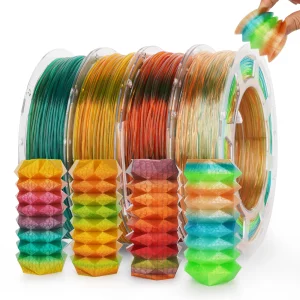
China TPU Rainbow Filament 1.75mm 1kg 95A Supplier

China TPU Rainbow Filament 1.75mm 1kg 95A Supplier, Factories

View Product Specs
China Green 3D filament PETG for FDM 3D printers

China Green 3D filament PETG for FDM 3D printers Manufacturers, Factories

View Product Specs
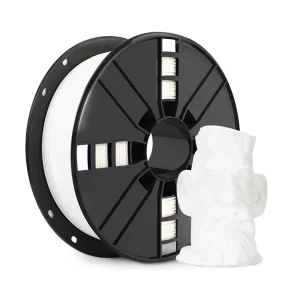
China TPU filament 1.75mm White

China TPU filament 1.75mm for 3D printing White Manufacturers, Supplier

View Product Specs
China PLA Filament Grey color 1kg spool

China PLA Filament Grey color 1kg spool Manufacturers, Factories

View Product Specs
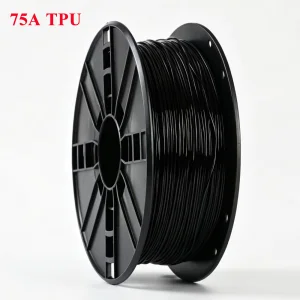
China 75A TPU filament flexible 3D filament

China 75A TPU filament flexible 3D filament 1.75mm 1kg spool Manufacturer, Suppliers

View Product Specs
Wholesale Silk PLA 3D Filament With Shining Surface

Wholesale Silk PLA 3D Filament With Shining Surface, 1.75mm 1KG/Spool Manufacturer, Supplier

View Product Specs
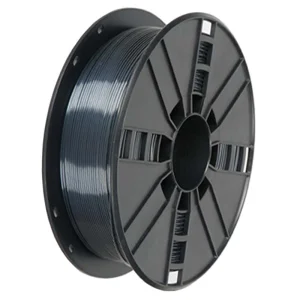
Wholesale Silk Black PLA Filament 1.75mm

Wholesale Silk Black PLA Filament 1.75mm 3D Printing Filament Manufacturers, Factories

View Product Specs
Wholesale PLA+ filament for 3D printing

Wholesale PLA+ filament for 3D printing Supplier, Factories

View Product Specs
Direct Sourcing Insights

Frequently Asked Technical & Procurement Questions

In-depth answers addressing factory MOQs, custom formulations, diameter monitoring, compliance documentation, and international shipping.

What Minimum Order Quantity (MOQ) applies to wholesale TPU filament and OEM custom branding?
For standard stock colors and formulas (such as Shore 95A in Black, White, or Transparent), our standard factory wholesale MOQ starts as low as 50 kilograms per SKU. For custom OEM projects involving custom Pantone color matching, personalized box design, customized label barcodes, and specialized cardboard spools, the baseline MOQ is typically 500 kilograms per production run.
How does your factory ensure inline diameter accuracy of ±0.02mm across large TPU production runs?
Our automated extrusion lines utilize dual-axis high-speed optical laser gauges position-calibrated continuously down the melt stream. The laser sensor feeds real-time dimensional data into a closed-loop PLC controller that automatically modulates tractor puller speed. Any section exceeding ±0.02mm or exhibiting ovality out of specification is automatically flagged and segregated during winding.
Can you manufacture softer flexible TPU grades such as Shore 70A or 75A for medical and footwear applications?
Yes, our R&D engineering lab specializes in synthesizing ultra-soft elastomeric filaments down to Shore 70A and 75A. Because these grades exhibit high elasticity, we utilize customized cooling baths and low-tension servo spoolers during extrusion to prevent physical elongation during winding.
What chemical compliance certifications accompany export shipments of your TPU filaments?
All manufactured TPU flexible filaments comply fully with international environmental regulations including EU REACH (Registration, Evaluation, Authorization and Restriction of Chemicals) and RoHS 3.0 (Restriction of Hazardous Substances). Technical Data Sheets (TDS), Safety Data Sheets (SDS), and FDA food-contact compliance declarations are provided upon request.
How is hygroscopic moisture degradation mitigated during long-distance maritime freight?
Prior to spooling, raw resin undergoes deep dehumidification rotor drying to under 200 ppm moisture content. Immediately following tension-controlled spooling, each spool is sealed in a heavy-gauge, multi-layer aluminum-poly vacuum pouch packed with fresh active silica desiccant. Outer master cartons are reinforced to withstand tropical humidity during ocean transit.
Do you offer customized mechanical formulations such as UV-stabilized or Flame-Retardant TPU?
Yes. We provide custom compounding solutions including UV-inhibited TPU for outdoor agricultural sensors, flame-retardant additives compliant with UL94-V0 standards for aerospace and automotive interiors, and electrostatic discharge (ESD) formulations for electronics manufacturing lines.
What spool sizes and structural options are available for industrial print farms?
We offer standard retail 1.0 kg spools, medium 3.0 kg industrial spools, and large-format 5.0 kg to 10.0 kg master spools designed for continuous high-yield production runs. Spool materials include high-impact polystyrene (HIPS), transparent polycarbonate, and fully recyclable heavy-duty pressed cardboard.
What printing speed recommendations should distributors provide to end-users purchasing Shore 95A TPU?
For standard Shore 95A TPU on direct-drive extruders, recommended print speeds range between 30 mm/s and 60 mm/s. On high-flow modern CoreXY platforms equipped with our newly formulated High-Speed TPU grade, speeds up to 150 - 200 mm/s can be reliably achieved while retaining full interlayer bond strength.
How does your OEM service manage custom Pantone or RAL color matching?
Clients supply a designated Pantone / RAL code or physically send a master material sample. Our color-matching laboratory formulates a custom carrier masterbatch, produces a trial test extrusion strand, and measures color delta ($\Delta E$) using a spectrophotometer to guarantee exact visual consistency before entering mass production.
What lead times can global importers anticipate for full container load (FCL) orders?
Standard manufacturing lead time for standard wholesale container orders (such as a 20ft or 40ft FCL) is typically 15 to 20 business days from deposit confirmation. Express sample orders and trial batch dispatches can be fulfilled within 3 to 5 working days.