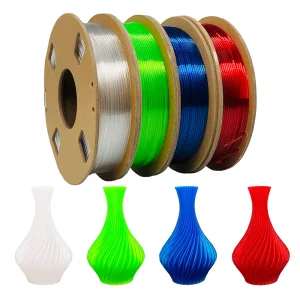
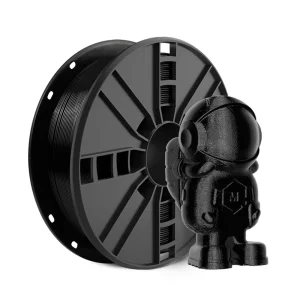
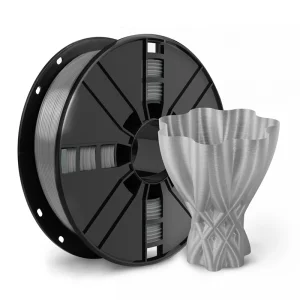
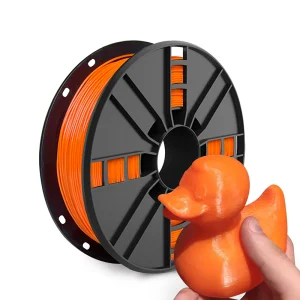
Premium 1.75mm grade formulations designed for high-speed print farm deployment, retail distribution, and global brand private labeling.
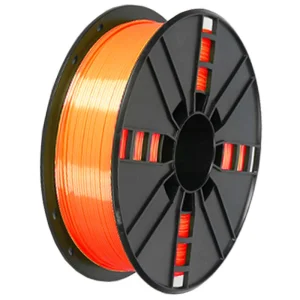
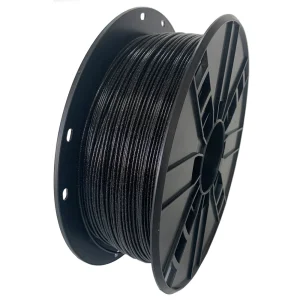
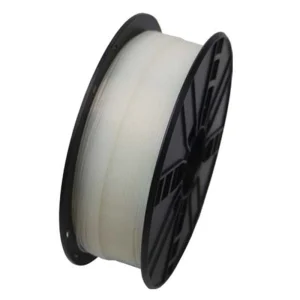
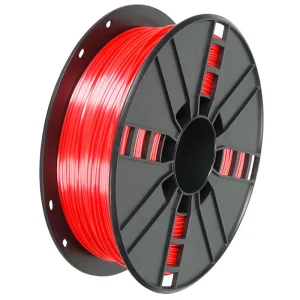
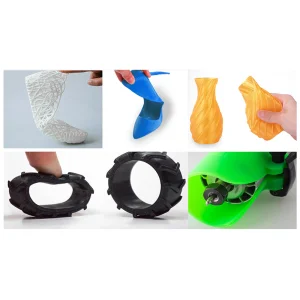
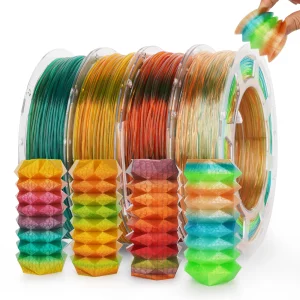
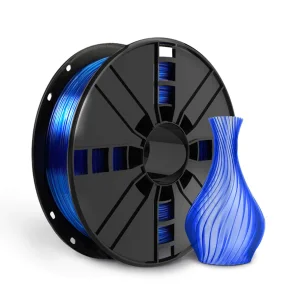
A comprehensive analysis of flexible elastomer polymer science, manufacturing tolerances, and supply chain scalability for global procurement directors.
Thermoplastic Polyurethane (TPU) has established itself as the indispensable elastomeric copolymer in additive manufacturing. Bridging the performance gap between rigid engineering thermoplastics (such as ABS, PETG, and Polycarbonate) and conventional vulcanized rubbers, 1.75mm TPU filament provides an exceptional combination of tensile strength, high elongation at break, superior impact damping, and outstanding resistance to chemical hydrocarbons, oils, and physical abrasion. As industrial FDM/FFF (Fused Deposition Modeling / Fused Filament Fabrication) technology moves rapidly toward high-speed printing environments exceeding 300 mm/s, the demand for precision-extruded, dimensionally stable TPU raw materials has seen exponential growth globally.
Understanding the molecular foundation: Polyether-based TPU exhibits exceptional hydrolytic stability and low-temperature flexibility, whereas Polyester-based TPU provides superior mechanical tensile strength and oil/solvent resistance for heavy automotive components.
Modern high-speed printers (Bambu Lab, Voron, Creality K1 series) require optimized melt-flow indexes (MFI). Advanced TPU formulations ensure low melt viscosity under high shear rates without sacrificing layer-to-layer crosslinking density.
From soft Shore 85A for flexible medical orthotics to rigid Shore 95A/98A for industrial seals and protective housings, precise durometer calibration prevents buckling in direct-drive extruders during automated mass production.
Historically, processing flexible filaments posed massive friction and feeding challenges. Standard Bowden PTFE tube setups suffered from filament binding, coiling, and jamming within the drive gear housing. However, the modern standard of dual-drive direct extruders combined with Torwell’s proprietary low-friction surface treatment on 1.75mm TPU strands has revolutionized operational reliability. Factory printing speeds for TPU have increased from a conservative 20–30 mm/s up to 150–250 mm/s when utilizing Shore 95A and 98A formulations.
Factory Insight: Torwell Technologies operates a standardized 2,500 m² clean manufacturing facility housing 6 high-precision automated extrusion lines. By combining in-line dual-axis laser optical micrometers with real-time closed-loop melt pump control, we guarantee a strict outer diameter tolerance of ±0.02 mm across all 1.75mm TPU production runs.
The global market for flexible 3D printing materials is projected to expand at a CAGR of over 18.4% through 2030. Key drivers include:
Addressing the core risk vectors faced by OEM brands, large-scale distributors, and automated print farm operators.
For B2B buyers and global brand managers, procuring wholesale TPU filament requires rigorous evaluation beyond initial price-per-kilogram metrics. Microscopic inconsistencies in diameter, unrecorded moisture absorption, or raw resin degradation lead to severe machine downtime, nozzle clogging, micro-voids, and inter-layer delamination in end-use parts. Torwell Technologies mitigates these procurement risks through five integrated manufacturing safeguards:
| Quality Checkpoint | Technical Challenge | Torwell Factory Control Standard | Impact on Enterprise Print Quality |
|---|---|---|---|
| Raw Polymer Dehumidification | TPU is inherently hygroscopic; ambient moisture causes steam bubbles & severe stringing. | Multi-stage desiccant rotor drying below 200 ppm moisture content prior to melt extrusion. | Bubble-free prints, maximum inter-layer bond strength, zero nozzle popping. |
| Dual-Axis Laser Gauge | Ovality and diameter drift cause inconsistent volumetric flow & hot-end jams. | Continuous in-line laser inspection tracking X/Y axes with automated optical feedback control. | Guaranteed ±0.02 mm tolerance; smooth extrusion flow rate across 1000m continuous spools. |
| Tension-Controlled Spooling | Loose or overlapping winding causes print stops in multi-day automated jobs. | Servo-driven precise layer-by-layer spooling with computerized tension monitoring. | 100% tangle-free unwinding; fully compatible with automated material systems (AMS). |
| Melt Rheology Calibration | Batch-to-batch viscosity variance disrupts standard print profile settings. | Continuous Melt Flow Index (MFI) laboratory testing per virgin resin batch lot. | Plug-and-play consistency; OEM customers maintain uniform slicer settings worldwide. |
| Hermetic Barrier Packaging | Moisture re-absorption during long maritime container transit and customs storage. | Heavy-duty aluminum/poly vacuum sealing with high-capacity silica gel desiccant packs. | Guaranteed 24-month shelf life under standard warehouse conditions. |
Torwell Technology empowers global distributors and Amazon top-sellers by delivering end-to-end OEM turn-key manufacturing. Our private label capabilities include:
How global manufacturers leverage Torwell 1.75mm TPU across automotive, medical, industrial automation, and consumer domains.
Engineers utilize high-temperature, oil-resistant TPU 95A to print functional air intake ducts, cable grommets, vibration-isolation bushings, and soft-touch interior door handle prototypes. TPU withstands mechanical fatigue under prolonged cyclical loads.
Custom robotic end-effectors, soft vacuum suction cups, and flexible protective conduit bellows printed with TPU Shore 85A/90A absorb mechanical impacts, prevent damage to delicate assembly lines, and reduce factory floor noise emissions.
Dermatologically compliant TPU grades enable customized orthotic shoe insoles, prosthetic socket liners, and protective facial mask seals. Biocompatible TPU offers breathability, anti-microbial surface modification, and continuous flex performance.
From shockproof action camera housings and high-traction bicycle grips to custom lattice shoe midsoles, wholesale TPU 1.75mm filament delivers high resilience (rebound resilience > 65%) to absorb impact force efficiently.
Torwell R&D Initiatives: Pushing the boundaries of functional elastomeric additive manufacturing.
As additive manufacturing scales toward high-volume end-part production, standard off-the-shelf TPU formulations are giving way to specialized engineering alloys. Torwell Technologies’ dedicated material polymer laboratory is driving four core innovation vectors:
By engineering specialized molecular weight distributions and integrating internal polymer lubricity agents, our next-generation 1.75mm TPU reduces backpressure inside high-flow hotends (such as Volcano and ceramic heating cores). This allows print speeds of up to 350 mm/s while maintaining 98% of static tensile strength and eliminating oozing during travel movements.
Targeted at aerospace, railway, and automotive electronics applications, Torwell’s halogen-free flame retardant TPU self-extinguishes within 10 seconds of flame removal, preventing dripping and conforming strictly to UL94 V-0 safety standard requirements.
For applications requiring semi-flexible behavior combined with high structural stiffness, micro-carbon fiber filled TPU offers a unique balance: increased tensile modulus, matte surface finish, zero thermal shrinkage warping, and static dissipative (ESD) electrostatic safety properties.
Supporting corporate ESG sustainability initiatives, Torwell is introducing bio-TPU lines derived up to 45% from renewable plant-based polyols (castor oil monomer derivatives), reducing carbon footprint by 38% compared to 100% fossil-fuel based polyurethane resins.
Ensuring frictionless international trade, customs clearance, and safety certifications across North America, Europe, and Asia-Pacific.
Exporting 3D printing consumables to over 75 countries requires comprehensive chemical compliance and batch traceability documentation. Torwell Technologies ensures full chemical and environmental regulatory alignment for all wholesale TPU filament exports:
Fully compliant with EU Directive 2011/65/EU (RoHS 2.0) and Regulation (EC) No 1907/2006 (REACH). Guaranteed free of heavy metals (Lead, Cadmium, Mercury), PBBs, PBDEs, and Substances of Very High Concern (SVHC).
Every batch produced in our factory operates under strict ISO 9001:2015 Quality Management Systems. Comprehensive raw lot batch numbers are laser-printed on every spool label for end-to-end traceability.
We provide full documentation for B2B customs clearance, industrial safety compliance, and enterprise deployment: Technical Data Sheets (TDS), Safety Data Sheets (SDS via GHS standards), and Certificate of Analysis (COA).
Expert answers regarding filament processing, factory production lead times, and OEM customization protocols.
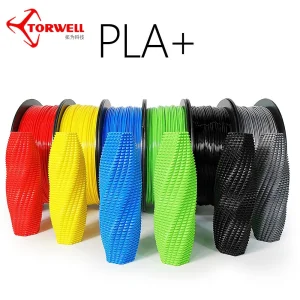
Explore our broader multi-material portfolio including modified PLA+, engineering PETG, ABS, and specialty high-gloss formulations.