Direct OEM factory supply with verified batch-to-batch durometer tolerances, optical clarity, and precision extrusion control.
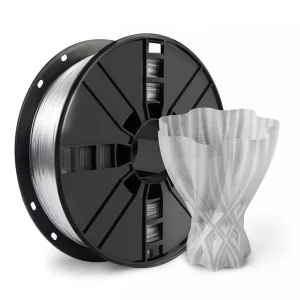
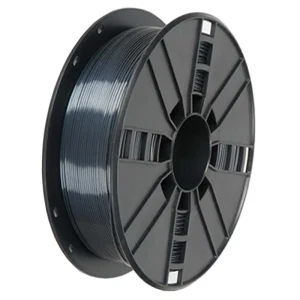
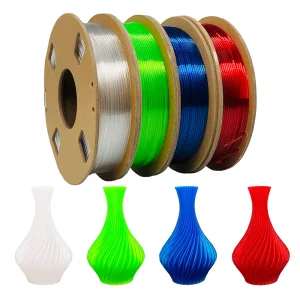
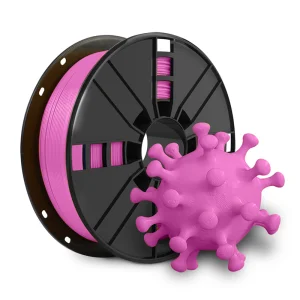
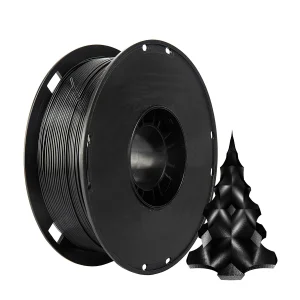
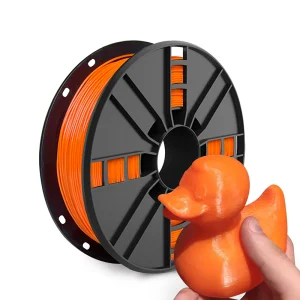
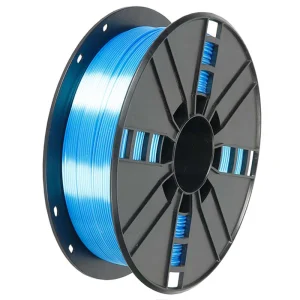
Understanding the micro-phase separation between hard and soft segments that gives Shore 75A Thermoplastic Polyurethane its unmatched elastic memory and mechanical toughness.
Thermoplastic Polyurethane (TPU) rated at Shore 75A represents an engineering apex within the realm of flexible block copolymers. Positioned at the softest spectrum of processable industrial elastomeric resins, TPU 75A bridges the gap between conventional vulcanized rubber, liquid silicone rubber (LSR), and standard semi-rigid engineering thermoplastics. For B2B procurement managers, material engineers, and industrial manufacturers, sourcing TPU 75A requires a deep technical comprehension of its chemical architecture, thermal characteristics, and melt rheology.
At the macromolecular level, TPU 75A consists of alternating linear polymer chains comprising hard segments (diisocyanates such as 4,4'-diphenylmethane diisocyanate / MDI combined with short-chain diol extenders like 1,4-butanediol) and soft segments (long-chain polyols). The ratio and chemistry of these polyols dictate the material's specific environmental and mechanical resilience:
Formulated with Polytetramethylene Ether Glycol (PTMEG). Features outstanding hydrolytic stability, superior low-temperature flexibility ($T_g$ down to -45°C), and exceptional resistance to microbial oxidation. Ideal for medical tubing, submerged marine seals, and outdoor pneumatic lines exposed to moisture.
Synthesized via polyester polyols. Delivers maximum mechanical tensile strength, elevated tear resistance (ISO 34-1), and superior resistance to petroleum oils, aliphatic hydrocarbons, and greases. Highly preferred for automotive suspension bushings, industrial scraper blades, and shoe soles.
Achieving a stable 75A durometer without plasticizer migration requires highly controlled polymerization stoichiometry. Unlike lower-grade soft elastomers that utilize volatile phthalates to achieve soft feel, primary-grade industrial TPU 75A achieves its softness natively through tailored soft-segment volume fraction (up to 75-80% soft polyol content). This eliminates outgassing, brittleness over time, and surface tackiness.
| Polymer Property | TPU 75A (Ultra-Soft) | TPU 85A (Standard Soft) | TPU 95A (Medium Rigid) | TPU 60D (Hard Engineering) |
|---|---|---|---|---|
| Hardness (Shore Scale) | 75A ± 2 | 85A ± 2 | 95A ± 2 | 60D ± 2 |
| Tensile Strength (ISO 527, MPa) | 25 - 35 | 35 - 45 | 45 - 55 | 55 - 65 |
| Ultimate Elongation (ISO 527, %) | 650 - 800% | 550 - 650% | 450 - 550% | 300 - 400% |
| Tear Strength (ISO 34-1, kN/m) | 55 - 70 | 80 - 100 | 120 - 140 | 180 - 210 |
| DIN 53516 Abrasion Loss (mm³) | < 30 | < 35 | < 40 | < 50 |
| Compression Set (23°C, 24h, %) | 20 - 25% | 25 - 30% | 30 - 35% | 40 - 45% |
Shift in global manufacturing paradigms toward recyclable thermoplastic elastomers, light-weighting in Automotive EVs, and bio-compatible medical wearables.
The global shift toward Electric Vehicles (EVs) demands extreme Noise, Vibration, and Harshness (NVH) mitigation without adding heavy rubber components. TPU 75A is rapidly replacing synthetic EPDM rubber in cable grommets, soft-touch interior trim elements, and acoustic dampening gaskets due to its 100% recyclability and lighter specific gravity (1.14 - 1.18 g/cm³).
With ISO 10993 and USP Class VI compliant polyether TPU 75A grades, medical device OEMs are manufacturing ultra-flexible skin-contact sensors, catheter tubing, and respiratory masks. The material withstands repeated gamma radiation, ethylene oxide (EtO), and isopropyl alcohol sterilization protocols without polymer chain degradation.
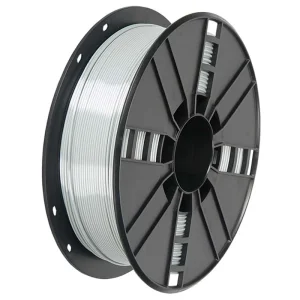
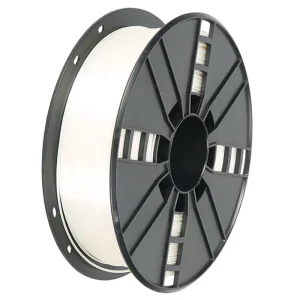
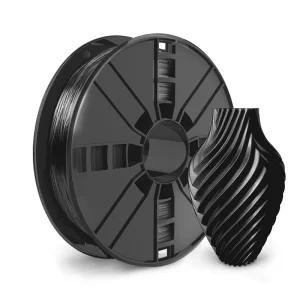
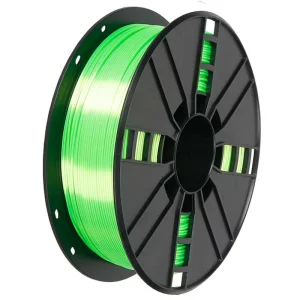
The rapid evolution of high-speed FDM/FFF and Selective Laser Sintering (SLS) 3D printers has created high demand for direct-drive extrudable 75A TPU filament and TPU 75A powders. OEM manufacturers use TPU 75A to print customized energy-returning shoe midsoles, ergonomic grips, and complex fluidic channels that are impossible to injection-mold.
A technical verification roadmap for global procurement directors sourcing TPU 75A raw pellets, extruded profiles, and 3D printing filaments.
Sourcing wholesale TPU 75A from global chemical plants and compound manufacturers requires stringent audit checklists. Because TPU 75A is exceedingly soft, minor variations in moisture content, melt flow index (MFI), or monomer ratios can result in catastrophic production failures—such as screw slippage during injection molding, diameter swelling during pipe extrusion, or drive-gear buckling during 3D printing.
TPU is inherently hygroscopic. Moisture levels exceeding 0.02% (200 ppm) cause rapid hydrolytic degradation at processing temperatures above 190°C. Suppliers must provide moisture-proof aluminum foil vacuum packaging with desiccant charges, accompanied by Karl Fischer titration certificates for every batch.
MFI values (typically measured at 190°C / 8.7 kg or 210°C / 2.16 kg according to ISO 1133) must remain strictly within a ±1.5 g/10 min window across lots. Uncontrolled MFI fluctuations cause flashing in injection molds or uneven wall thickness in extruded tubes.
For clear or translucent TPU 75A applications (optical seals, medical tubing), un-plasticized gel particles or black carbon specs cause mechanical stress concentration points. Quality suppliers utilize inline optical gel counters to guarantee < 5 gel particles per 100 kg of resin pellets.
Global buyers must demand verifiable documentation certifying compliance with REACH SVHC (EU Regulation EC 1907/2006), RoHS 3 (Directive EU 2015/863), FDA 21 CFR 177.2600 (rubber articles for food contact), and UL 94 V-0 / HB flame retardancy ratings.
How Chinese TPU polymerization hubs integrate vertical raw material sourcing, automated continuous extrusion, and closed-loop quality control to provide unbeatable unit economics.
China has evolved into the world's primary manufacturing ecosystem for specialty engineering elastomers. Chinese TPU 75A manufacturers leverage an integrated industrial network—combining domestic upstream petrochemical feedstocks (such as MDI from Wanhua Chemical) with cutting-edge Industry 4.0 automation.
Advanced co-rotating twin-screw compounders equipped with gravimetric loss-in-weight feeders ensure ultra-precise liquid polyol and diisocyanate dosing. Underwater pelletizing systems yield spherical, highly uniform 2.5mm TPU pellets that flow smoothly in automated hopper systems.
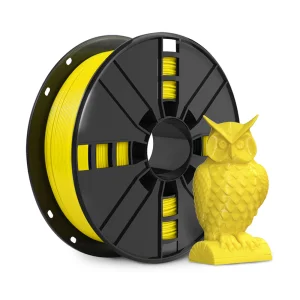
For TPU 75A 3D printer filament production, dual-axis dual-head laser micrometers continually measure filament diameter at 1000 Hz. Automated haul-off speed adjustments maintain standard 1.75mm diameter tolerances within ±0.02 mm, eliminating ovality and feed jamming.
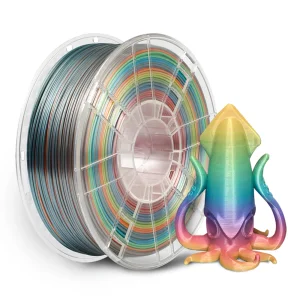
Chinese factories excel in bespoke compounding—offering customer-specific Pantone color matching, UV-stabilizer additive masterbatches, anti-static functional fillers, and custom spooling options ranging from 0.5kg mini spools to 10kg industrial print-farm reels.
Optimal thermal windows, drying curves, and real-world deployment parameters for converting raw TPU 75A into high-performance components.
Due to its high elasticity and soft melt strength, processing TPU 75A requires meticulous temperature profiling to prevent thermal degradation and screw bridging:
| Process Parameter | Injection Molding Range | Profile Extrusion Range | 3D Filament Printing (FFF) |
|---|---|---|---|
| Pre-Drying Temp & Time | 80°C - 90°C for 3 - 4 hours | 90°C - 100°C for 4 hours | 75°C - 85°C for 5 hours |
| Feed Zone Temp | 170°C - 180°C | 165°C - 175°C | 190°C - 205°C (Nozzle) |
| Compression Zone Temp | 180°C - 195°C | 175°C - 185°C | N/A |
| Metering / Nozzle Temp | 190°C - 205°C | 185°C - 195°C | 210°C - 225°C |
| Mold / Bed Temperature | 15°C - 35°C (Chilled) | 20°C - 30°C (Water Bath) | 30°C - 60°C (Heated Bed) |
| Screw L/D & Compression Ratio | 18:1 to 22:1 (2.0:1) | 24:1 to 30:1 (2.5:1) | Direct Drive (Short Path) |
Challenge: Standard NBR rubber gaskets swelled when exposed to bio-diesel, causing leakage in marine outboard engines.
Solution: Custom polyester-based TPU 75A gaskets were die-cut from extruded sheet stock. Chemical resistance testing showed zero volume swelling after 1,000 hours of immersion, extending gasket service life 4x.
Challenge: Hard plastic bumpers on autonomous cleaning robots damaged home furniture legs during high-speed collisions.
Solution: Co-injection overmolding of flame-retardant polyether TPU 75A over ABS housings provided a soft-touch damping buffer with high abrasion resistance, passing 500,000 continuous impact tests.
Challenge: Traditional EVA insoles lost their cushioning memory after 3 months of daily wear.
Solution: Additively manufacturing variable-density lattice insoles using TPU 75A filament delivered 92% energy return and maintained structural rebounding performance after 2 million fatigue cycles.
Direct answers from material engineers and supply chain specialists on procuring and processing wholesale TPU 75A.
Shore 75A is drastically softer and more flexible than Shore 95A. Shore 75A offers an elongation at break exceeding 700% with minimal force required to flex, resembling soft rubber band elastic properties. Shore 95A feels more like hard shoe-sole rubber. In terms of processing, Shore 75A requires lower melt temperatures, precise moisture control, and specialized direct-drive feeding mechanics due to its flexibility.
Printing 75A TPU filament successfully requires a 100% constrained, direct-drive extruder path. The gap between the drive gears and the melt zone throat must be under 0.5mm to prevent the soft filament from wrapping around the gear. Bowden tube setups should be avoided. Additionally, slow printing speeds (15 - 30 mm/s), zero retraction, and disabling fast travel speeds prevent pressure buildup in the nozzle.
Choose Polyether TPU 75A if your end product will be exposed to high humidity, continuous water immersion, fungal environments, or extreme cold (-20°C to -45°C). Polyether bonds do not undergo hydrolytic degradation. Conversely, choose Polyester TPU 75A if your product requires maximum tear resistance, abrasion protection against rough surfaces, or contact with industrial oils and lubricants.
For standard natural/transparent or black TPU 75A polymer pellets, factory MOQs typically start at 1,000 kg (1 metric ton). For custom Pantone-matched TPU pellets or specialized 3D printer filaments, MOQs range from 500 kg to 2,000 kg depending on masterbatch complexity. Typical lead times are 10–14 business days from order confirmation to port departure.
Yes, TPU 75A is 100% melt-processable and recyclable. Clean, uncontaminated regrind can be blended back with virgin TPU pellets at ratios up to 15-20% by weight without significantly degrading mechanical properties. However, regrind must be dried rigorously to <0.02% moisture prior to re-extrusion to avoid thermal bubble formation.
Explore our complete factory catalog of high-performance polymer filaments, specialty color blends, and OEM custom spools.